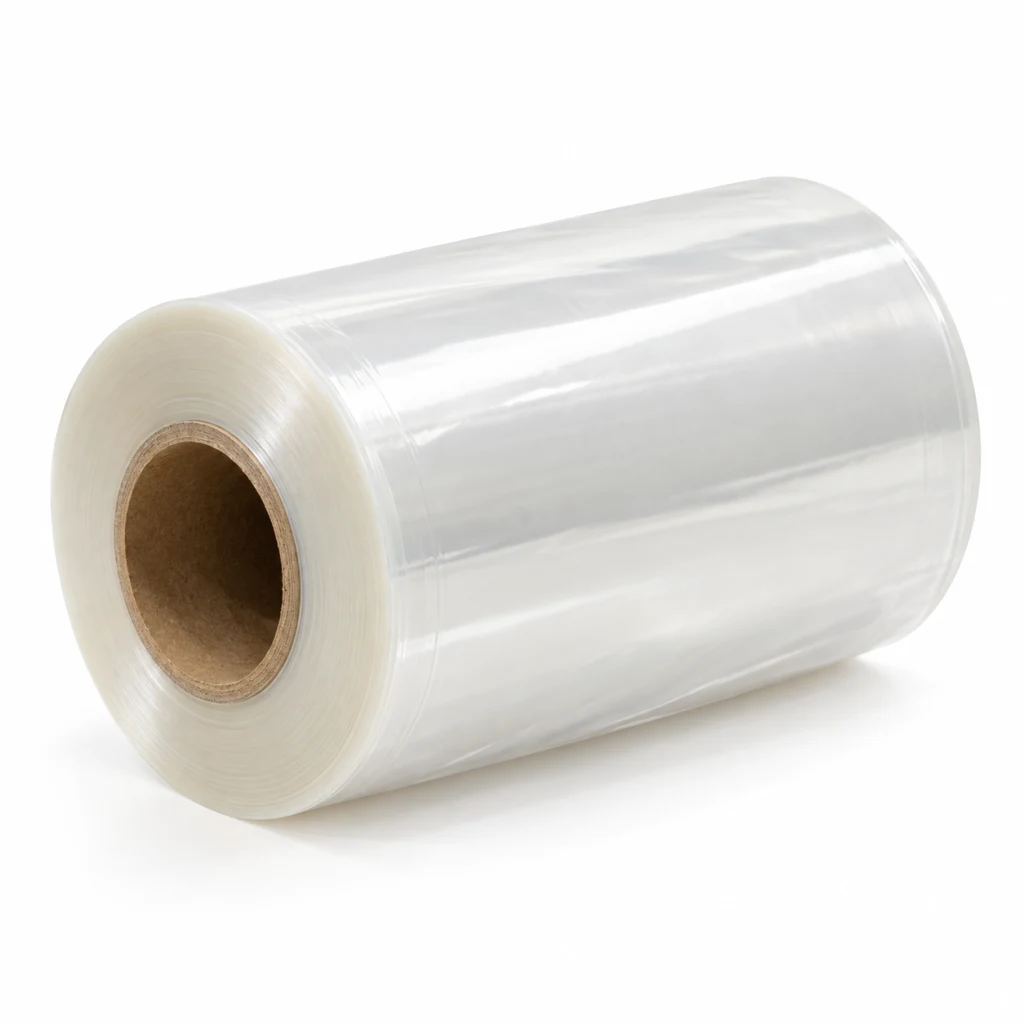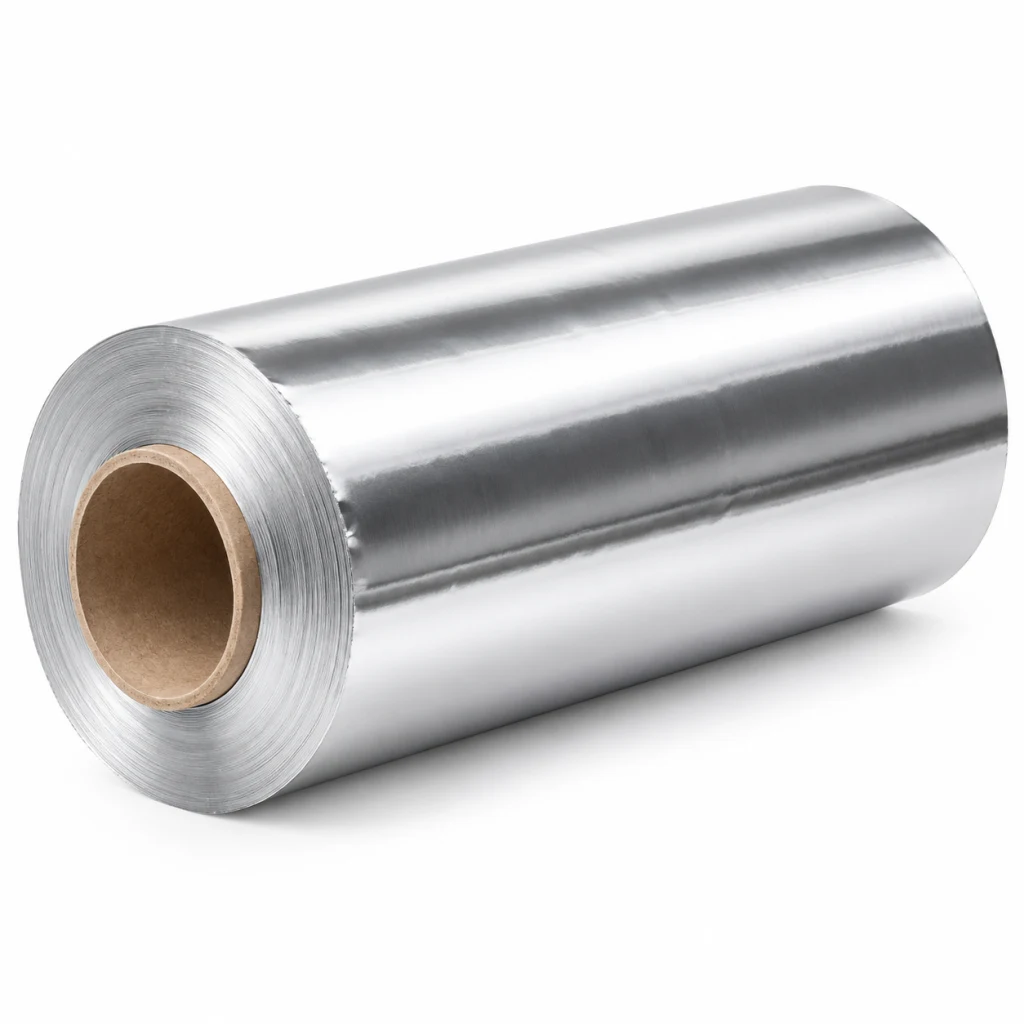
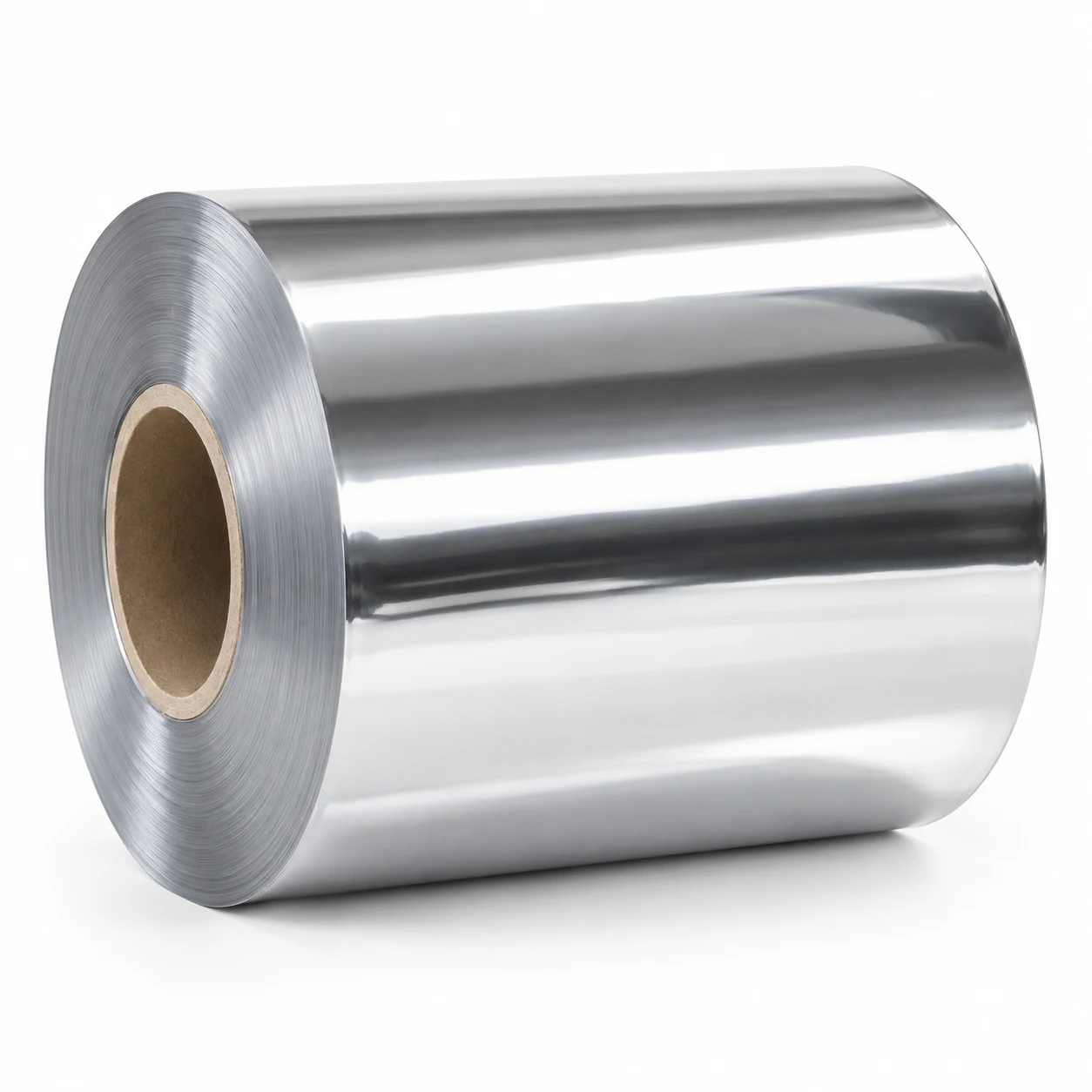
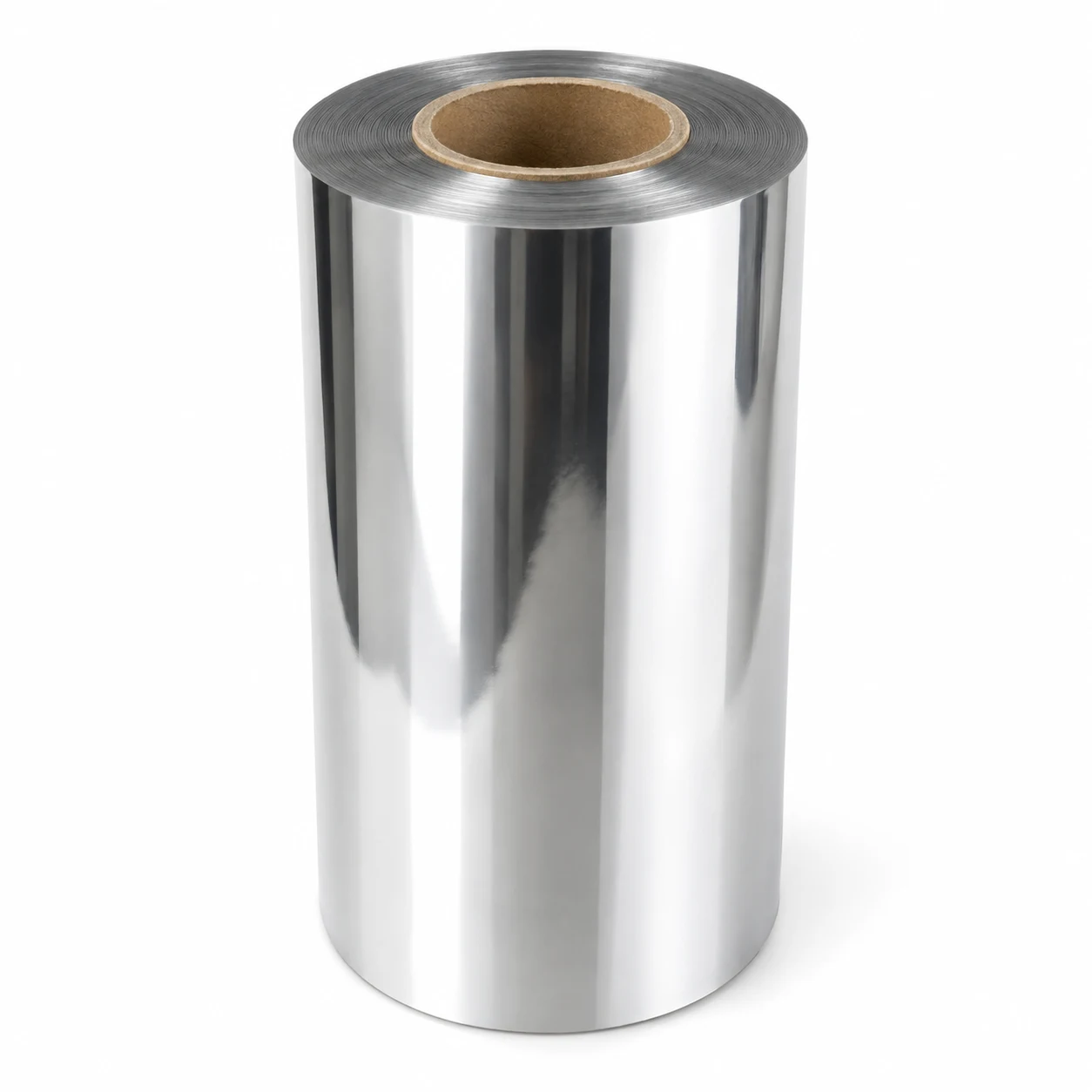
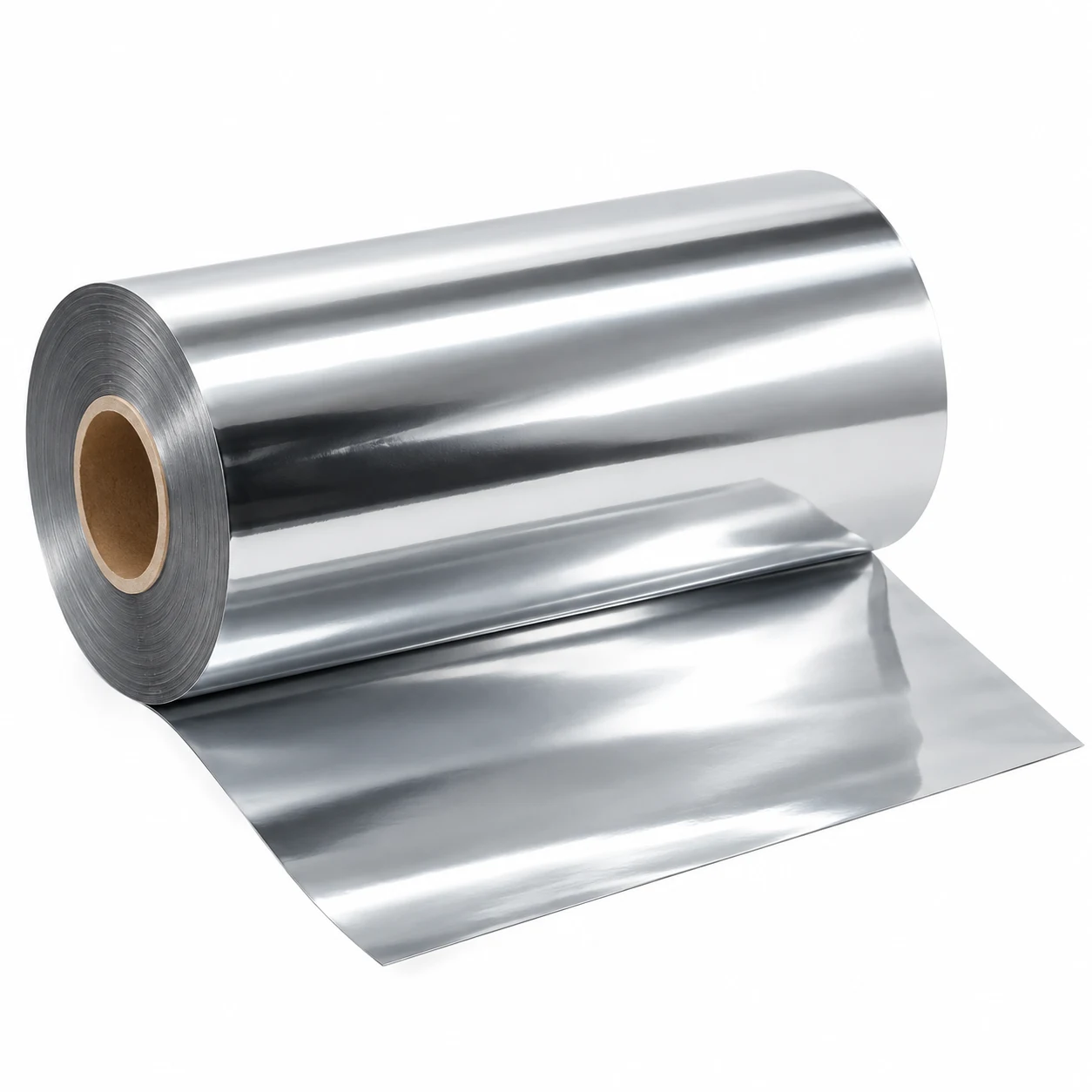
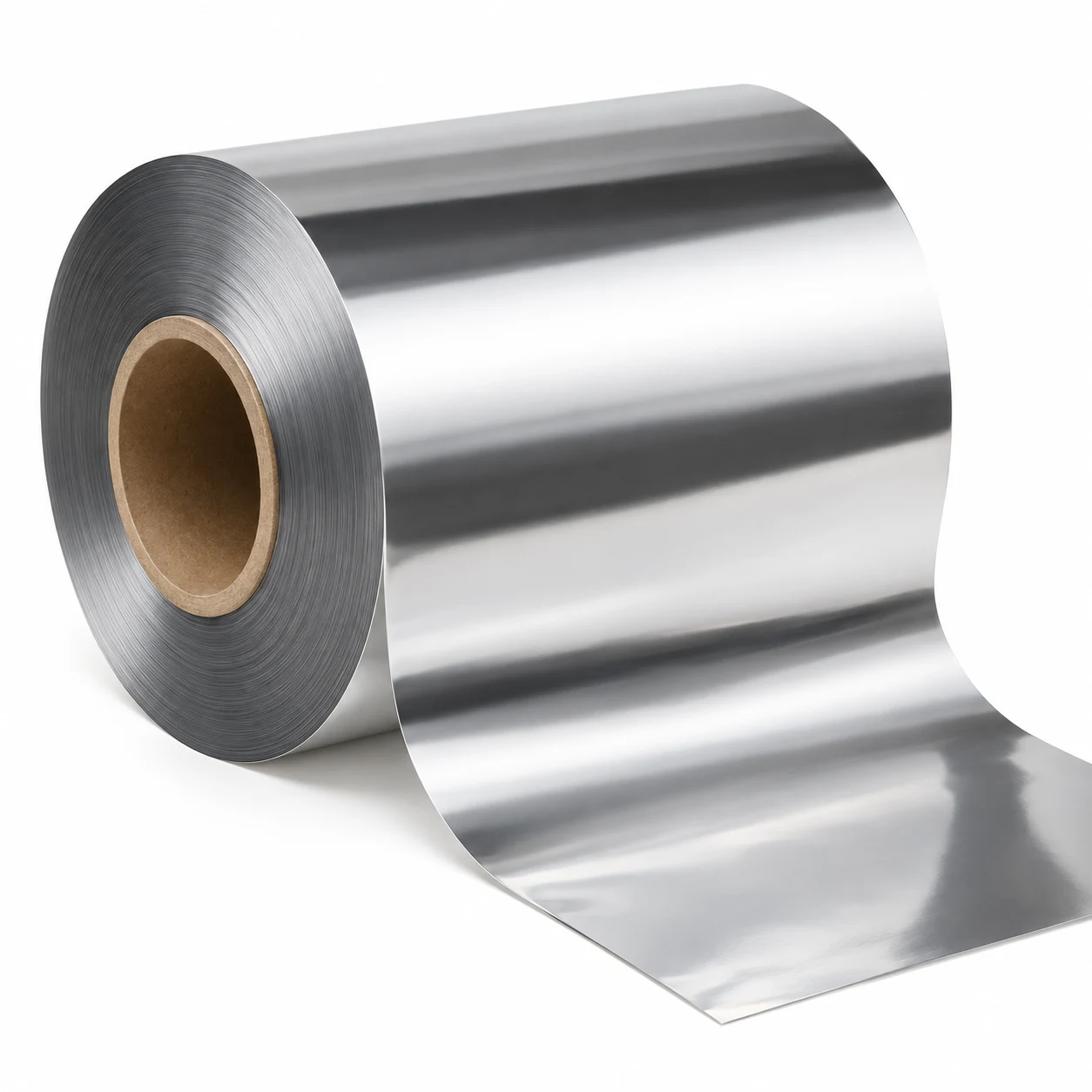
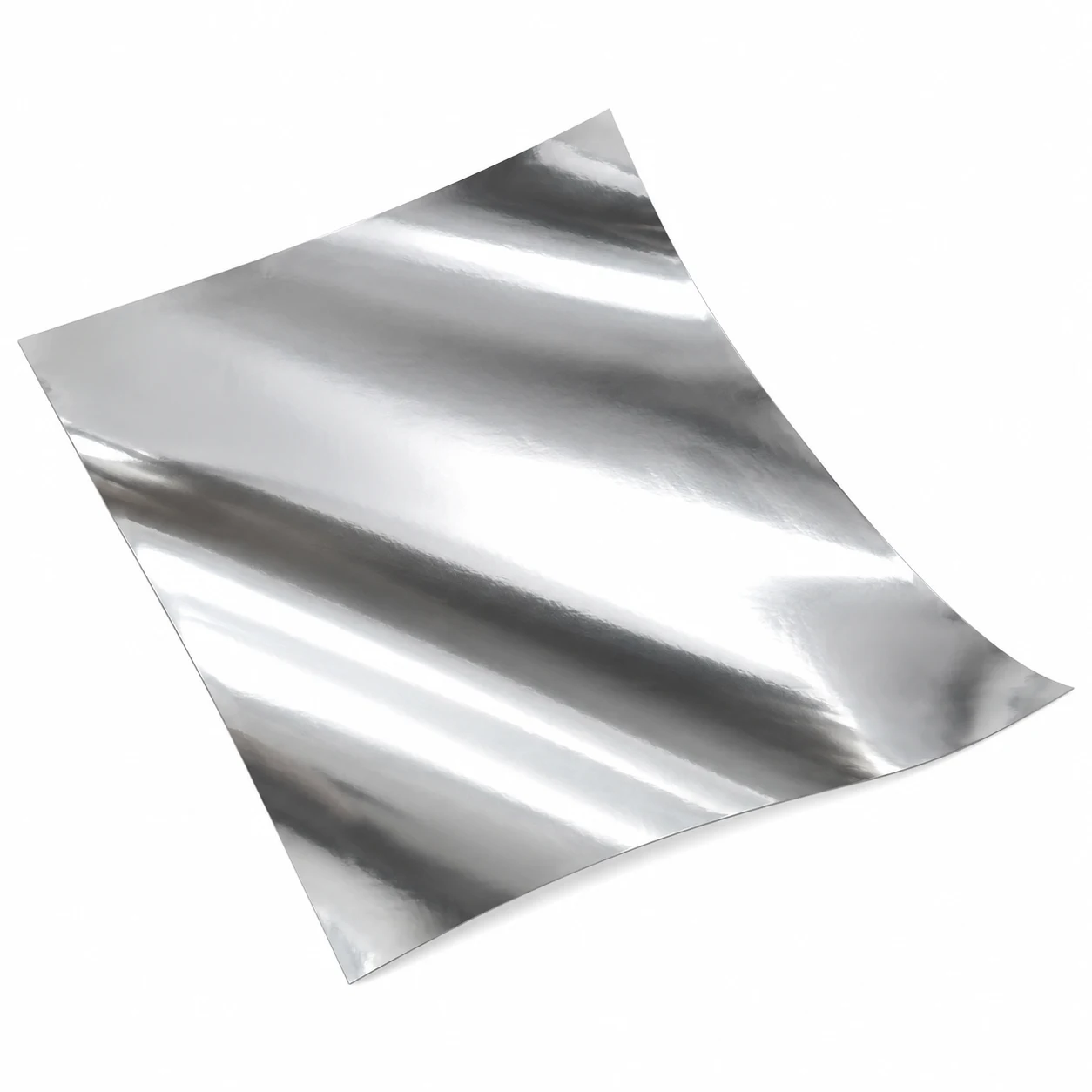
Custom metallized pet film — made to order: width, thickness and optical density are all specified per run.
Metallised PET is ordinary PET film with a layer of aluminium vapour-deposited onto it in a vacuum chamber — a coating measured in nanometres, not microns. The result rates 5 of 5 on both oxygen and moisture barrier, blocks light completely, and weighs and costs a fraction of what aluminium foil does. For most high-barrier packs that do not have to be retorted, it is the right answer.
VMPET against foil
Foil is a true barrier and survives sterilisation; metallised PET is a very good barrier that can develop pinholes if it is flexed hard enough, and it is not a retort material. What you gain is weight, cost, flex-crack resistance and a cleaner metallic look on shelf. Coffee is the classic case — light and oxygen are what stale it, and a VMPET ply stops both. See our coffee bag packaging guide for how the whole structure comes together, and aluminium foil film for when only foil will do.
Metallisation grades
Standard metallisation, high-barrier metallisation, or a transparent barrier coating where the pack has to show the product and still keep oxygen out. Width, thickness and optical density are made to order — optical density is the specification that decides how much light gets through and how metallic the pack looks. FDA and GB food-grade grades available.
What moves the price
Optical density, mostly — a heavier metallisation blocks more light and costs more, and a transparent barrier coating is a different product again at a different price. Base film thickness and width behave as with plain PET. Against aluminium foil, metallised PET is substantially cheaper per square metre and lighter to ship, which is why it has replaced foil in most non-retorted high-barrier packs. Against plain PET it is a clear step up in cost, and the honest question is whether the product needs the barrier or just looks better with the shine.
Where it goes wrong
Flexing it hard. The metallised layer is nanometres thick and it will develop pinholes under repeated sharp folding, which is why it is not used where foil is required and why a stiff pack outperforms a floppy one here. The second is specifying it for retort, which it is not rated for. The third is treating the metallic look as the specification: two films can look identical and differ by an order of magnitude in optical density, and the one that matters is the number rather than the appearance.
Where custom metallized pet film is used
In coffee, snack and supplement structures — anywhere a high barrier is needed and the pack is not retorted. It is the usual alternative to foil, and the comparison is worth understanding rather than assuming: the coffee bag guide works through a full structure, laminate against mono-material covers what the metallised ply costs in recyclability, and OTR and WVTR explained gives the numbers to compare it on.
What to send us for a quotation
A quotation for custom metallized pet film is written against a specification, so the more of this you can send, the closer the first number is to the real one: which structure, or the shelf life and the product so we can choose one — VMPET (metallised PET) are available here; the temperature the pack has to survive, from filling through to how the customer opens it (ambient for this product); the line it runs on — this one is specified for high-barrier packaging and Middle ply of an aluminium-plastic laminate; which options you want fitted: standard metallisation, High barrier metallisation and Transparent barrier coating; the values for width, Thickness and Optical density.
Send the fill weight and the quantity with it. Where you already buy something similar, a sample is worth more than a description — we measure what is actually there rather than quoting against how it was once written down.
Food-contact and export requirements are set out in FDA 21 CFR 177, the US rule for food-contact polymers; the declarations for this structure are issued with the order.