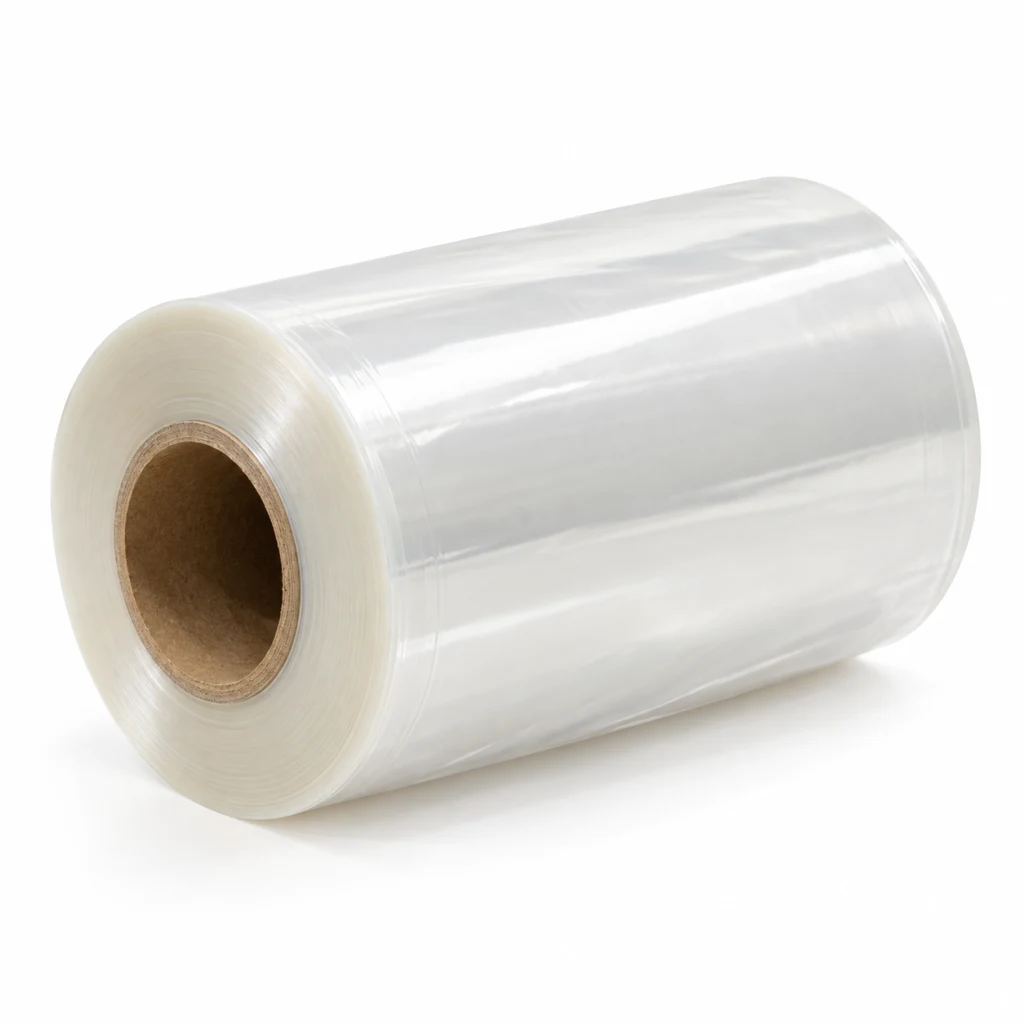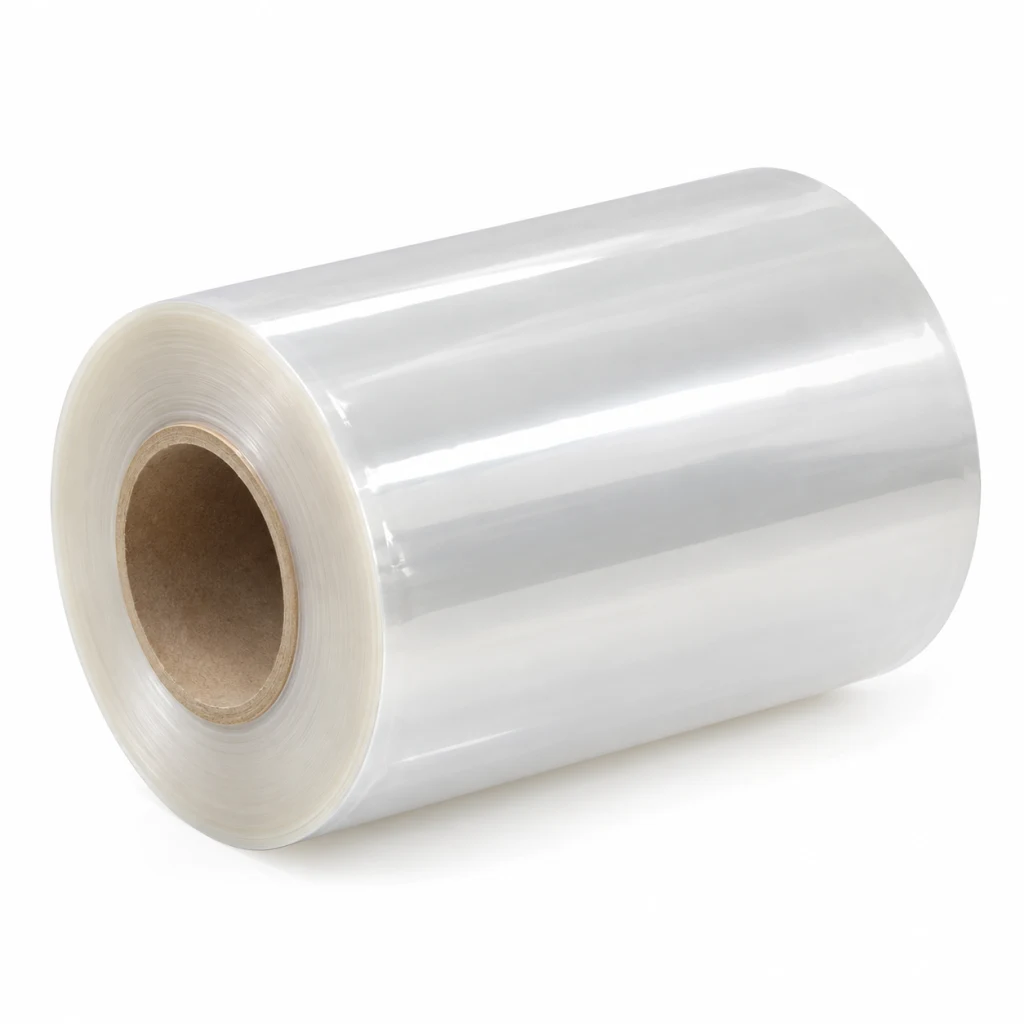
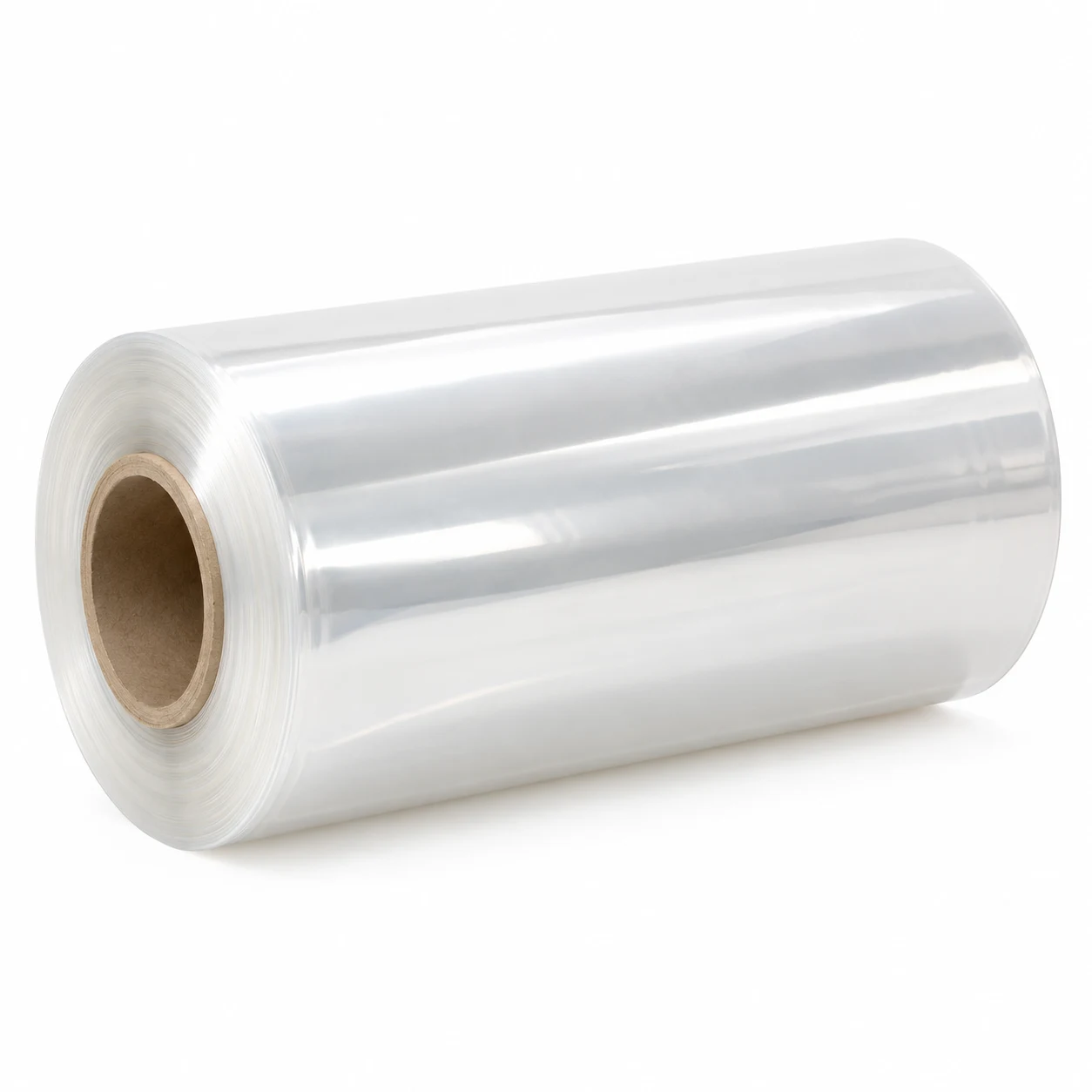
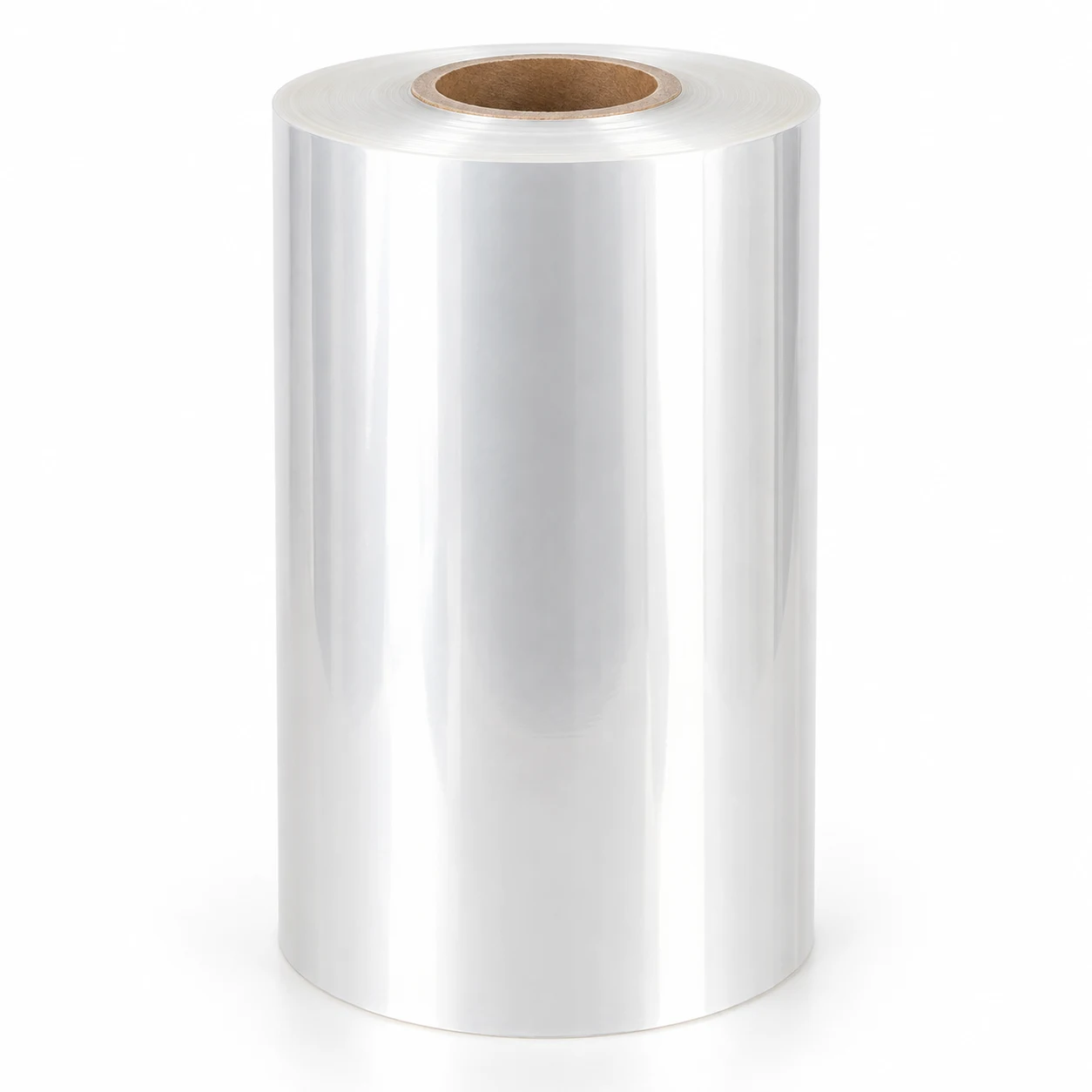
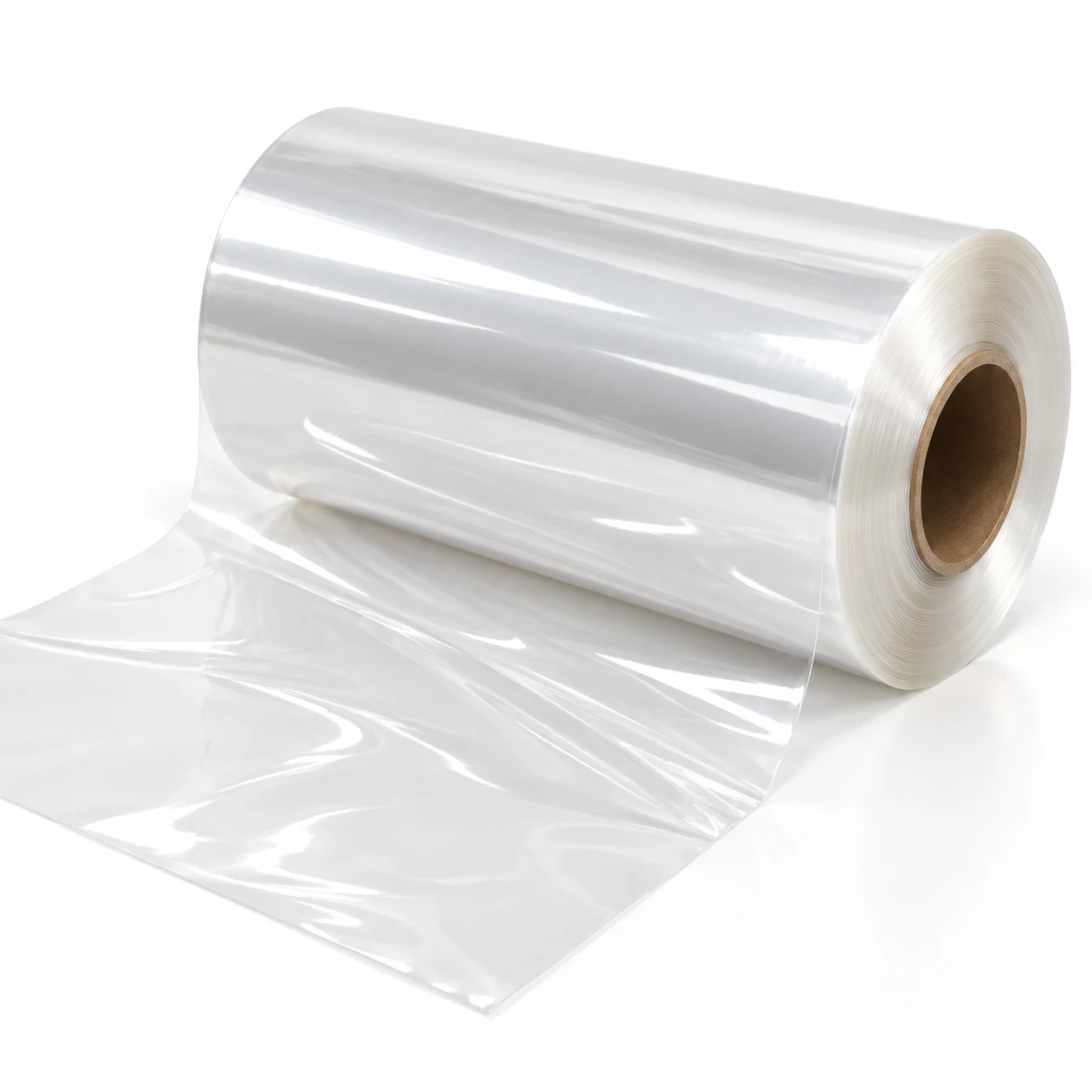
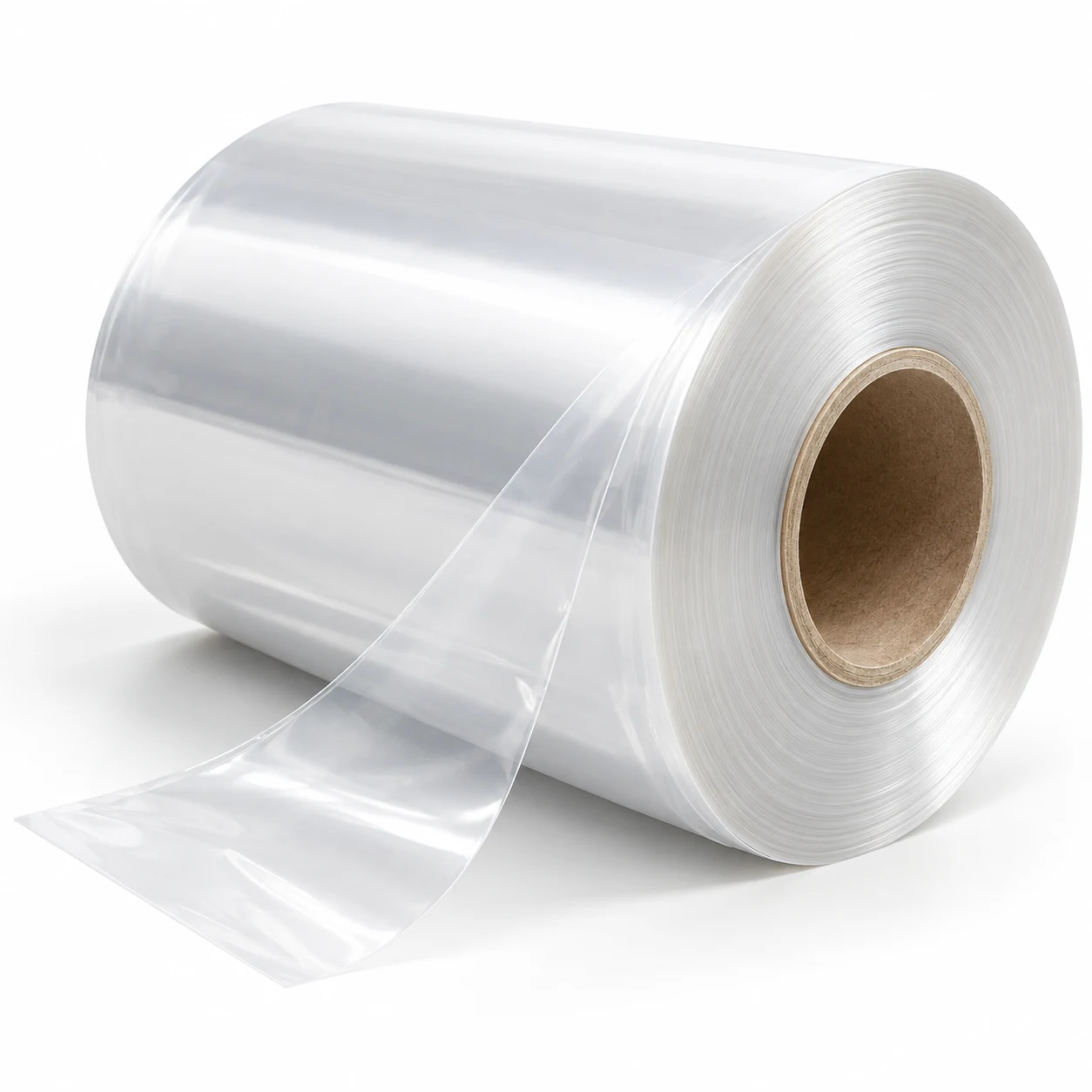
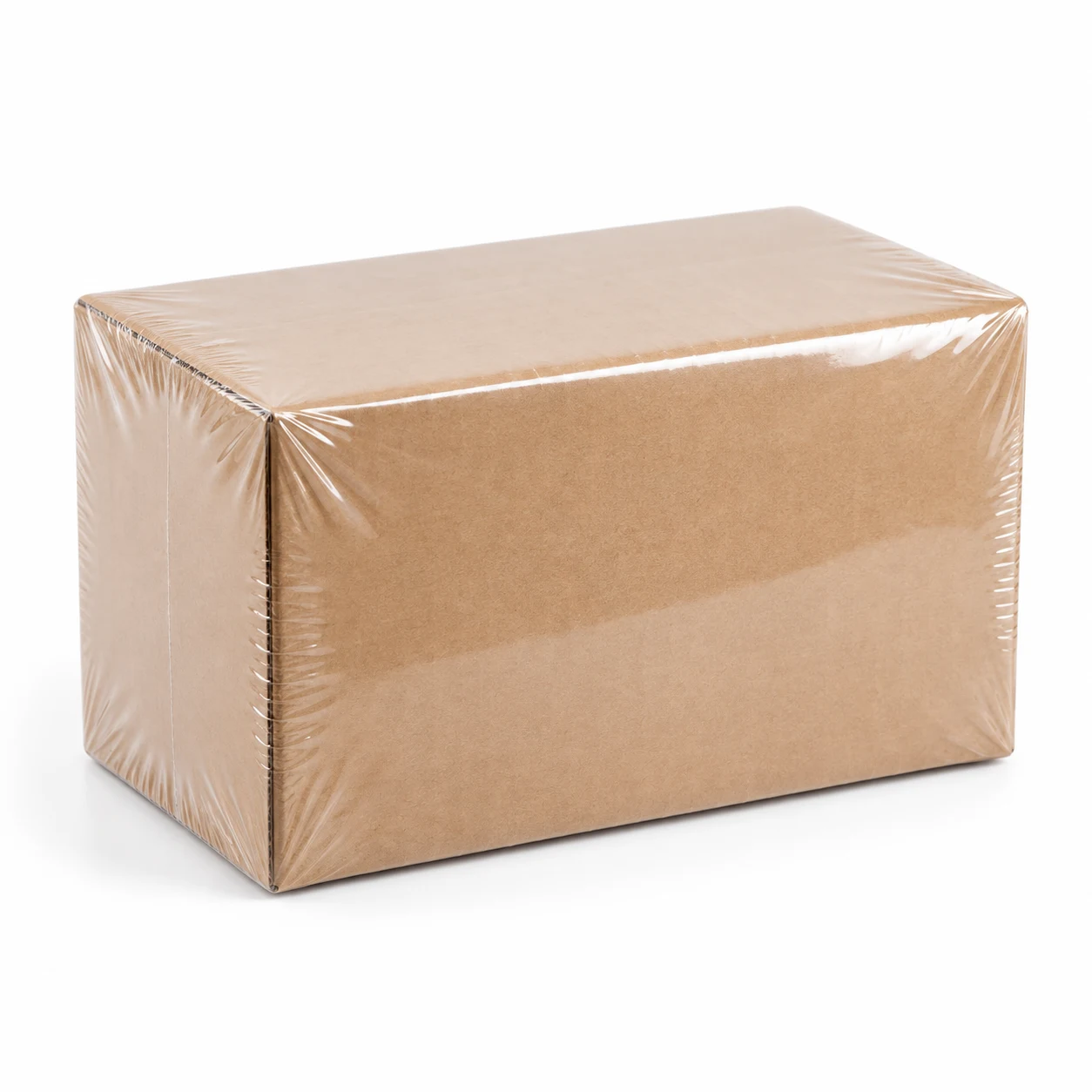
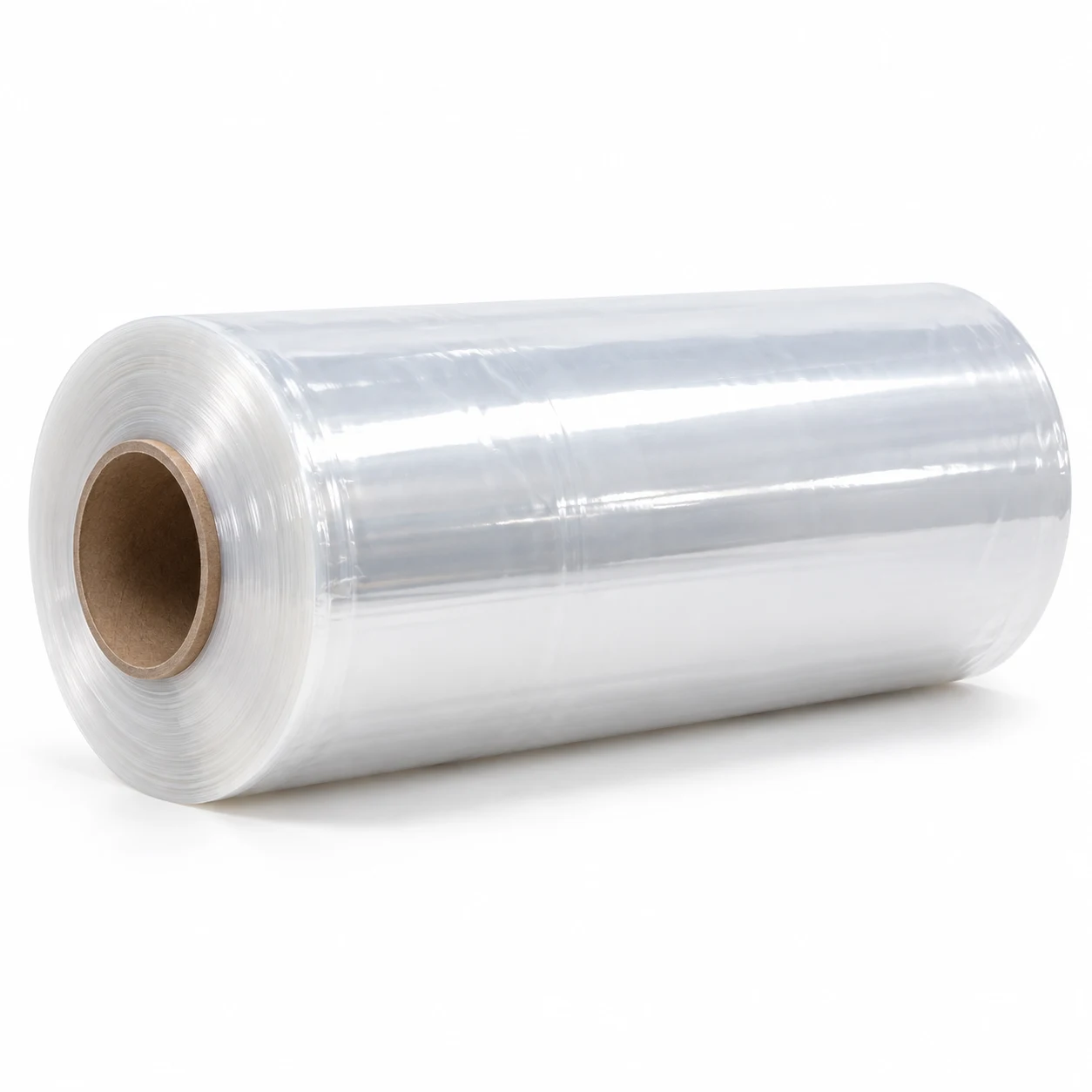
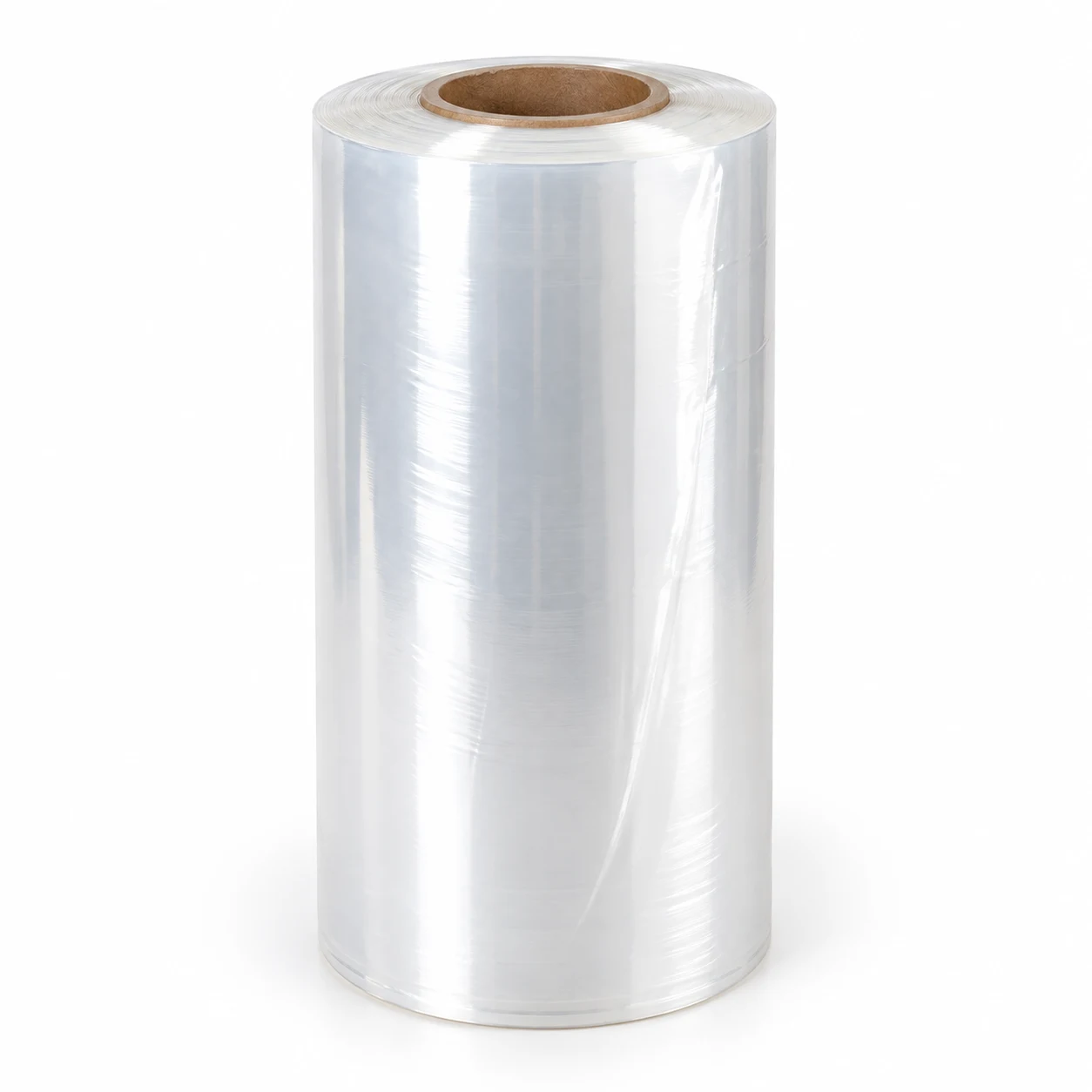
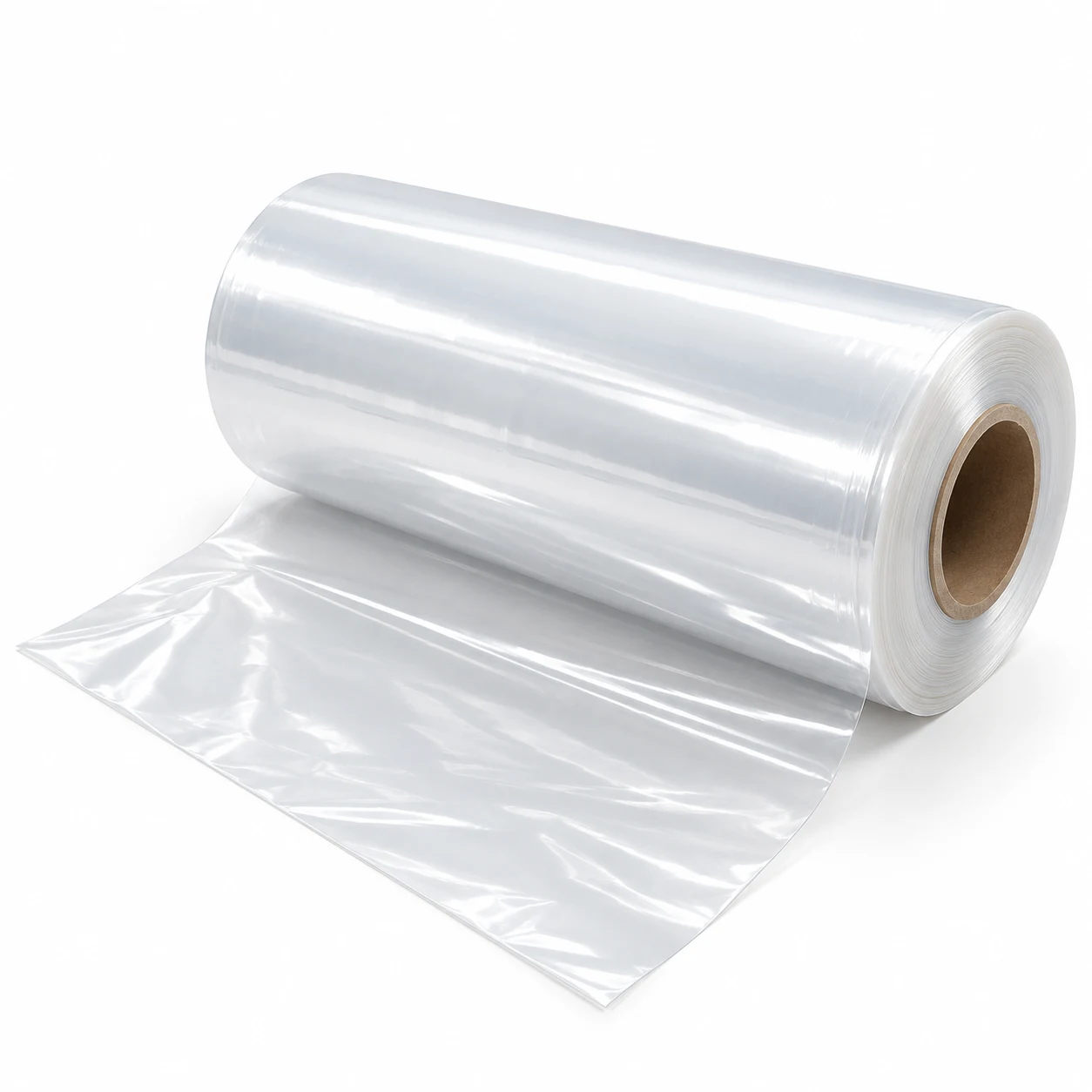
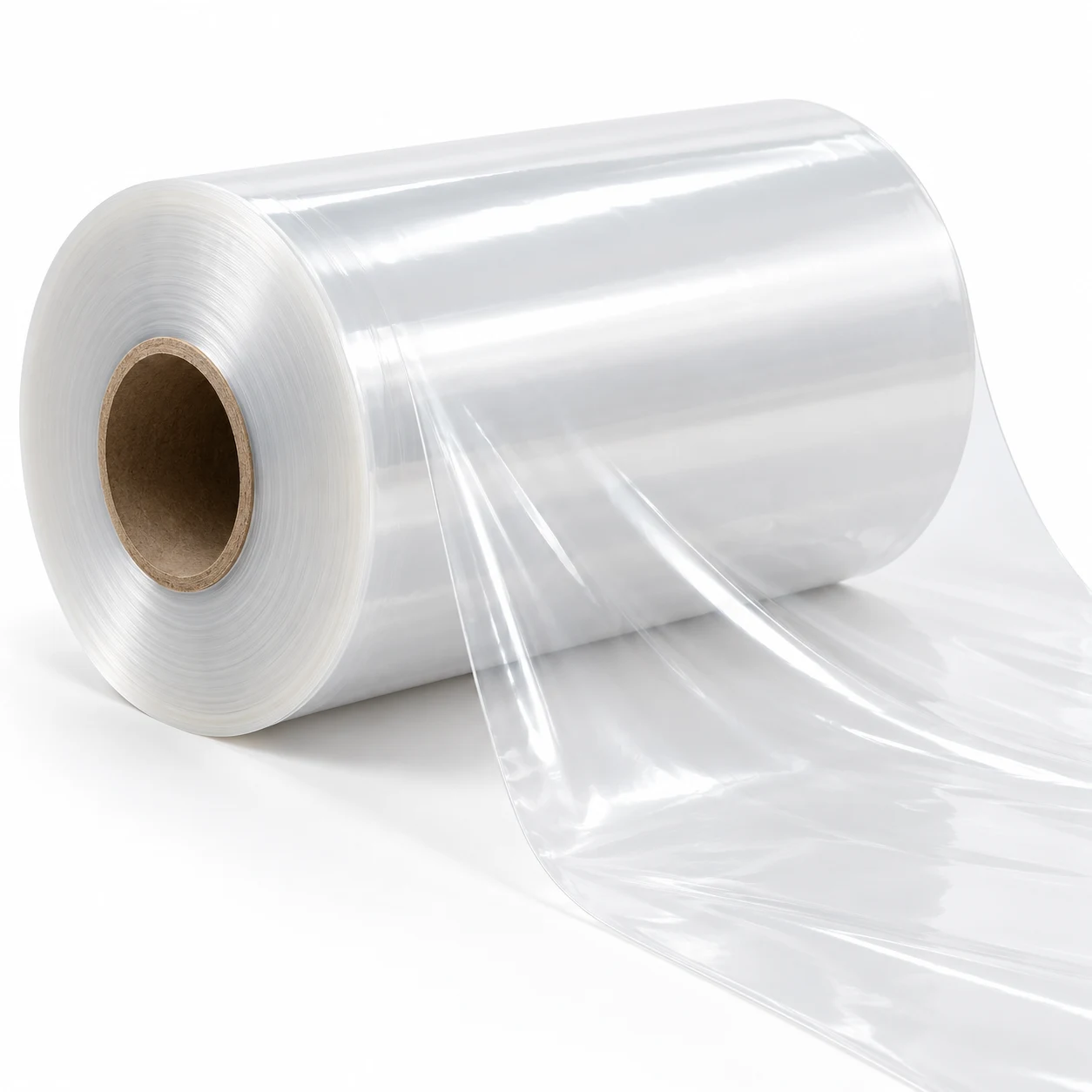
Custom shrink film — made to order: width, thickness and shrink ratio are all specified per run.
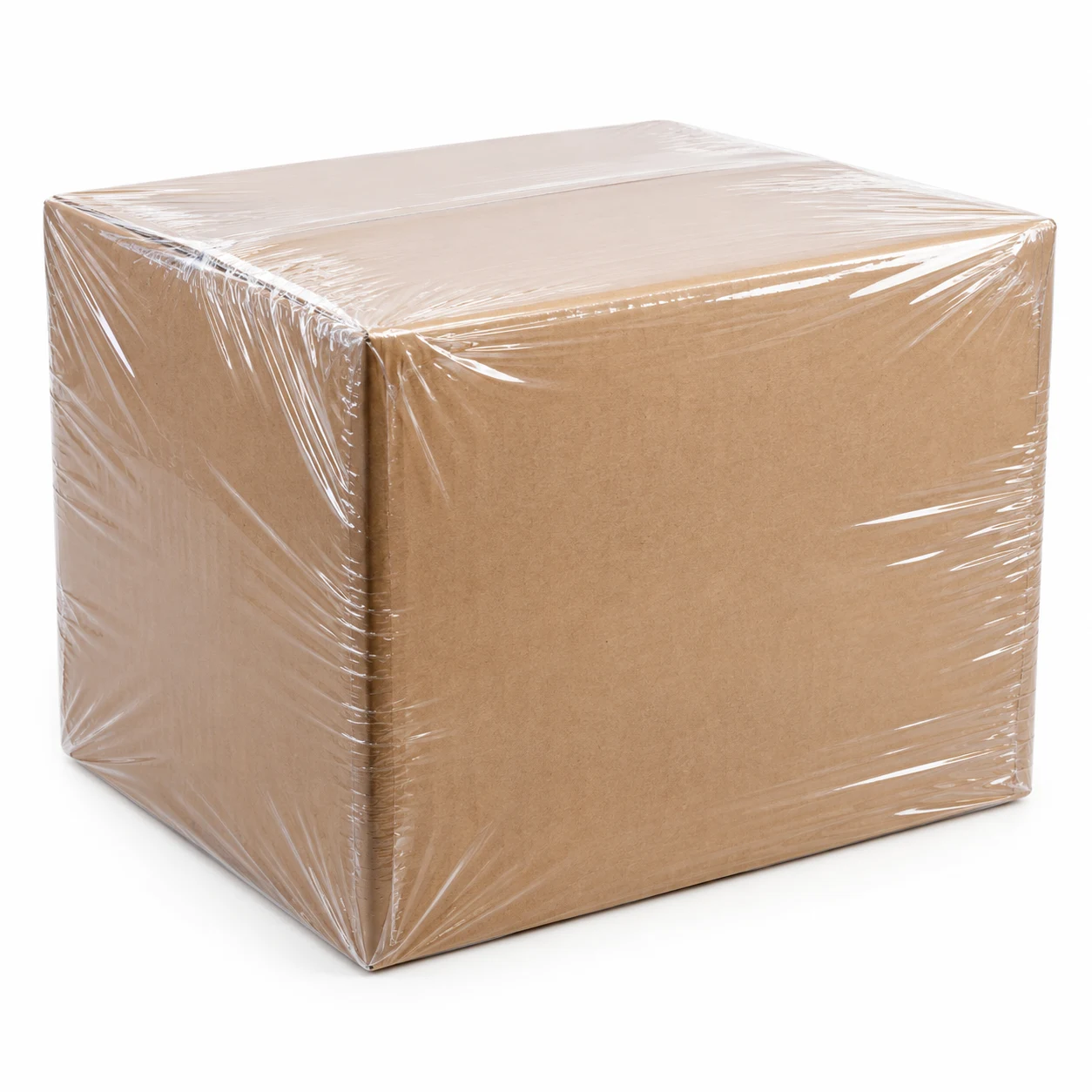
Shrink film is wrapped loosely and then heated, at which point it contracts onto whatever it is holding. It is how multipacks of bottles and cans travel without a carton, how a single pack is tamper-evidenced, and how a pallet of mixed goods becomes one unit. There is no heat sealing involved in the usual sense — the film is cut and lapped, and the shrink does the work.
POF against PE
Polyolefin shrink film is clear, glossy and thin, and it shrinks evenly in both directions, so it suits retail packs where the wrap is visible and the print underneath has to show. PE shrink film is tougher, thicker and cheaper, and it is what goes round bottled water, canned drinks and transport loads where appearance matters less than not splitting. Perforated film is available where trapped air would otherwise balloon the pack, and printed film where the wrap itself carries branding.
Specifying it
Width, thickness and shrink ratio are made to order, and the shrink ratio has to match your tunnel temperature and belt speed — too little and the pack is loose, too much and it distorts. Typical uses are beverages and bottled water, gifts and daily goods, cartons and canned drinks. For hand and machine pallet wrapping, see stretch films, which stretch cold rather than shrinking hot.
What moves the price
Material and thickness. POF costs more than PE per square metre and runs thinner, so the finished cost per pack is closer than the per-kilo price suggests. Shrink ratio and the number of layers move it further. Perforation and printing are separate operations with their own increments. Because the film is bought by the roll and used by the metre, the practical lever most operations have is film thickness — many run heavier film than the load needs because it was specified once and never revisited.
Where it goes wrong
A shrink ratio that does not match the tunnel. Too little and the pack is loose and looks cheap; too much and it distorts and the print skews — both read as a film problem and both are a settings mismatch. The second is confusing shrink with stretch: shrink film wrapped on a pallet without heat does nothing, and stretch film in a tunnel melts. The third is unperforated film over a product with trapped air, which balloons and splits.
Where custom shrink film is used
Multipacks of bottles and cans, tamper-evident single packs, and pallet loads that need containing rather than compressing. Retail multipacks usually take POF for clarity and gloss; transport loads take PE for toughness and cost. If the job is holding a pallet together rather than wrapping a product, stretch film is the material — it stretches cold instead of shrinking hot, and the two are not interchangeable. The rest of the transport range is in cartons and transport packaging.
What to send us for a quotation
A quotation for custom shrink film is written against a specification, so the more of this you can send, the closer the first number is to the real one: which structure, or the shelf life and the product so we can choose one — POF shrink film and PE shrink film are available here; the temperature the pack has to survive, from filling through to how the customer opens it (ambient for this product); the line it runs on — this one is specified for shrink wrapping and Multipack outer film; which options you want fitted: pOF — clear and glossy, PE — tough and economical and Perforated; the values for width, Thickness and Shrink ratio.
Send the fill weight and the quantity with it. Where you already buy something similar, a sample is worth more than a description — we measure what is actually there rather than quoting against how it was once written down.
Food-contact and export requirements are set out in FDA 21 CFR 177, the US rule for food-contact polymers; the declarations for this structure are issued with the order.