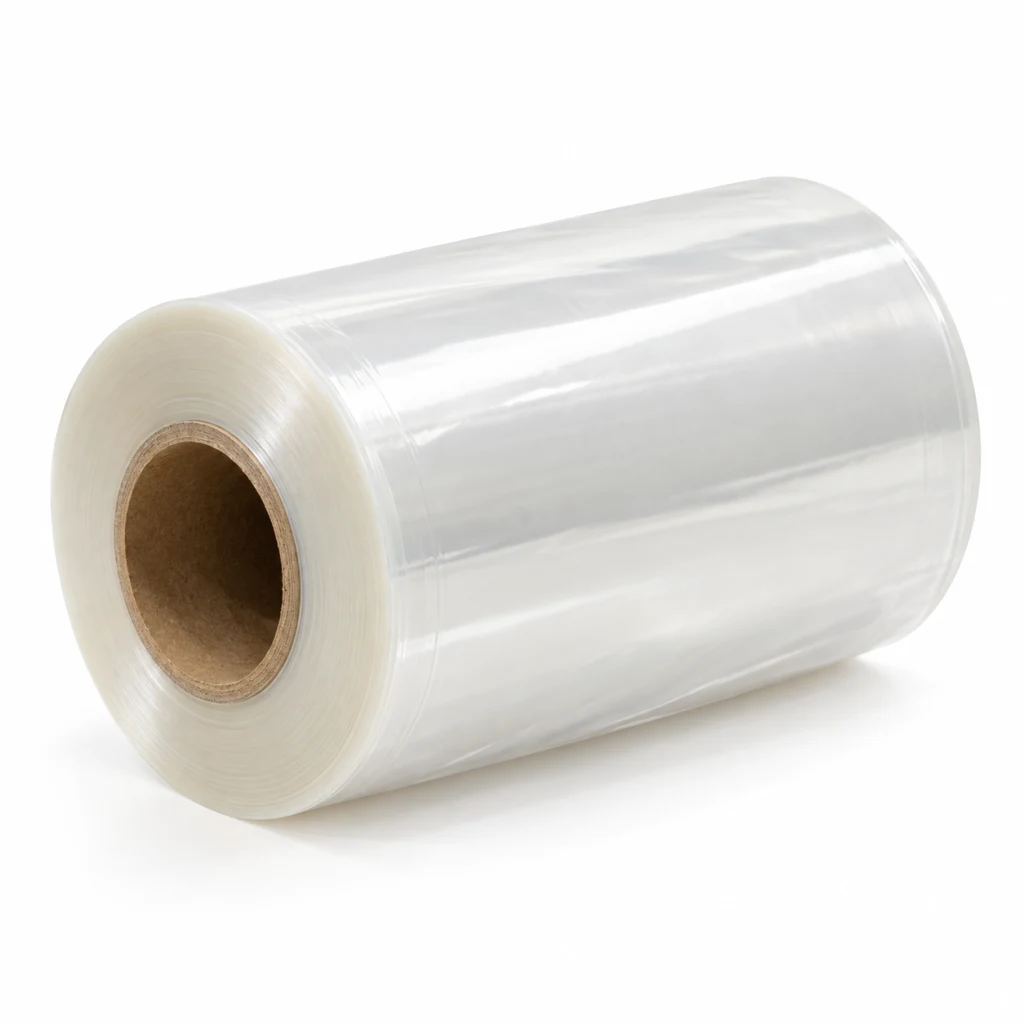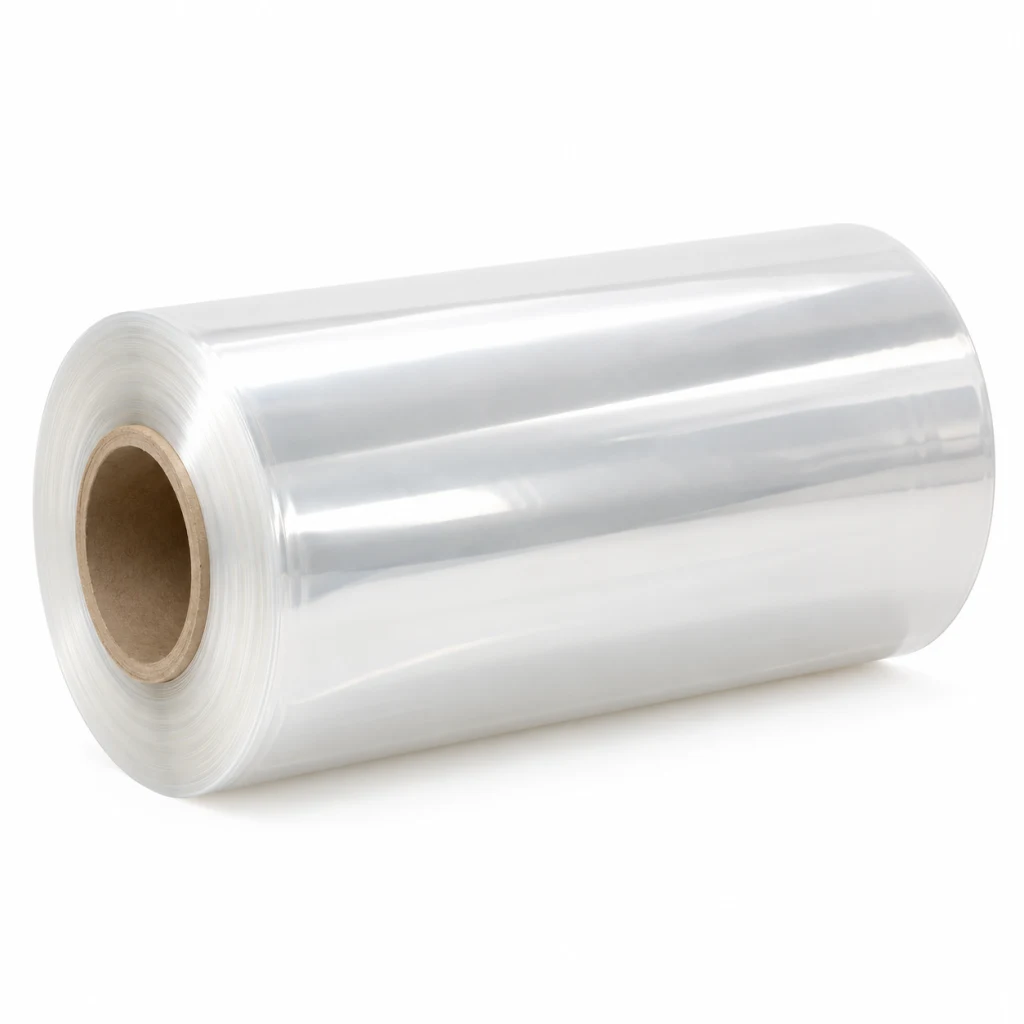
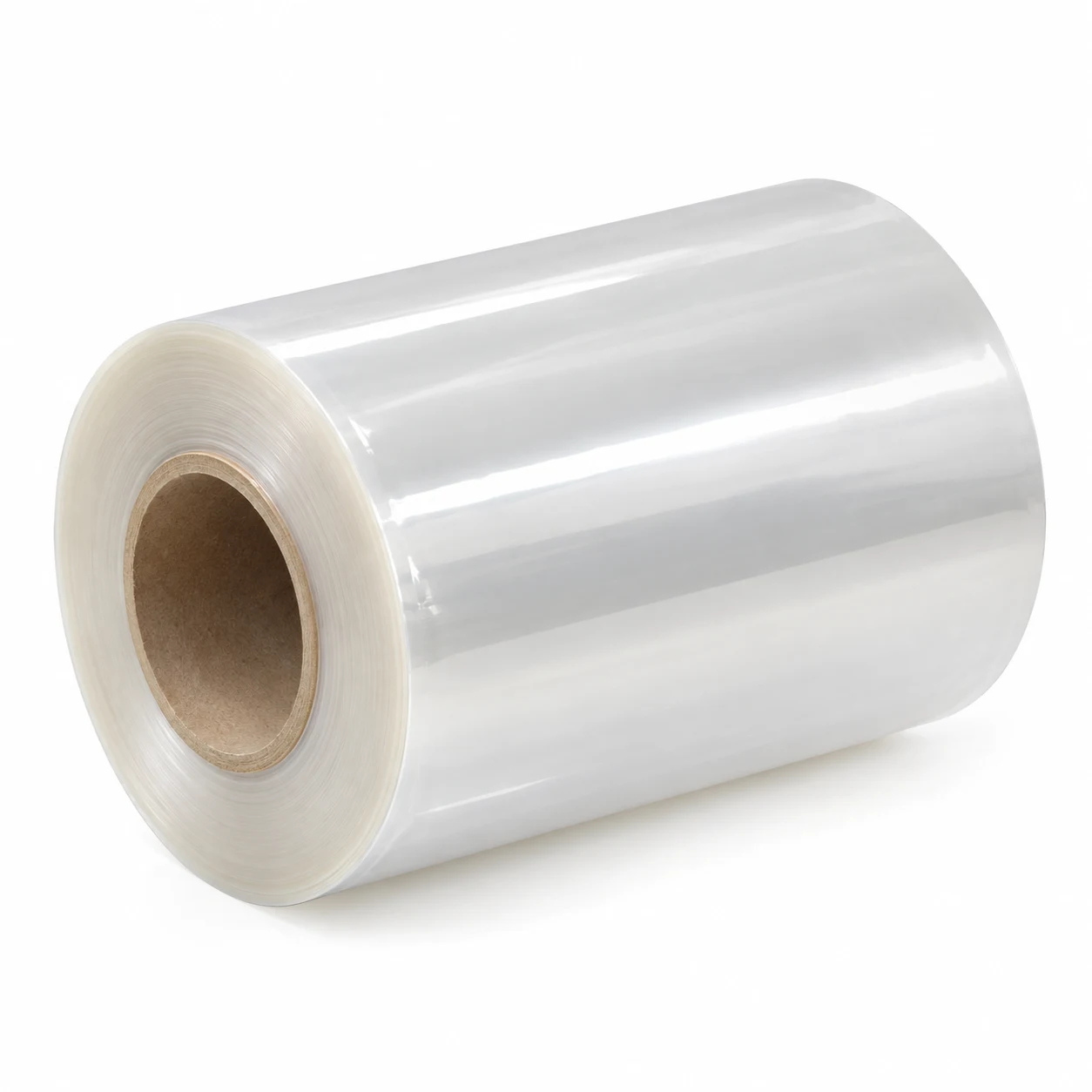
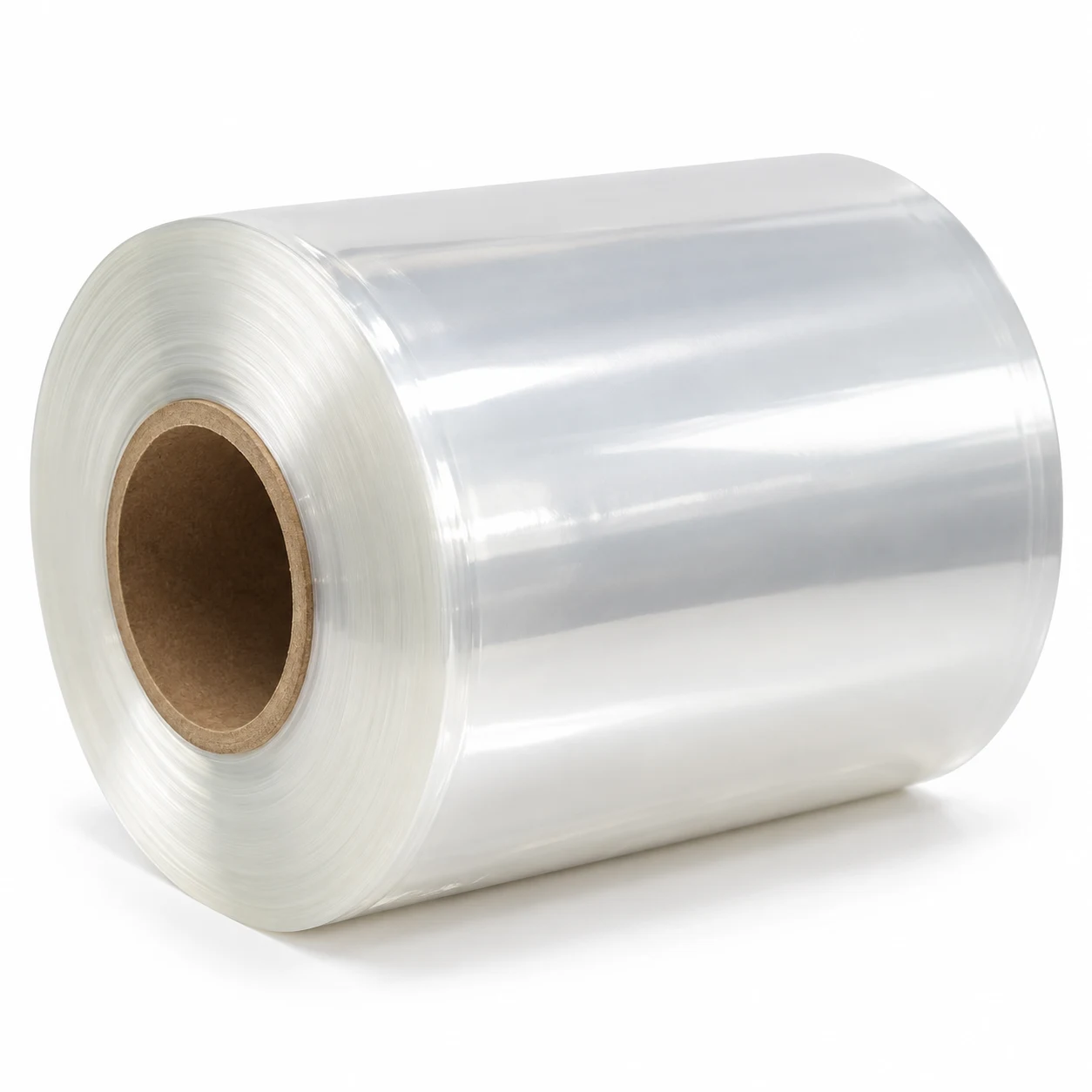
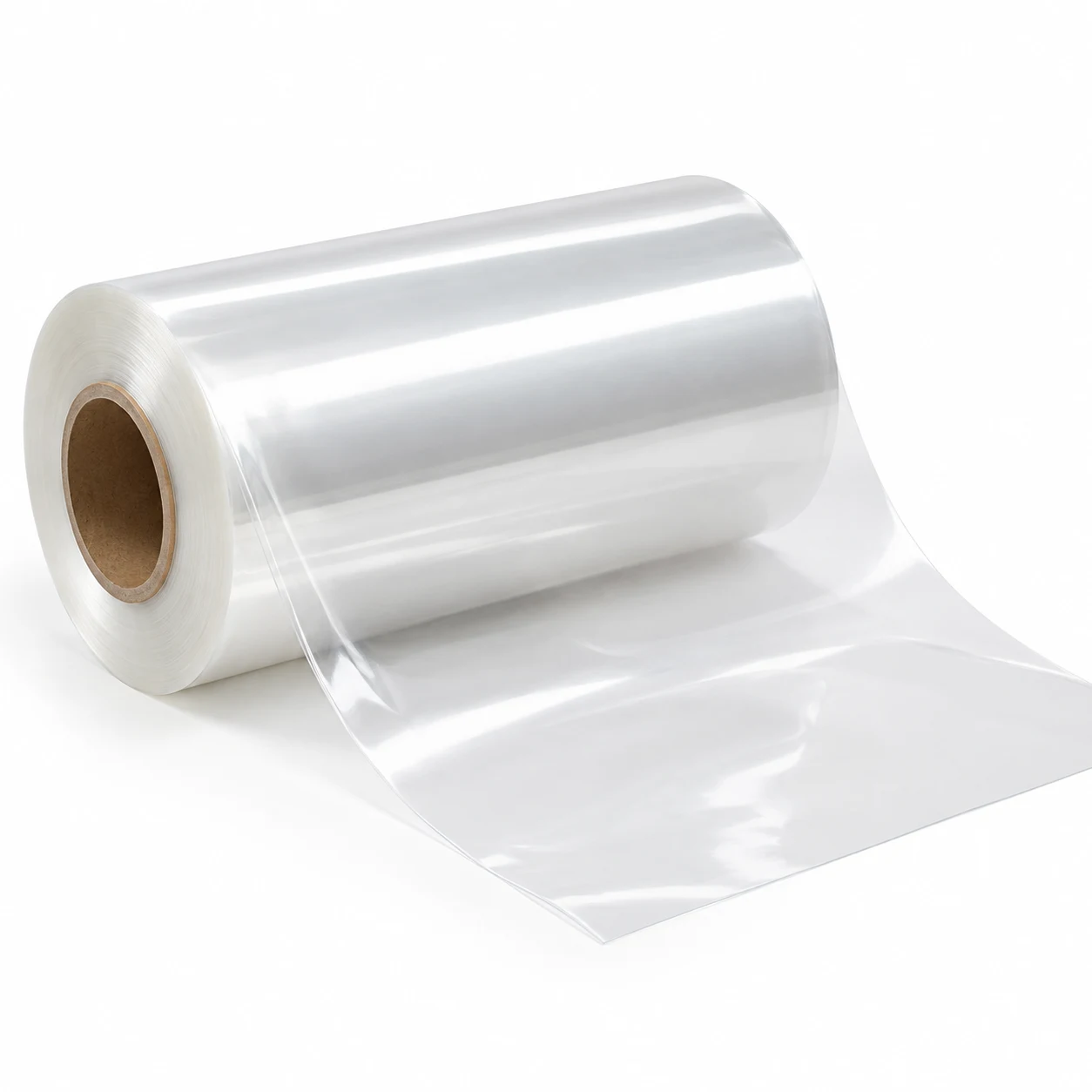
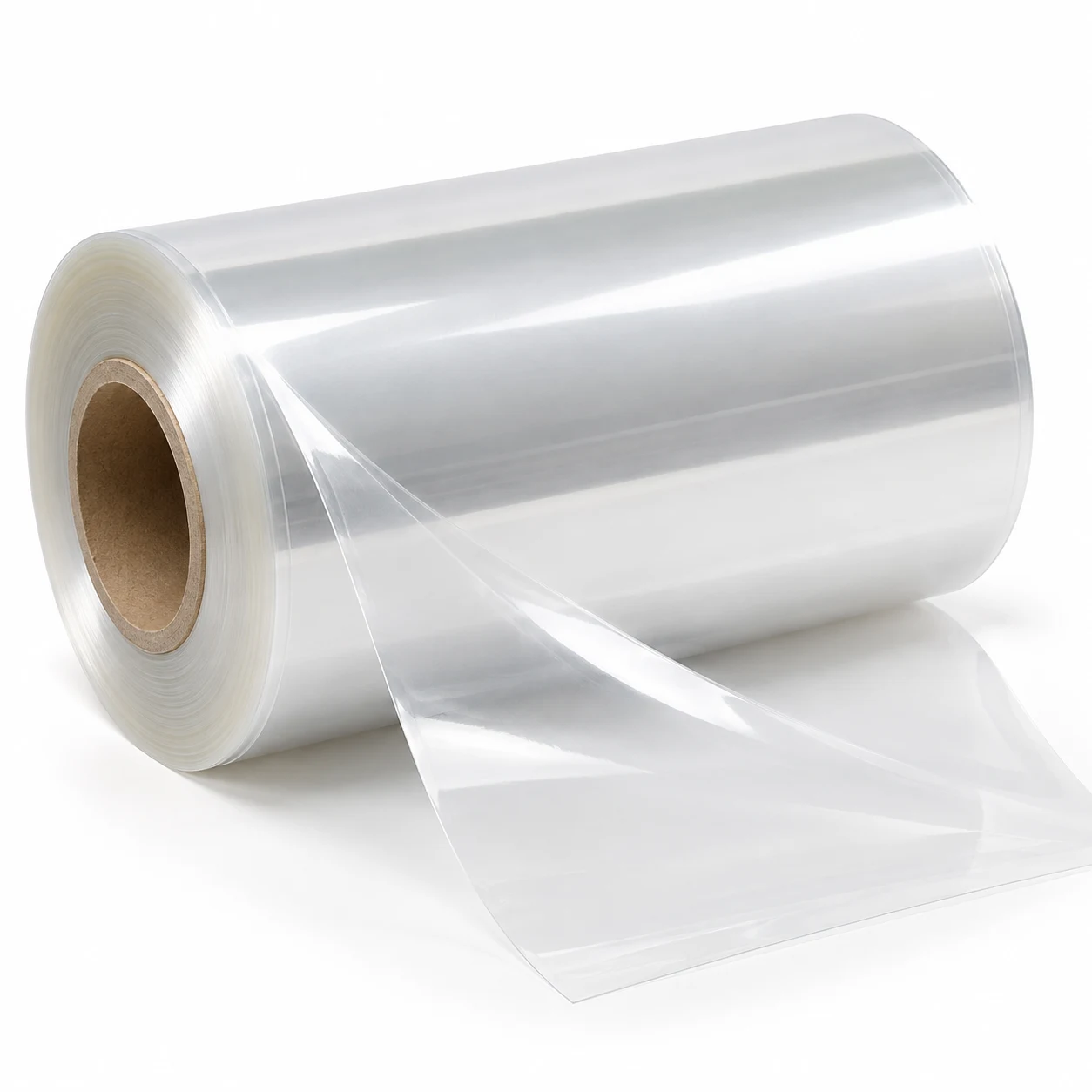
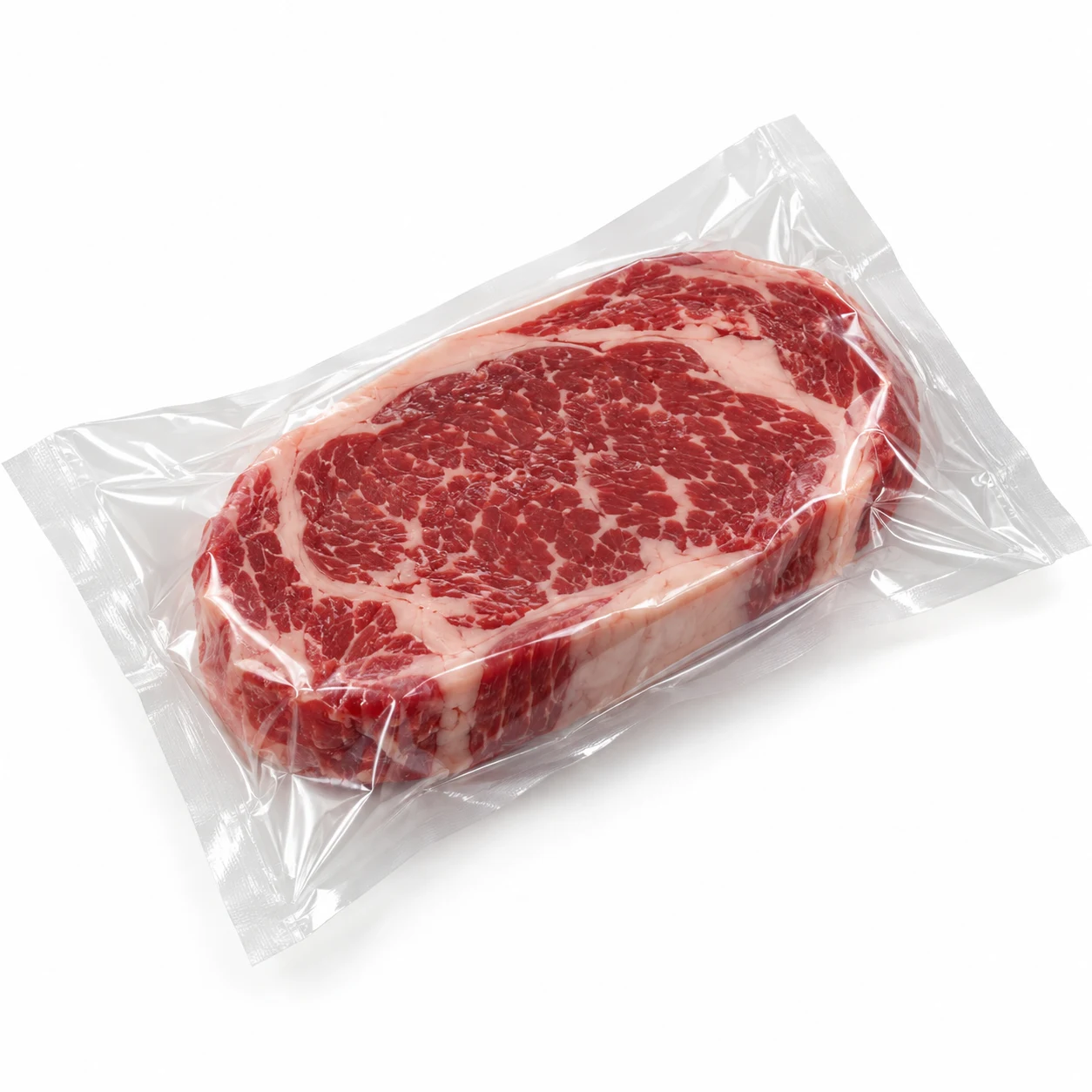
Custom nylon film — made to order: width, thickness and grade are all specified per run.
Nylon is the toughness layer. Where PET gives a laminate its stability and PE gives it a seal, PA gives it the ability to survive being handled: very high puncture and tear resistance, resistance to oils and fats that swell other polymers, and — unusually — it keeps those properties from freezer temperatures right up through a 121 °C retort cycle.
Where a laminate needs it
Anything with a bone, a shell or a sharp frozen edge in it. Anything vacuum-packed, where atmospheric pressure presses film hard onto an irregular shape for the whole life of the pack. Anything oily, where fat migration would otherwise weaken the structure. That is why PA sits in the middle of the vacuum pouch and the retort pouch webs. Oxygen barrier is 4 of 5; heat seal is 2 of 5, so it is never the sealing ply.
Cast, oriented, coextruded
Cast nylon is the most puncture-resistant and the most formable, which matters for thermoforming webs. Biaxially oriented nylon is stiffer and stronger in tension. Coextruded grades combine nylon with a sealant in one film and save a lamination pass. Width, thickness and grade are made to order. Typical uses are meat, fish and seafood, and vacuum-packed foods. FDA and GB food-grade grades available.
What moves the price
Grade and thickness, and nylon is the most expensive of the common plies per micron — which is why structures use as little of it as the job allows rather than as much as possible. Cast, biaxially oriented and coextruded grades price differently and behave differently; coextruded grades that carry a sealant can remove a whole lamination pass, which sometimes makes the more expensive film the cheaper structure. Width and quantity behave as elsewhere.
Where it goes wrong
Specifying it as a moisture barrier. Nylon absorbs water, and its oxygen barrier falls as humidity rises, so a structure leaning on nylon alone in a humid market performs worse than the datasheet suggests. The second is using it as a sealant, which it is not — heat seal is 2 of 5 and a sealant ply sits behind it in every structure we make. The third is under-specifying thickness for bone-in or shell-on product, where the whole reason for the nylon is puncture resistance and too little of it defeats the purpose.
Where custom nylon film is used
In the middle of vacuum, retort and frozen structures, and as the web for thermoformed packs where the film has to draw down over a shape without thinning to nothing. The meat and seafood page is where its properties matter most — bone, shell and a vacuum all working against the film at once. For its place in a structure string, see how to read a film structure; for how its oxygen barrier falls as humidity rises, OTR and WVTR explained.
What to send us for a quotation
A quotation for custom nylon film is written against a specification, so the more of this you can send, the closer the first number is to the real one: which structure, or the shelf life and the product so we can choose one — PA / Nylon are available here; the temperature the pack has to survive, from filling through to how the customer opens it (frozen to retort 121 °C for this product); the line it runs on — this one is specified for middle ply of a laminate and Reinforcing layer; which options you want fitted: cast, Biaxially oriented and Coextruded; the values for width, Thickness and Grade.
Send the fill weight and the quantity with it. Where you already buy something similar, a sample is worth more than a description — we measure what is actually there rather than quoting against how it was once written down.
Food-contact and export requirements are set out in FDA 21 CFR 177, the US rule for food-contact polymers; the declarations for this structure are issued with the order.