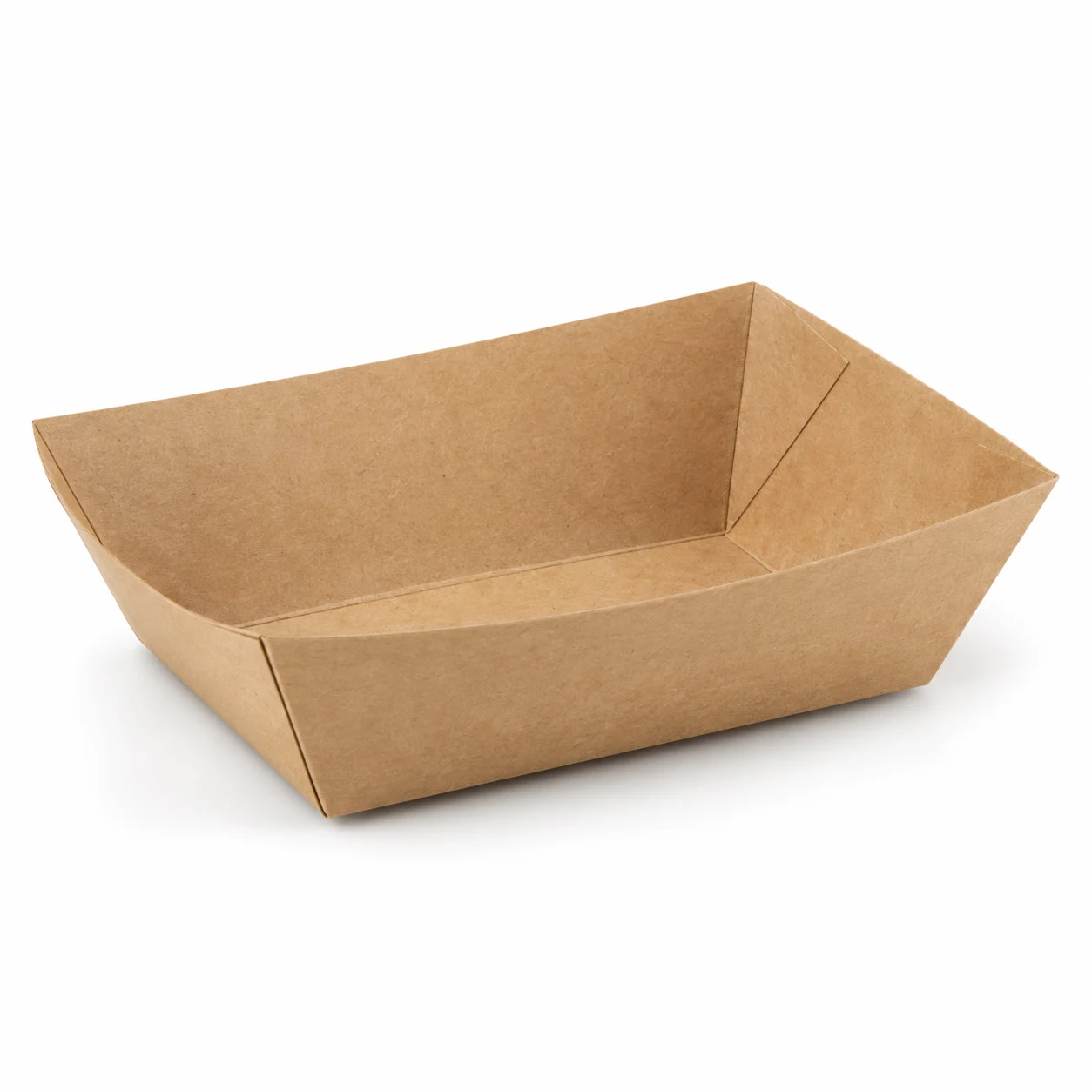
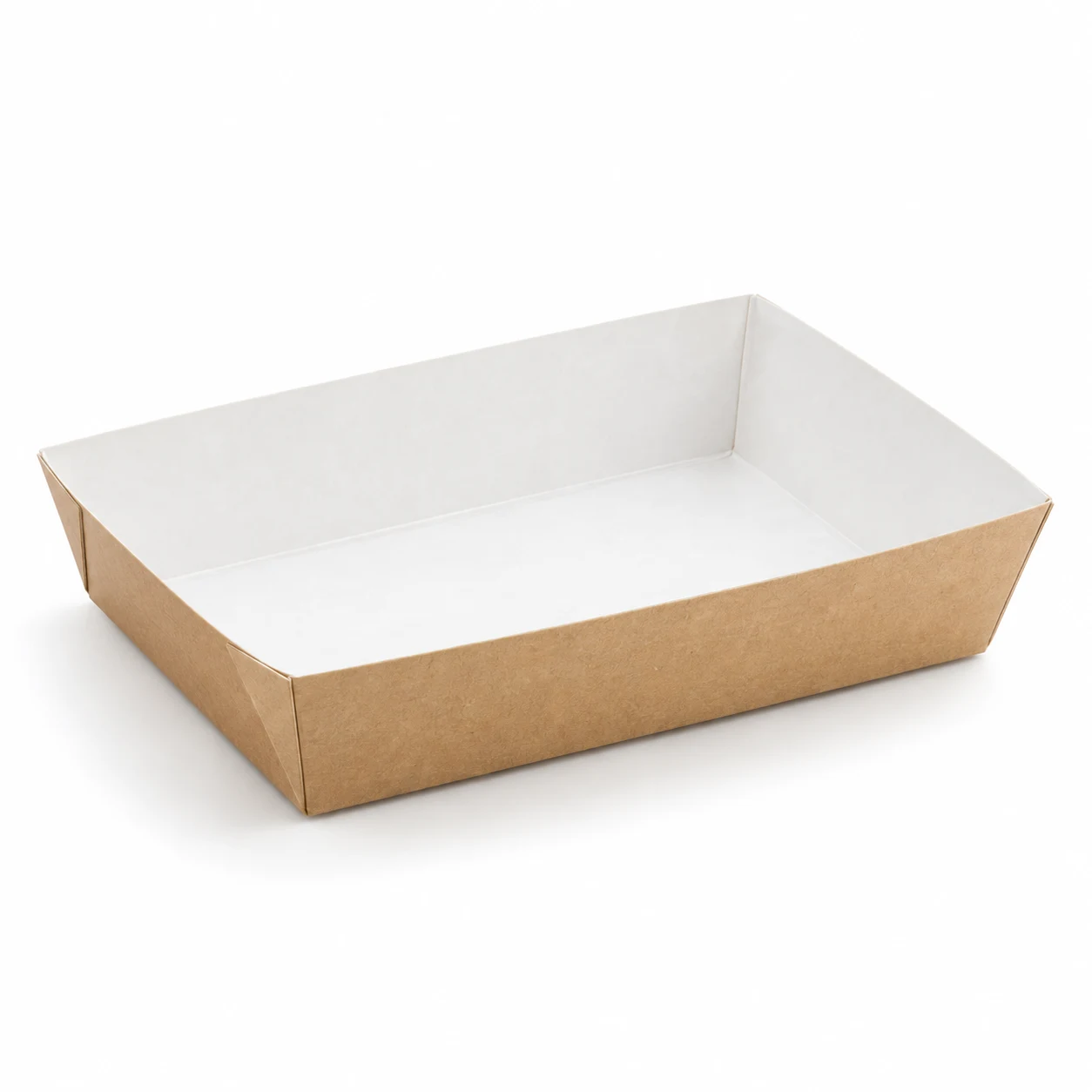
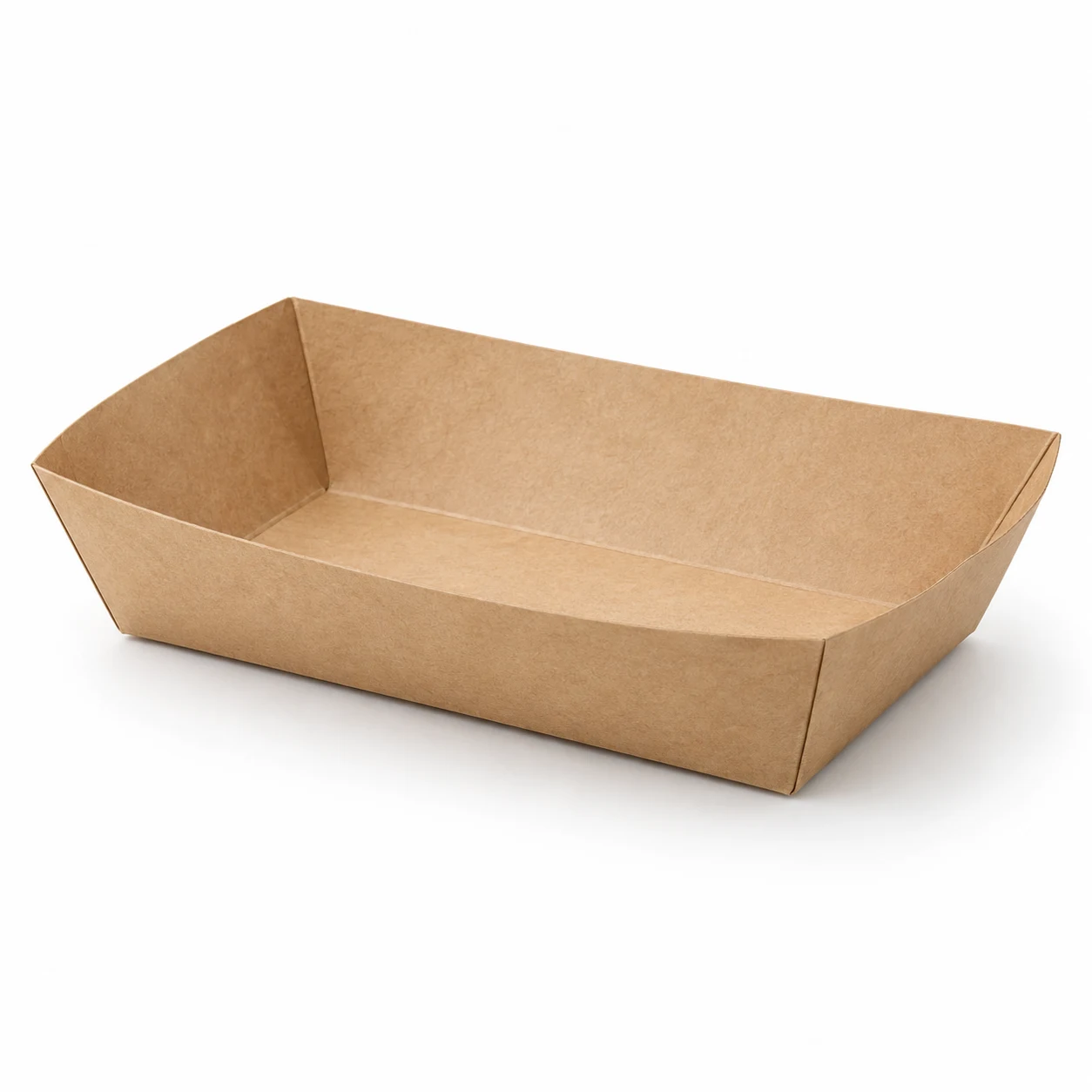
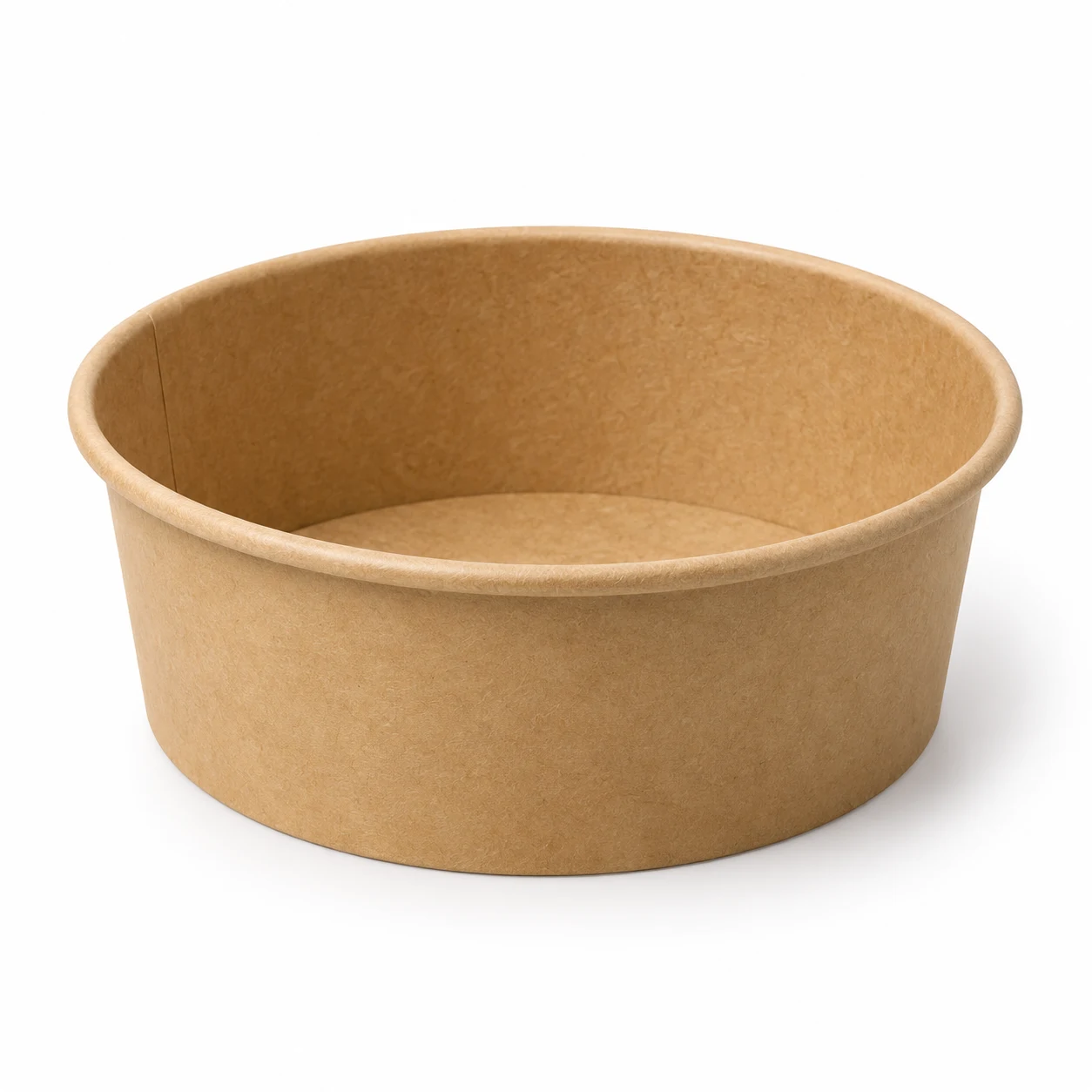
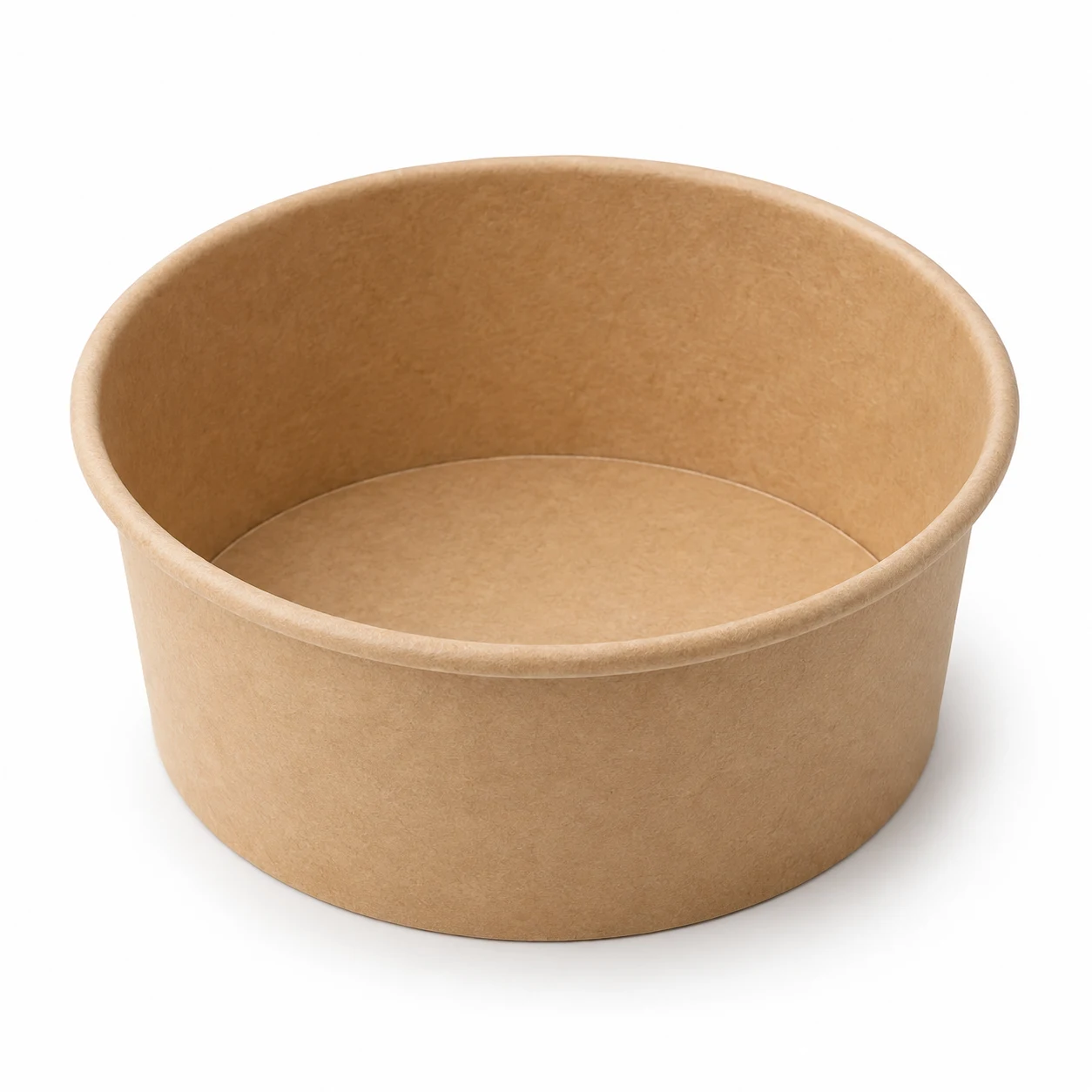
Custom paper box and bowl — made to order: size, shape, coating and printing are all specified per run.
Board containers are the format most takeaway and bakery brands move to when plastic becomes a problem — for regulation, for a retailer, or for their own customers. Board takes print across every face, folds into almost any shape, and biodegrades after use. What it cannot do on its own is hold liquid or grease, which is what the coating is for.
PE coating against PLA coating
A PE coating is cheap, reliable and waterproof, and it compromises the compostability claim — a PE-coated box is recyclable in some streams and compostable in none. A PLA coating keeps the whole container compostable and costs more, and it is less tolerant of very hot, very fatty contents. Which one is right is a question about the claim the brand needs to make and the waste stream the market actually has, not about the food. Kraft or white board, with or without a window.
Ordering
Size, shape, coating and printing are made to order; containers are die-cut and folded, so a new shape means a new dieline rather than a new mould, which makes short runs viable. Barrier is 1 of 5 on both oxygen and moisture — this is a container for food eaten today. Typical uses are bakery packaging, fast food and takeaway boxes, and paper bowls. Artwork and dielines are covered in printing and finishing.
What moves the price
Board grade, coating and print. A PE coating is cheap and reliable; a PLA coating costs more and keeps the compostability claim. Print across multiple faces costs more than a single panel. Tooling is a cutting die rather than a mould, which makes this the cheapest format here to change shape — a new outline is a new die, not a new mould, so seasonal and regional variants are genuinely viable. Volume behaves normally.
Where it goes wrong
A PE coating under a compostable claim, which cannot hold. The second is a PLA coating under very hot, very fatty contents, where it is less tolerant than PE and will soften — the claim and the food have to be reconciled rather than chosen separately. The third is treating board as a barrier: at 1 of 5 on both oxygen and moisture this is a container for food eaten today, and a bakery item sold with a two-week shelf life needs something else.
Where custom paper box and bowl is used
Bakery, fast food, takeaway and food service — the categories most likely to be asked for a plastic-free pack by a retailer, a regulator or their own customers. The snack and bakery page covers the trade-offs, and export packaging compliance what a compostable claim has to prove and where. Because tooling is a cutting die rather than a mould, seasonal and regional shapes are viable in a way moulded packaging is not.
What to send us for a quotation
A quotation for custom paper box and bowl is written against a specification, so the more of this you can send, the closer the first number is to the real one: which structure, or the shelf life and the product so we can choose one — Paper / board are available here; the temperature the pack has to survive, from filling through to how the customer opens it (ambient use for this product); the line it runs on — this one is specified for die cutting and Coating / laminating; which options you want fitted: pE coated, PLA coated and Kraft; the values for size, Shape, Coating and Printing.
Send the fill weight and the quantity with it. Where you already buy something similar, a sample is worth more than a description — we measure what is actually there rather than quoting against how it was once written down.
Food-contact and export requirements are set out in FDA 21 CFR 177, the US rule for food-contact polymers; the declarations for this structure are issued with the order.