Export packaging compliance stops more shipments than quality does. 4 things have to be right: the material, the label, the documents and, if there is timber anywhere, the fumigation stamp.
A pack that fails a quality check is a problem between you and your supplier. A pack that fails at a border is a problem with a demurrage clock running. Compliance is dull, predictable, and the cheapest thing on this list to get right in advance.
Food contact: what the claim means
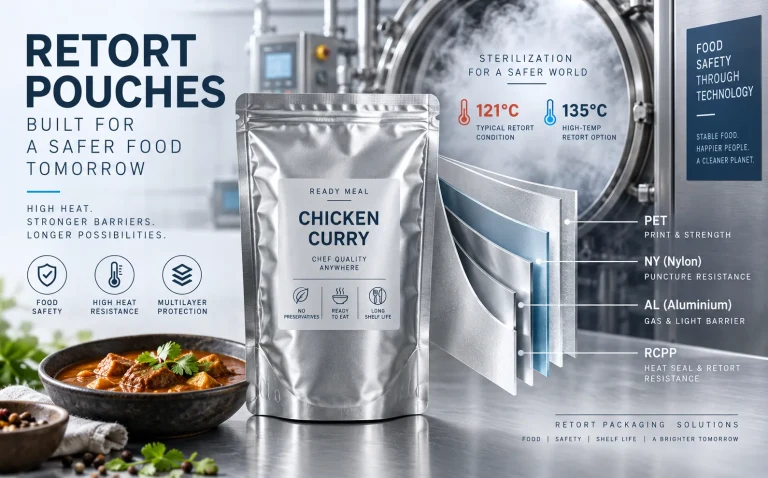
Food-grade is not one standard. In the United States it means compliance with the relevant FDA regulations for the specific polymer and use; in China it means the GB standards; in the EU it means Regulation 1935/2004 and the plastics regulation beneath it.
The claims are close but not identical, and a declaration written for one market does not automatically satisfy another. Ask for the declaration of compliance that names your market and your use — including whether it covers hot fill, retort, or fatty foods, because those are tested separately.
The ALLWINS structures are available in FDA and GB food-grade specifications, and every product page states what its structures comply with.
What goes on the pack
Labelling rules belong to the destination, not the origin. Common requirements: the product name in the local language, net weight in the local unit, ingredients and allergens, the importer’s name and address, country of origin, and a batch code and date in an agreed format.
Some markets add their own: halal certification marks in much of the Middle East, specific recycling marks in the EU, Arabic alongside English in the Gulf.
These are your responsibility, not the printer’s. Send artwork that is already correct, because a print run is a poor place to discover a labelling rule.
Substances and restrictions
REACH governs chemical substances in goods placed on the EU market, and RoHS restricts specific hazardous substances. Heavy-metal limits on packaging inks and pigments apply in most developed markets.
For most flexible packaging these are satisfied as a matter of course by any competent converter, but the paperwork still has to exist. Ask for it at the quotation stage rather than when the container is at sea.
The documents that travel
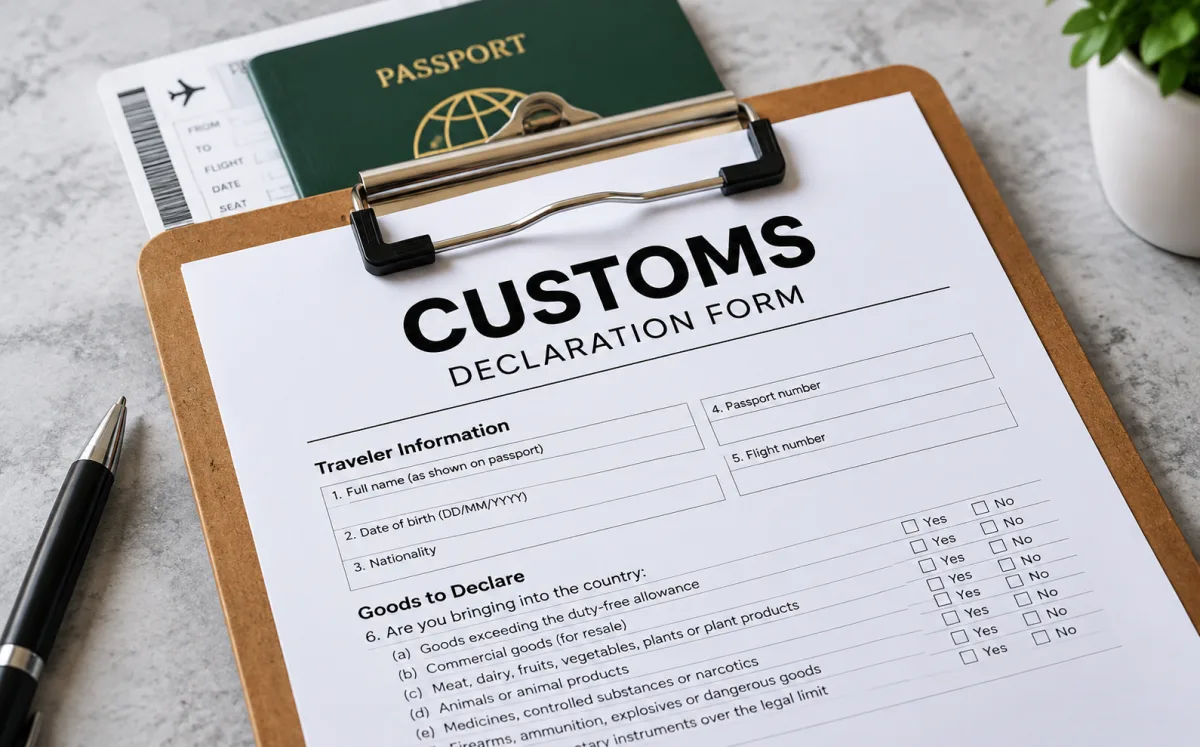
Commercial invoice, packing list, bill of lading or air waybill, and a certificate of origin cover the ordinary case. Food-contact materials usually add a declaration of compliance and often a certificate of analysis for the batch.
Some destinations require pre-shipment inspection by a nominated body, and a few require legalisation of documents at a consulate. Both take time and neither can be done retrospectively.
Ask your own customs broker for their list before production finishes. They know your port.
Wood, pallets and the one that surprises people
Solid wood packaging — pallets, crates, dunnage — has to be heat-treated or fumigated and marked to ISPM 15. An unmarked wooden pallet can hold an entire container.
Plywood and processed board are exempt, which is why so much export packing uses them. If your goods ship on wood, confirm the treatment mark before loading.
Getting it right in advance
Decide the destination market before artwork is finalised, ask for the declarations that name that market, and give your broker the document list early.
None of it is difficult. All of it is expensive to discover late.
The standards behind this are public: see ISPM 15, the standard timber packaging is treated and stamped to.
Export packaging compliance in short
- Food contact is a market-by-market claim: FDA 21 CFR, the GB 4806 series and EU 1935/2004 are not interchangeable.
- The label carries obligations that differ by destination and change more often than the product does.
- A declaration of compliance names the regulation, the contact conditions and who is making the statement.
- Timber packaging falls under ISPM 15, and an uncertified crate holds the whole container.
Key Information
Export packaging compliance stops more shipments than quality does. Four things have to be right: the material, the label, the documents, and — if there is any timber in the shipment — the ISPM 15 heat-treatment stamp.
- Food-contact plastics are governed by FDA 21 CFR in the United States and by Regulation (EC) 1935/2004 and Regulation (EU) 10/2011 in the European Union.
- ISPM 15 requires solid wood packaging to be heat treated or fumigated and marked; customs inspects the mark, not the paperwork.
- A declaration of compliance travels with the shipment; it is not issued afterwards on request.
- Migration test reports are specific to a structure and a food type, so one report does not cover a whole catalogue.
- A pack that fails a border check is held by a third party with no commercial interest in resolving it quickly.
What documents does a food packaging shipment need?
A declaration of compliance for the food-contact material, migration test reports for the structure, and — where timber is present — the ISPM 15 mark on the wood itself.
What is ISPM 15 and does it apply to my shipment?
It is the international standard for solid wood packaging. It applies to pallets, crates and dunnage, not to plywood or processed board, and the mark has to be on the timber.
Is a supplier's 'food grade' claim enough?
No. Food grade is a claim, not a standard. What travels is a declaration naming the regulation, the structure and the food types it was tested against.