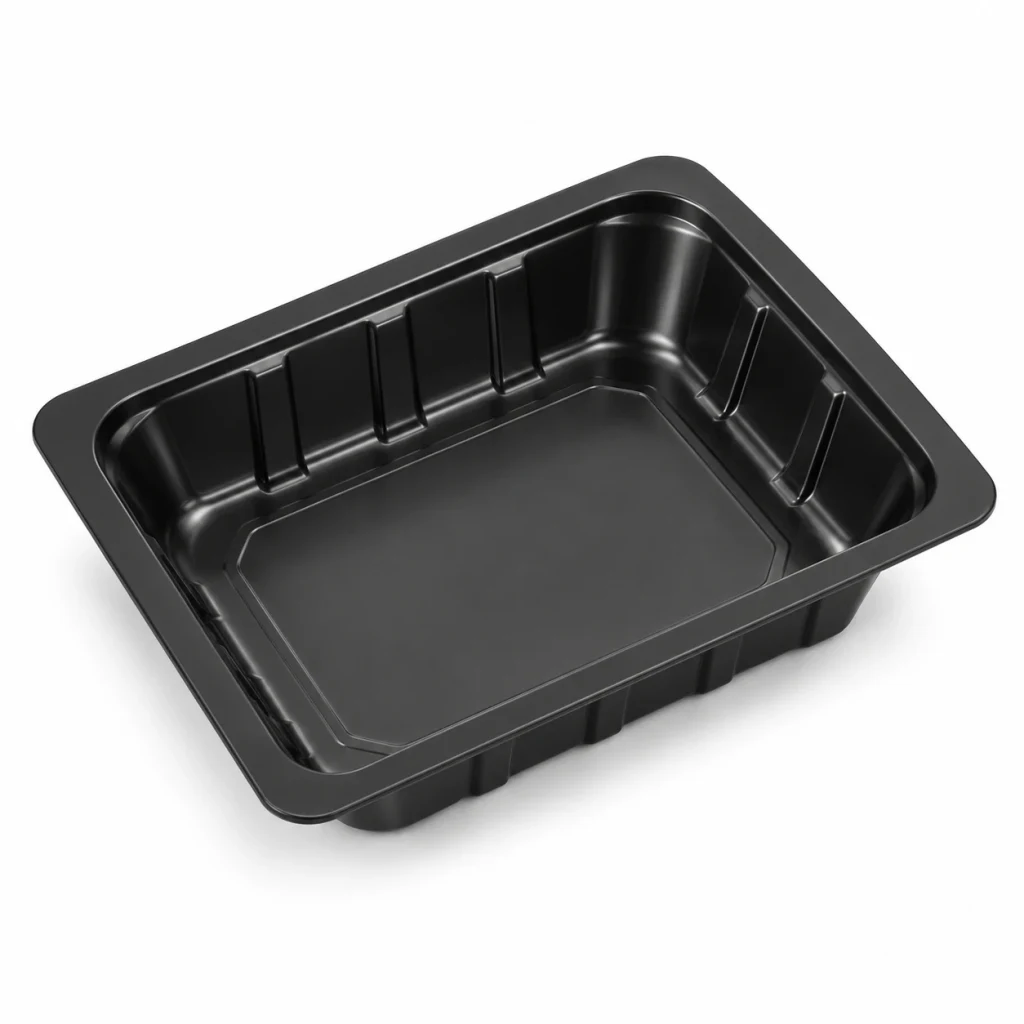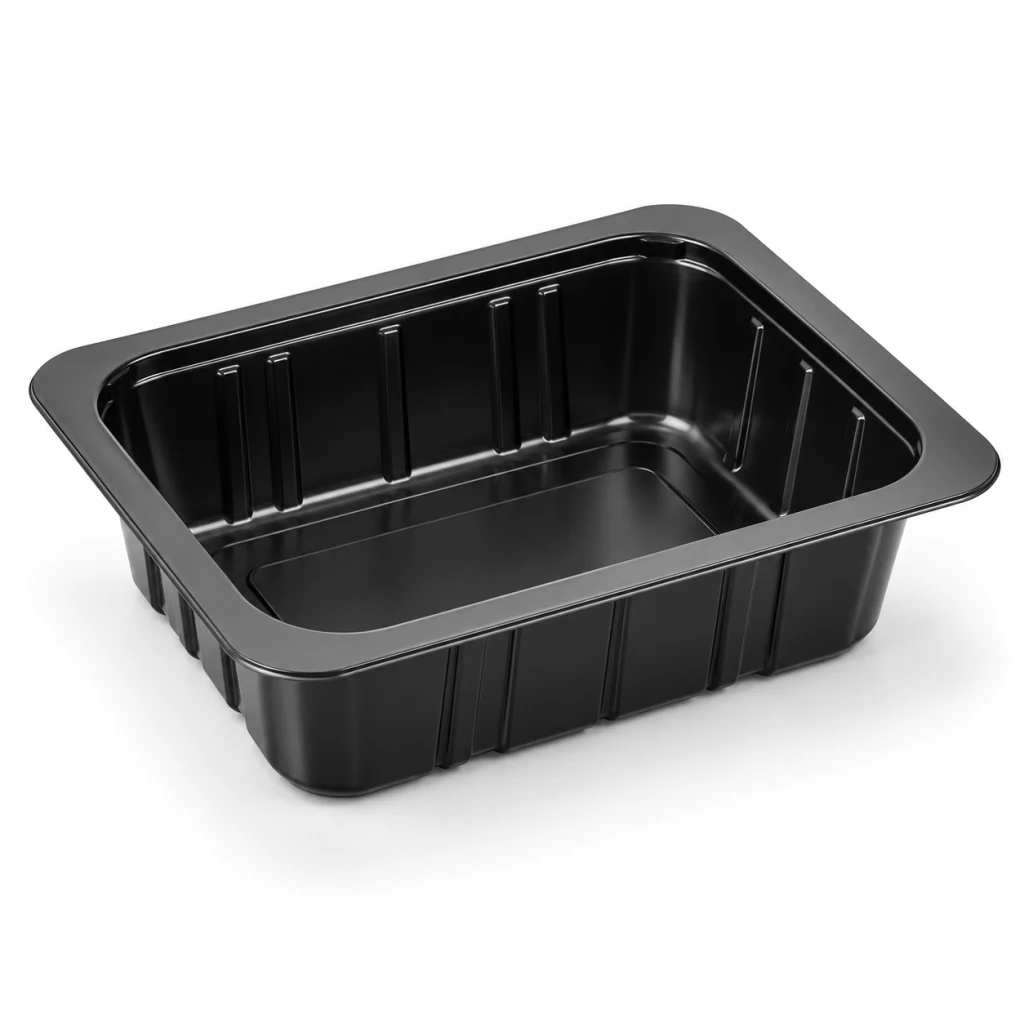
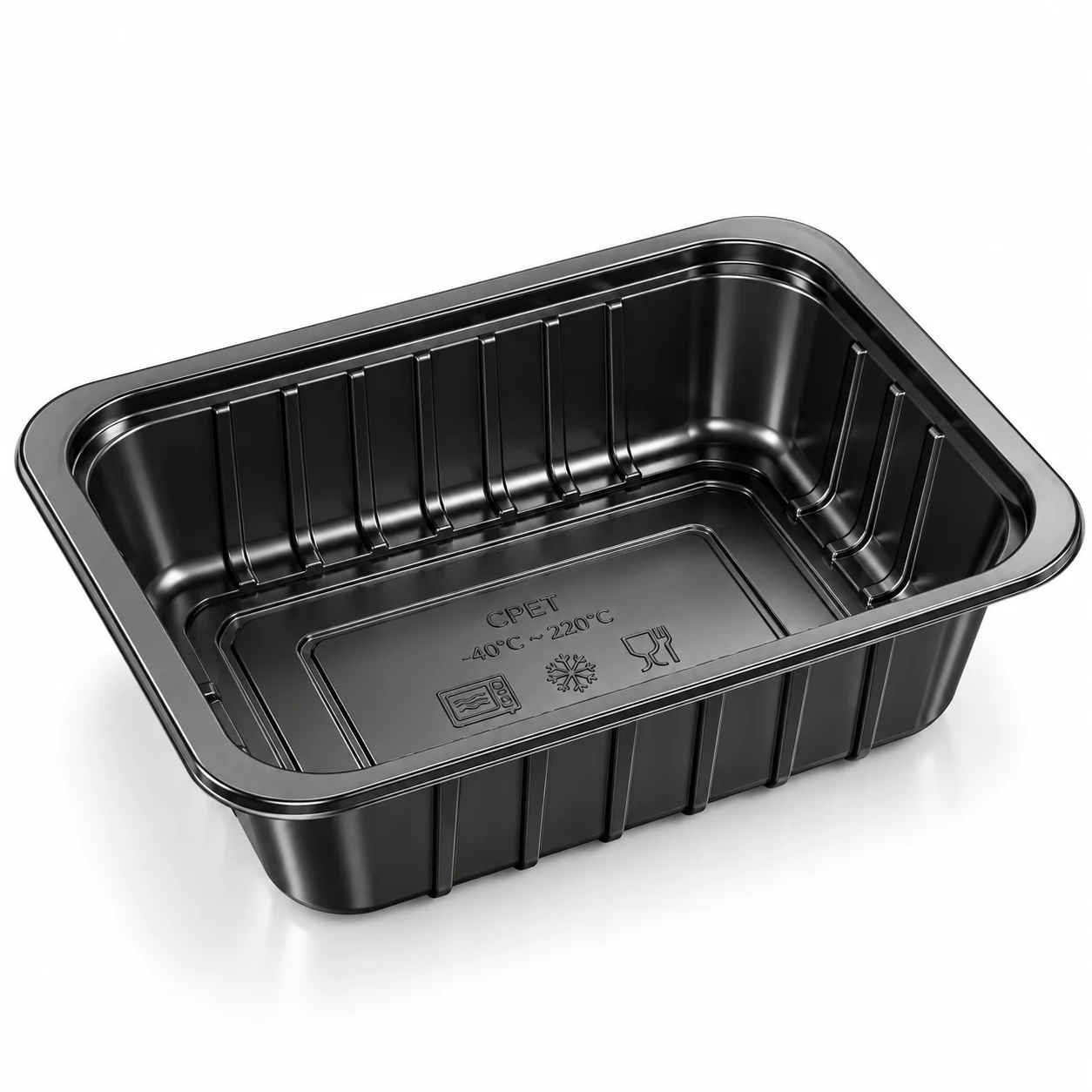
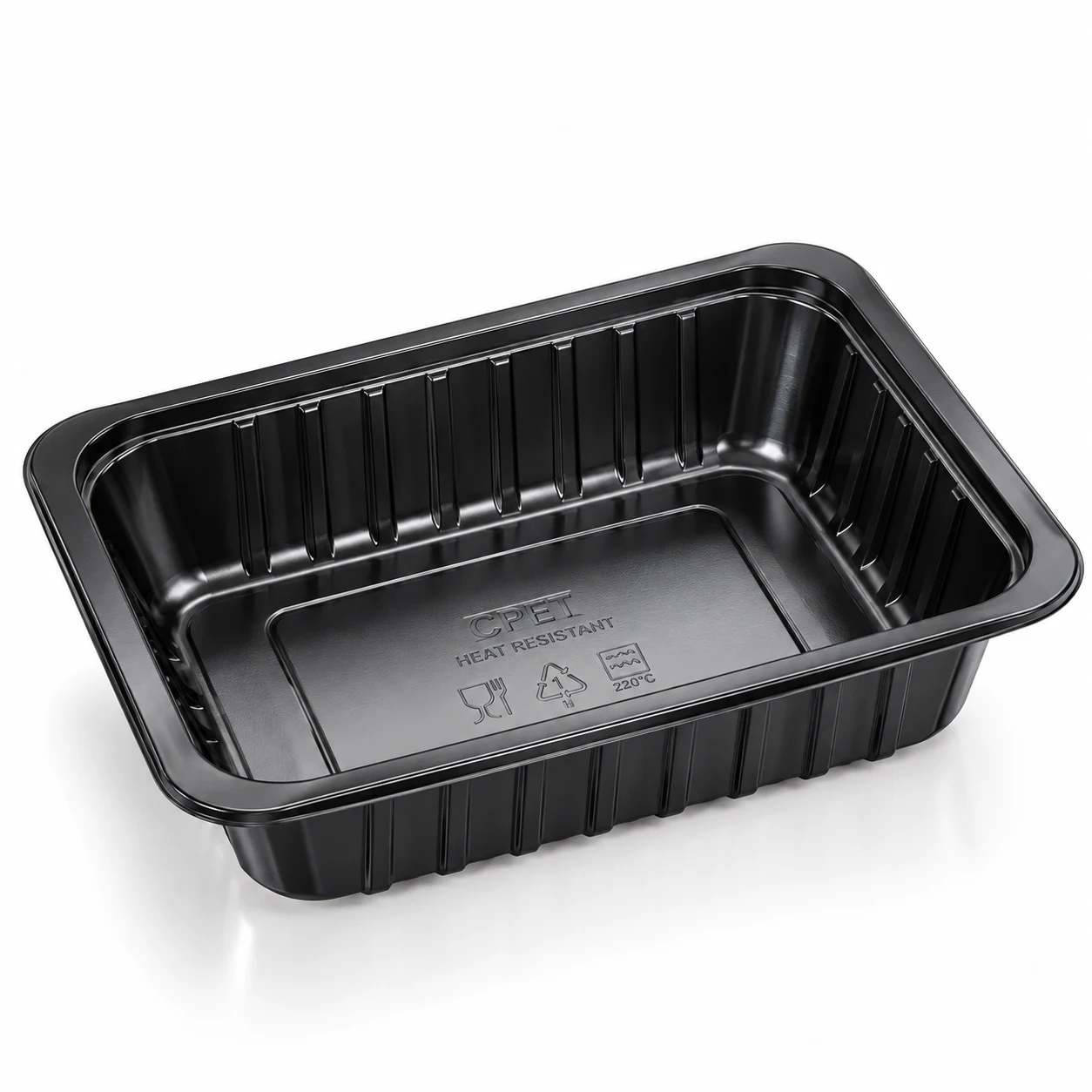
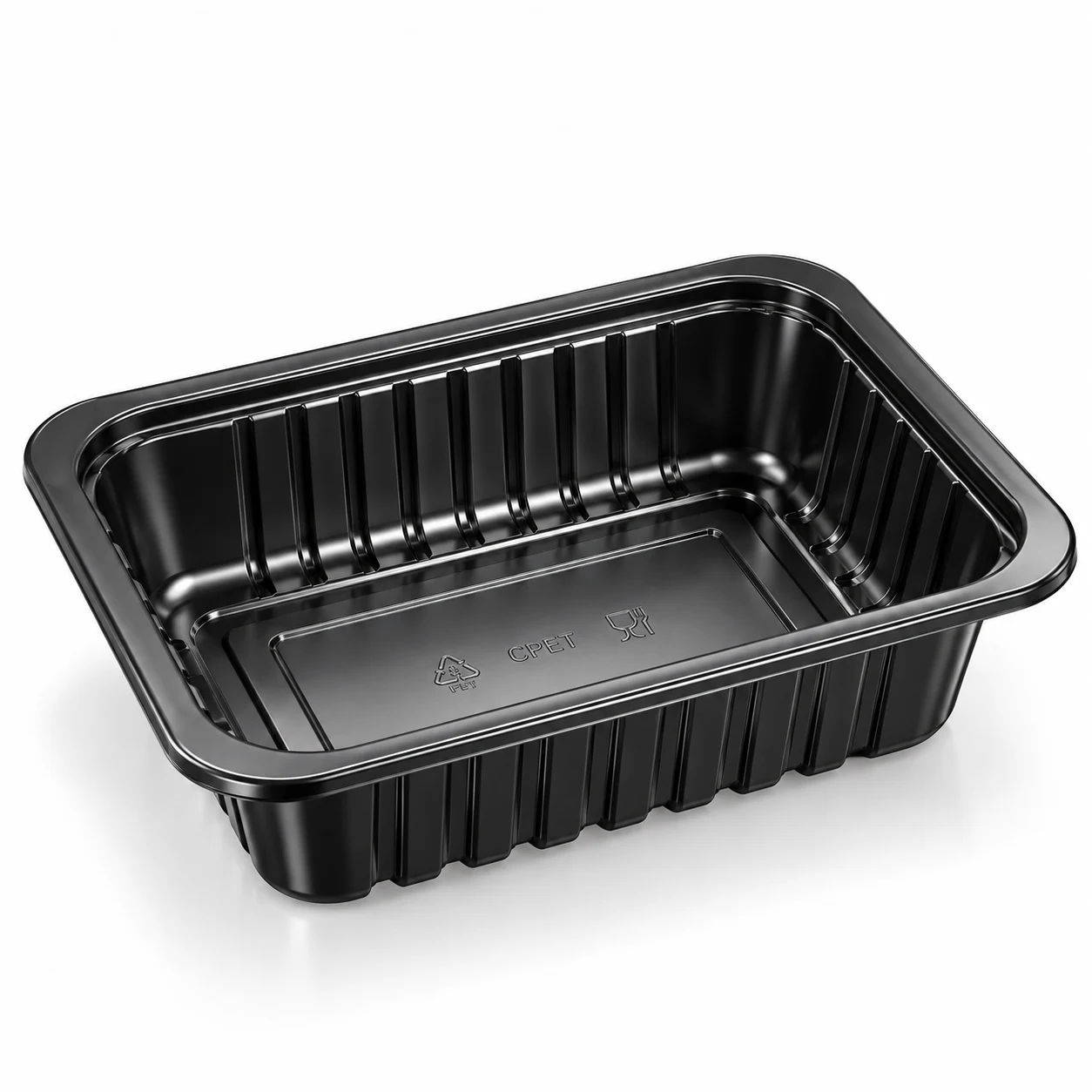
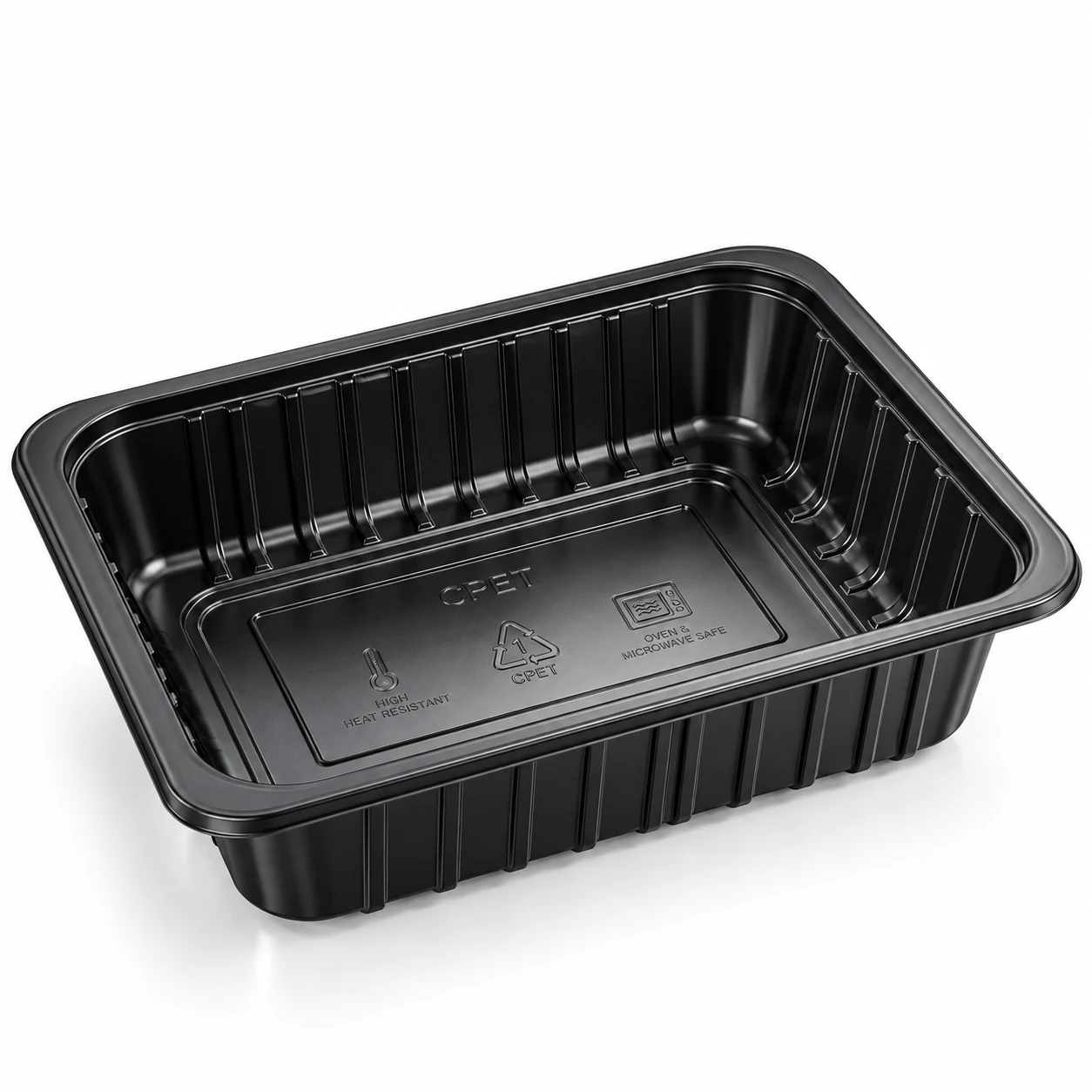
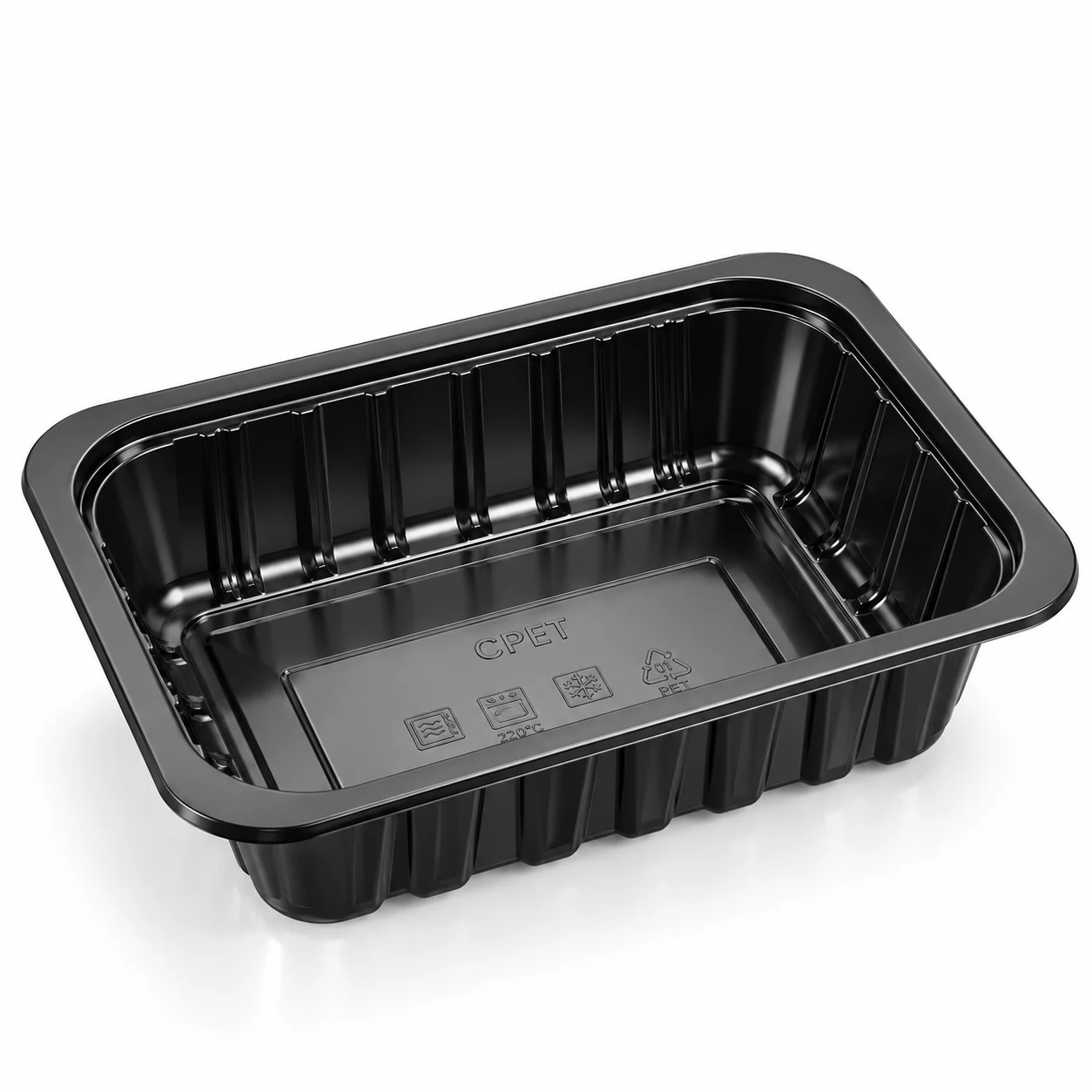
Custom cpet tray — made to order: size, depth, compartments and colour are all specified per run.
CPET is PET that has been crystallised — held at temperature during forming until the polymer reorganises into a heat-stable structure. That one process change takes the same material from a 60 °C ceiling to 220 °C, which is why a CPET tray is the only thing in this catalogue that goes from a freezer into a conventional oven and comes out intact with a ready meal in it.
Why it is usually black
Crystallised PET is opaque rather than clear, and the usual pigment is black — partly because it hides the pigment needed for crystallisation, and partly because food photographs well against it. White is available. The trade-off against a clear tray is that the product has to be sold by the sleeve or the lidding film rather than through the base. In exchange, barrier is 5 of 5 on both oxygen and moisture, the best of any tray we make.
Specifying one
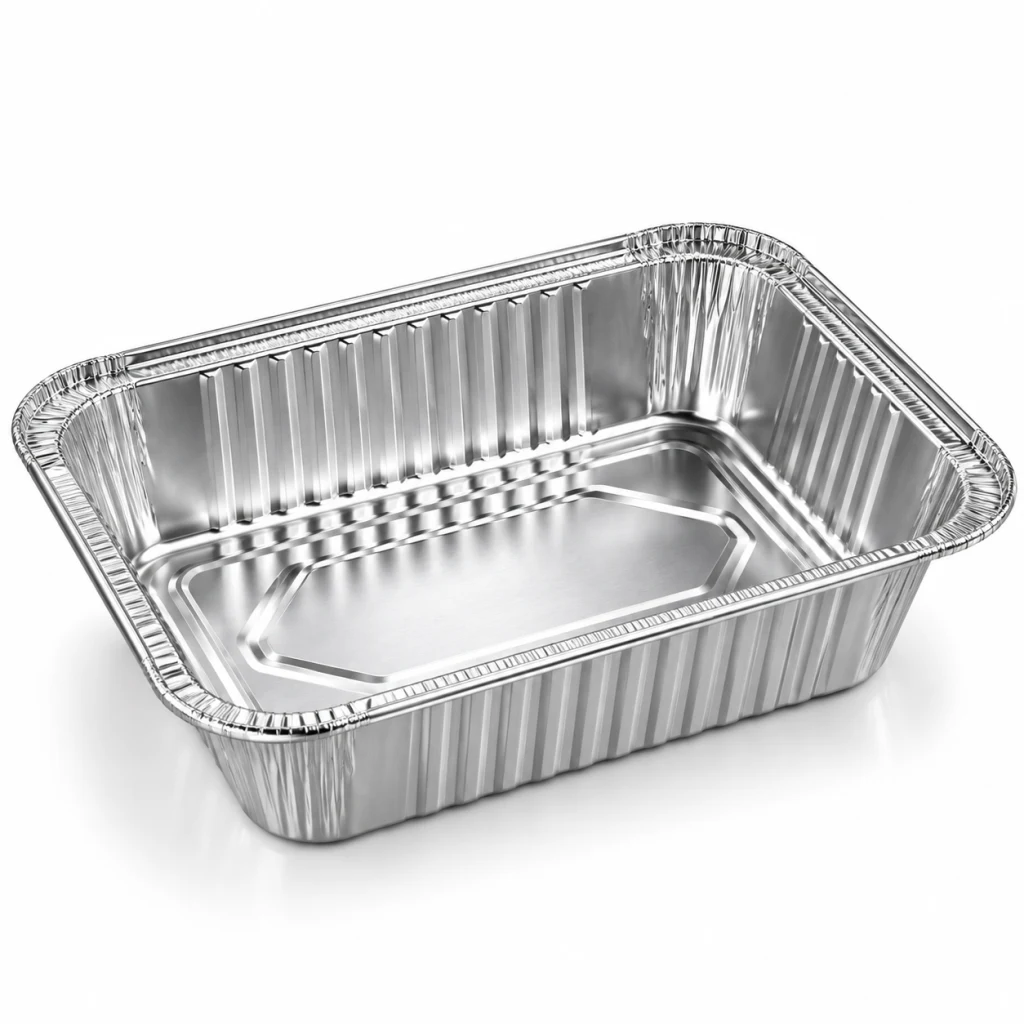
Size, depth, compartments and colour are made to order, with an ovenable lid where the pack is reheated covered. Temperature range is −40 to 220 °C, microwave and conventional oven safe. Typical uses are ready meals, hot meals and baked goods. For chilled display where clarity matters more than heat, see the PET tray; for the highest oven temperatures, the aluminium foil tray. FDA and GB food grade.
What moves the price
The material and the process. Crystallising PET during forming takes longer and runs hotter than forming APET, so a CPET tray costs more than a PET one of the same size before anything else is considered. Tooling, depth and compartments behave as elsewhere. An ovenable lidding film is a further increment and a necessary one if the pack is reheated covered. The comparison worth making is against a foil tray, which goes hotter and costs differently, rather than against a chilled tray it cannot replace.
Where it goes wrong
Paying for the oven range and then not using it. If the range is microwave-only, a PP tray does the job for less. The second is specifying a standard lidding film on an ovenable tray, which produces a pack whose instructions it cannot survive — a liability question as much as a technical one. The third is expecting a clear tray: crystallised PET is opaque, and a brand planning to sell through the base has to be told before tooling.
Where custom cpet tray is used
Frozen and chilled ready meals reheated in their own tray, and bakery ranges finished in an oven. It is the only plastic tray here that goes from a freezer into a conventional oven, which is the whole reason it costs more than PP — the ready meal page sets out when that range is worth paying for and when a PP tray or an aluminium foil tray answers better.
What to send us for a quotation
A quotation for custom cpet tray is written against a specification, so the more of this you can send, the closer the first number is to the real one: which structure, or the shelf life and the product so we can choose one — CPET are available here; the temperature the pack has to survive, from filling through to how the customer opens it (−40 to 220 °C for this product); the line it runs on — this one is specified for thermoforming and Heat sealing; which options you want fitted: black, White and Multi compartment; the values for size, Depth, Compartments and Colour.
Send the fill weight and the quantity with it. Where you already buy something similar, a sample is worth more than a description — we measure what is actually there rather than quoting against how it was once written down.
Food-contact and export requirements are set out in FDA 21 CFR 177, the US rule for food-contact polymers; the declarations for this structure are issued with the order.