
Snack packaging and bakery packaging for fast lines and short shelf lives
Snack packaging is costed differently from everything else in this catalogue, because snack and bakery products turn over quickly, which changes the whole calculation. The barrier that a coffee roaster needs is wasted here; what matters instead is line speed, print quality and unit cost, because the pack is made in millions and the product is gone in weeks.
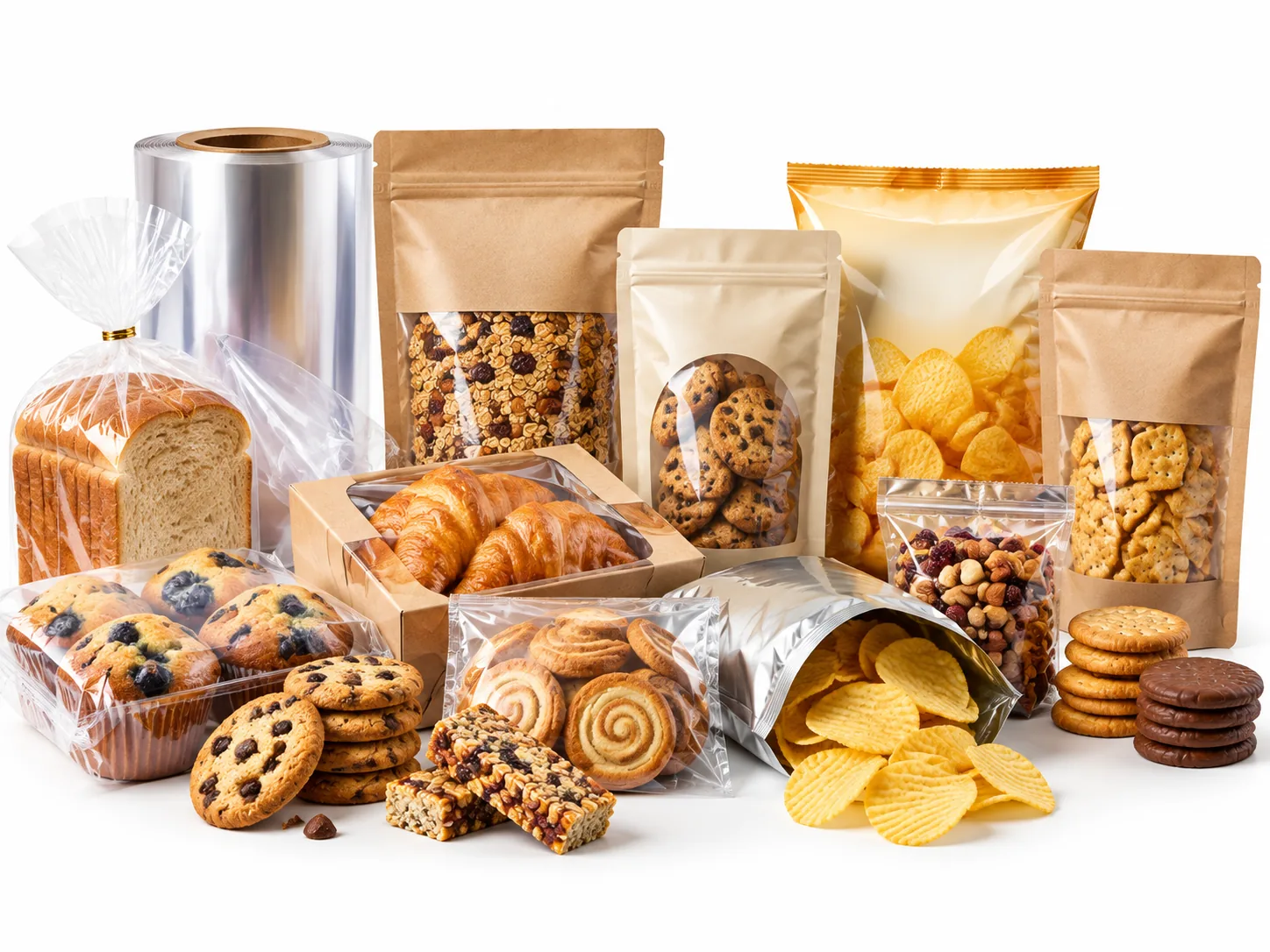
Roll stock for flow wrap and vertical form-fill-seal
Ten-colour gravure and digital printing
Kraft and biodegradable structures for bakery
Formats costed for volume rather than shelf life
What this category asks of a pack
Four demands, and none of them is barrier.
The line runs fast, so the film has to
A flow-wrapper or a vertical form-fill-seal machine will out-run pre-made pouch filling several times over, which is where the unit cost comes from. That means roll stock with a seal initiation temperature matched to your jaws and a coefficient of friction matched to your former — specifications that get left off enquiries and then cause downtime.
Print is the product
Snacks are bought on impulse from a crowded shelf, so the artwork does the selling. Ten-colour gravure gives the reproduction and the run length; digital printing gives short runs, seasonal variants and no cylinder cost. Which is right is a volume question rather than a quality one.
Crisps need stiffness, not oxygen barrier
Puffed and fried snacks fail by going soft, not by oxidising within their short life, so moisture barrier and film stiffness matter more than an aluminium ply. Over-specifying the structure here is the most common way to pay for packaging nobody needs.
Bakery is sold on looking fresh
Bread, pastry and cake are judged by sight and by give, which means a clear window or a clear film, and often a perforated or breathable structure so the product does not sweat inside its own pack.
Formats for snack packaging
The formats this category runs on.
Back seal pouch
The pillow pack, formed on your own line from roll stock at high speed, with uninterrupted print across the front.
Three side seal pouch
The most economical printed pouch for medium volumes, sample packs and single portions.
Stand-up pouch
Shelf presence for premium snack lines, with a zip where the bag is opened more than once.
BOPP film
The stiff, clear, highly printable outer ply behind most snack laminates, plain, matt or metallised.
Paper box and bowl
Board containers for bakery and takeaway, printable on every face and biodegradable after use.
Printed carton
Retail and gift presentation that ships as well as it displays, laminated, spot-UV or foiled.
Structures that suit it
BOPP/PE is the workhorse: a stiff, glossy, highly printable outer laminated to a polyethylene sealant. PET/CPP is specified where the pack is filled hot or the product is cooked in it. For bakery, kraft paper structures and PLA/PBAT films give the natural look and the compostable claim, at a barrier of 1 of 5 — which is enough for a product eaten within days and not for one that sits. The films are in films and rolls; printing and finishing covers gravure, digital and the finishes available.
What has to be provable
Food-contact declarations to FDA or GB standards apply to every structure here. Where the pack carries a compostable or recyclable claim — common in bakery — that claim has to be provable in the market where the pack is thrown away rather than the one where it is filled, and the certification differs between them. Allergen and nutritional labelling is the brand’s responsibility; what we supply is the material declaration and the printed substrate that carries it. See quality and compliance.
The rules themselves are public: FDA 21 CFR 177, the US list of permitted food-contact polymers.
Questions we are asked about snacks and bakery
Do I need a high-barrier structure for crisps?
Usually not. Crisps fail by going soft rather than by oxidising within their shelf life, so moisture barrier and stiffness matter more than an aluminium ply. A metallised film is worth it for long shelf lives and fatty products.
Gravure or digital printing?
Volume decides it. Gravure needs cylinders, so it suits long runs and repeat artwork; digital has no cylinder cost, so it suits short runs, variants and launches. Ask for both prices with your quantity.
What do you need to specify roll stock?
The machine, the web width, the fill weight and the seal temperature your jaws run at. Film specified against a machine runs; film specified against a product sometimes does not.
Can bakery packaging be compostable?
Yes — PLA/PBAT films and PLA-coated board are both available and certifiable. The barrier is low, which suits bakery and does not suit anything with a long shelf life.
Can I have a window in a printed pouch?
Yes, as a registered clear panel in the print or as a die-cut window with a clear film behind it. Both are specified at artwork stage.
What is the most economical snack format?
Back seal roll stock, if you have a line that runs it. If you are filling pre-made pouches, the three side seal pouch is the cheapest printed format.
Send the machine and the run length
For this category the filling line and the volume decide more than the product does. With those and the shelf life, we can quote roll stock or pre-made against the same brief.
Key Information
Snack and bakery packaging is costed differently from the rest of the catalogue because the product turns over quickly. A shorter shelf life means a lighter barrier, and the saving goes into print and line speed instead.
- Fast turnover allows a lighter barrier than long-shelf-life categories, which changes the whole cost calculation.
- Metallised BOPP and clear BOPP structures are common where shelf life is measured in weeks.
- High line speeds make coefficient of friction and seal initiation temperature critical.
- Bakery products often need an anti-fog film or a breathable structure rather than a high barrier.
- Print quality carries more weight in this category because purchase is impulse-driven.
What barrier does a snack pack need?
Usually far less than a long-life category. Where the shelf life is weeks rather than a year, metallised or clear BOPP is often enough, and the budget moves to print and line speed.
Why does line speed affect the film choice?
Because faster jaws mean less dwell time. The film's seal initiation temperature and coefficient of friction have to suit the machine or the line runs below its rated speed.
What suits fresh bakery?
Often a breathable or anti-fog structure rather than a high barrier, because trapped moisture spoils the product faster than oxygen does.