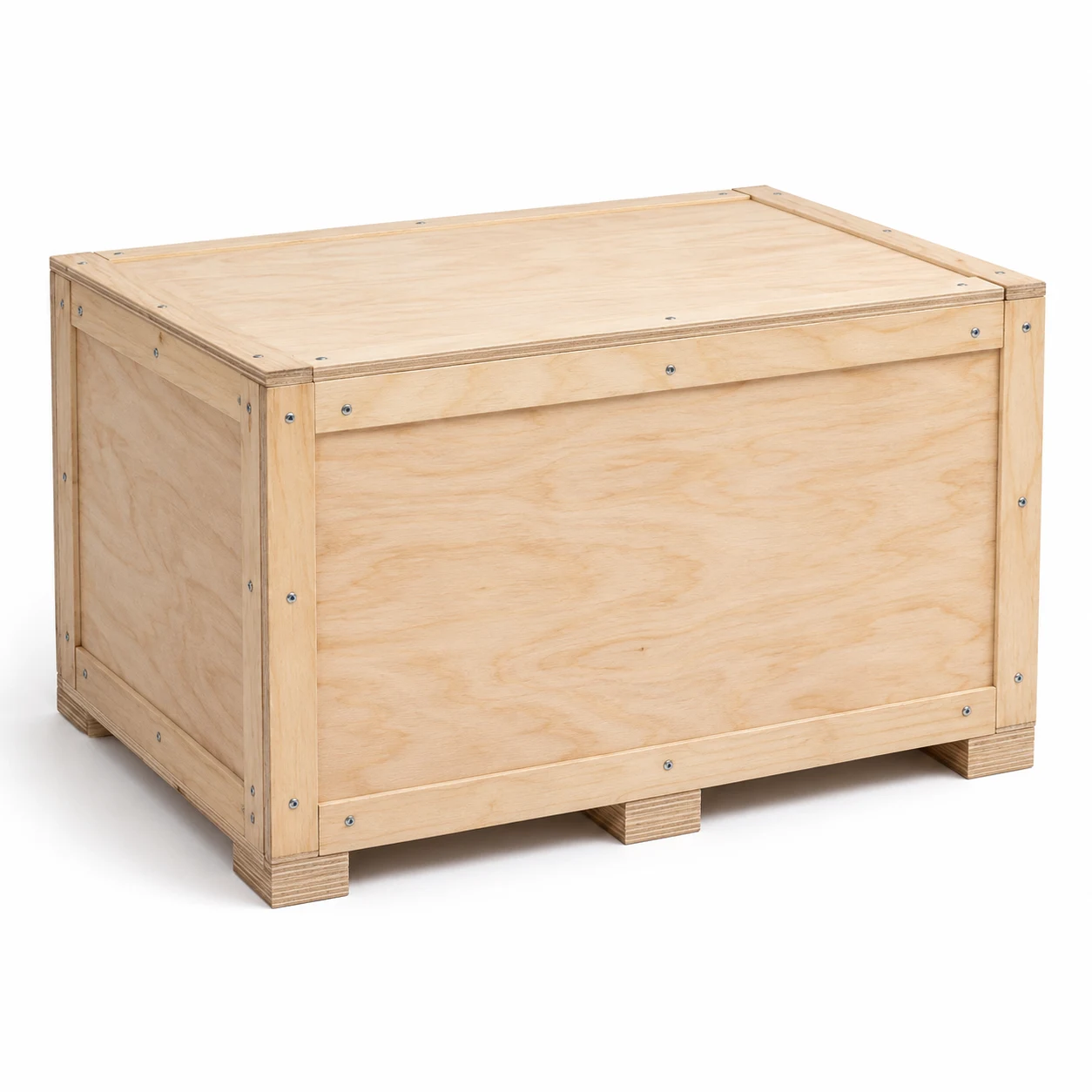
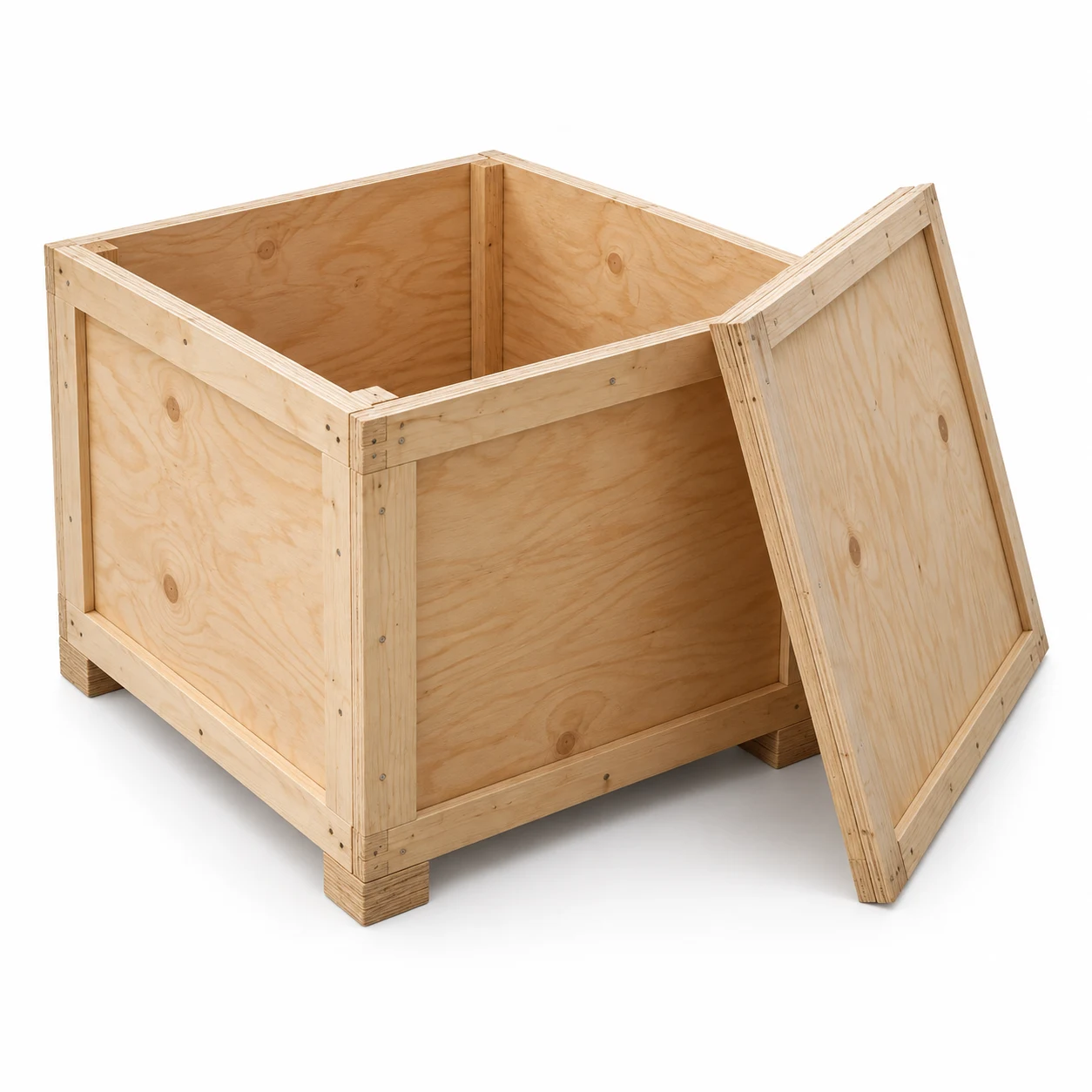
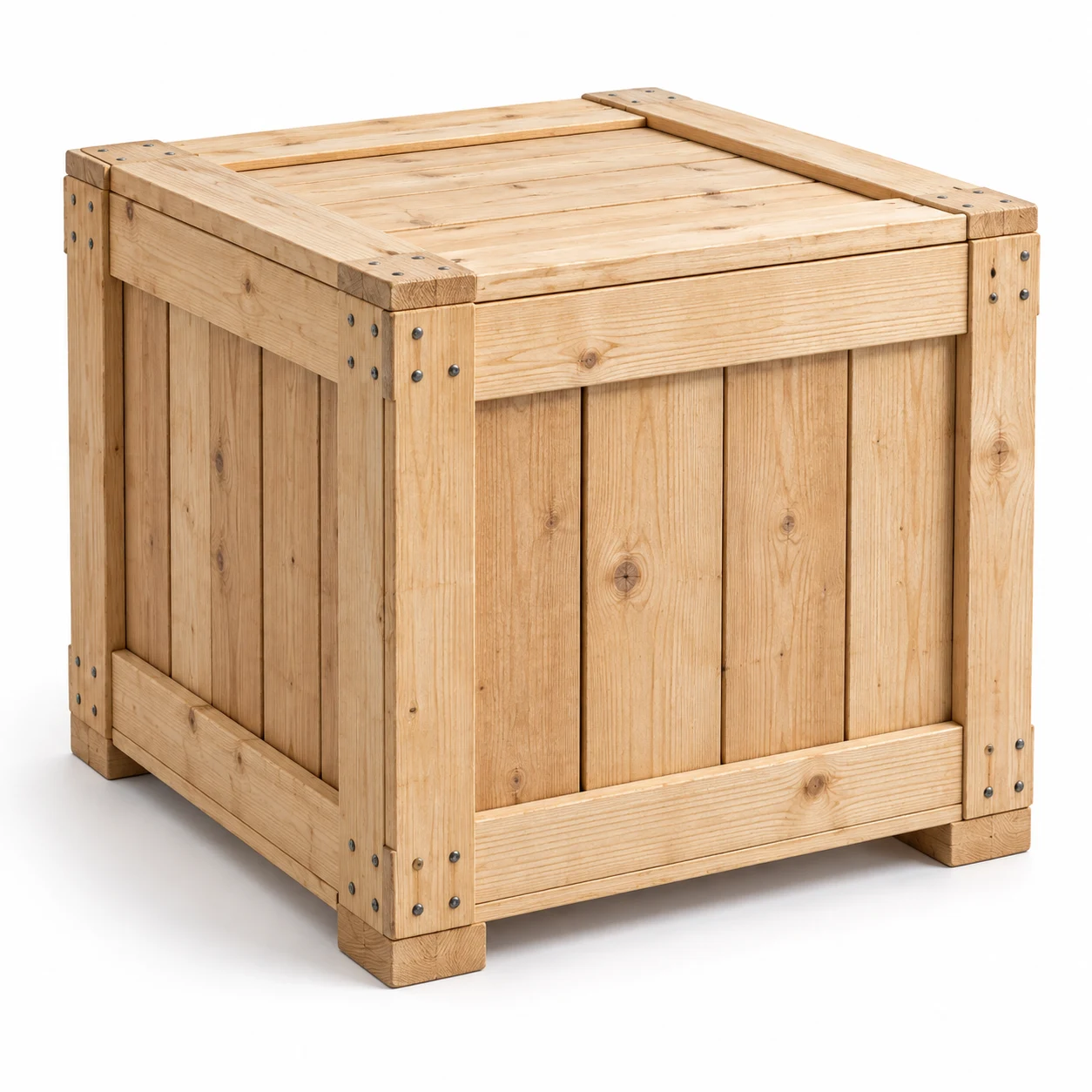
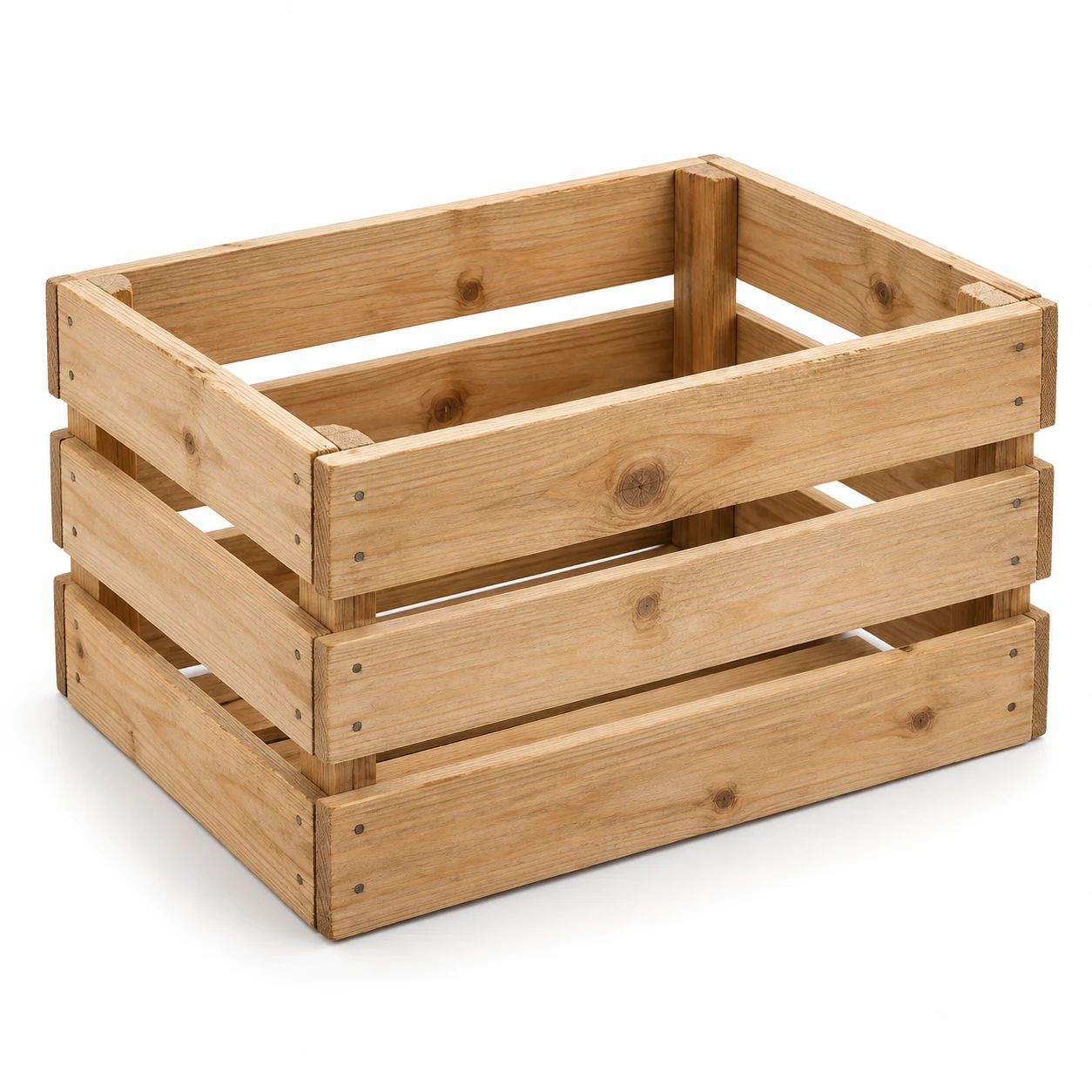
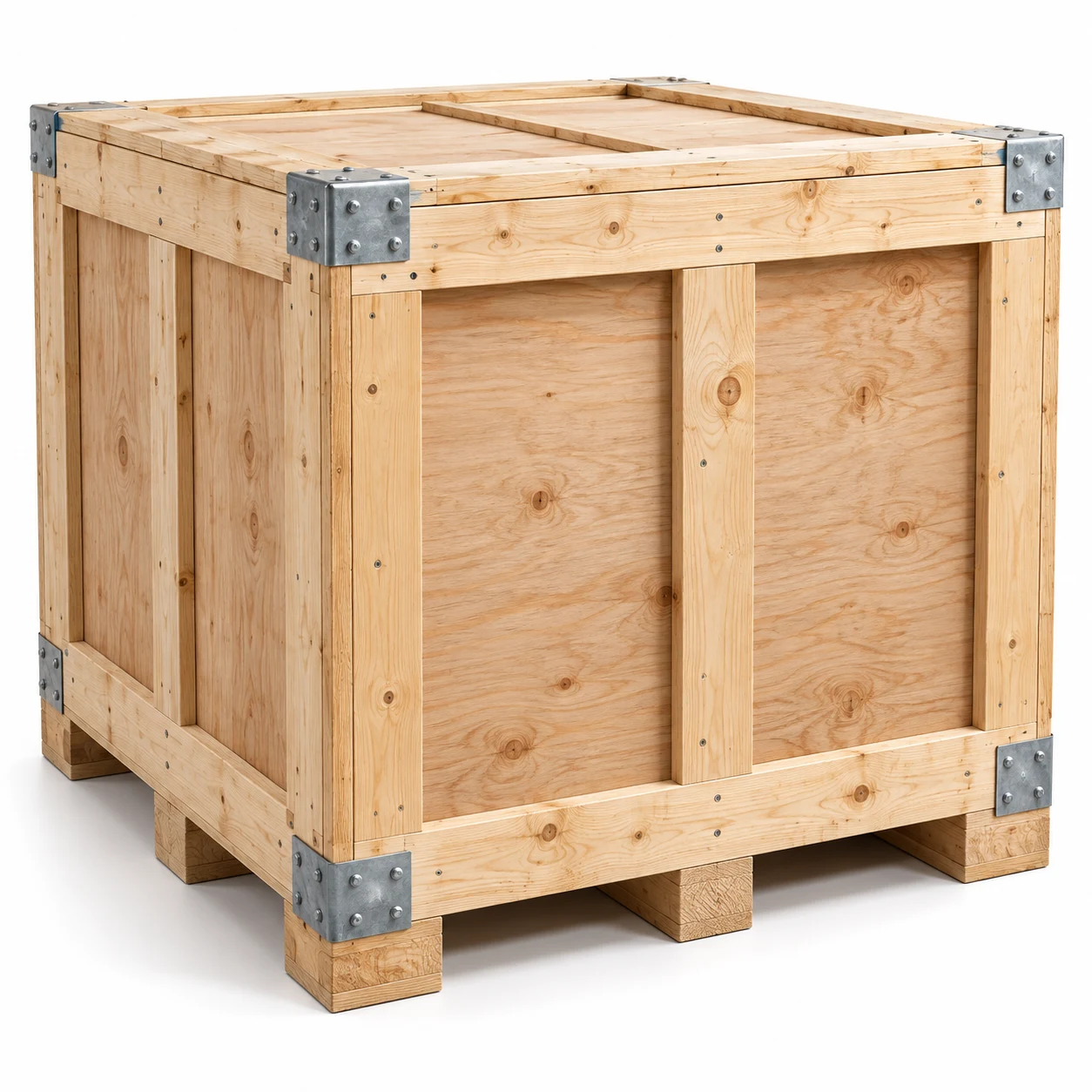
Custom wooden case and pallet — made to order: size, timber, construction and internal bracing are all specified per run.
Some loads are simply too heavy or too valuable for board. Machinery, precision instruments and large equipment need a case that is structurally rigid under both static load and the dynamic shocks of a sea journey, that can be braced internally so nothing moves, and that can be reused across several shipments. That is still timber.
Plywood, solid timber and internal bracing
Plywood cases are lighter, dimensionally stable and give a cleaner finish; solid timber crates are stronger per unit cost and easier to repair. Closed cases protect from weather and sight; open crates are lighter, cheaper and let the goods be inspected. What matters most in practice is the internal bracing — a case that holds a machine rigidly against its own base survives a journey that one relying on the outer walls does not. Compression strength rates 5 of 5.
Fumigation, and ordering
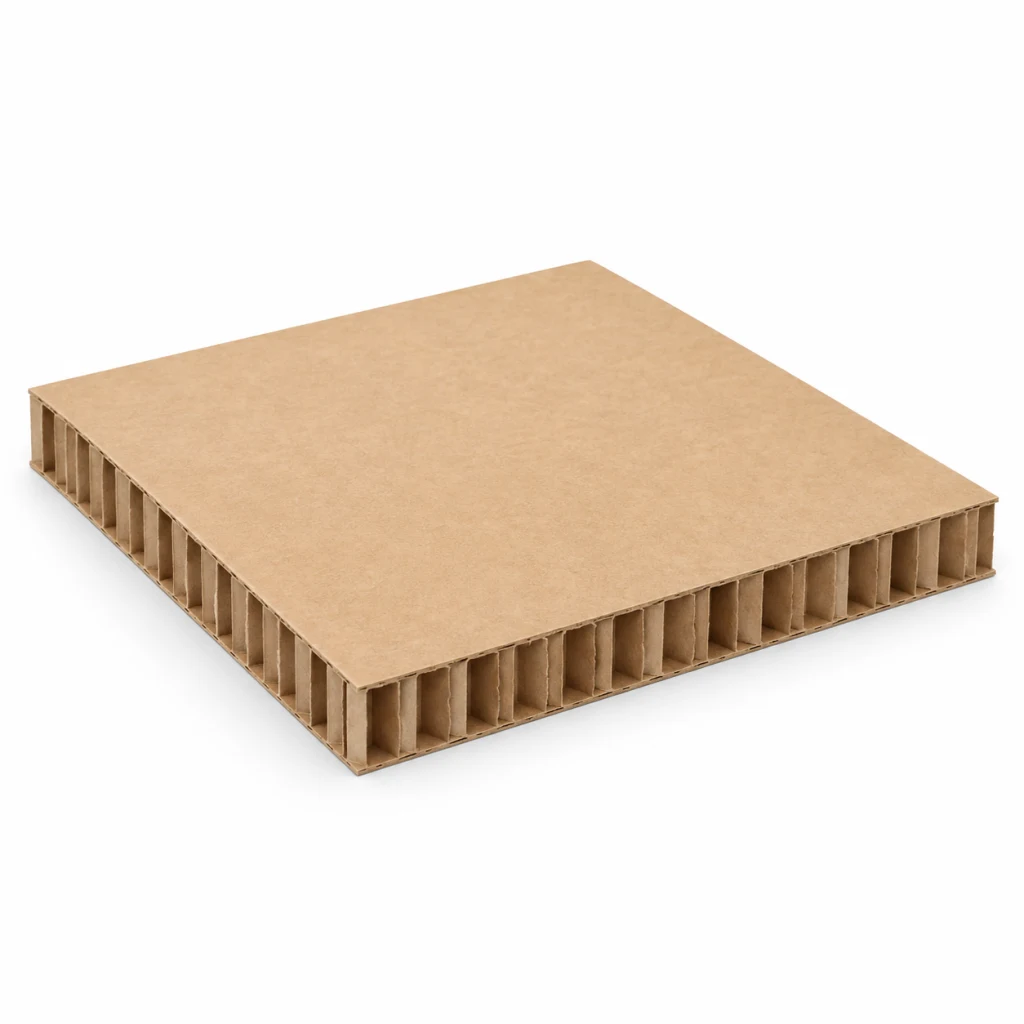
Timber crossing a border falls under ISPM 15, so cases are heat treated and stamped as part of the order rather than as an afterthought. Size, timber, construction and internal bracing are made to order, with a pallet base where the load is forked. If the fumigation requirement is the problem rather than the strength, see honeycomb board box and paper pallet and slip sheet.
What moves the price
Timber, construction and bracing. Plywood costs more than solid boards and finishes better; closed cases cost more than open crates; internal bracing designed against the load is where the engineering sits and where the protection comes from. Heat treatment and the ISPM 15 stamp are part of the order rather than an extra, and they are not optional for a border crossing. Reusability across shipments is often what justifies the cost, so ask for the return-trip case rather than the cheapest one.
Where it goes wrong
A case sized to the machine and braced as an afterthought, which arrives intact with a damaged machine inside it. The second is assuming heat treatment is someone else’s job; an uncertified crate is held at the border and the goods sit. The third is choosing timber for a load that honeycomb board or a heavy-duty carton would carry, which pays for weight, freight and paperwork that could have been avoided.
Where custom wooden case and pallet is used
Machinery, precision instruments and large equipment shipped by sea — loads too heavy or too valuable for board, where internal bracing matters more than the walls. If the fumigation requirement is the obstacle rather than the strength, honeycomb board and paper pallets avoid ISPM 15 entirely. The documentation that has to travel either way is in export packaging compliance.
What to send us for a quotation
A quotation for custom wooden case and pallet is written against a specification, so the more of this you can send, the closer the first number is to the real one: which structure, or the shelf life and the product so we can choose one — Plywood and Solid timber are available here; the temperature the pack has to survive, from filling through to how the customer opens it (ambient for this product); the line it runs on — this one is specified for strapping and wrapping; which options you want fitted: closed case, Open crate and Plywood; the values for size, Timber, Construction and Internal bracing.
Send the fill weight and the quantity with it. Where you already buy something similar, a sample is worth more than a description — we measure what is actually there rather than quoting against how it was once written down.
Food-contact and export requirements are set out in ISPM 15, the international standard for wood packaging crossing a border; the declarations for this structure are issued with the order.