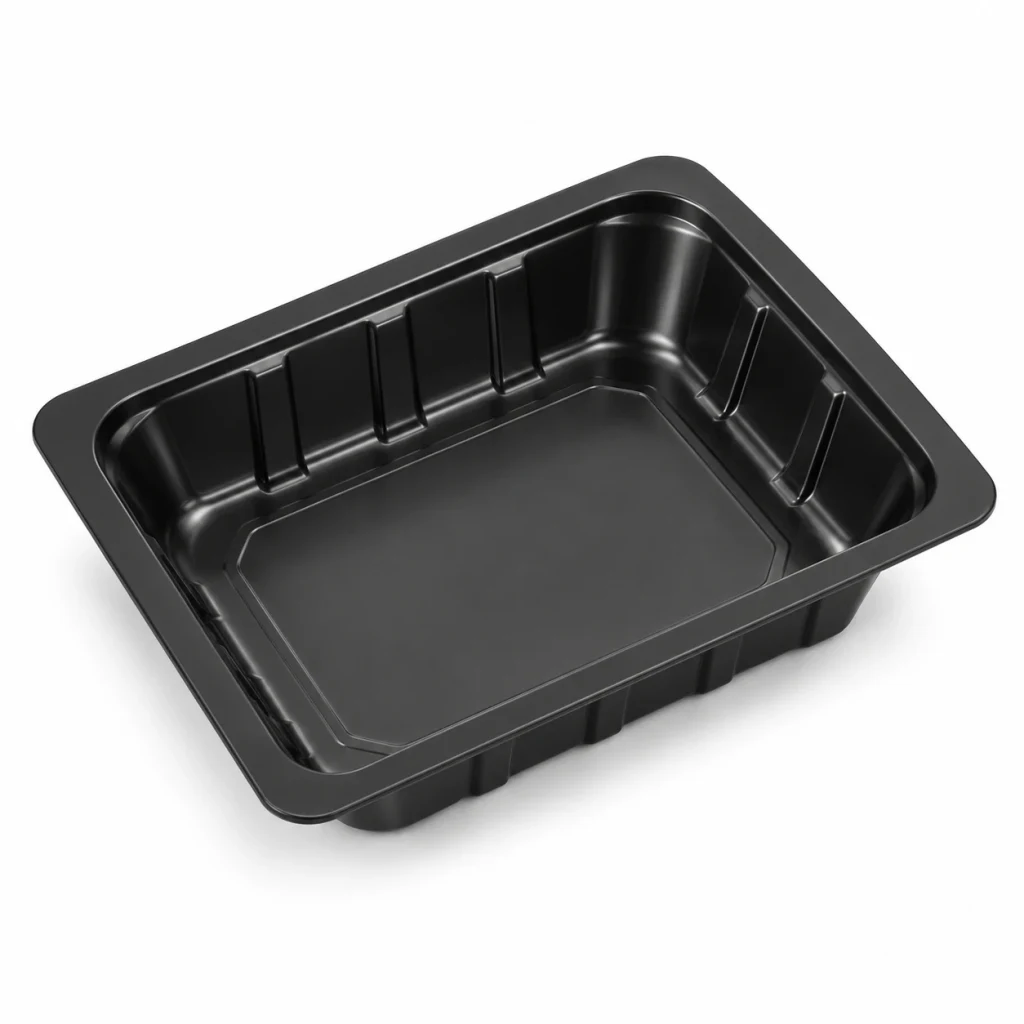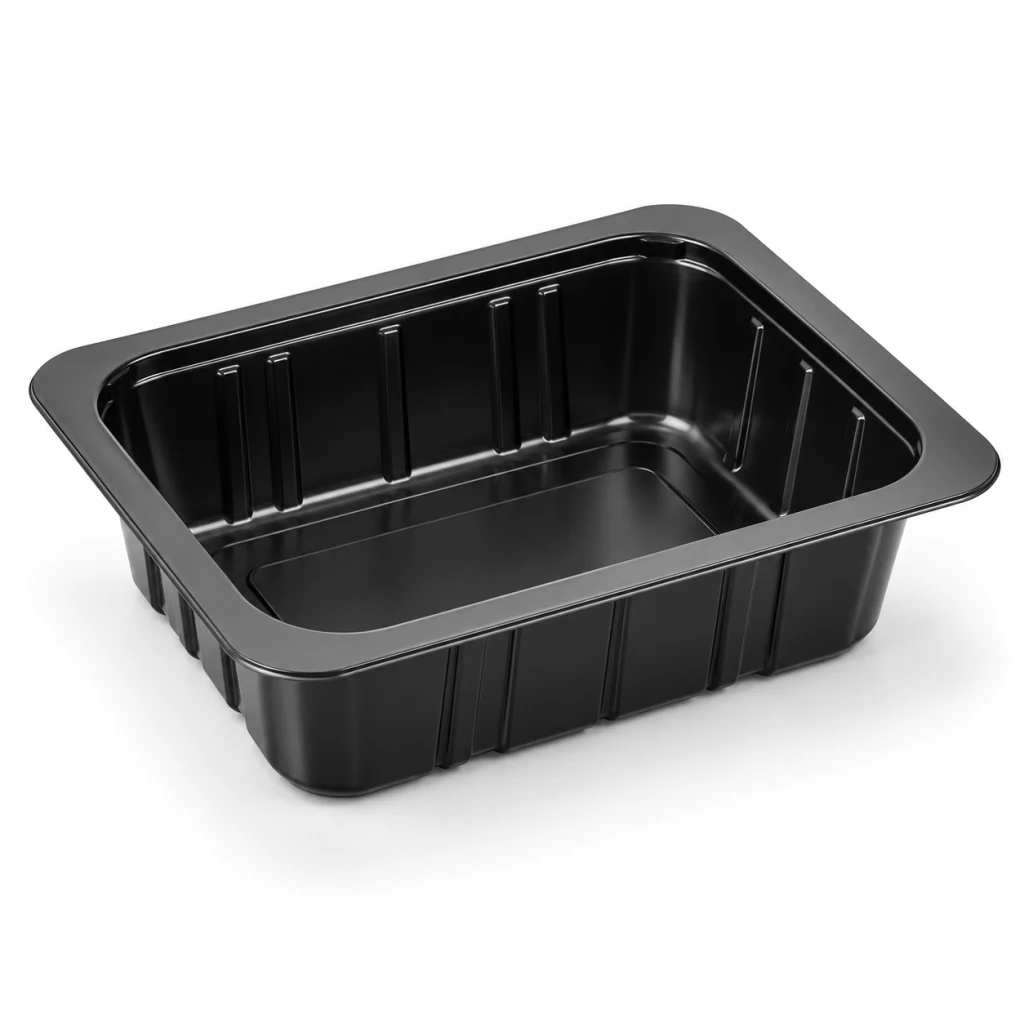
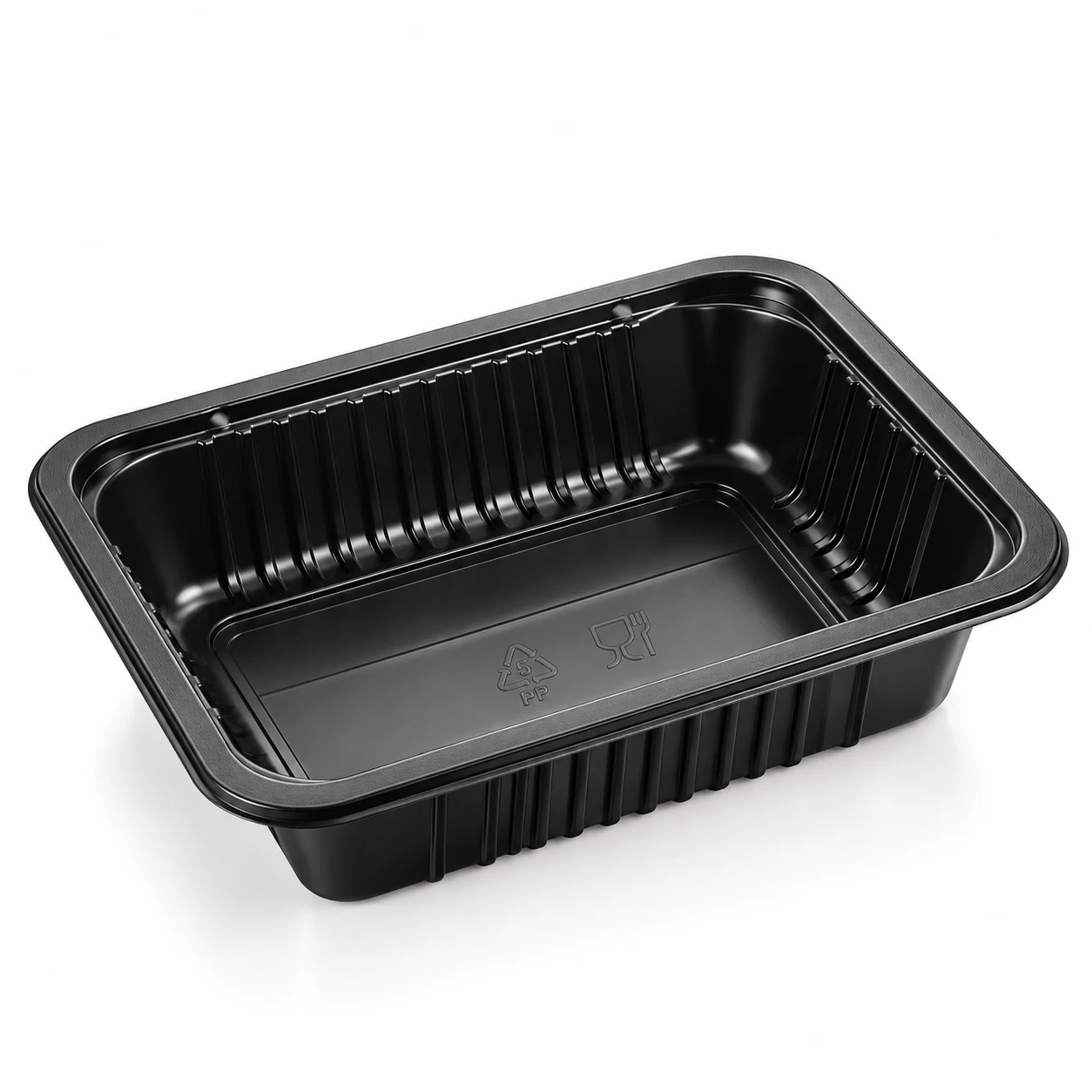
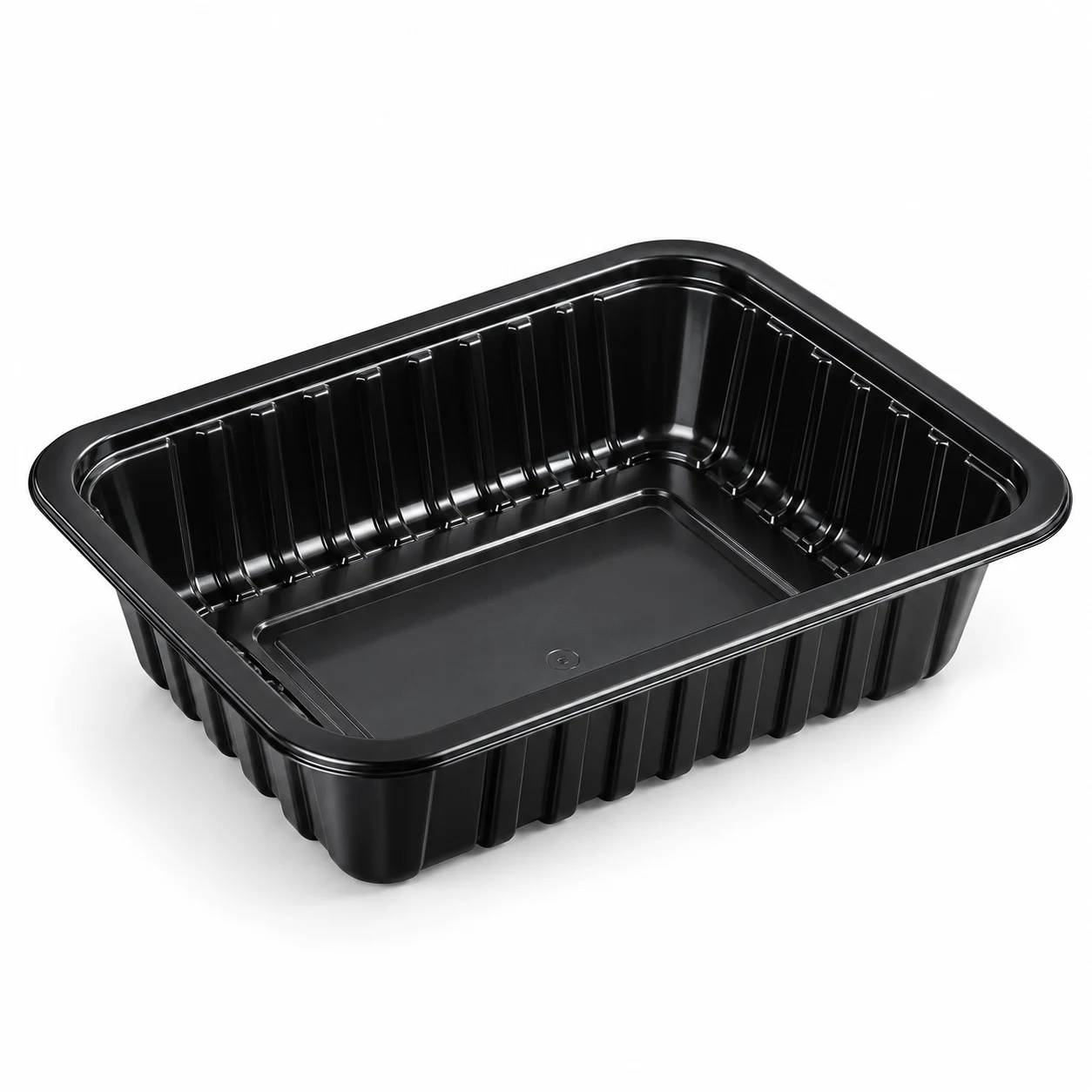
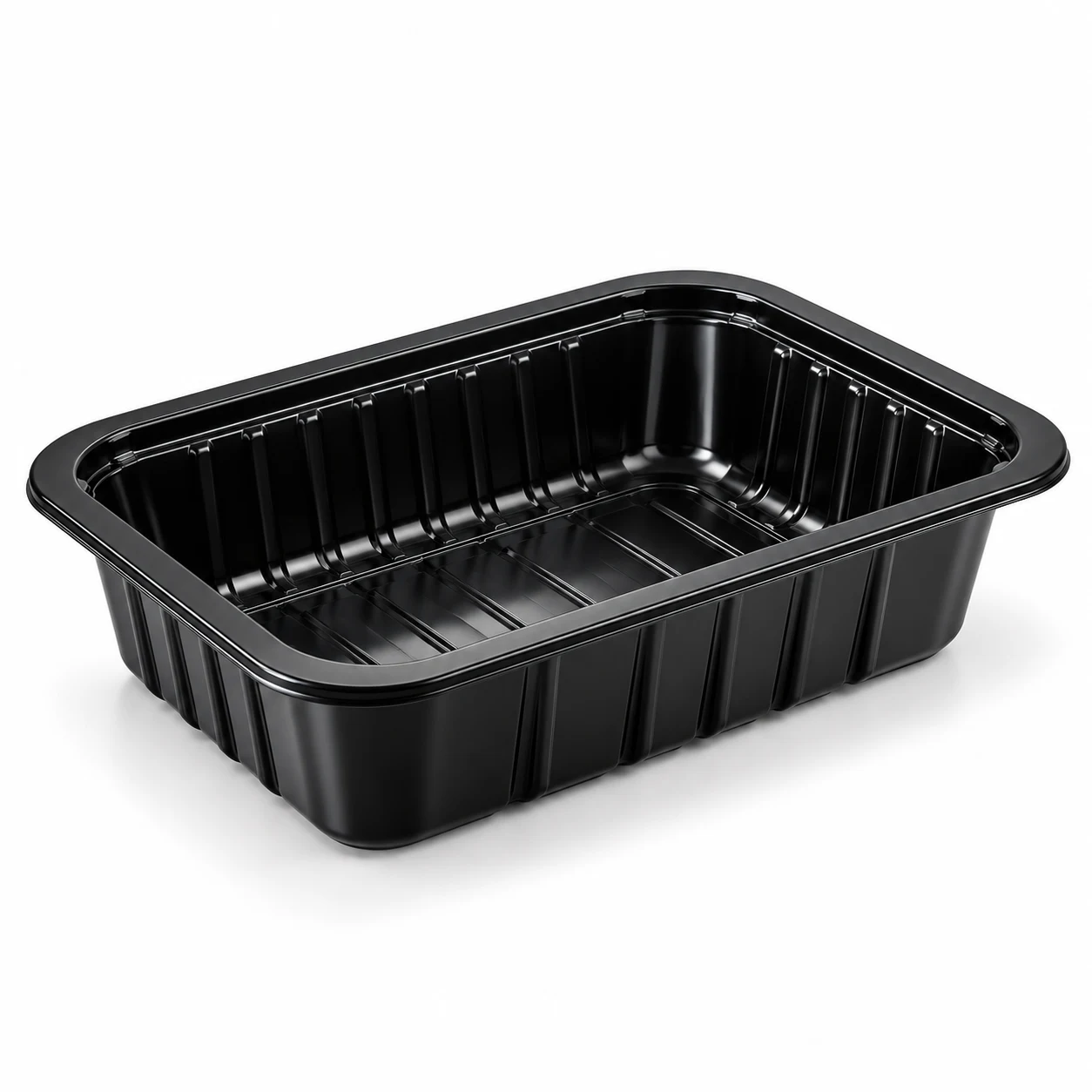
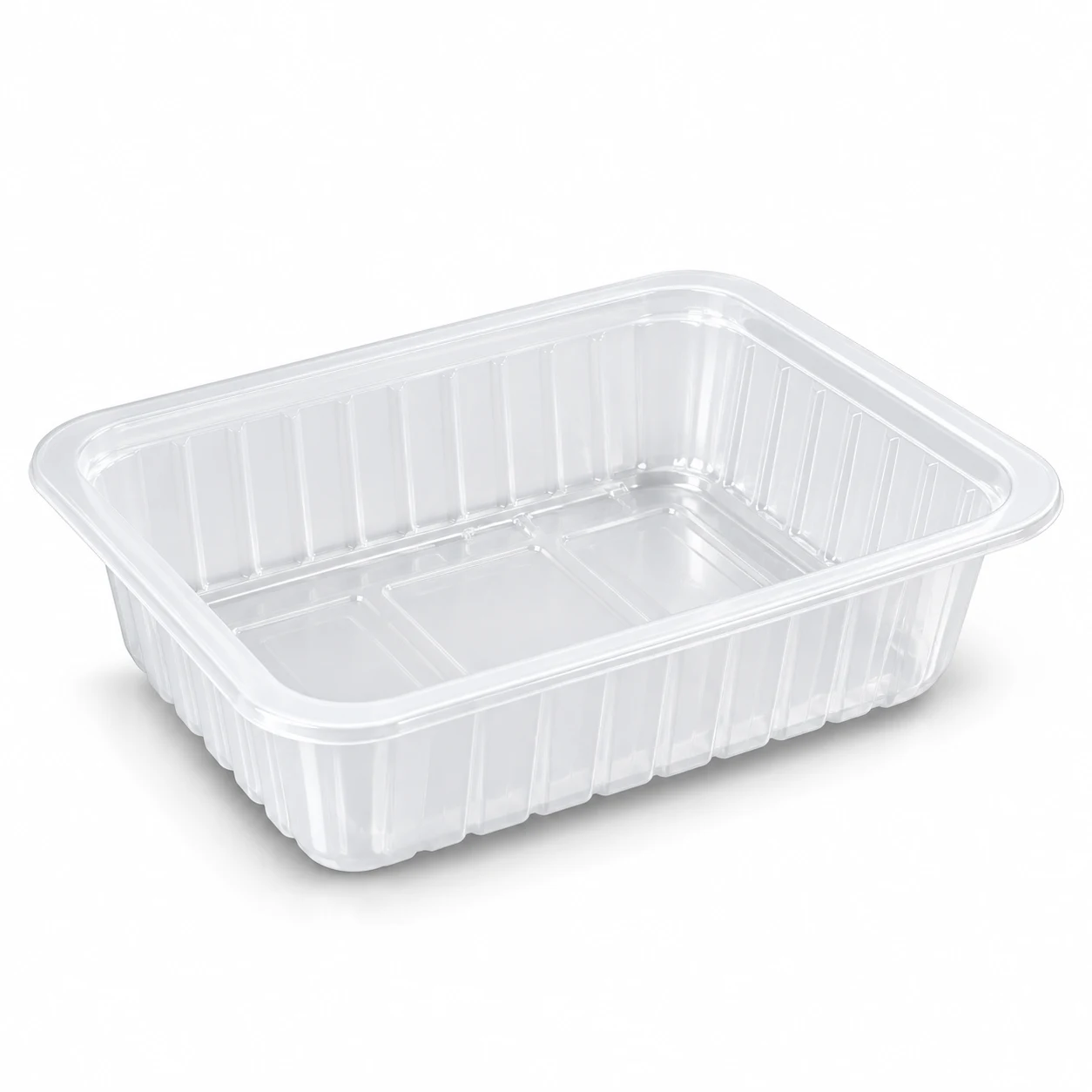
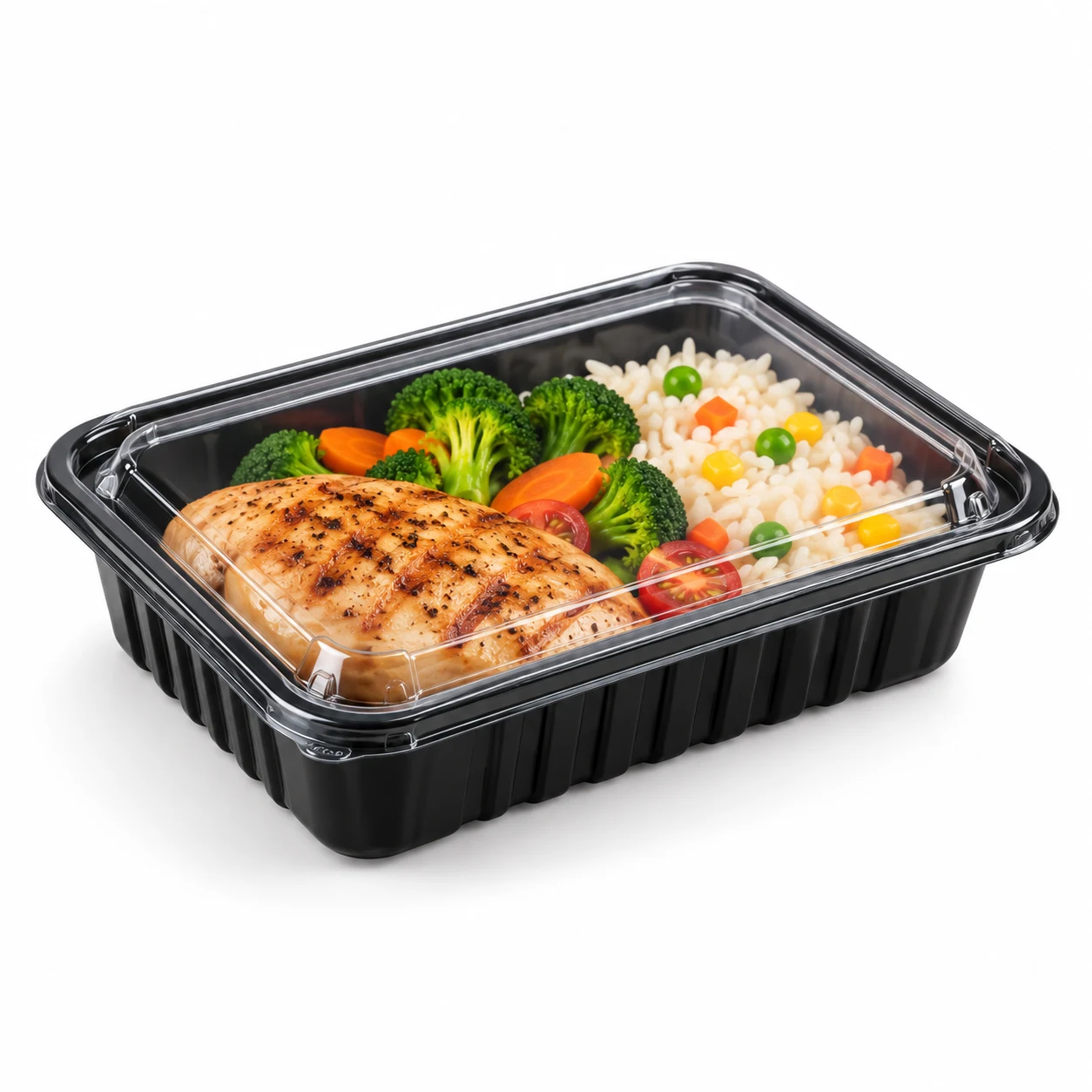
Custom pp tray — made to order: size, depth, compartments and colour are all specified per run.
A PP tray is the workhorse of hot food service. Polypropylene holds its shape up to 120 °C, which means a tray of noodles or curry can be filled hot, sealed, carried, and put in a microwave by whoever ordered it — none of which a cheaper material survives. It is oil-resistant, it is rigid enough to carry a full meal one-handed, and at volume it is the least expensive rigid option we supply.
Compartments and lids
Single or multi-compartment, with or without a lid, in black, white or clear. Compartments are worth thinking about properly: they keep a wet component off a crisp one, they portion visually, and they stiffen the tray. Temperature range is −20 to 120 °C, so the same tray freezes and reheats. Barrier is 3 of 5 for both oxygen and moisture — sufficient for food eaten within days, not for an ambient shelf life.
Made to order
Size, depth, compartment layout and colour are all specified per order; trays are thermoformed or injection moulded depending on the geometry and the volume, and they seal to a lidding film across the rim. For a clear tray where the product has to sell itself, see the PET tray; for one that goes into a conventional oven, the CPET tray. FDA and GB food grade.
What moves the price
Tooling and volume, more than material. A thermoformed or injection-moulded tray needs a mould, and the mould is a one-off cost recovered across the run — which is why a simple round or rectangular tray at volume is very cheap per unit and a compartmented tray at low volume is not. Compartments, undercuts and unusual profiles all add to tooling. Colour adds masterbatch. Depth adds material. If a standard geometry will do, say so: an existing tool removes the largest single line from the quotation.
Where it goes wrong
A compartment layout settled after the mould is cut, which means a second mould. The second is specifying PP for a range that will be reheated in a conventional oven, which it will not survive — that is CPET or foil. The third is a lidding film chosen separately from the tray: peel strength is a property of the pair, and a film that seals perfectly to one PP grade can channel or weld shut on another.
Where custom pp tray is used
Takeaway, food service, hot meals and microwave ranges — the volume end of prepared food, where the tray has to be filled hot, carried, and reheated by whoever ordered it. The ready meal page compares it against the oven-safe and chilled routes. If the product is sold cold and has to be seen, the PET tray is clear; if it goes into a conventional oven, the CPET tray is the only plastic that does.
What to send us for a quotation
A quotation for custom pp tray is written against a specification, so the more of this you can send, the closer the first number is to the real one: which structure, or the shelf life and the product so we can choose one — PP are available here; the temperature the pack has to survive, from filling through to how the customer opens it (−20 to 120 °C for this product); the line it runs on — this one is specified for heat sealing and Injection moulding; which options you want fitted: single compartment, Multi compartment and With lid; the values for size, Depth, Compartments and Colour.
Send the fill weight and the quantity with it. Where you already buy something similar, a sample is worth more than a description — we measure what is actually there rather than quoting against how it was once written down.
Food-contact and export requirements are set out in FDA 21 CFR 177, the US rule for food-contact polymers; the declarations for this structure are issued with the order.