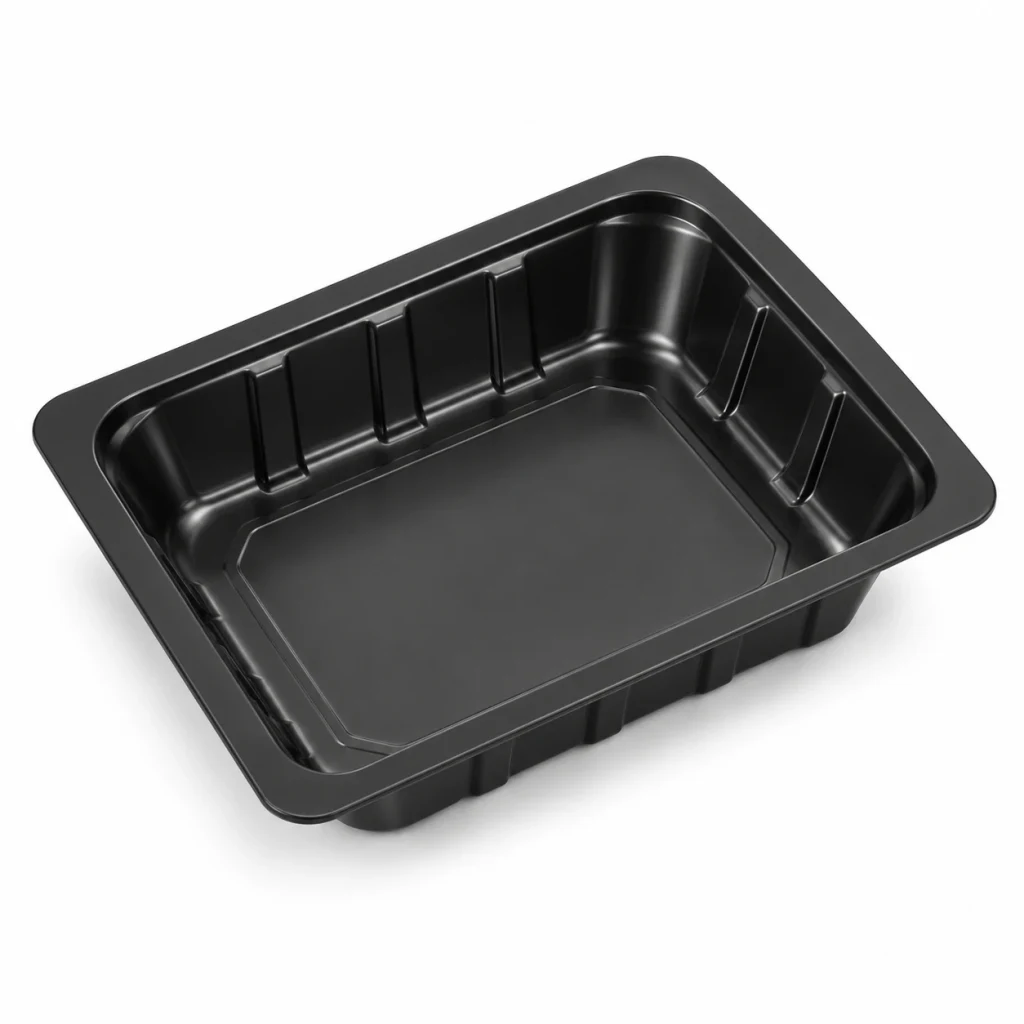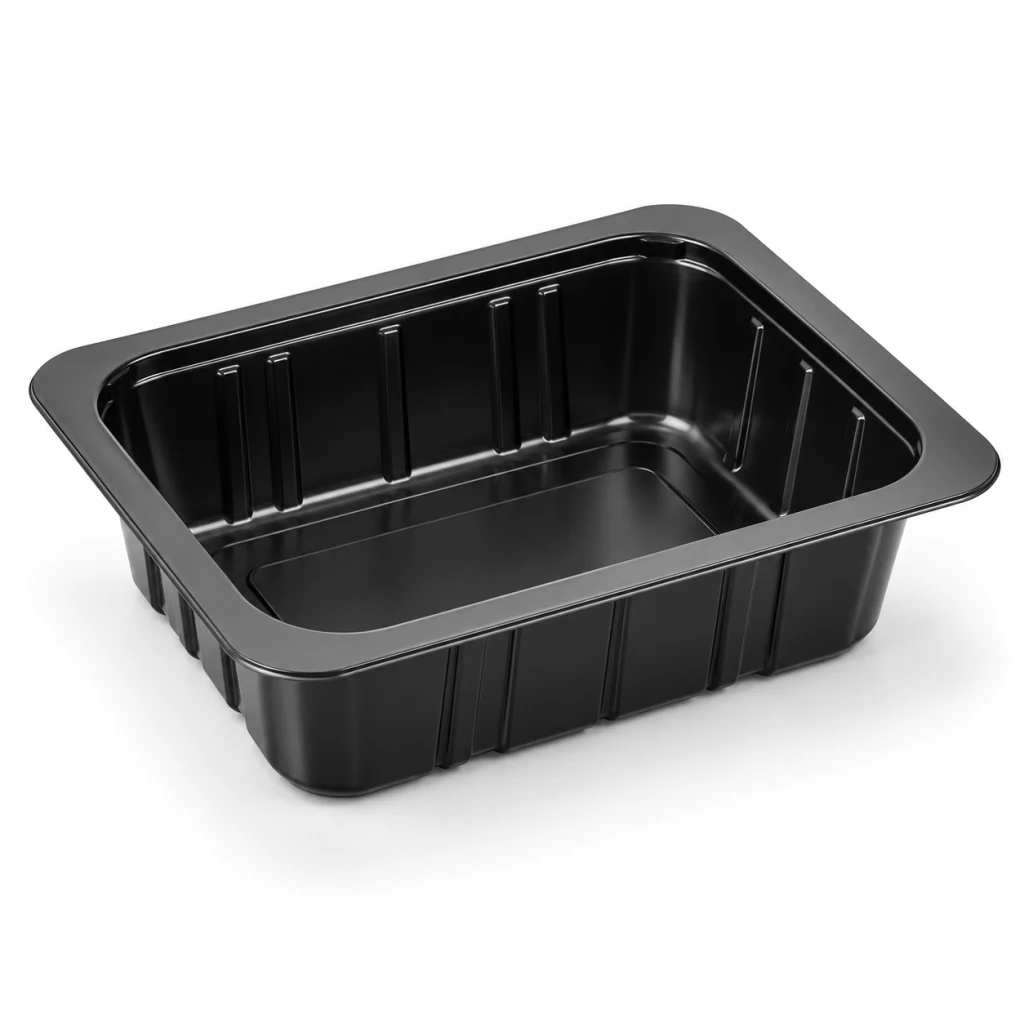
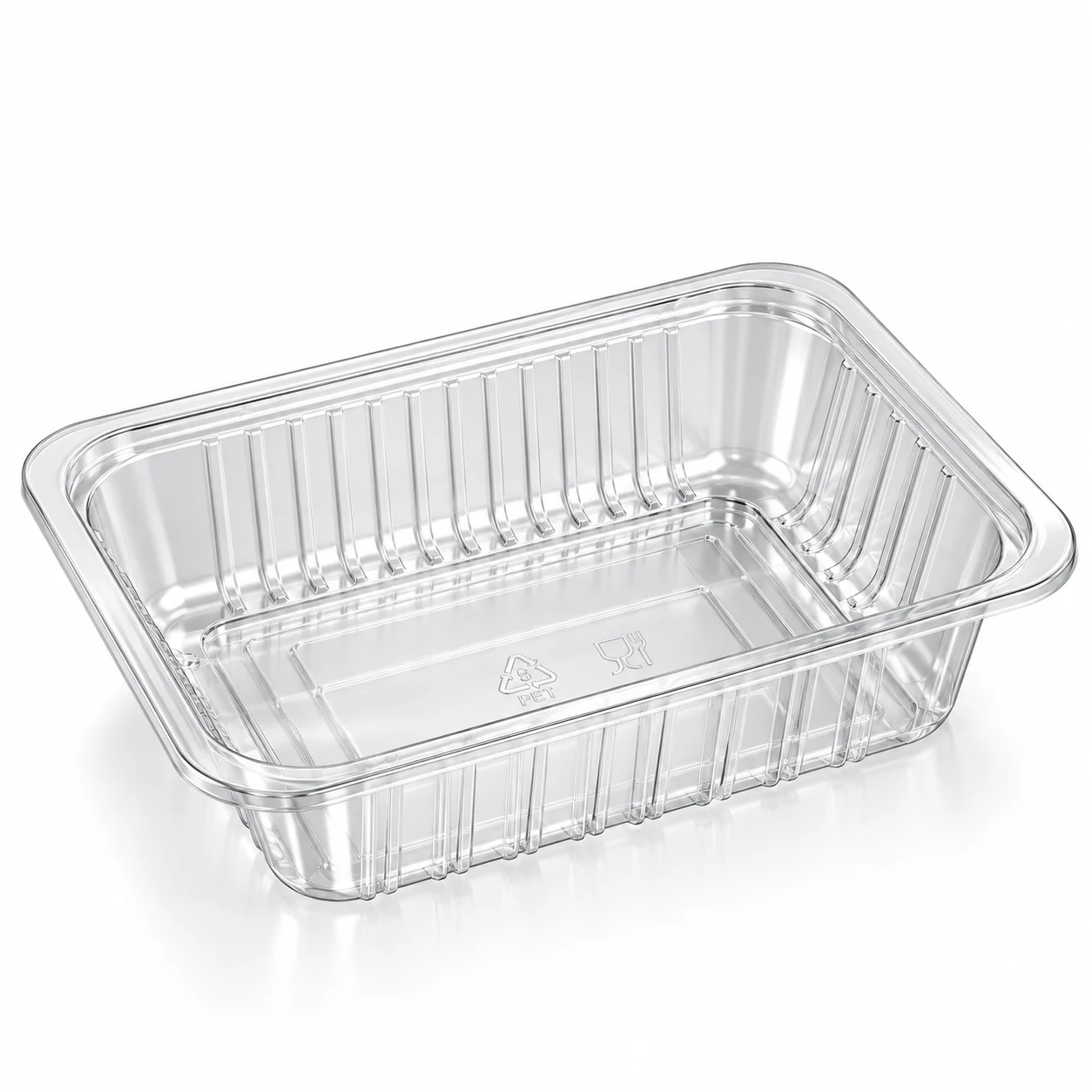
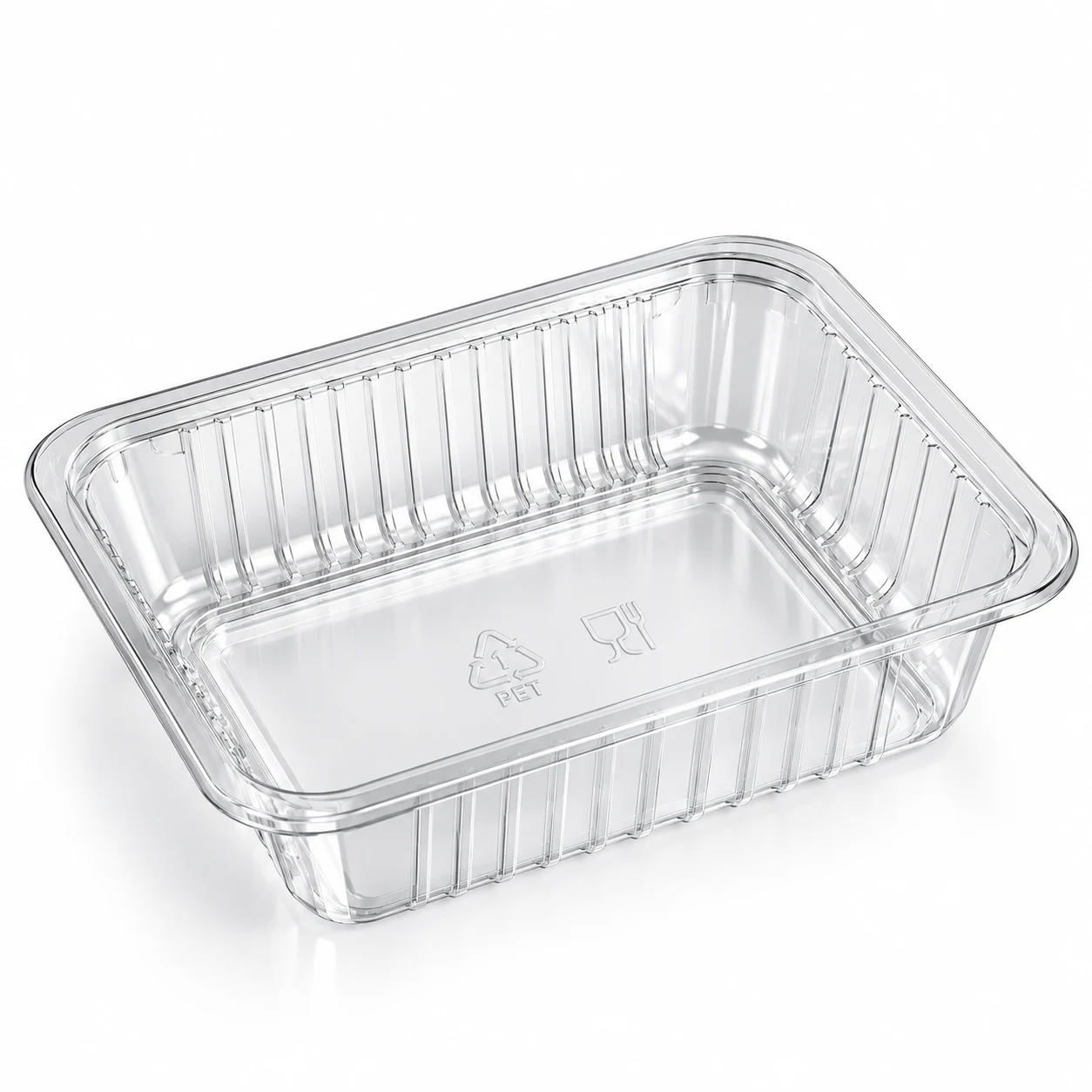
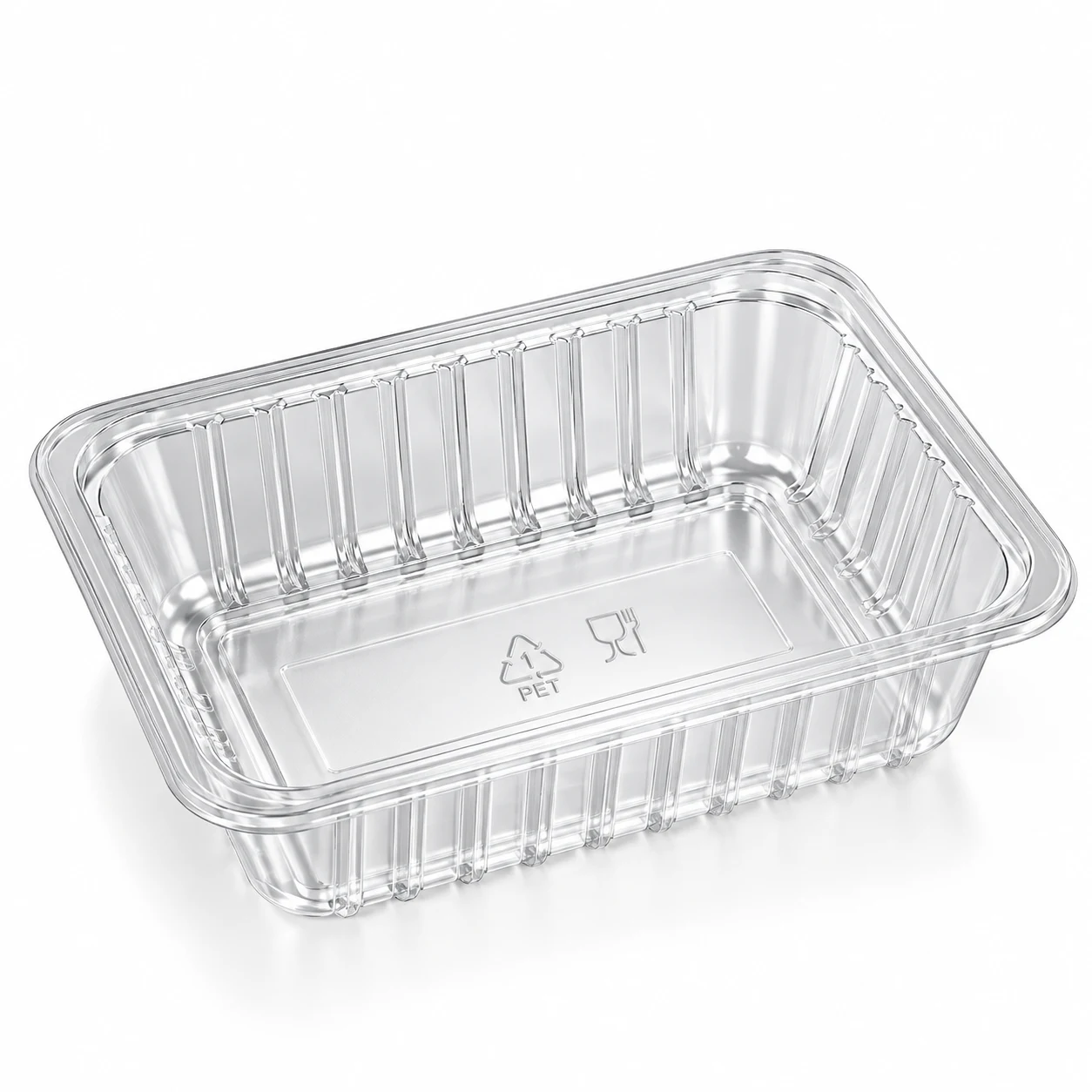
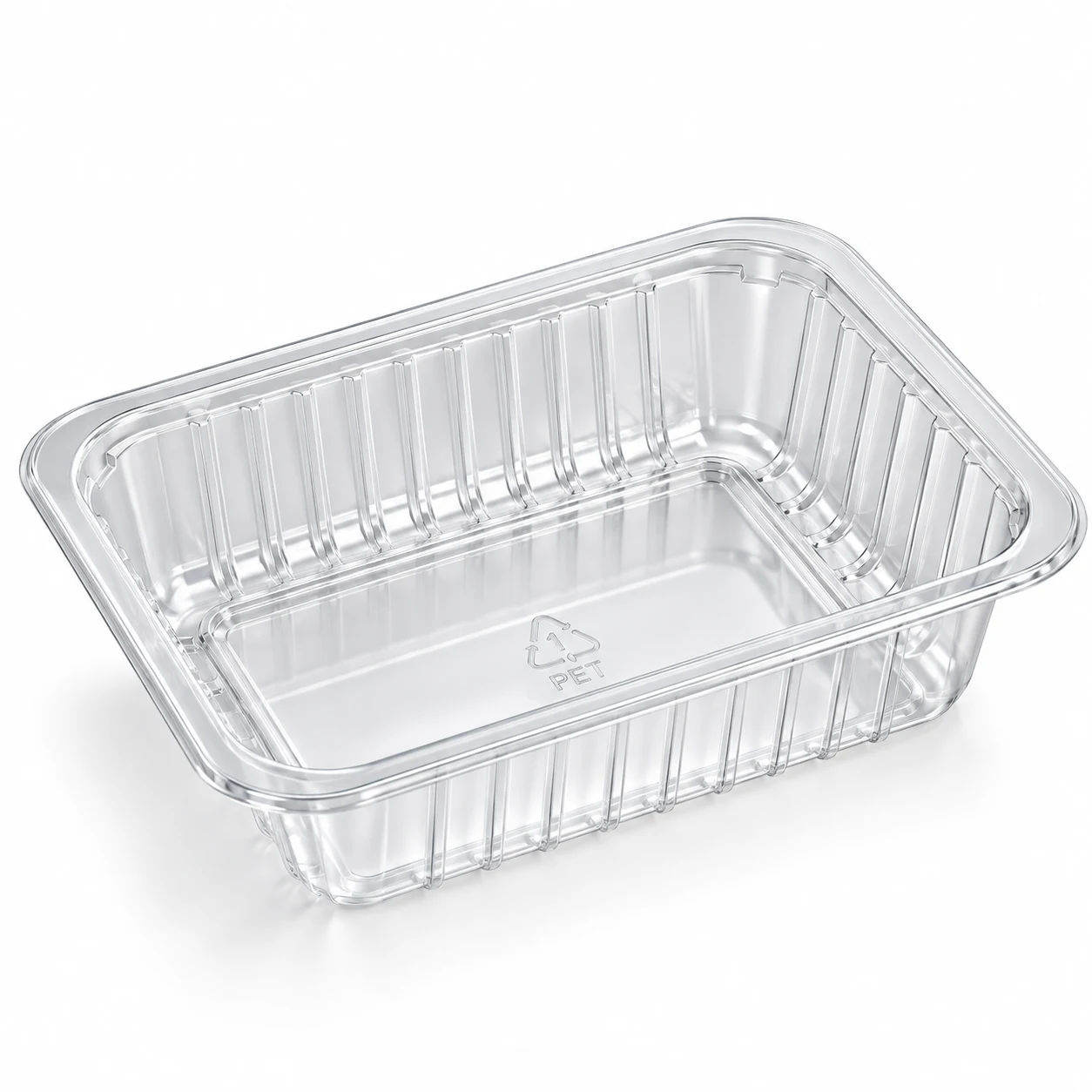
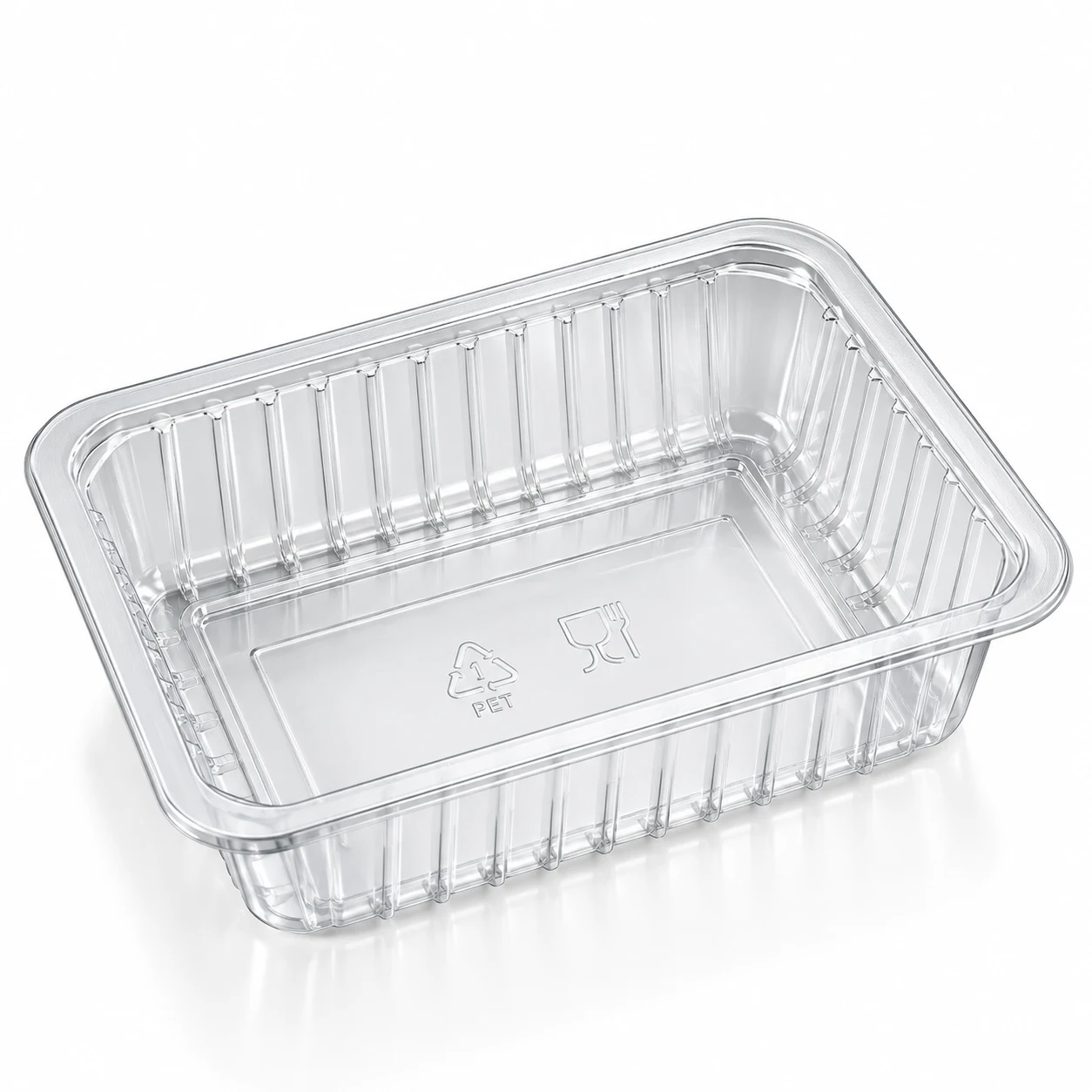
Custom pet tray — made to order: size, depth, compartments and anti-fog coating are all specified per run.
A PET tray is glass-clear, and in chilled retail that is the whole argument. Fruit, salad, pastries and prepared foods are bought with the eyes, and a hard, glossy, optically clear tray shows the product without a photograph of it. PET also resists scuffing better than softer clear plastics, so a tray still looks new after a day of being moved around a cabinet.
APET, anti-fog and lidding
Standard PET is fine for cold display. APET is the grade to ask for when the tray has to seal to a lidding film or tolerate a little more heat — it is the usual choice for sealed chilled packs. Anti-fog coating is worth specifying for anything with moisture in it: without it, condensation films the lid within minutes of leaving a chiller and the product disappears behind it. Temperature range is −40 to 60 °C, so freezing is fine and reheating is not.
Options and ordering
Single or multi-compartment, hinged lid or flat lid, with or without anti-fog. Size, depth and compartments are made to order. Barrier is 3 of 5 on oxygen and moisture. If the pack needs a gas flush to extend fresh life, the same tray shape is available as a MAP tray; for oven reheating see the CPET tray. FDA and GB food grade.
What moves the price
Material and clarity, then tooling. APET costs more than standard PET and is what a sealed pack needs, so a tray being lidded is a different quotation from one being displayed open. Anti-fog coating is a real increment and worth it for anything moist. Depth drives material use directly — a deeper tray is more grams. Volume and tooling behave as with PP. Where a range runs several sizes, sharing a footprint across them lets one sealing tool serve all of them, which is usually a larger saving than the tray price itself.
Where it goes wrong
Skipping anti-fog on a chilled pack. It costs little and without it the lid films over within minutes of leaving a cabinet, which defeats the entire reason a clear tray was specified. The second is standard PET where APET was needed, discovered as inconsistent seals. The third is a rim that does not match the sealing tool, which is a dimension worth confirming before tooling rather than after.
Where custom pet tray is used
Chilled retail — fruit, salad, pastry, prepared foods and anything bought with the eyes. The frozen and chilled page covers what condensation does to a clear pack and why anti-fog is a specification rather than an extra. Where the pack also needs a gas flush to extend fresh life, the same shapes are available as a MAP tray, and the full range is in trays and containers.
What to send us for a quotation
A quotation for custom pet tray is written against a specification, so the more of this you can send, the closer the first number is to the real one: which structure, or the shelf life and the product so we can choose one — PET and APET are available here; the temperature the pack has to survive, from filling through to how the customer opens it (−40 to 60 °C for this product); the line it runs on — this one is specified for thermoforming and Heat sealing; which options you want fitted: single compartment, Multi compartment and Hinged lid; the values for size, Depth, Compartments and Anti-fog coating.
Send the fill weight and the quantity with it. Where you already buy something similar, a sample is worth more than a description — we measure what is actually there rather than quoting against how it was once written down.
Food-contact and export requirements are set out in FDA 21 CFR 177, the US rule for food-contact polymers; the declarations for this structure are issued with the order.