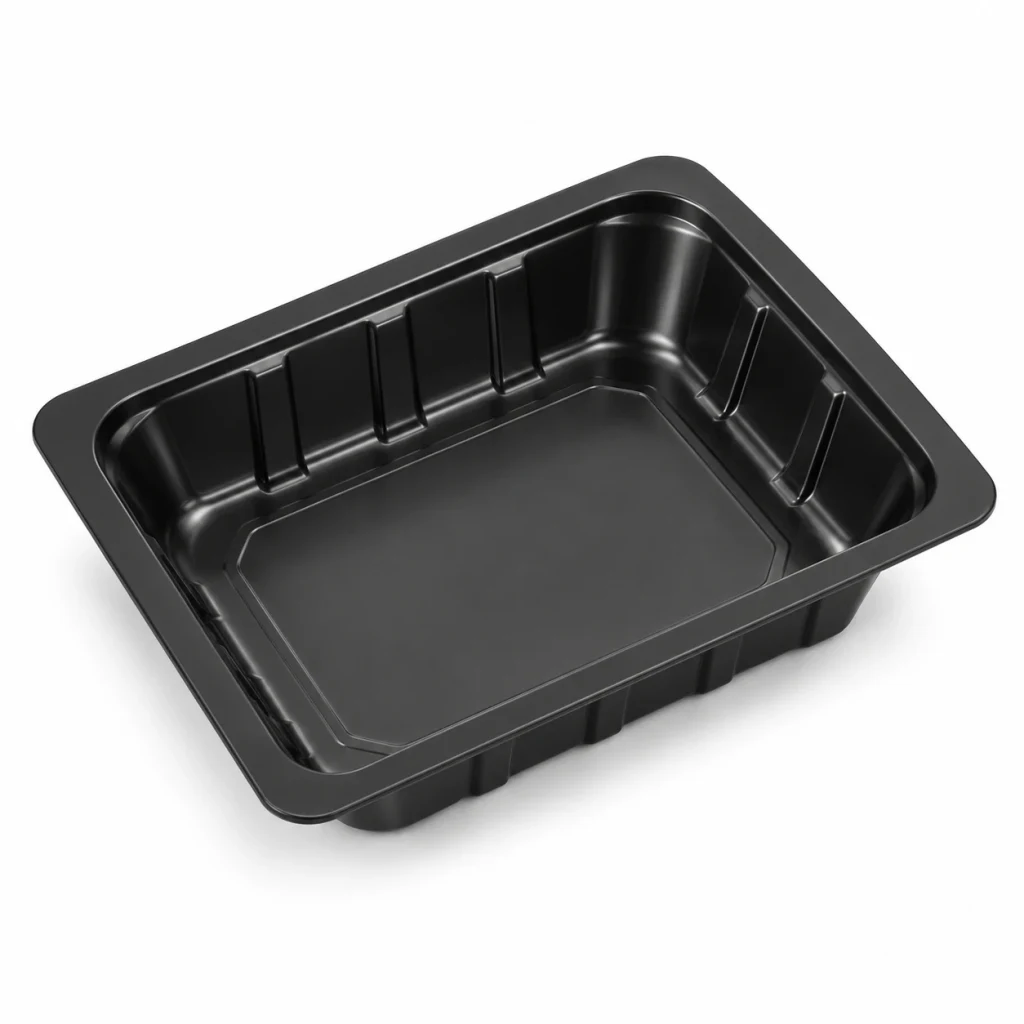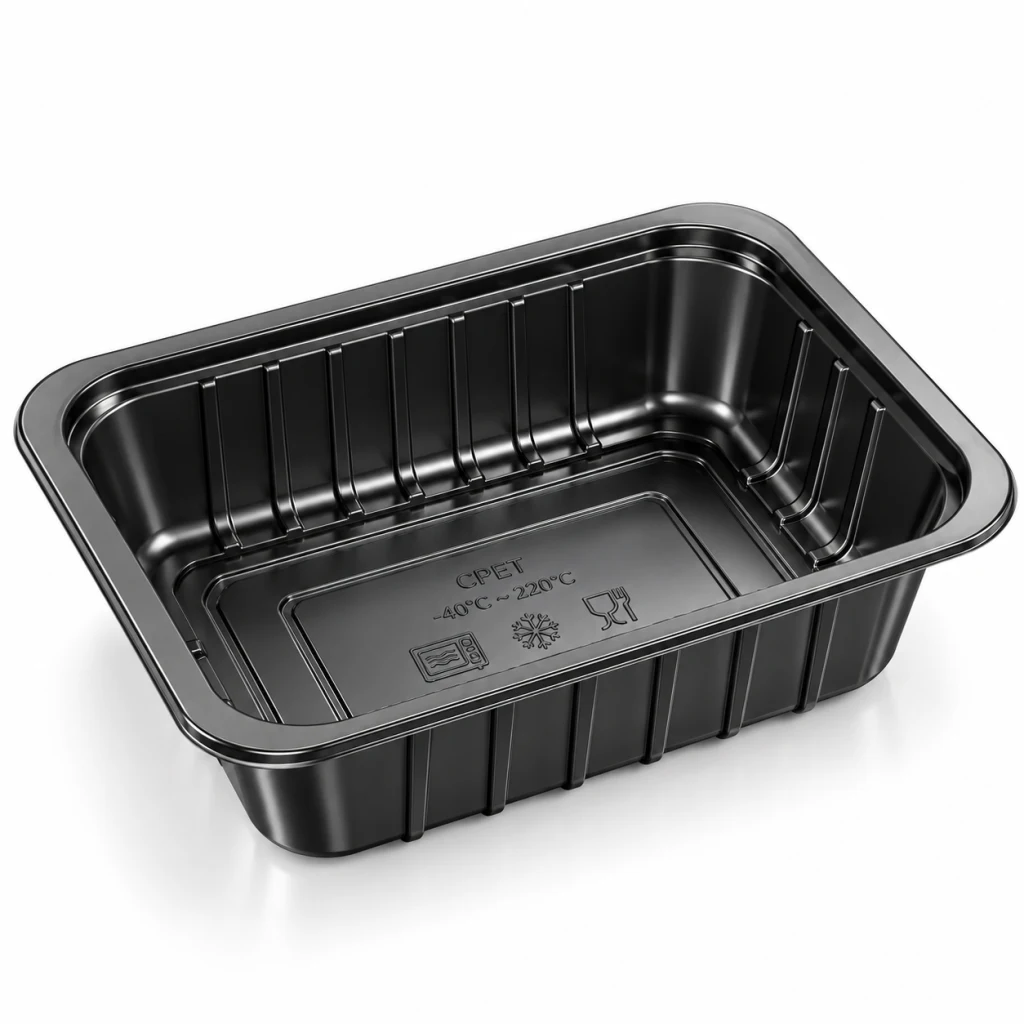
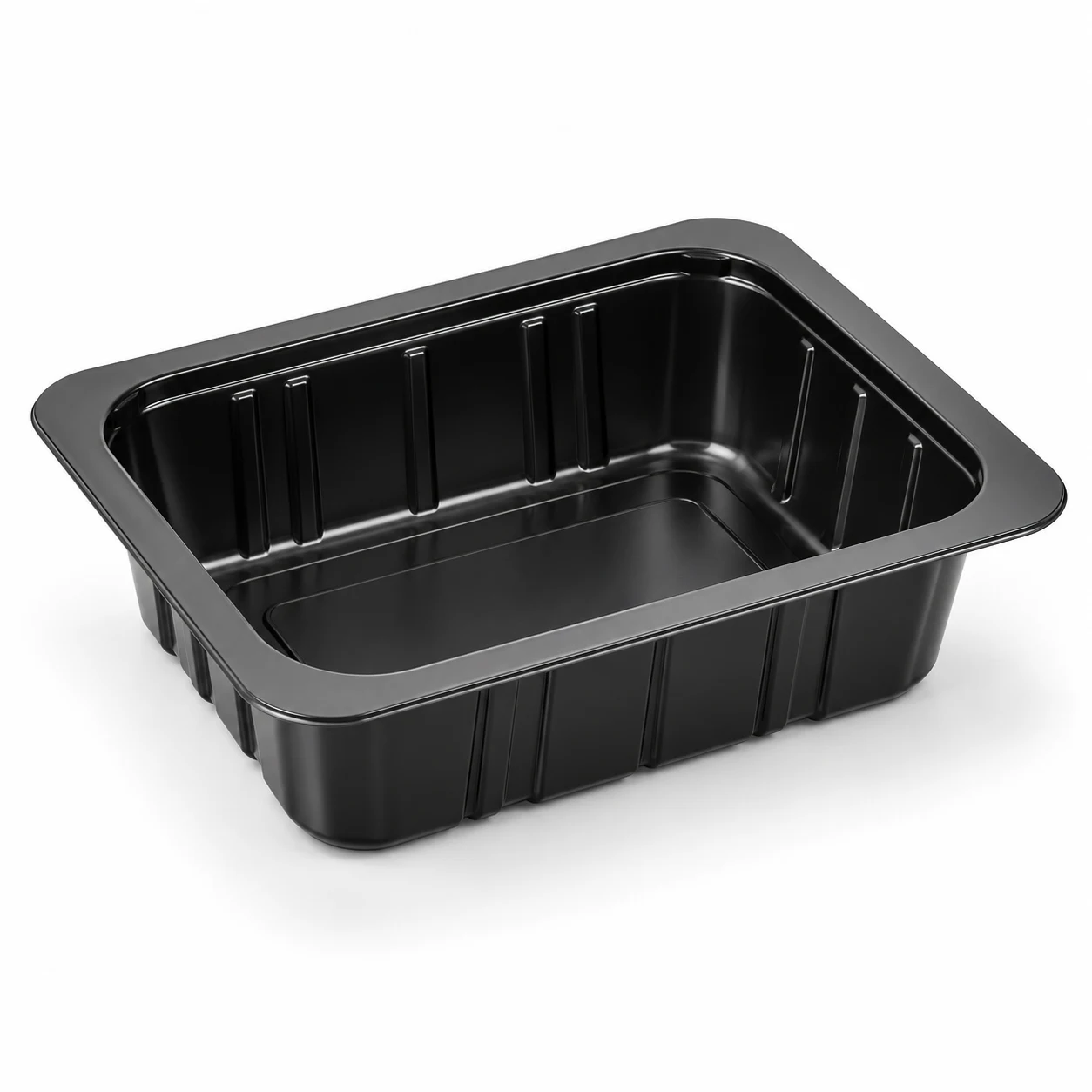
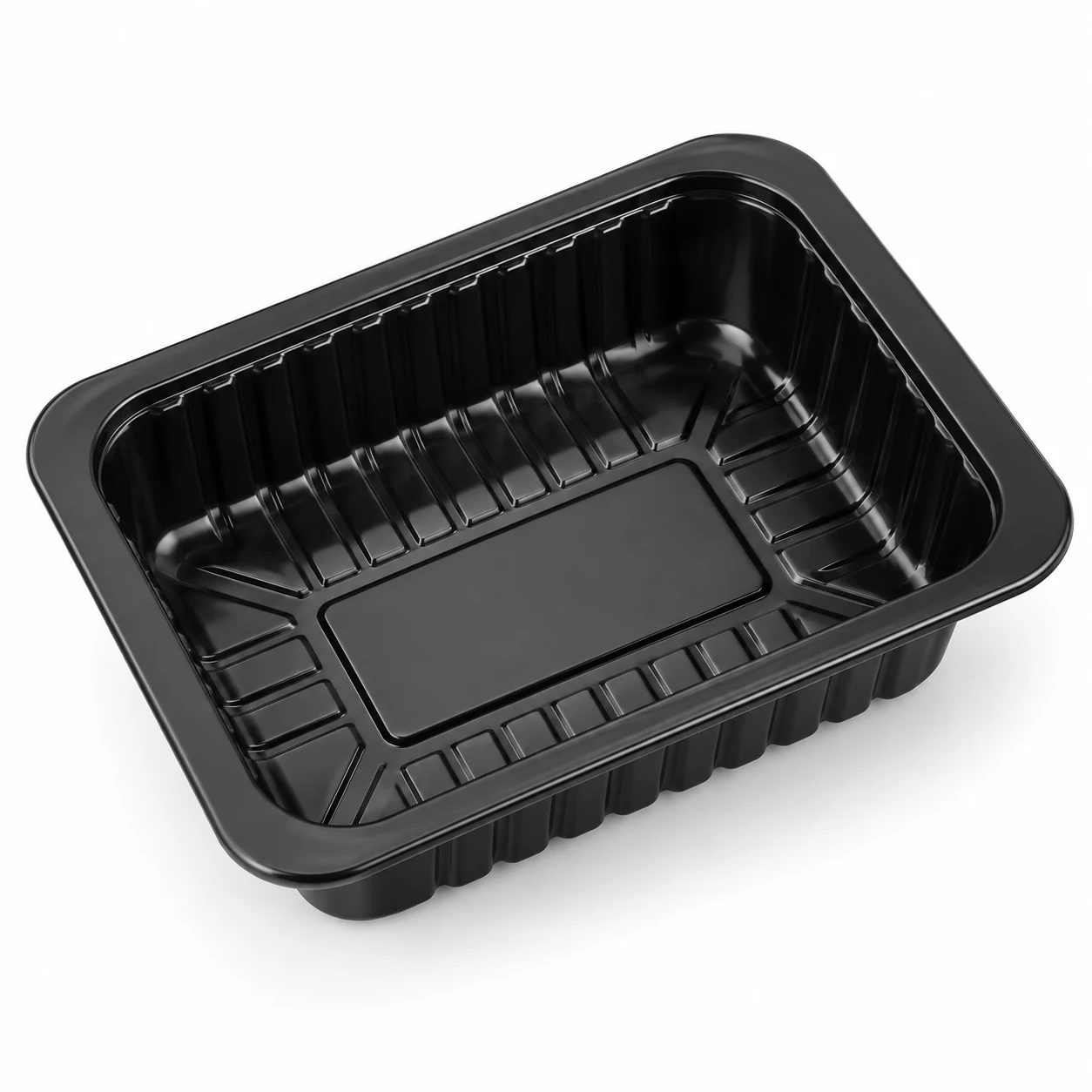
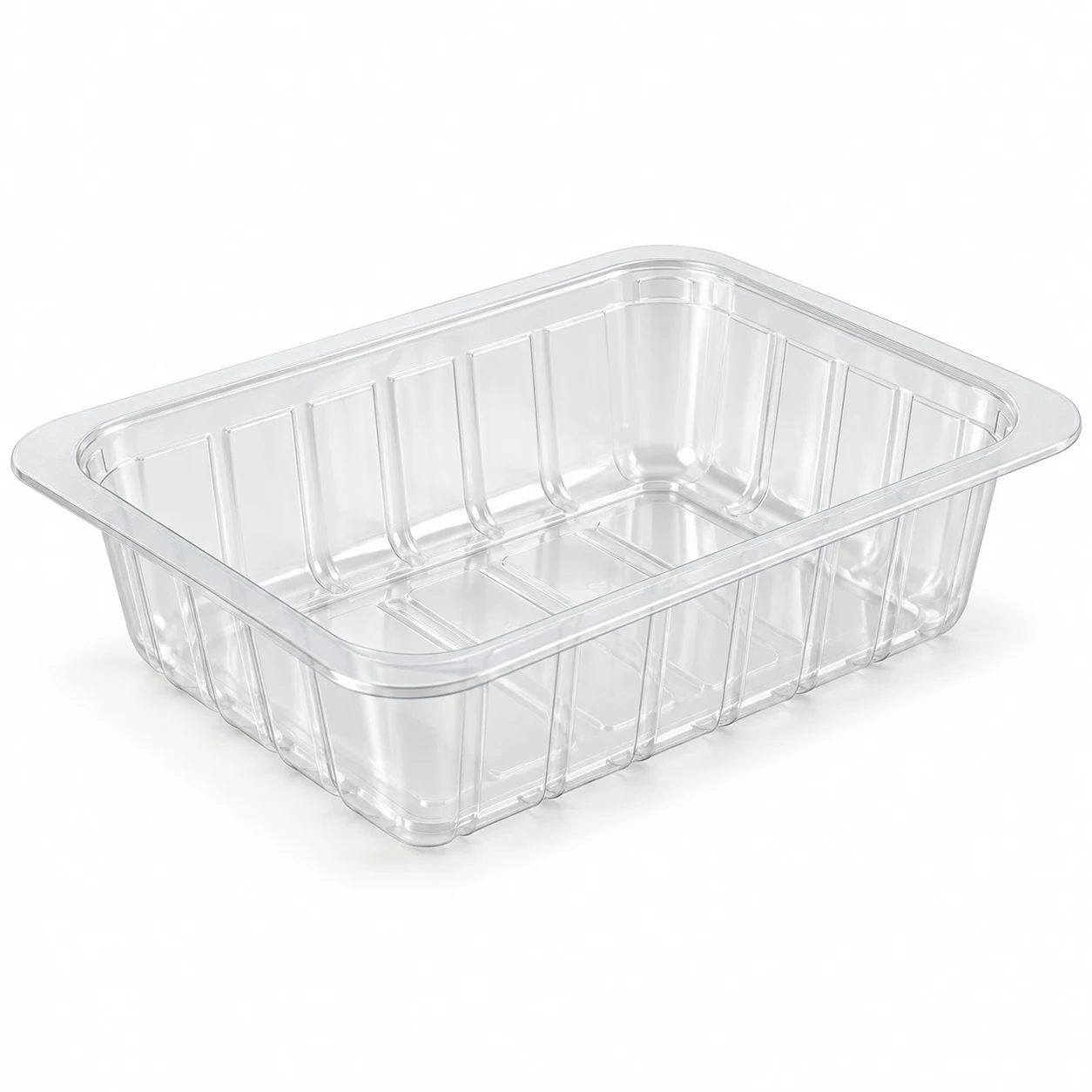
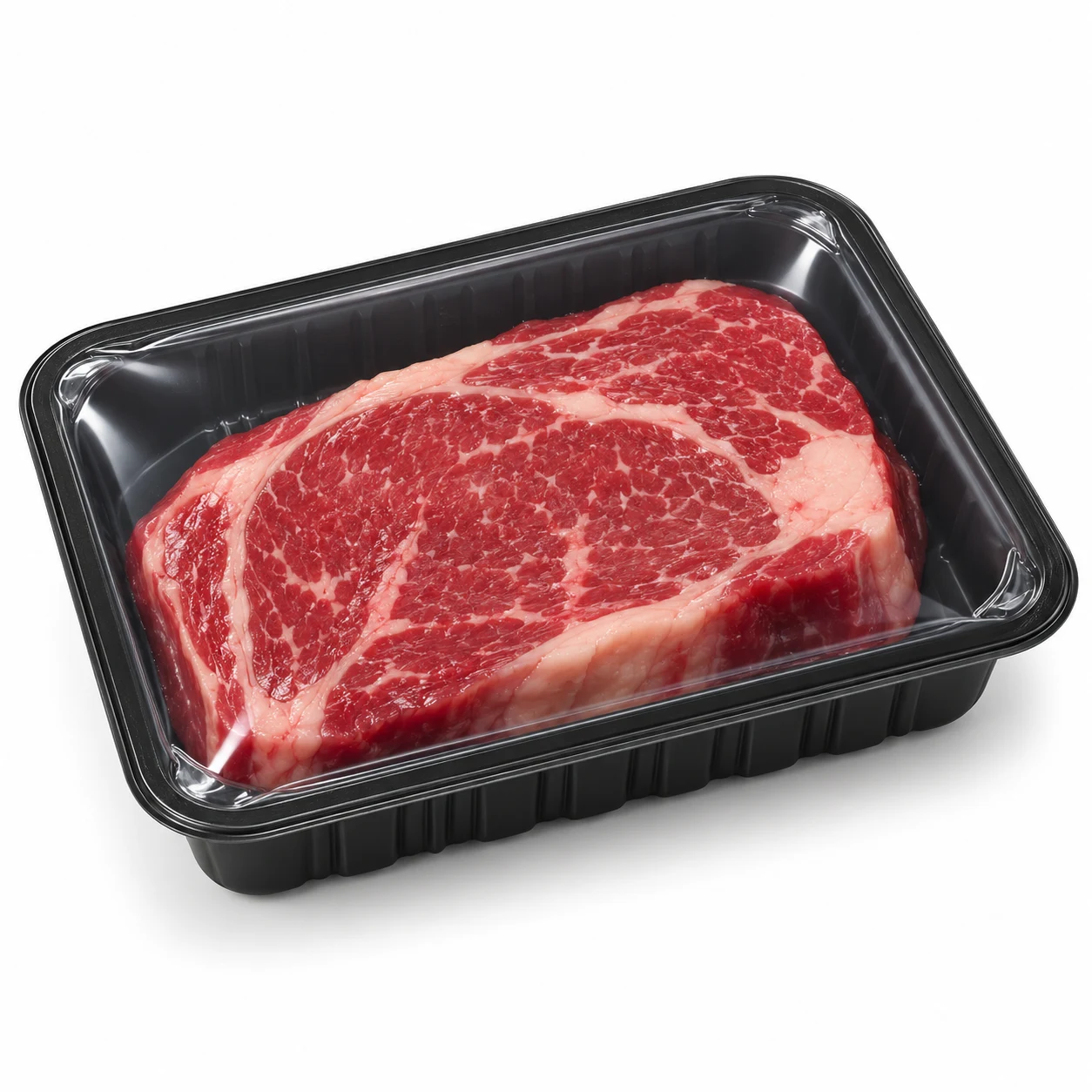
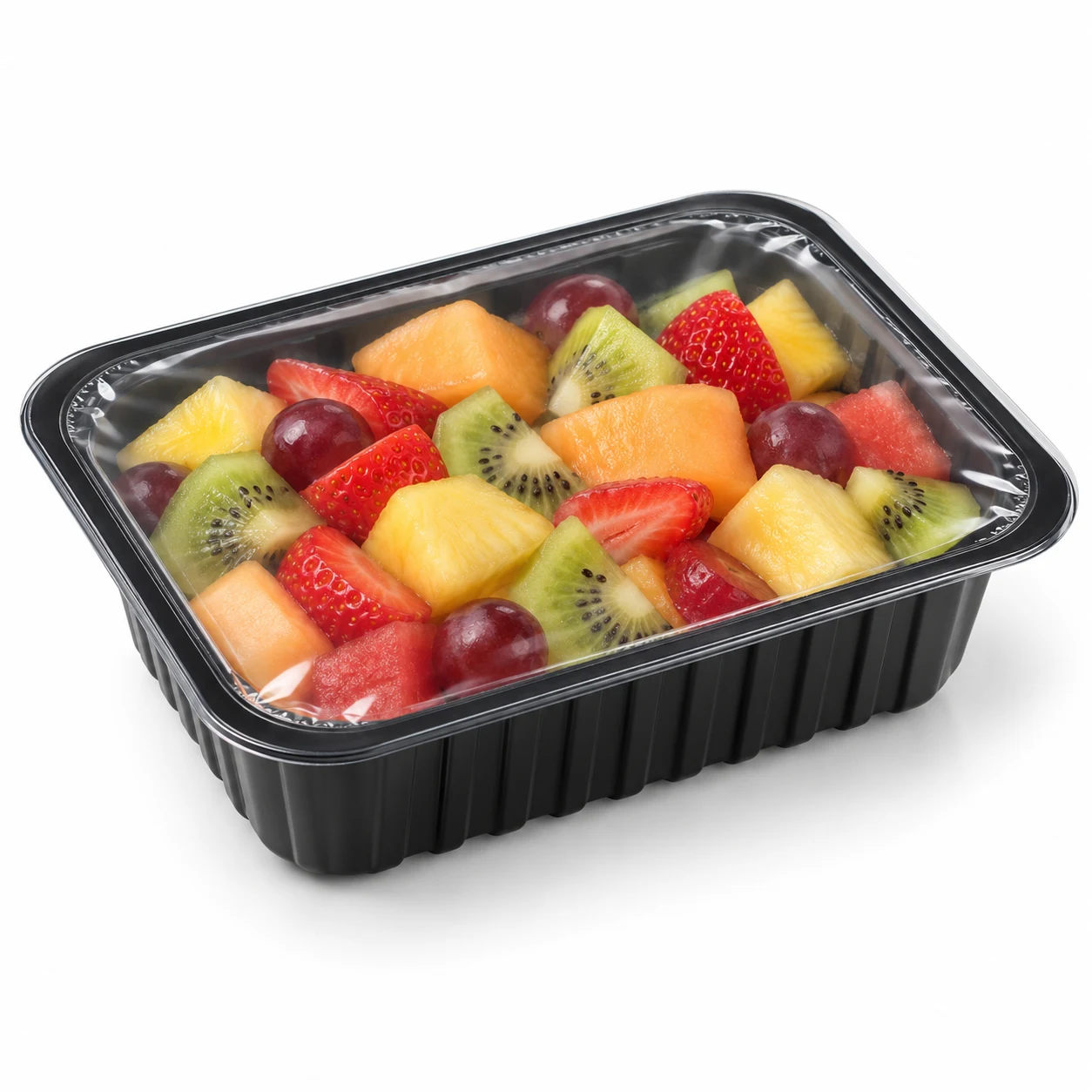
Custom MAP tray — made to order: tray size and depth, gas mix and lidding film are all specified per run.
Modified atmosphere packaging replaces the air inside a sealed tray with a gas mixture chosen for the product. Fresh meat gets oxygen and carbon dioxide — oxygen to hold the red colour shoppers read as fresh, CO₂ to suppress bacteria. Fish and cooked foods usually get nitrogen and CO₂ with no oxygen at all. Done properly it doubles or triples chilled shelf life without freezing anything.
The tray, the film and the gas are one specification
A MAP pack only works if all three agree. The tray has to seal cleanly across its whole rim, which is why we supply APET, CPET and PP bases with a sealable rim rather than a general-purpose tray. The lidding film has to hold the gas in — anti-fog lidding is usual, so the pack stays visible in a chiller. And the gas mix follows the product. Barrier rates 4 of 5 on oxygen and moisture; base available black or clear.
Ordering
Tray size and depth, gas mix and lidding film are specified together. Typical uses are fresh meat and poultry, fish and seafood, and cooked and deli foods. MAP is a filling-line capability as much as a packaging one — see packaging machinery selection. Where the film should follow the product rather than sit above it, see the skin pack tray. FDA and GB food grade.
What moves the price
Three things priced together: the tray, the lidding film and the gas. Tray material and depth behave as elsewhere. The lidding film is a real cost and anti-fog raises it. The gas mix itself is an operating cost rather than a packaging one, but it belongs in the comparison because a MAP pack only works if all three agree — and a cheaper tray that seals badly wastes the gas as well as the film. Tooling and volume behave as with any thermoformed tray.
Where it goes wrong
Gas loss at the seal rather than through the film, which is the commonest failure in this category and almost always a rim, a contaminated seal area or a film not matched to the tray material. The second is a gas mix borrowed from a different product: a high-oxygen mix that holds the colour of red meat will shorten the life of fish. The third is treating MAP as a substitute for the cold chain rather than an extension of it.
Where custom MAP tray is used
Fresh meat, poultry, fish and cooked deli ranges sold chilled — the categories where two or three times the shelf life is the difference between a viable listing and a written-off one. The meat and seafood page sets out how the gas mix is chosen and what it trades against colour. Where the film should follow the product rather than sit above it, the skin pack tray is the alternative, and the two are compared there.
What to send us for a quotation
A quotation for custom MAP tray is written against a specification, so the more of this you can send, the closer the first number is to the real one: which structure, or the shelf life and the product so we can choose one — APET, CPET and PP are available here; the temperature the pack has to survive, from filling through to how the customer opens it (chilled for this product); the line it runs on — this one is specified for modified atmosphere (MAP) and Heat sealing; which options you want fitted: sealable rim, Anti-fog lidding and Black base; the values for tray size and depth, Gas mix and Lidding film.
Send the fill weight and the quantity with it. Where you already buy something similar, a sample is worth more than a description — we measure what is actually there rather than quoting against how it was once written down.
Food-contact and export requirements are set out in FDA 21 CFR 177, the US rule for food-contact polymers; the declarations for this structure are issued with the order.