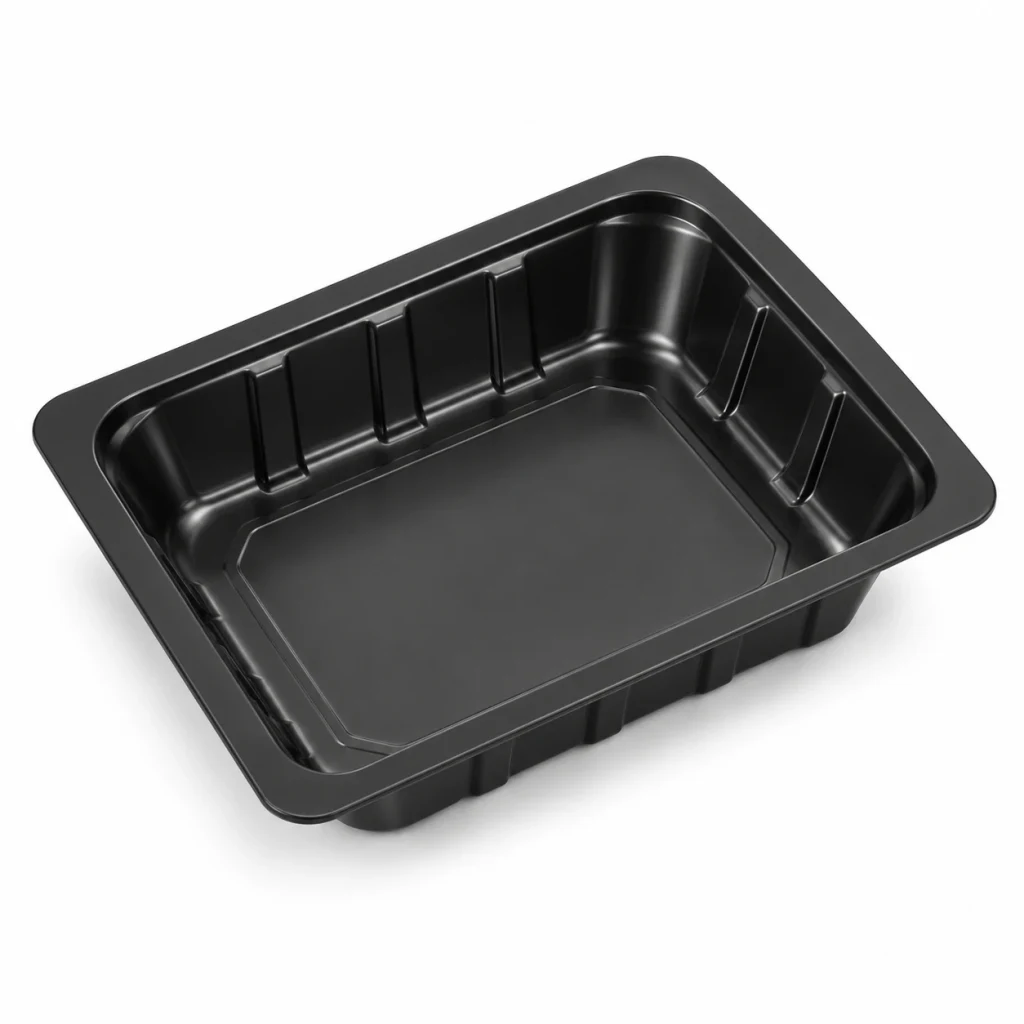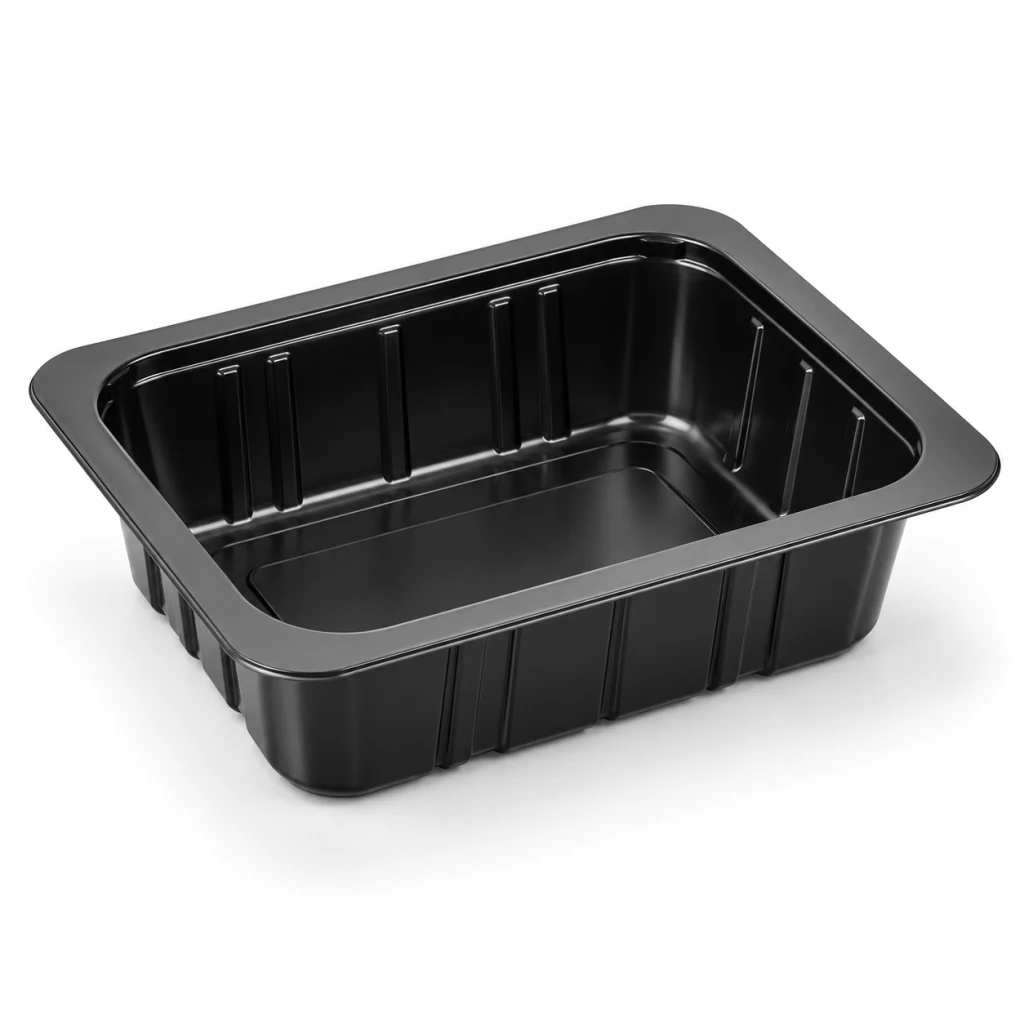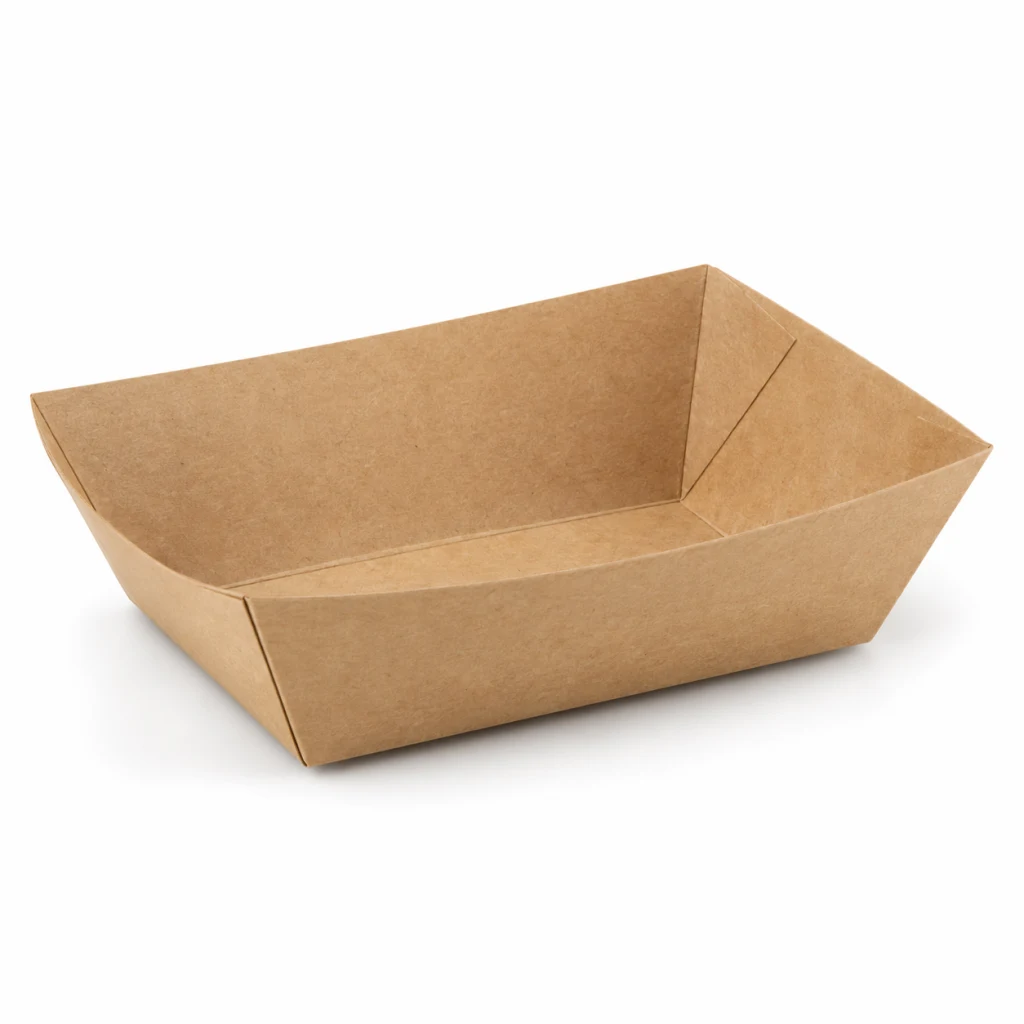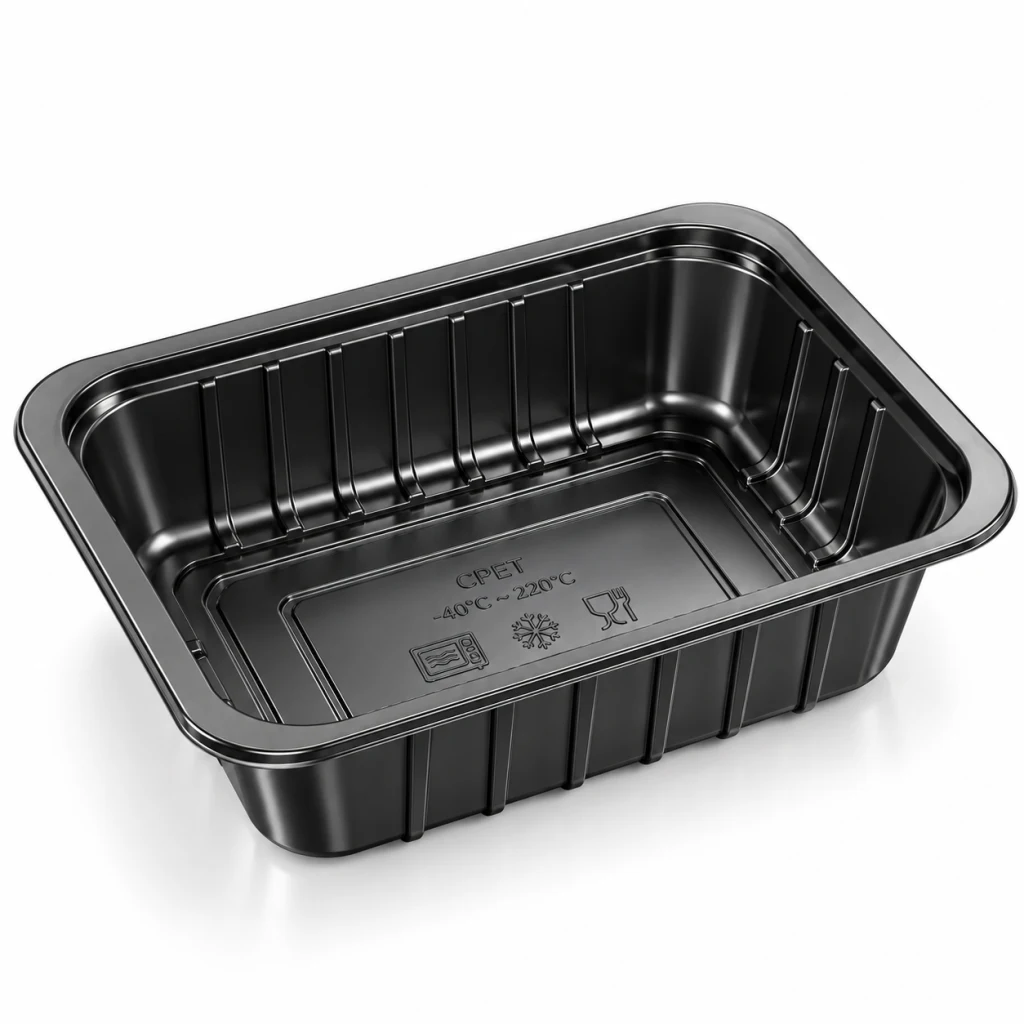
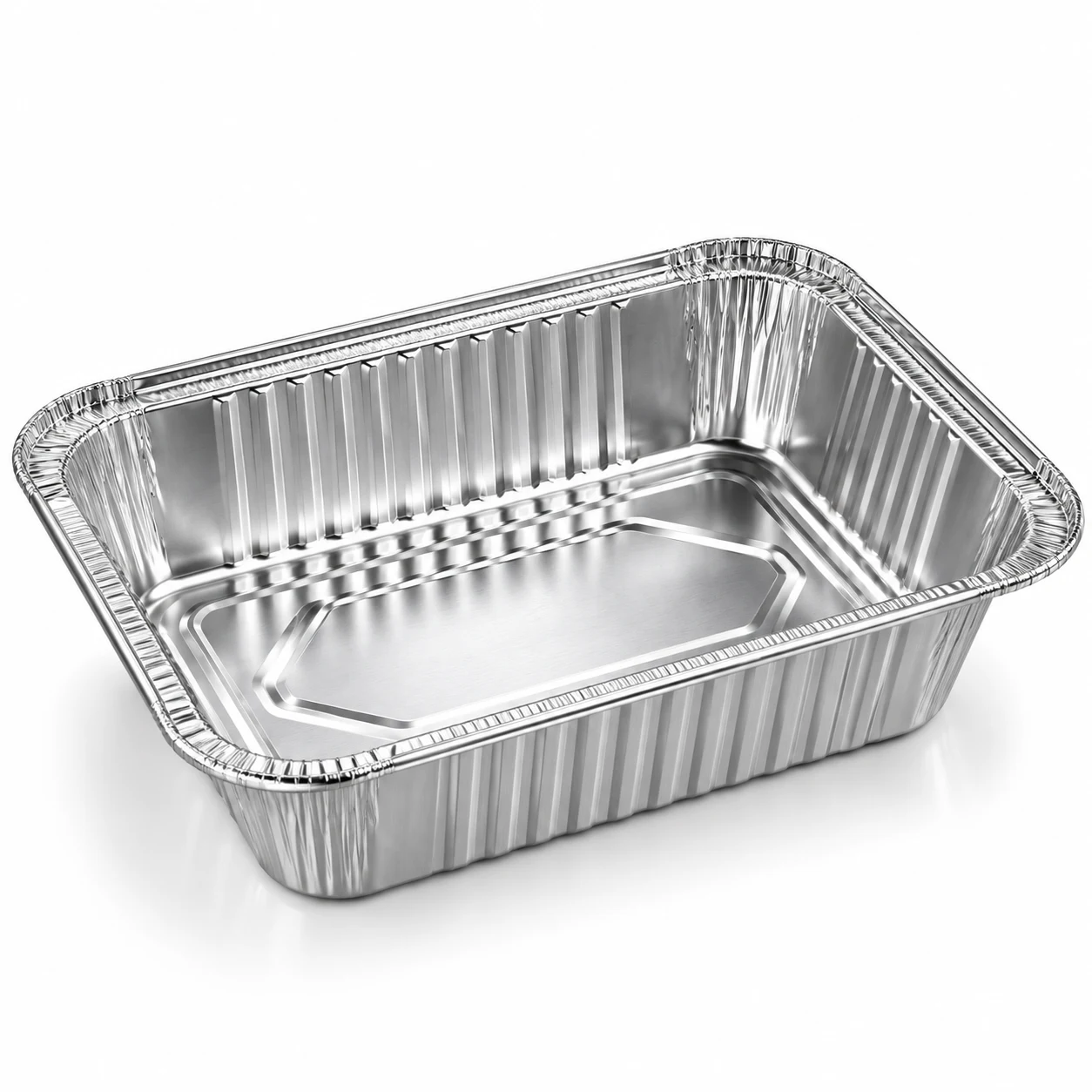
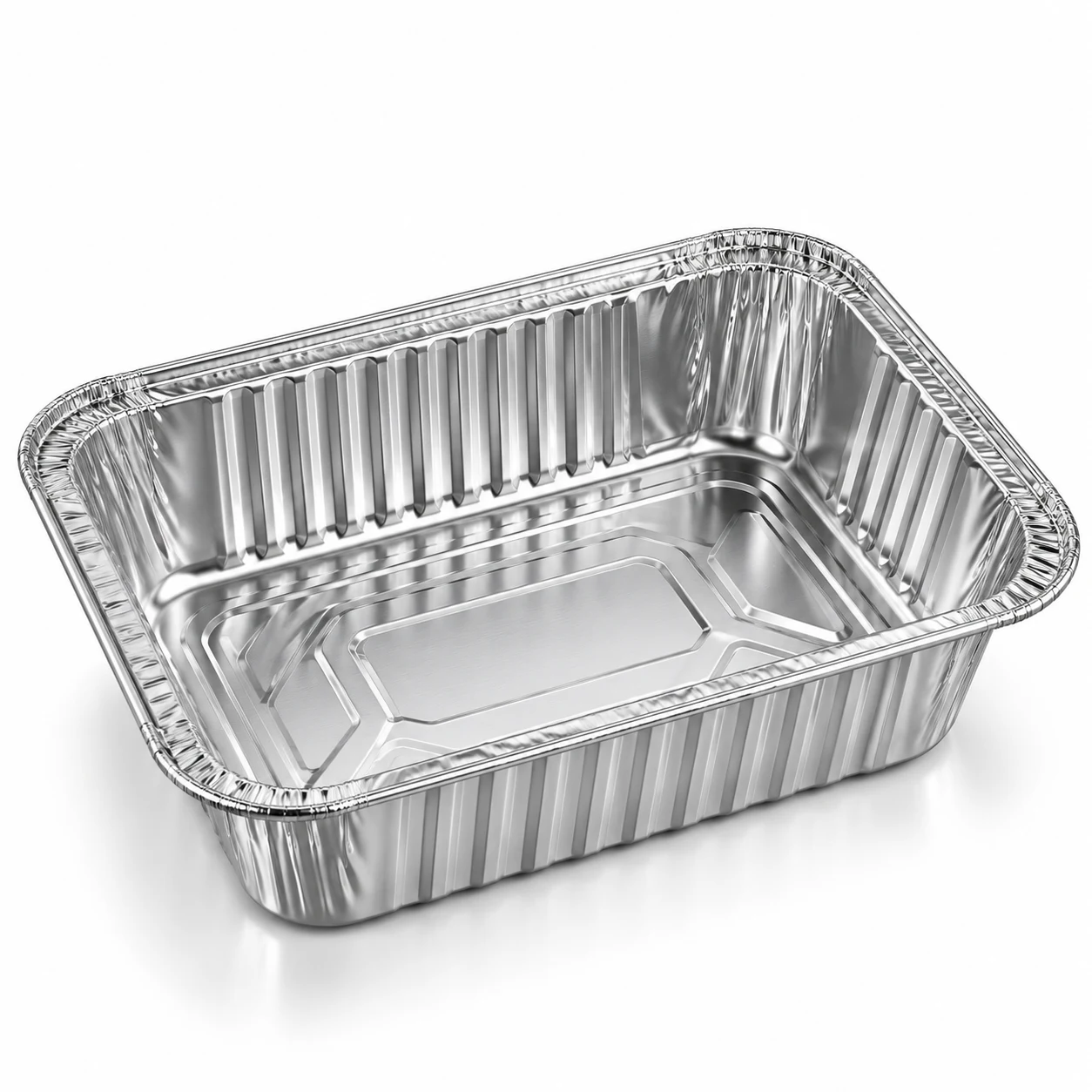
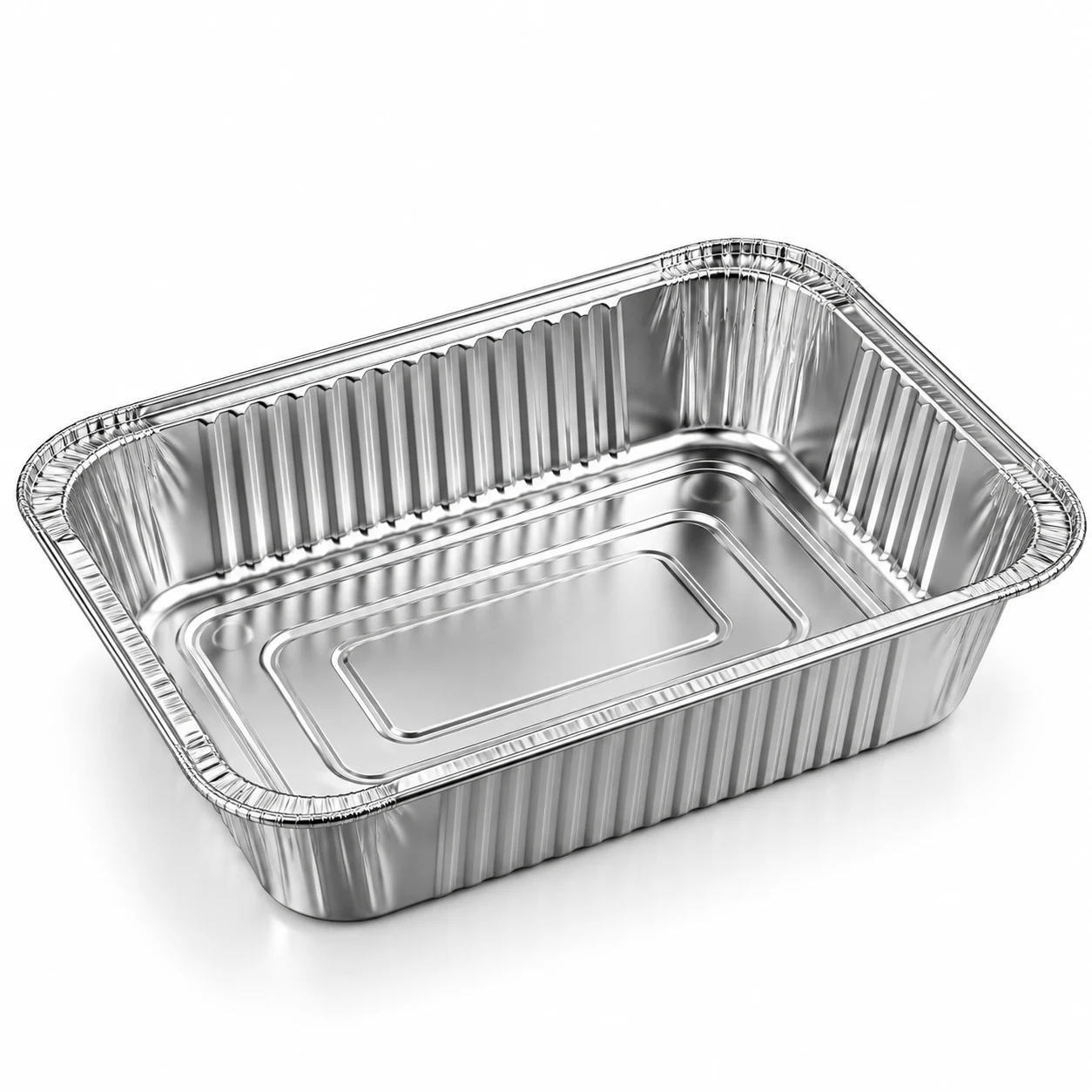
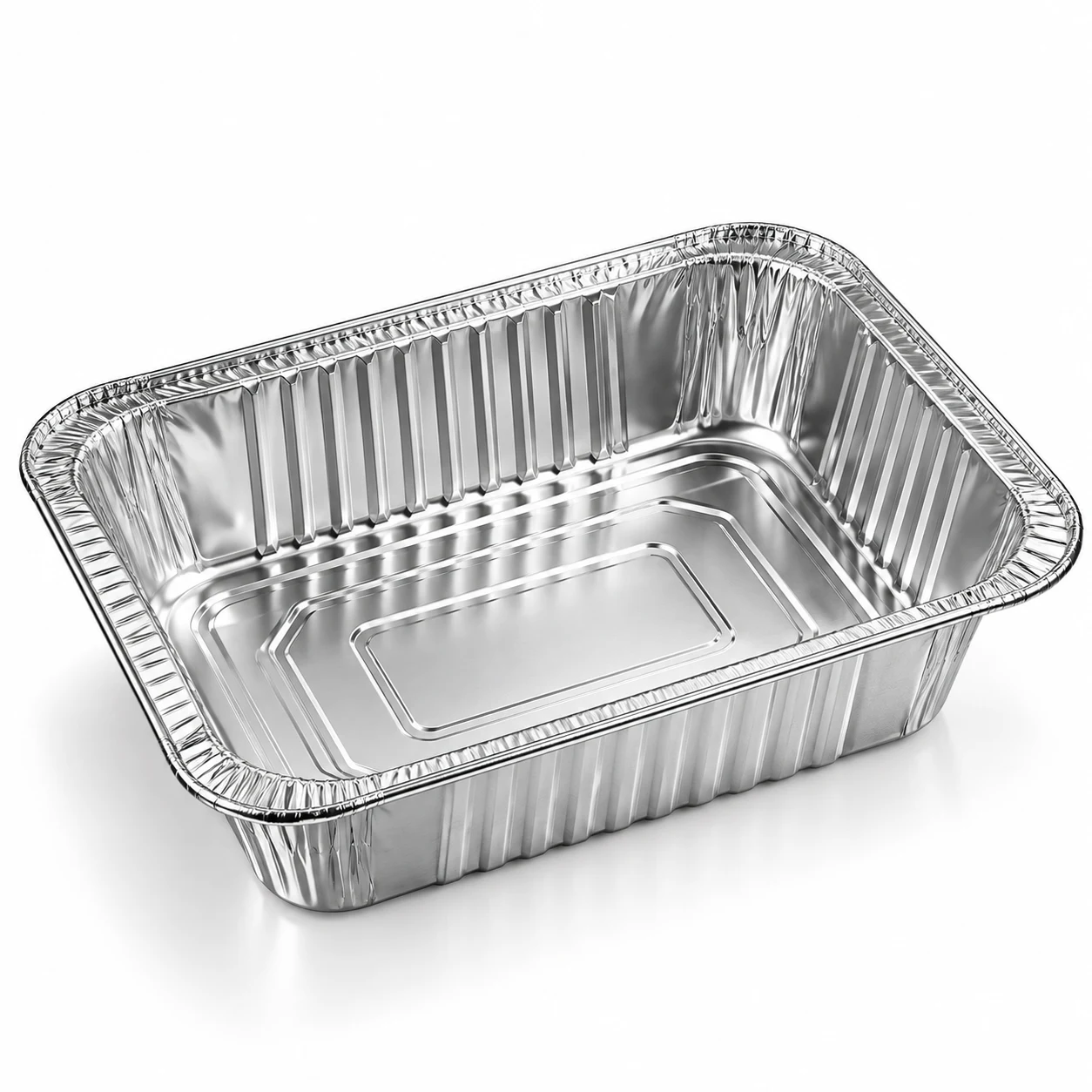
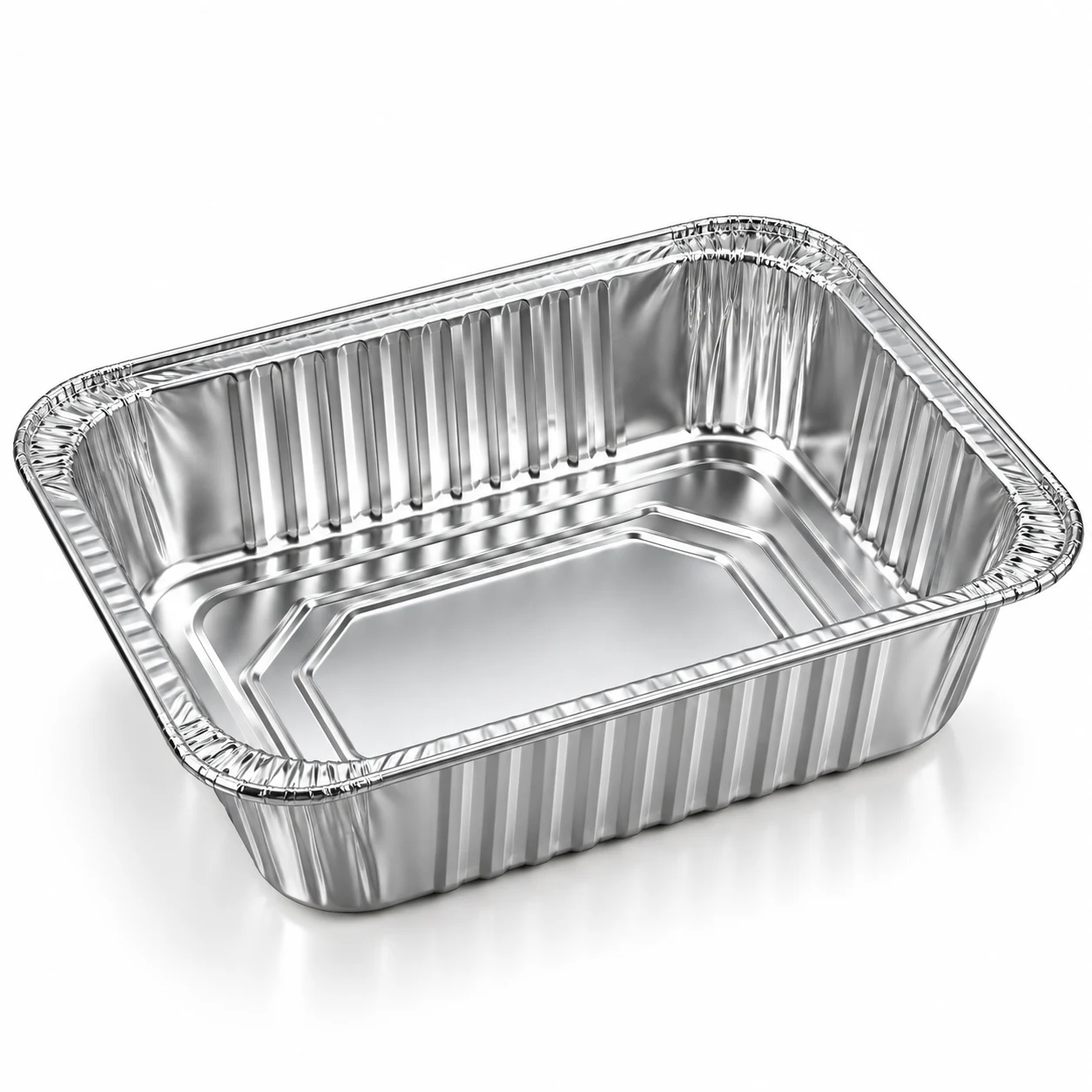
Custom aluminium foil tray — made to order: size, depth, compartments and lid type are all specified per run.
A pressed foil container is a complete barrier — no light, no oxygen, no moisture — and it is oven safe to 400 °C, which is well beyond anything plastic will take. That combination is why foil trays are standard on airline meal services, in bakeries and across takeaway: the tray the food is cooked in is the tray it is served in, and nothing has to be transferred.
Smooth wall against wrinkle wall
Wrinkle wall is the familiar ribbed container, formed in one press from a lighter gauge — economical, and the ribs add stiffness. Smooth wall is drawn rather than pressed, uses a heavier gauge, and gives a cleaner, more premium finish that seals reliably to a foil or board lid across the whole rim. If the tray is going to be lidded and sold at retail, ask for smooth wall; if it is a bakery or takeaway container, wrinkle wall usually does.
Ordering
Size, depth, compartments and lid type — board lid or foil lid — are made to order. Temperature range is −200 to 400 °C, and foil resists oils and fats without absorbing them. For oven reheating in a plastic tray, see the CPET tray; for the same barrier in a flexible format, aluminium foil film. FDA and GB food grade.
What moves the price
Gauge and wall type. Wrinkle wall is pressed from lighter foil and is the economical option; smooth wall is drawn from heavier gauge, seals reliably and costs more. Depth and compartments add material and tooling. Lids — board or foil — are priced separately and can double the cost of a shallow tray. Because foil is priced against the aluminium market, quotations here move for reasons unrelated to the rest of the catalogue and are held for shorter periods.
Where it goes wrong
Wrinkle wall where the pack is lidded and sold at retail, which gives an unreliable seal across the ribbed rim. The second is bare foil against acidic or salty contents, which reacts — a lacquered tray is specified against the food rather than by default, and the fault shows up as discolouration weeks later. The third is a microwave instruction on a foil pack, which must not appear.
Where custom aluminium foil tray is used
Airline meal services, bakery, takeaway and any range cooked and served in the same container. Its oven range goes well beyond any plastic here, and its barrier is complete — but it cannot be microwaved, which is usually what decides between it and CPET. The ready meal page compares the routes, and aluminium foil film covers the same barrier in a flexible format.
What to send us for a quotation
A quotation for custom aluminium foil tray is written against a specification, so the more of this you can send, the closer the first number is to the real one: which structure, or the shelf life and the product so we can choose one — Aluminium foil are available here; the temperature the pack has to survive, from filling through to how the customer opens it (−200 to 400 °C for this product); the line it runs on — this one is specified for stamping and Heat sealing; which options you want fitted: smooth wall, Wrinkle wall and With board lid; the values for size, Depth, Compartments and Lid type.
Send the fill weight and the quantity with it. Where you already buy something similar, a sample is worth more than a description — we measure what is actually there rather than quoting against how it was once written down.
Food-contact and export requirements are set out in FDA 21 CFR 177, the US rule for food-contact polymers; the declarations for this structure are issued with the order.