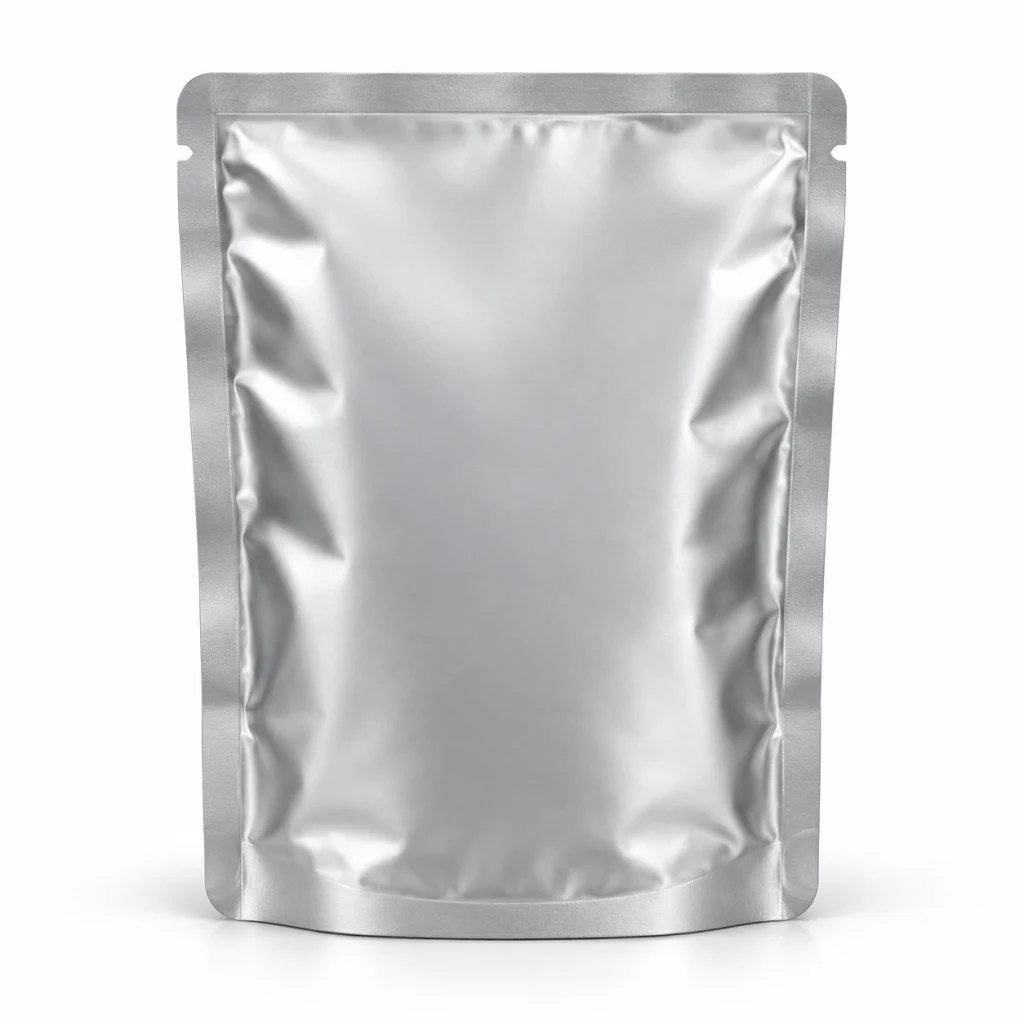
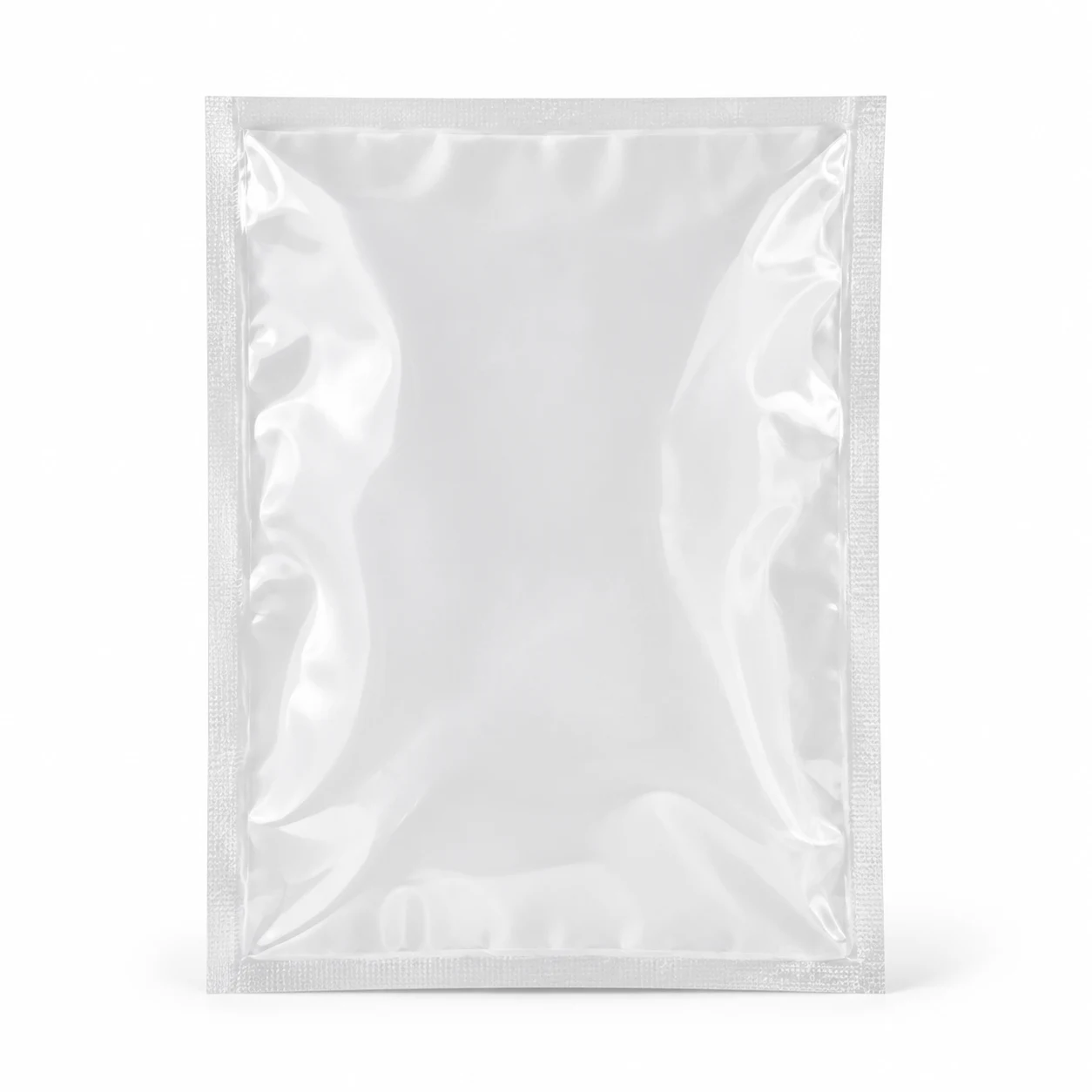
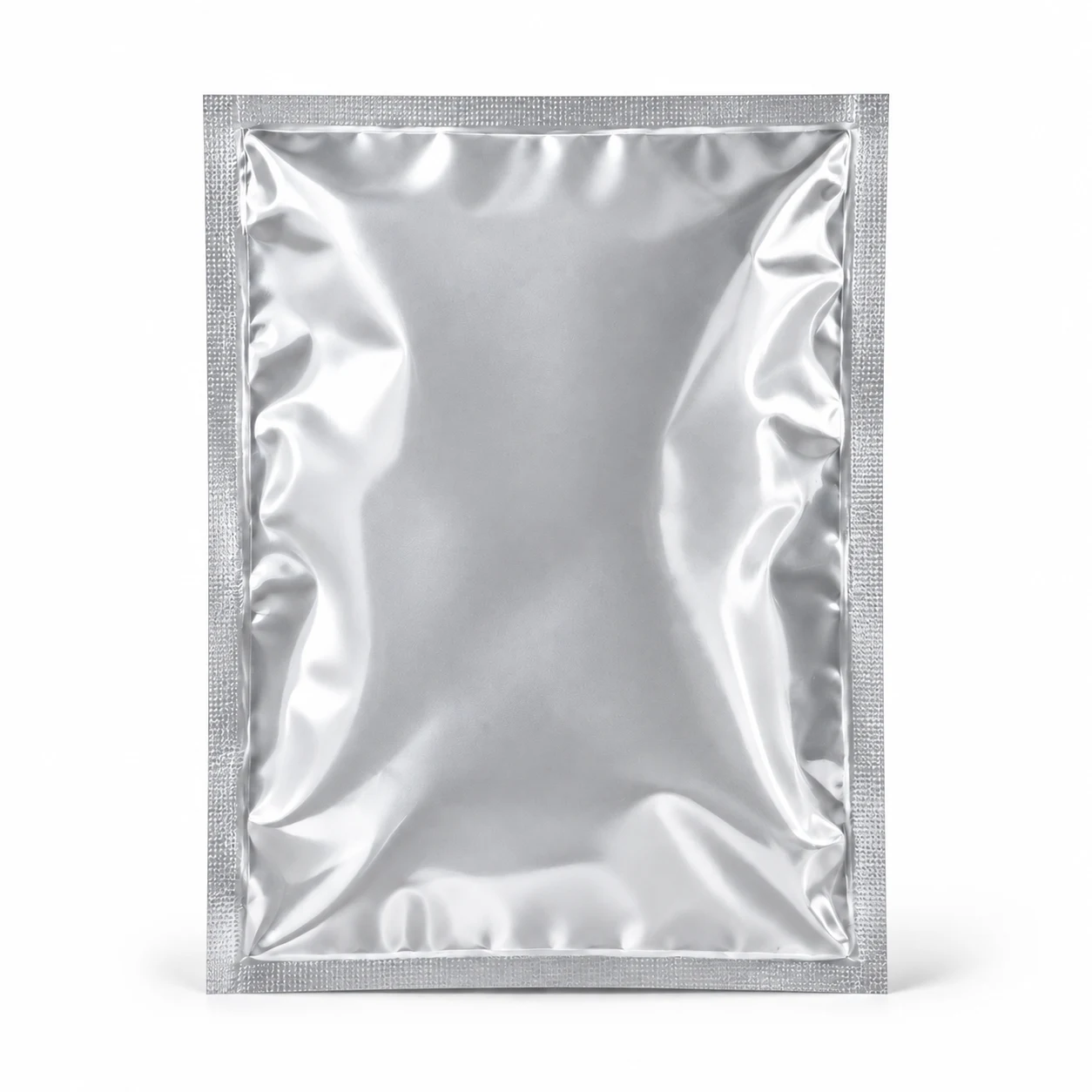
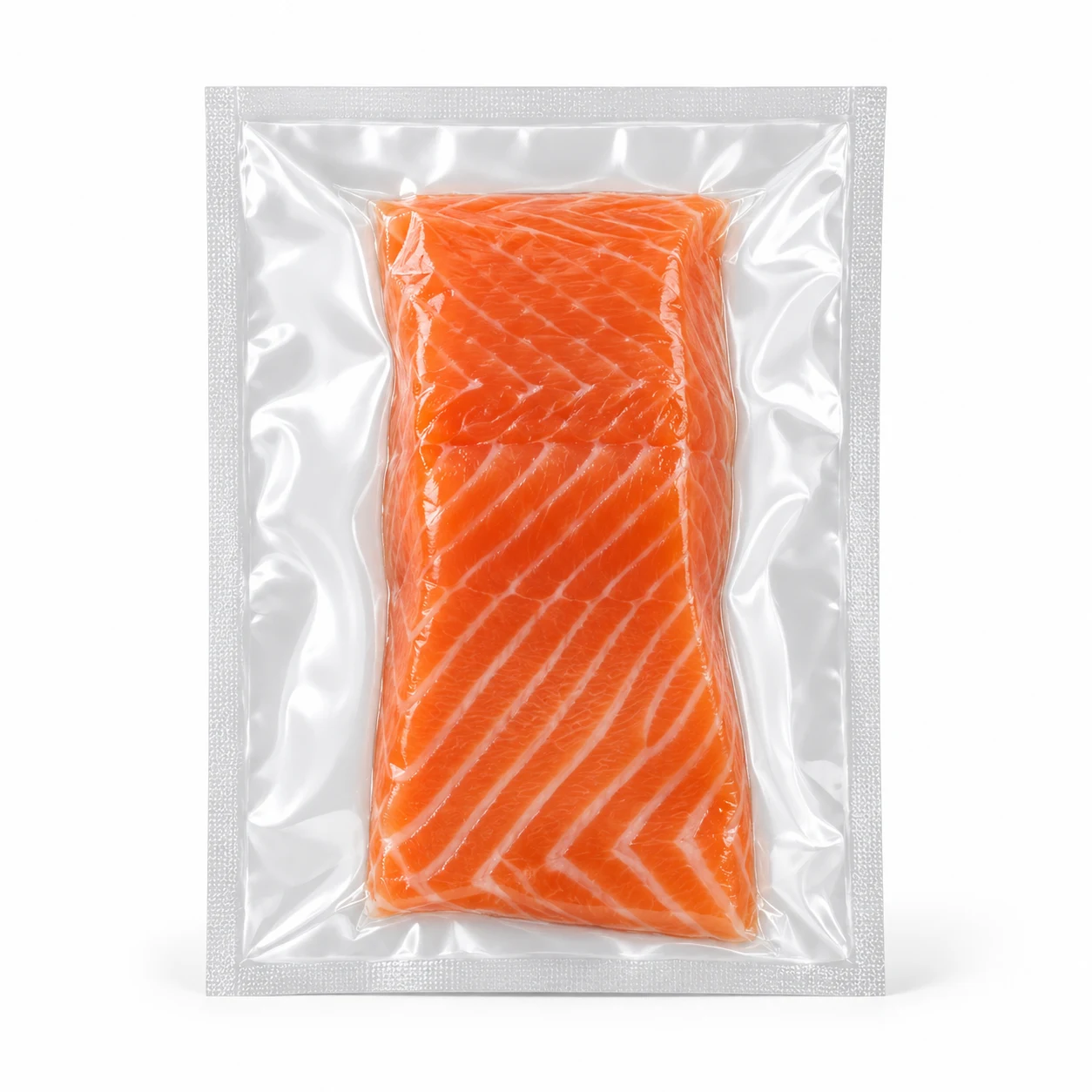
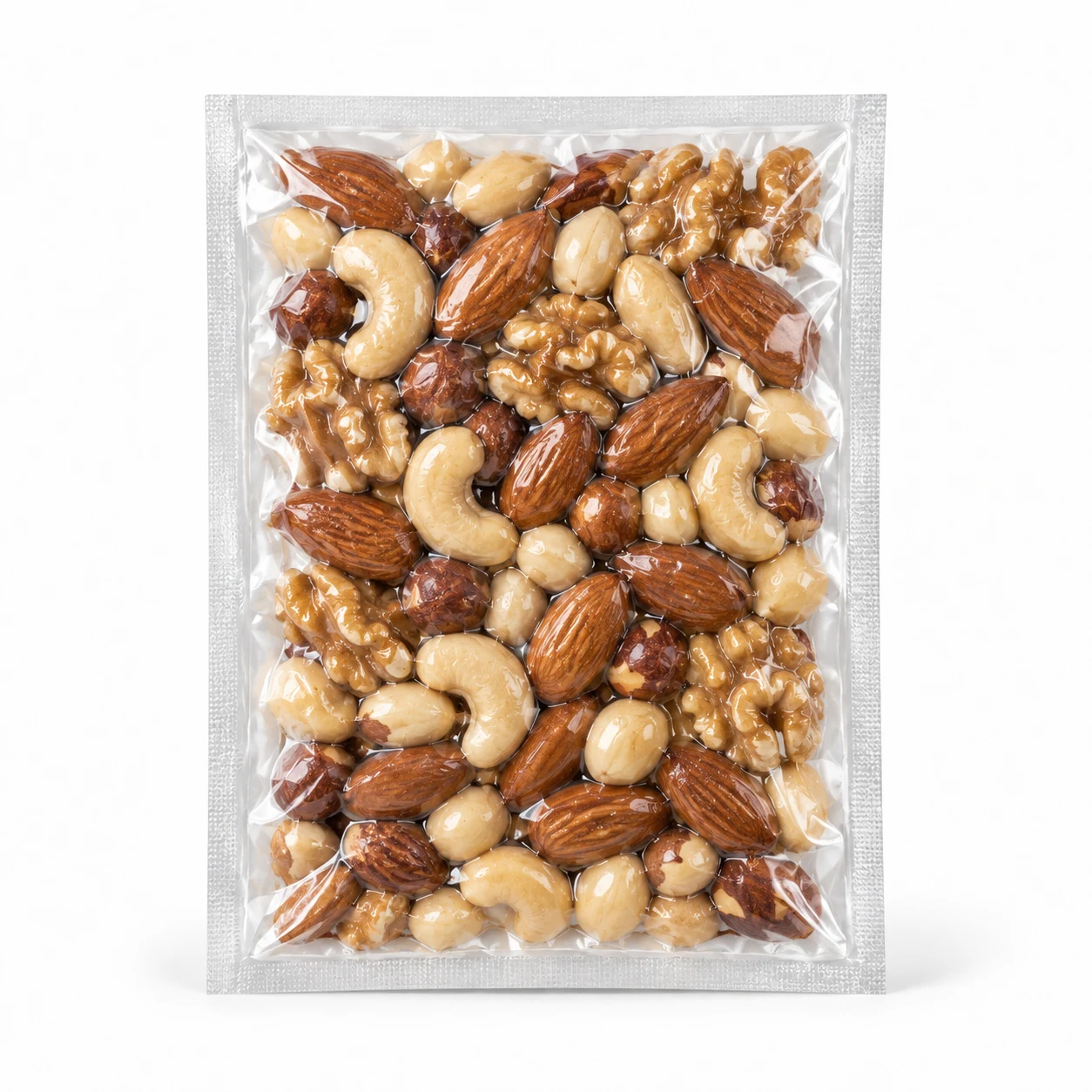
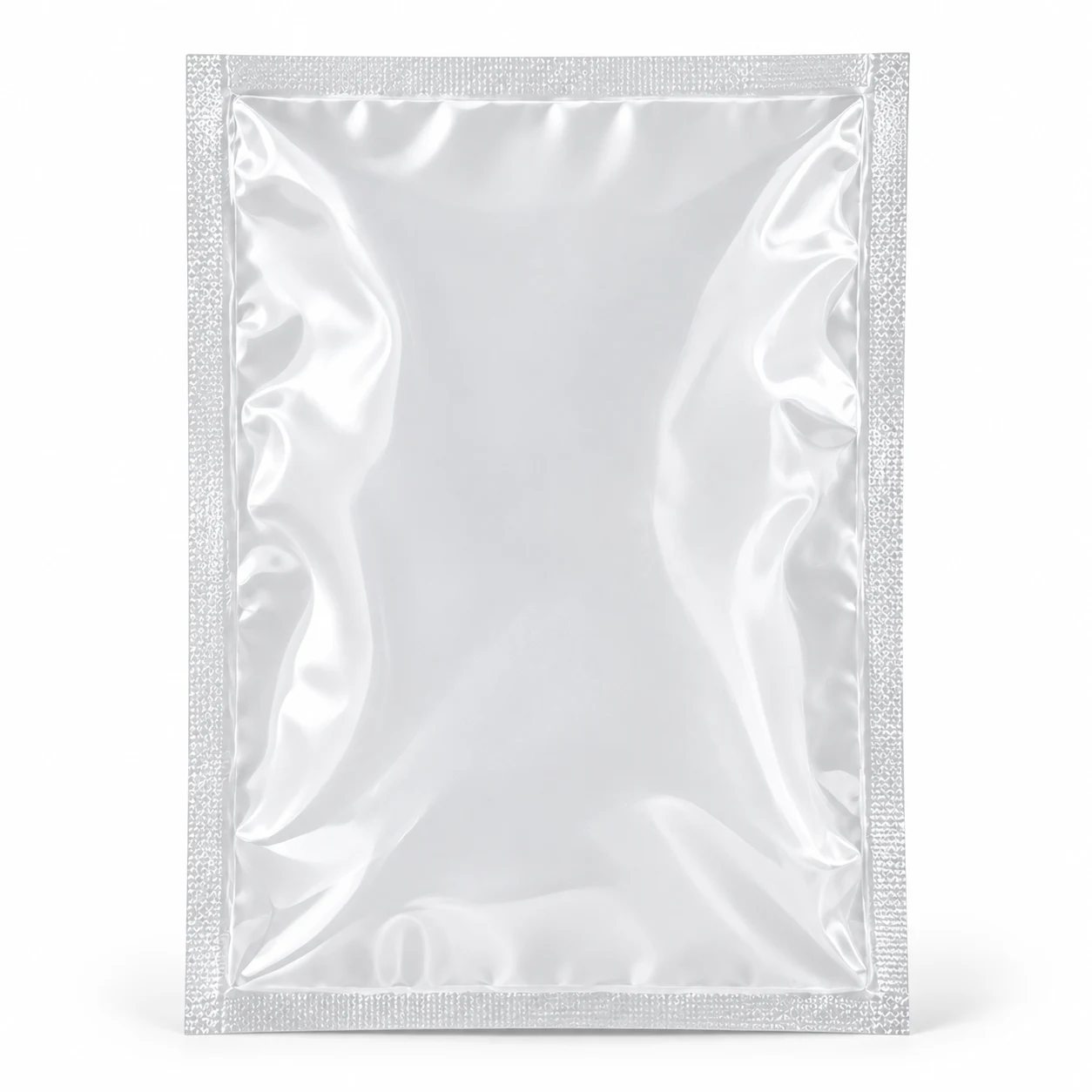
Custom vacuum pouch — made to order: size, thickness and printing up to 10 colours are all specified per run.
A vacuum pouch is made to have the air pulled out of it and stay that way. For fresh meat, fish and cheese, shelf life is mostly a question of how much oxygen is left in the pack, and a good vacuum pouch removes the argument — provided the film survives the process, which is where most of them fail.
Why nylon, and why thickness matters
We build these on PA/PE and PET/NY/PE because nylon resists puncture and tearing in a way polyethylene alone does not. Bone ends, shell, frozen edges and the sheer force of atmospheric pressure pressing film onto an irregular shape will breach a thin pack, and a breached vacuum pack is worse than no vacuum at all. The same nylon keeps the film from going brittle at freezer temperatures, so the pouch performs from frozen through to ambient. Oxygen and moisture barrier both rate 4 of 5, and vacuum retention is excellent.
Options and ordering
Size and thickness are made to order, smooth or embossed — embossed if you are running a chamber machine that needs channels for the air to escape. Clear or printed up to ten colours. Typical fills are fresh meat and poultry, fish and seafood, frozen foods, cooked and deli products, cheese and dairy. For the rigid equivalent with film drawn over the product, see the skin pack tray. Structures are available to FDA and GB food-grade specification.
What moves the price
Thickness and nylon content, which move together. A pouch thick enough for bone-in product costs more than one for a fillet, and the honest answer to “can it be thinner” is usually no if the contents are sharp. Embossed pouches cost more than smooth. Print adds the usual increment, though a great deal of vacuum packing is done unprinted with a separate label — which is often the cheaper route for short runs and several SKUs.
Where it goes wrong
Buying on thickness alone. A thick PE pouch will still breach on a bone end where a thinner nylon-containing one survives, because the property that matters is puncture resistance and not gauge. The second is the machine mismatch: embossed pouches on a nozzle machine or smooth pouches in a chamber will both give a poor vacuum, and that reads as a film fault when it is a pairing fault. The third is overfilling, which leaves too little clean film for the seal and produces leakers that pass inspection and fail in a chiller.
Where custom vacuum pouch is used
Fresh and frozen meat, fish and seafood, cheese, cooked and deli products — anywhere shelf life is decided by how much oxygen is left against the product. The meat and seafood page sets out the failure modes this category has and almost no other does, and the frozen and chilled page covers what cold does to the film and the seal. If the film is to be drawn over the product rather than around it, the skin pack tray is the rigid equivalent.
What to send us for a quotation
A quotation for custom vacuum pouch is written against a specification, so the more of this you can send, the closer the first number is to the real one: which structure, or the shelf life and the product so we can choose one — PA/PE and PET/NY/PE are available here; the temperature the pack has to survive, from filling through to how the customer opens it (frozen to ambient for this product); the line it runs on — this one is specified for vacuum packing and Heat sealing; which options you want fitted: smooth, Embossed and Clear; the values for size, Thickness and Printing up to 10 colours.
Send the fill weight and the quantity with it. Where you already buy something similar, a sample is worth more than a description — we measure what is actually there rather than quoting against how it was once written down.
Food-contact and export requirements are set out in FDA 21 CFR 177, the US rule for food-contact polymers; the declarations for this structure are issued with the order.