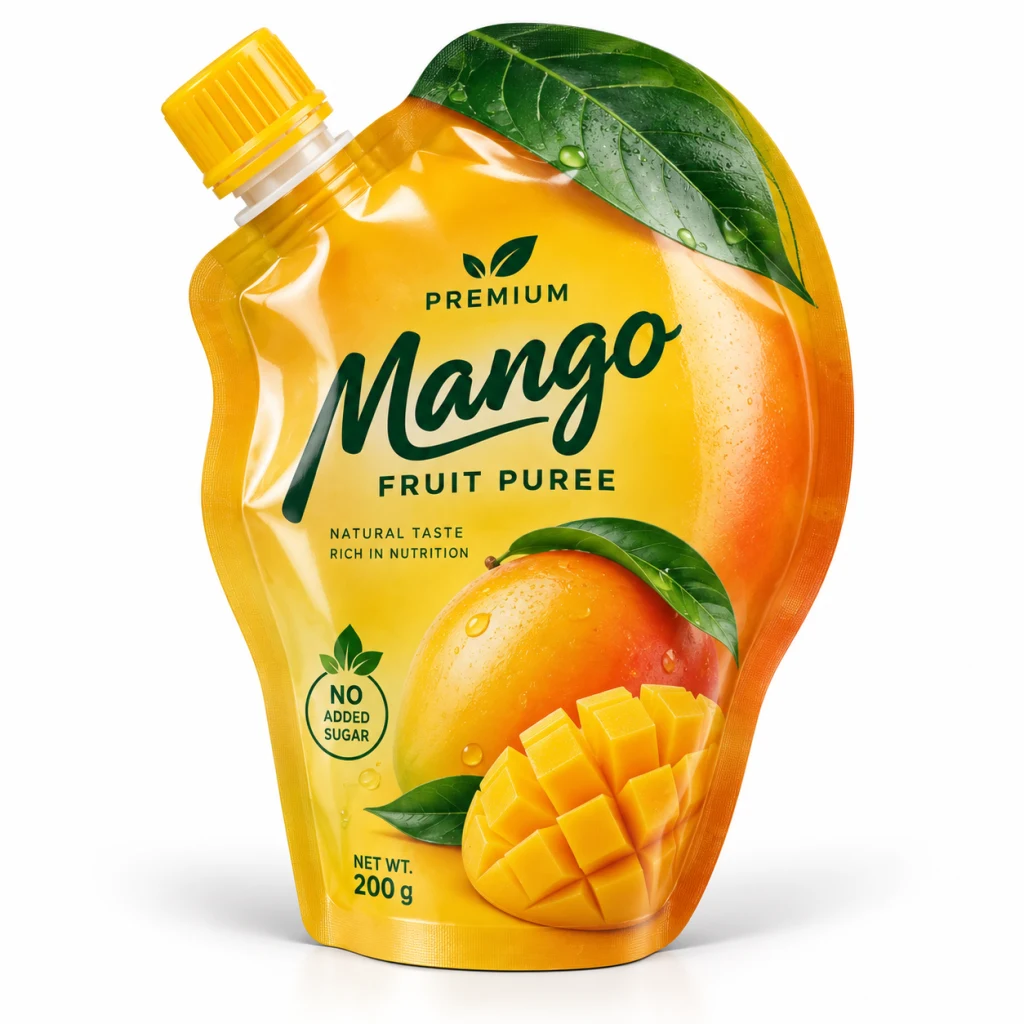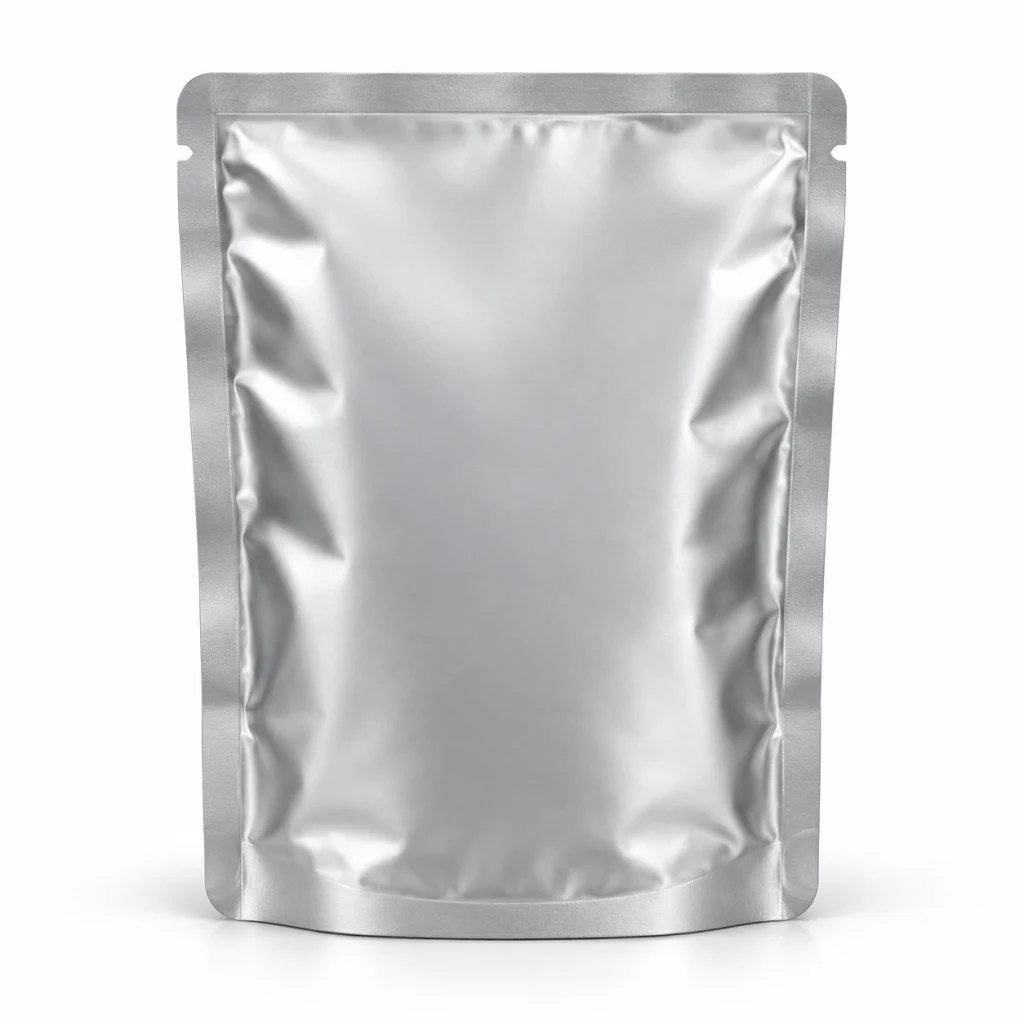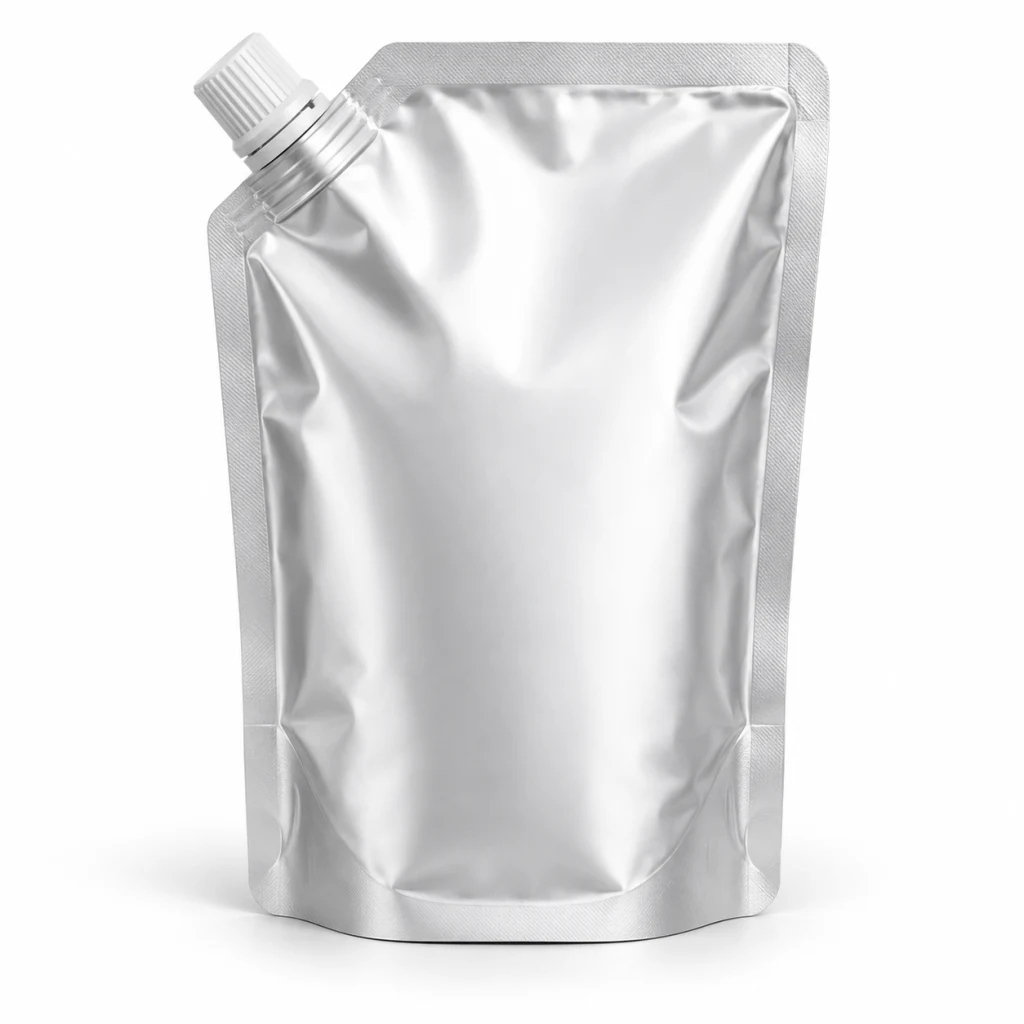
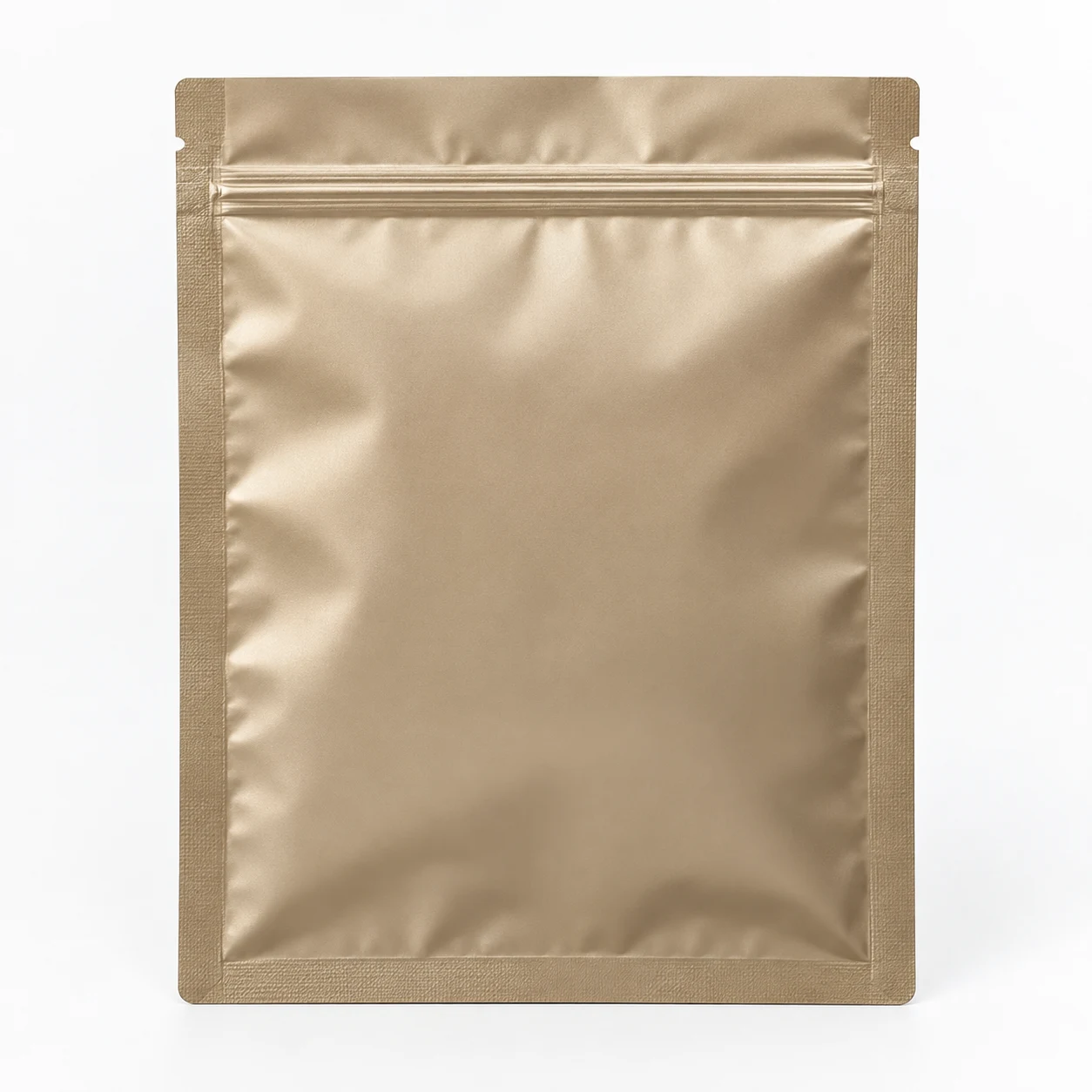
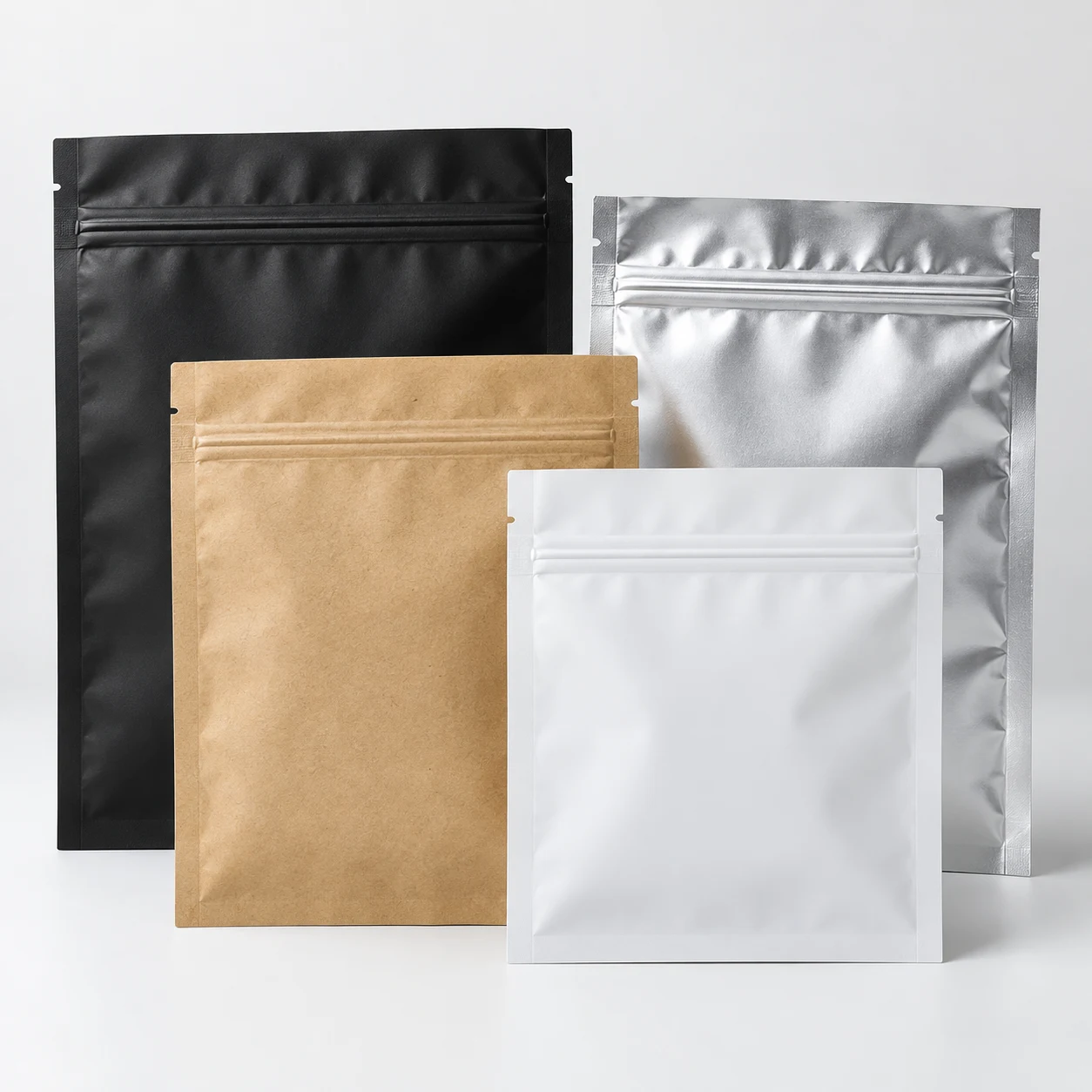
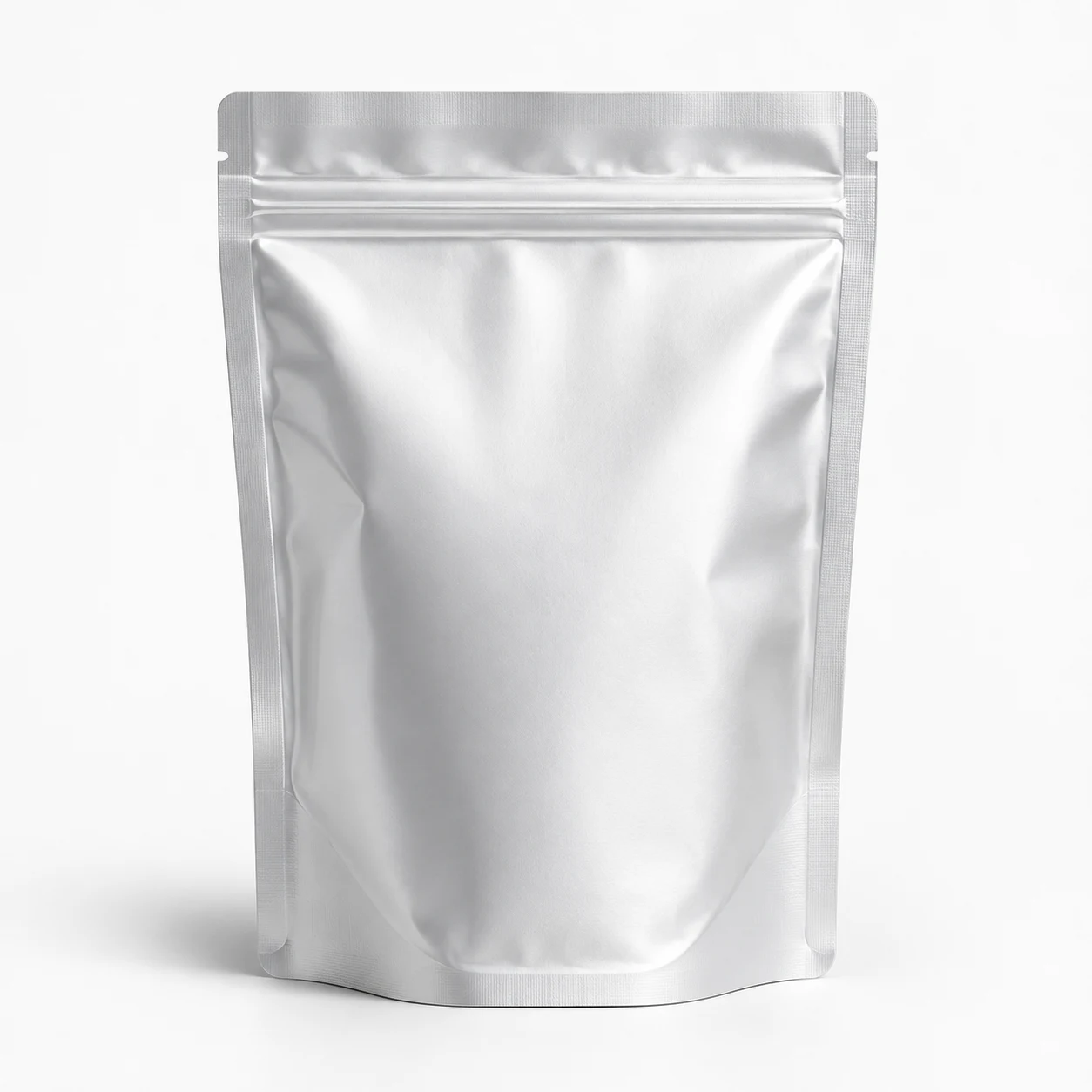
Custom zipper pouch — made to order: size, thickness, structure and printing up to 10 colours are all specified per run.
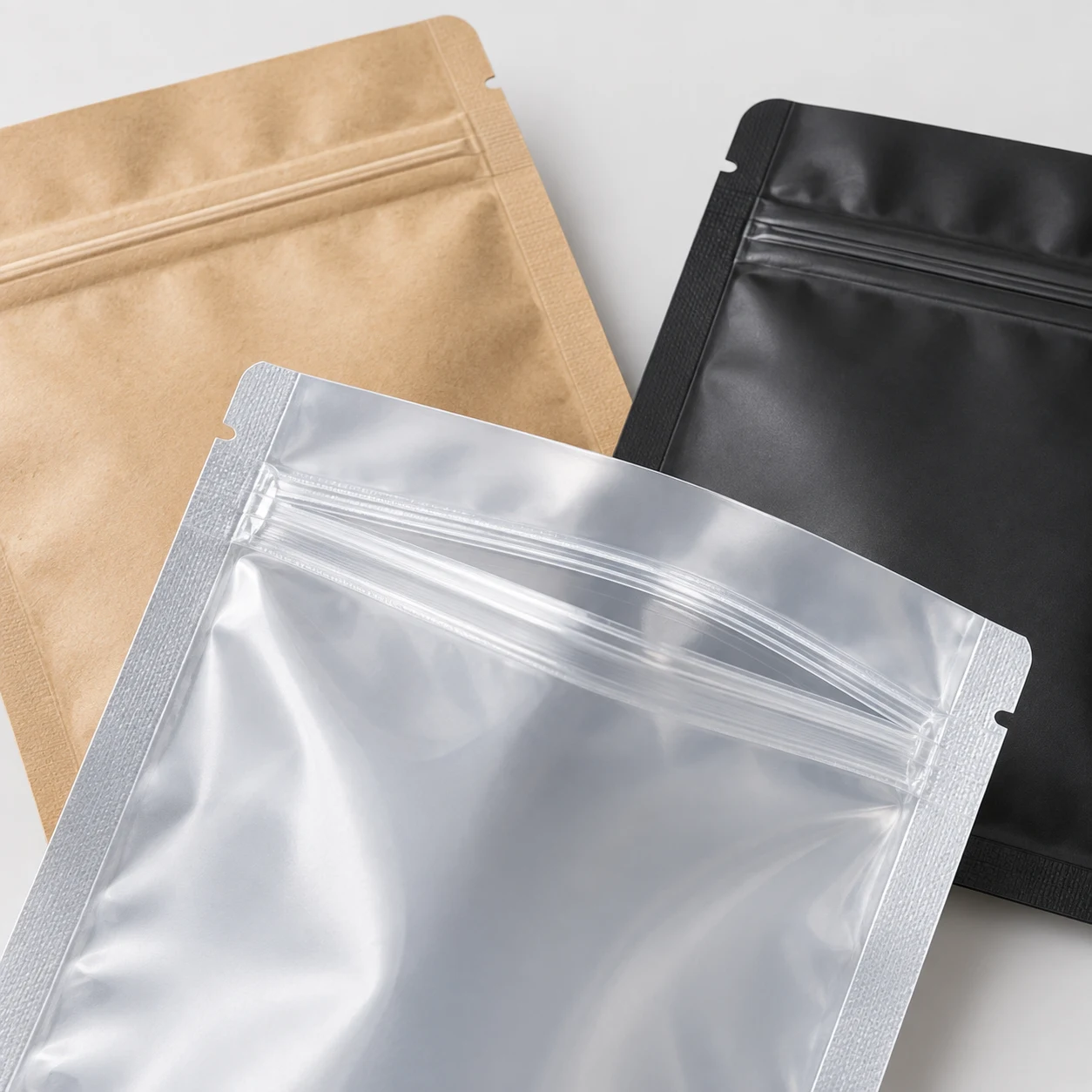
A zipper pouch is any of our pouch formats with a press-to-close or slider closure welded into the top seal, and it exists for one reason: most products are not finished in one sitting. Coffee, pet food, seasonings, crisps and frozen portions are opened, used and put back, and everything that happens to them after the first opening depends on whether the pack closes again properly.
Barrier after opening, not just before it
This is where the structure earns its money. We build zipper pouches in PET/AL/PE and PET/VMPET/PE for high barrier — both 4 of 5 on oxygen and moisture — in PA/PE where the pack goes into a freezer, and in Kraft paper/PE or PLA/PBAT where the brand needs a recyclable or biodegradable claim and will accept less barrier for it. A press-to-close zip is standard; a slider costs more and is easier for older hands and gloved ones.
Options and ordering
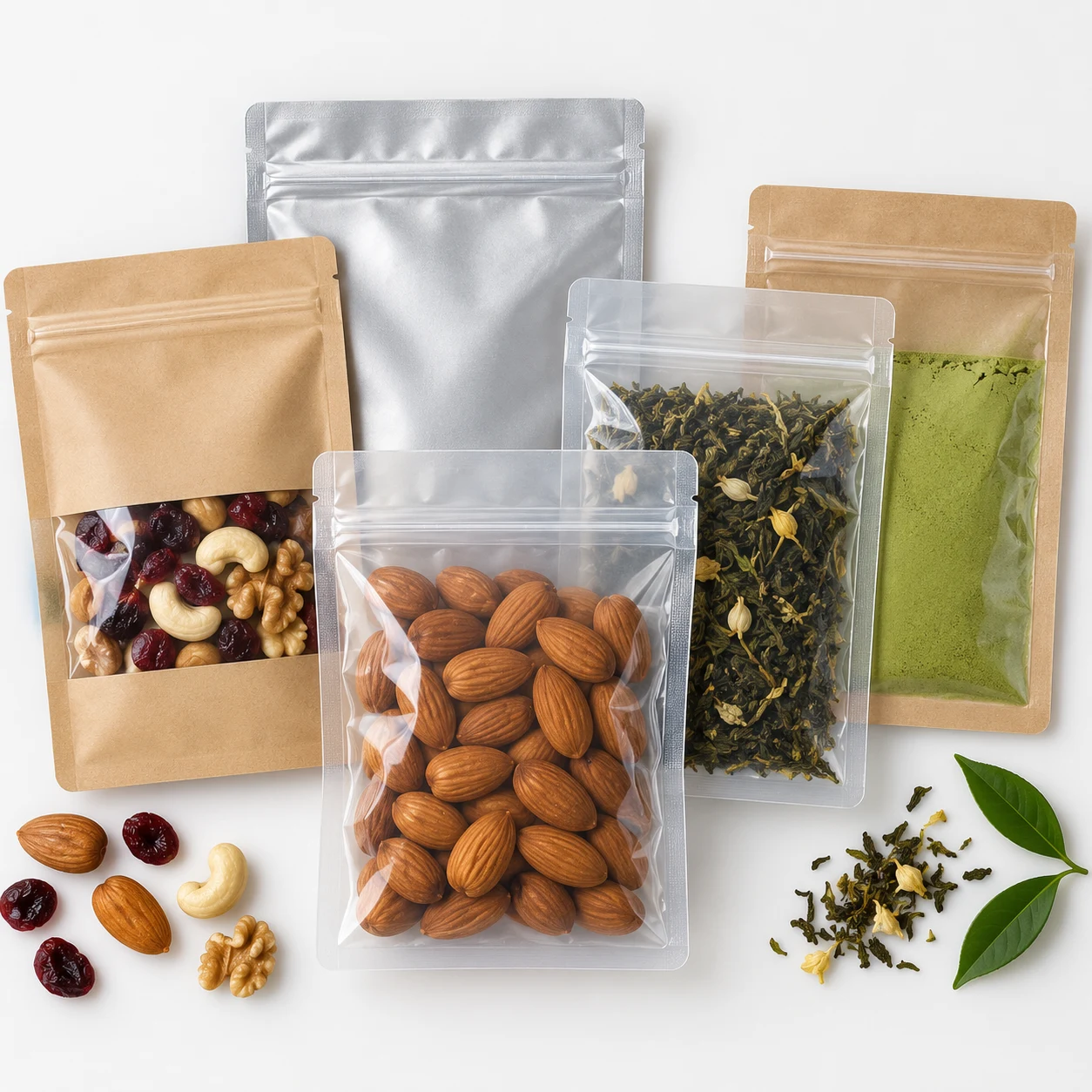
Size, thickness and structure are made to order, with printing up to ten colours, and a matt, gloss or kraft finish. Typical fills are coffee, tea and nuts, seasonings, crisps, pet food, frozen and chilled foods, and organic lines. Without the closure this is the stand-up pouch; for coffee specifically, the degassing valve matters as much as the zip, and our coffee bag packaging guide explains why.
What moves the price
The zip itself is a modest addition; a slider costs noticeably more than a press-to-close. The structure remains the larger lever, and it is worth being honest about what the closure changes: a zip protects the product after opening, it does not improve the unopened shelf life, so the barrier decision is unaffected by having one. Volume and print method behave as they do across the range. Where a brand runs several flavours in one structure and one size, digital printing turns four production runs into one.
Where it goes wrong
Expecting the zip to do barrier work. Once opened, a pack is exposed every time it is opened, and a press-to-close zip reduces that exposure rather than eliminating it — for coffee, the valve and the structure matter more than the closure. The second mistake is fitting a zip to a pack that is emptied in one go, which pays for a feature nobody uses. And for freezer products, a zip on a structure without nylon becomes brittle and cracks, which is a structure choice rather than a closure one.
Where custom zipper pouch is used
Coffee, pet treats, seasonings, frozen portions, supplements — anything consumed over weeks rather than at once, which is most of what a household buys. The closure protects the majority of the pack, because most of it is eaten after the first opening. For coffee specifically the zip is only half the answer and the valve is the other half: see the coffee packaging page. For frozen portions, the structure has to stay flexible below zero, which the frozen and chilled page covers.
What to send us for a quotation
A quotation for custom zipper pouch is written against a specification, so the more of this you can send, the closer the first number is to the real one: which structure, or the shelf life and the product so we can choose one — PET/AL/PE, PET/VMPET/PE and PA/PE are available here; the temperature the pack has to survive, from filling through to how the customer opens it (ambient, and low temperature with PA/PE for this product); the line it runs on — this one is specified for pre-made pouch filling and Vacuum packing; which options you want fitted: press-to-close zipper, Slider zipper and Matt finish; the values for size, Thickness, Structure and Printing up to 10 colours.
Send the fill weight and the quantity with it. Where you already buy something similar, a sample is worth more than a description — we measure what is actually there rather than quoting against how it was once written down.
Food-contact and export requirements are set out in FDA 21 CFR 177, the US rule for food-contact polymers; the declarations for this structure are issued with the order.