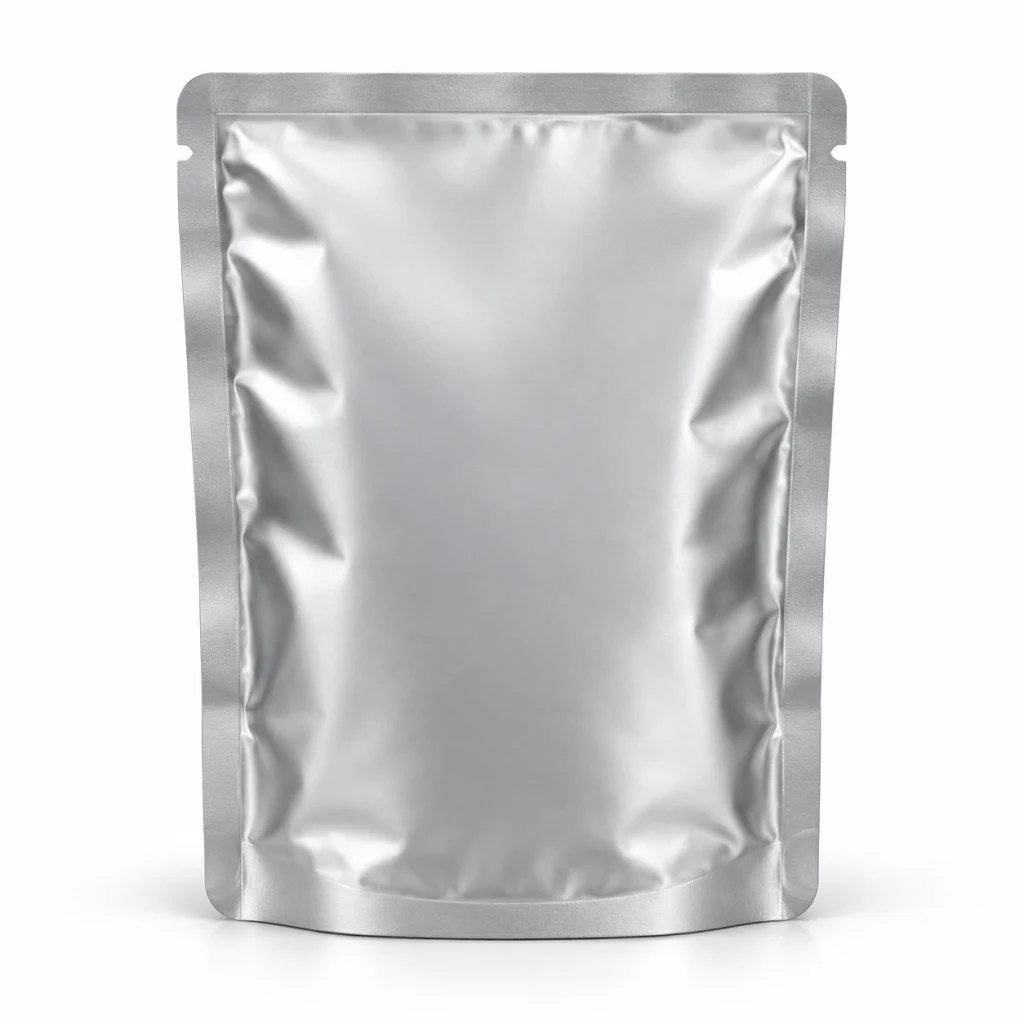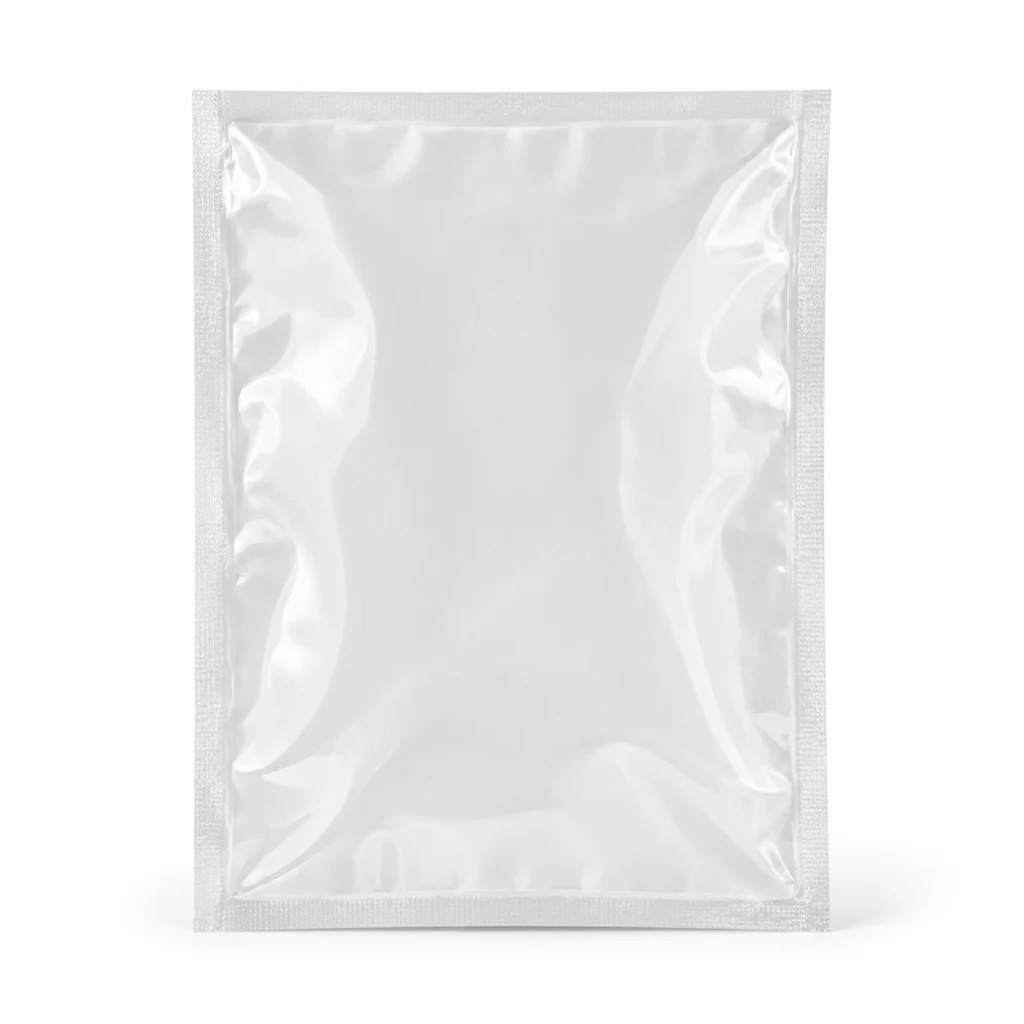
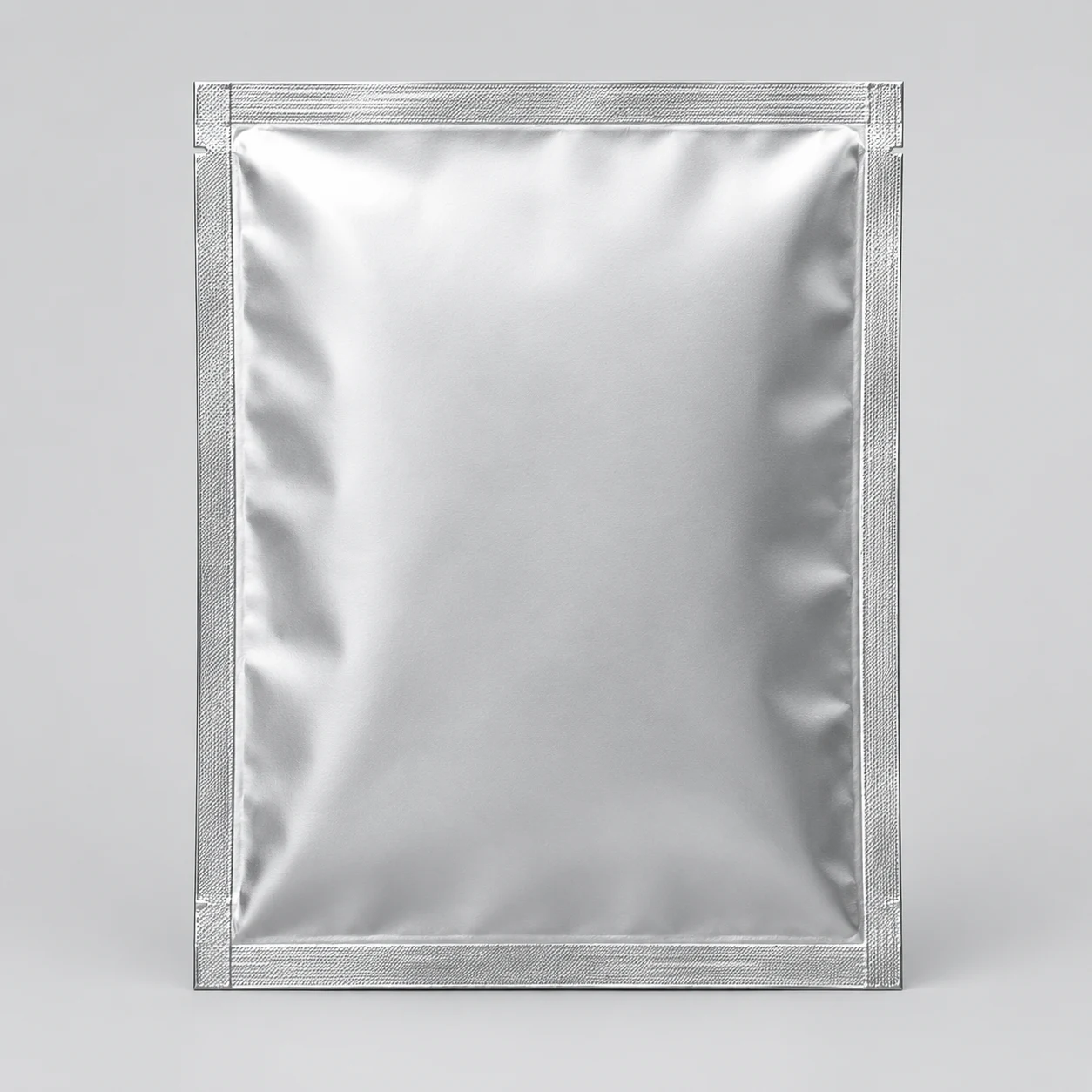
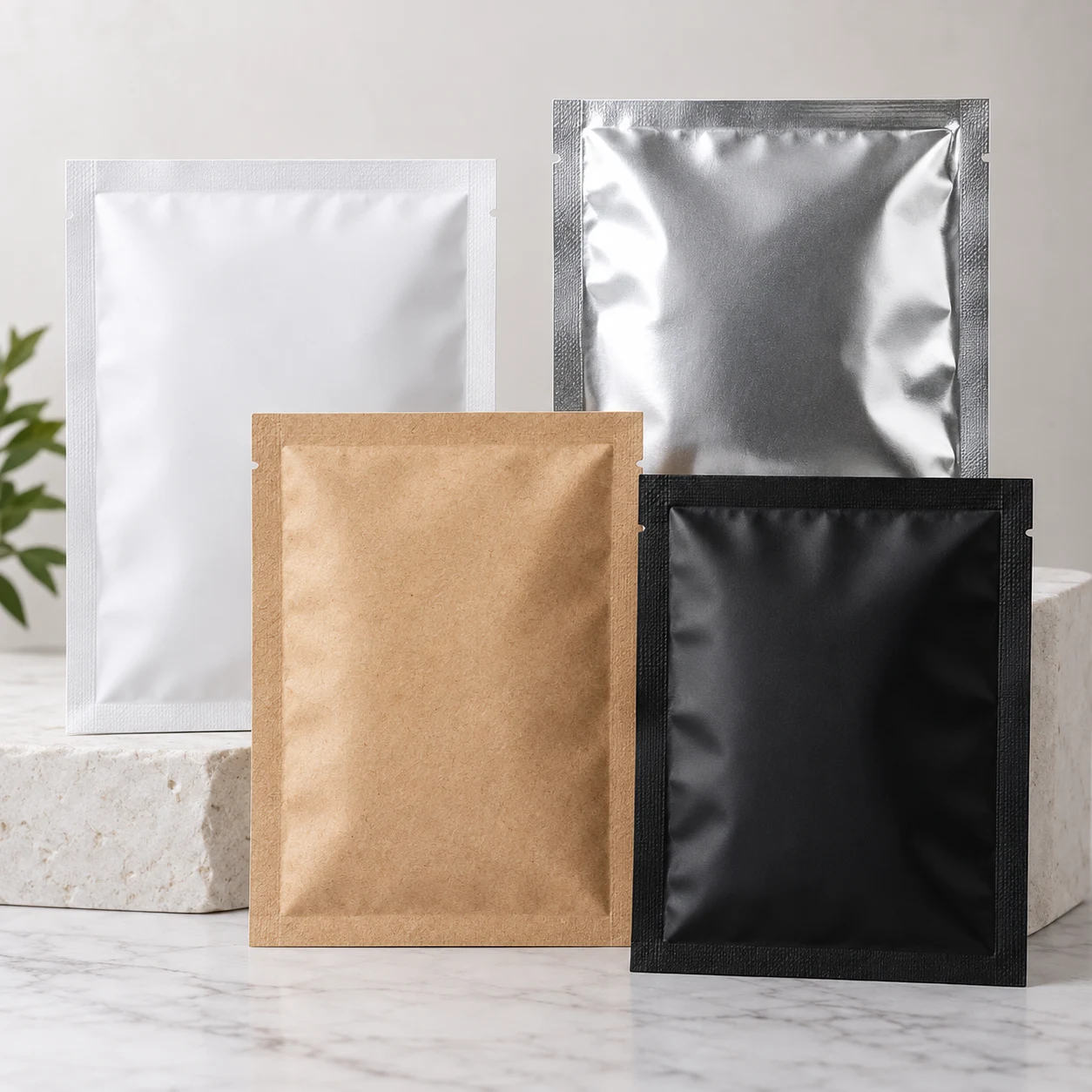
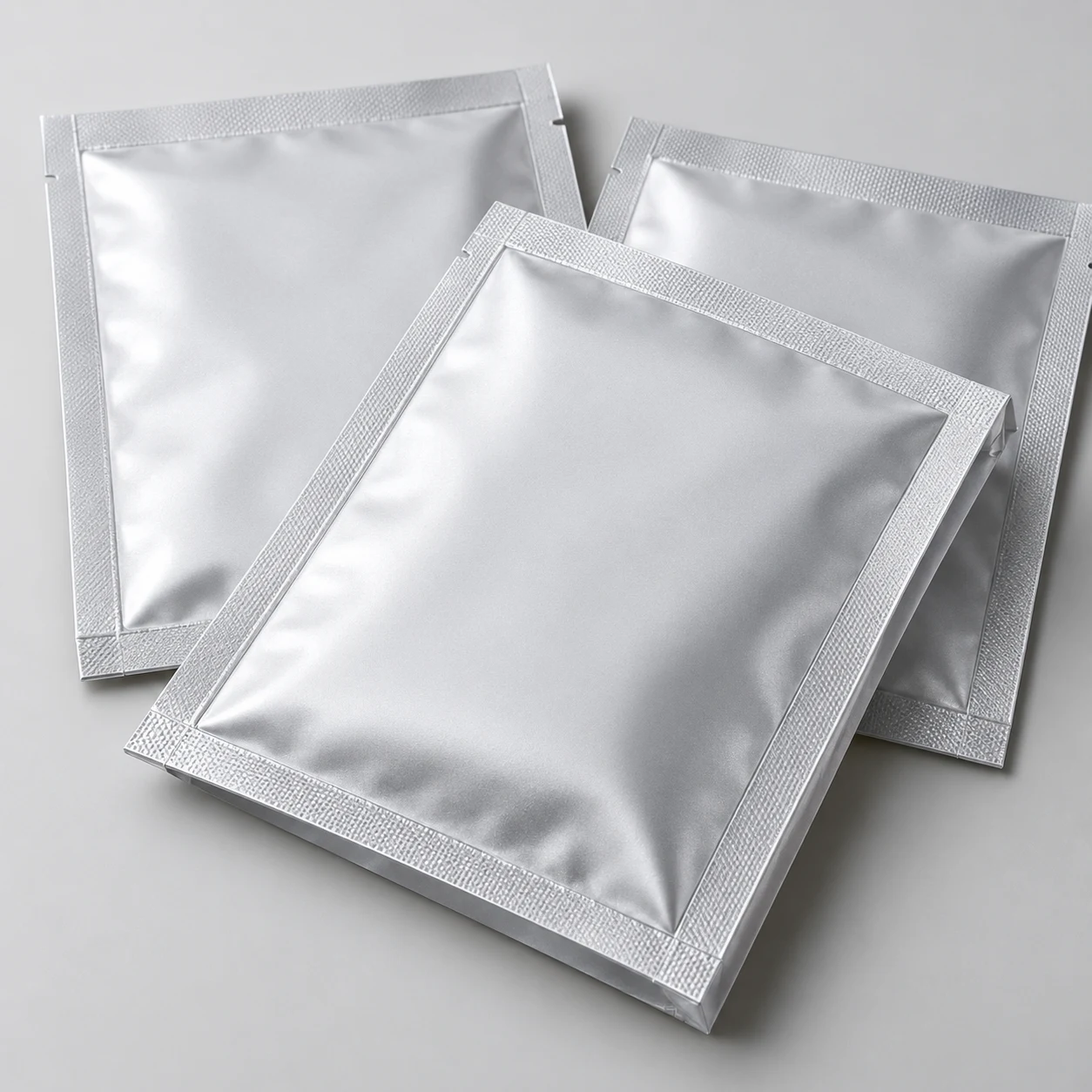
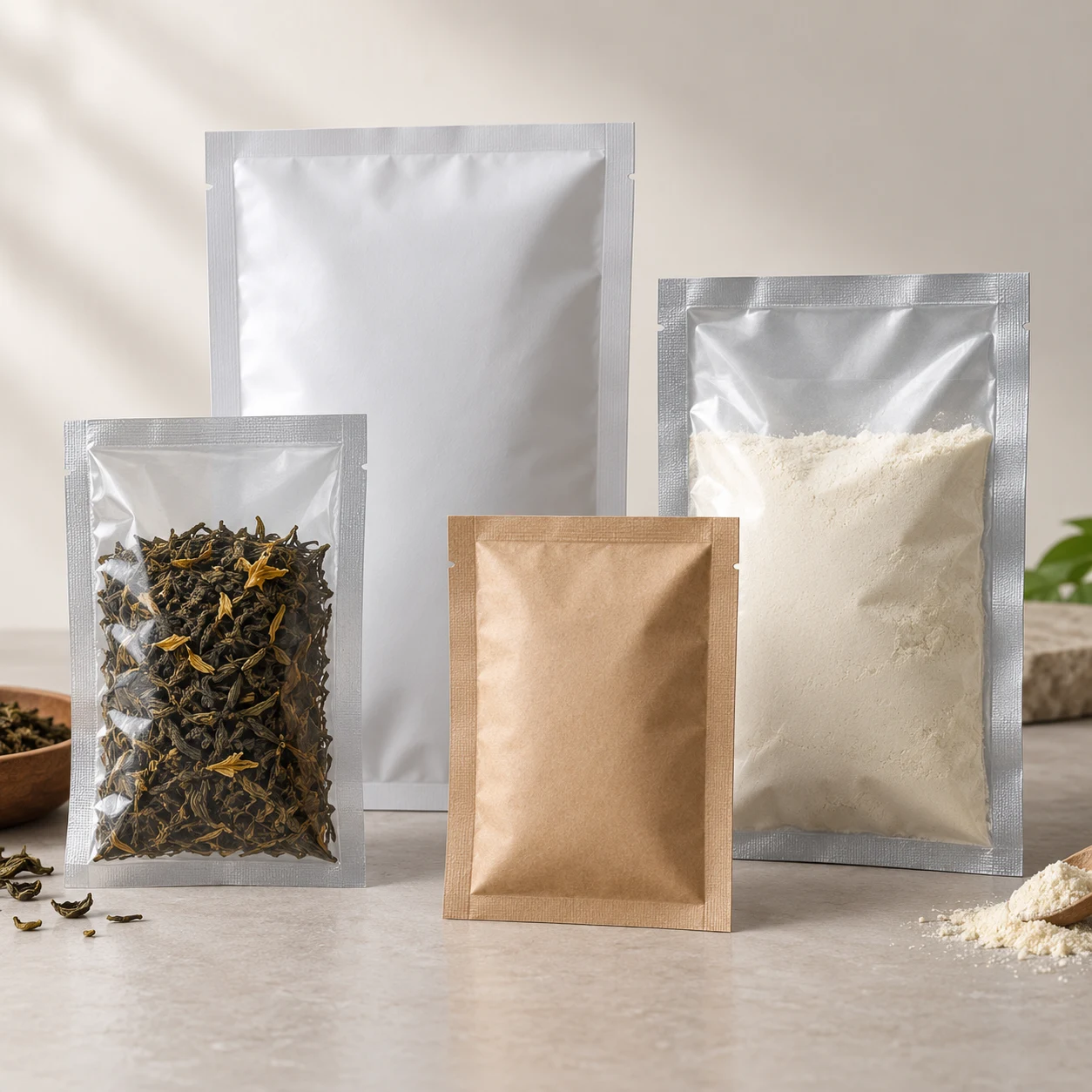
Custom four side seal pouch — made to order: size, thickness and printing up to 10 colours are all specified per run.
Sealing all four edges instead of three does two things: it gives a flat, even face with a defined border on every side, and it lets the pouch carry an aluminium layer without the seal geometry fighting it. The result is a format that prints and stacks unusually well and reaches 4 of 5 on both oxygen and moisture barrier — high enough for coffee, seasonings and anything else that loses its value to air.
Where the format earns its place
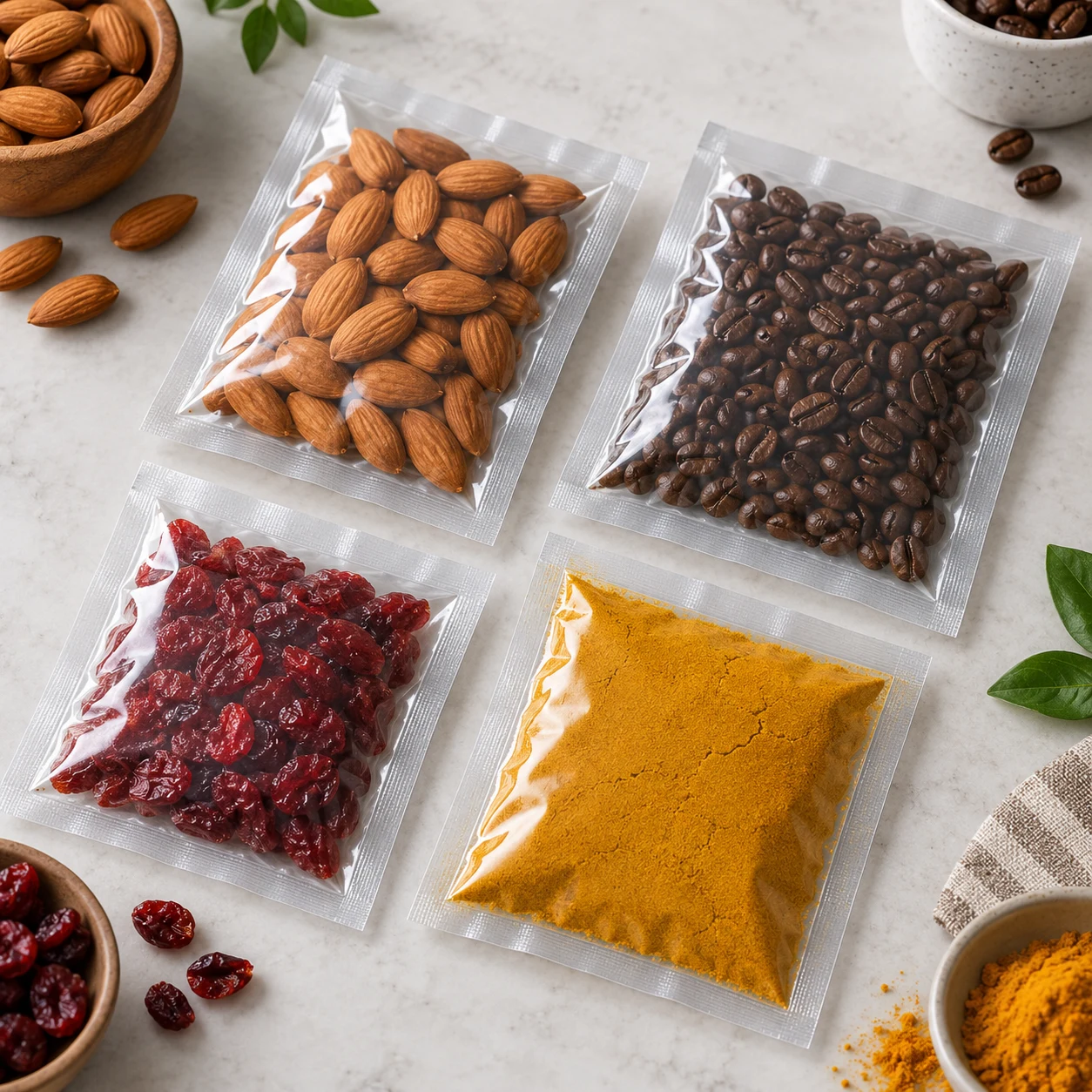
Stiffness is the underrated property here. A four-side-seal pouch holds its shape in a display box and in a hand, which is why it is the default for sachets, single portions and sample packs where the pack is part of the presentation. We make it in PET/PE and BOPP/PE for clarity, and PET/AL/PE where the barrier matters more than seeing the contents. Typical fills are coffee and tea, nuts and seasonings, dried fruit and biscuits, powders and single-serve portions.
Made to order
Size, thickness and printing up to ten colours are specified per order, in matt or gloss. The pouch runs on pre-made pouch filling and heat-sealing lines. For the same face in a cheaper structure, see the three side seal pouch; for a format that stands on a shelf, the stand-up pouch. What the aluminium layer is actually doing is explained in laminate versus mono-material structures, along with what it costs you in recyclability.
What moves the price
The aluminium ply, mostly. A PET/PE or BOPP/PE sachet and a PET/AL/PE one are separated by the foil, and the foil is both the cost and the reason to choose this format. After that it is the usual three: print method, quantity, and how much of the web each pouch uses. Small sachets tile well and waste little; large flat packs waste more. Because the format suits sampling and single doses, ask for the digital price — variant runs of a few thousand are viable here in a way they are not at gravure volumes.
Where it goes wrong
Choosing it for shelf presence. It is flat and stiff and it presents beautifully in a box or a display tray, and it does not stand up. The second is sealing: four sealed edges mean four chances for a contaminated seal, and a sachet filled with anything powdery will seal badly if powder gets into the seal area. That is a filling-line setting rather than a pouch fault, but it is discovered as a leaking pack — which is why the fill level and the seal band are worth agreeing with us before the first run.
Where custom four side seal pouch is used
Single-serve coffee and tea, seasoning sachets, supplement doses and sample packs, plus any product where the pack is displayed in a box and has to hold its shape. The aluminium structure makes it a genuine option for oxygen-sensitive contents in a flat format, which the three-side-seal cannot do. See supplement packaging for what a powder needs from it, and how to read a film structure for what the PET/AL/PE string is telling you about barrier, weight and cost.
What to send us for a quotation
A quotation for custom four side seal pouch is written against a specification, so the more of this you can send, the closer the first number is to the real one: which structure, or the shelf life and the product so we can choose one — PET/PE, BOPP/PE and PET/AL/PE are available here; the temperature the pack has to survive, from filling through to how the customer opens it (ambient for this product); the line it runs on — this one is specified for pre-made pouch filling and Heat sealing; which options you want fitted: pET/PE, BOPP/PE and PET/AL/PE; the values for size, Thickness and Printing up to 10 colours.
Send the fill weight and the quantity with it. Where you already buy something similar, a sample is worth more than a description — we measure what is actually there rather than quoting against how it was once written down.
Food-contact and export requirements are set out in FDA 21 CFR 177, the US rule for food-contact polymers; the declarations for this structure are issued with the order.