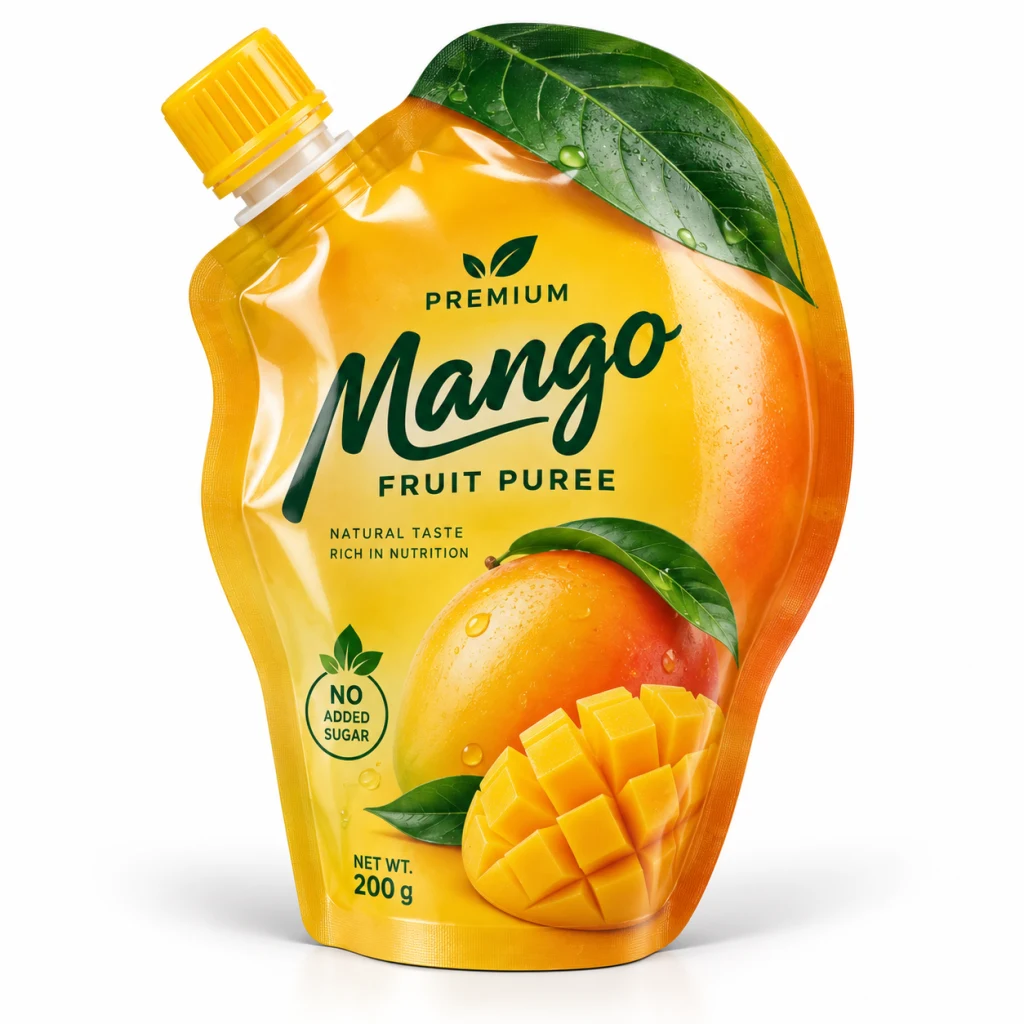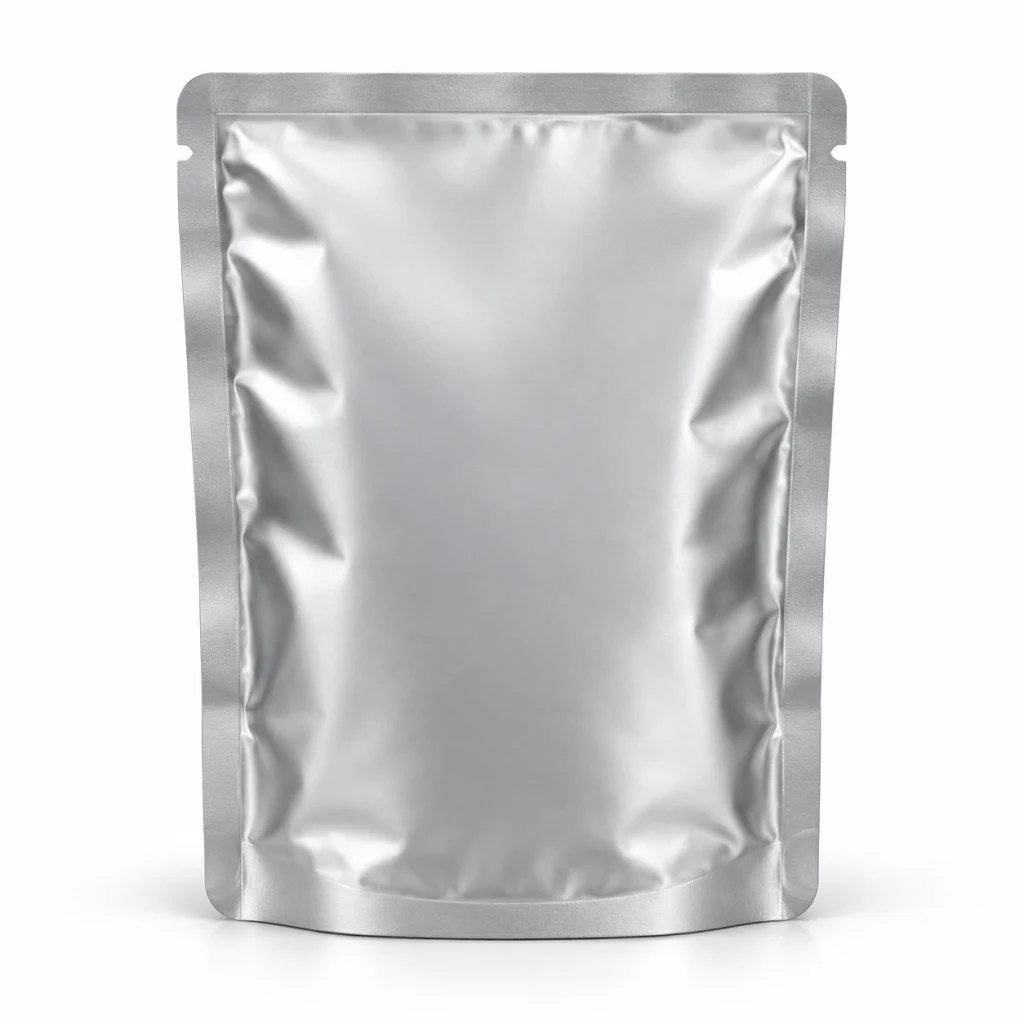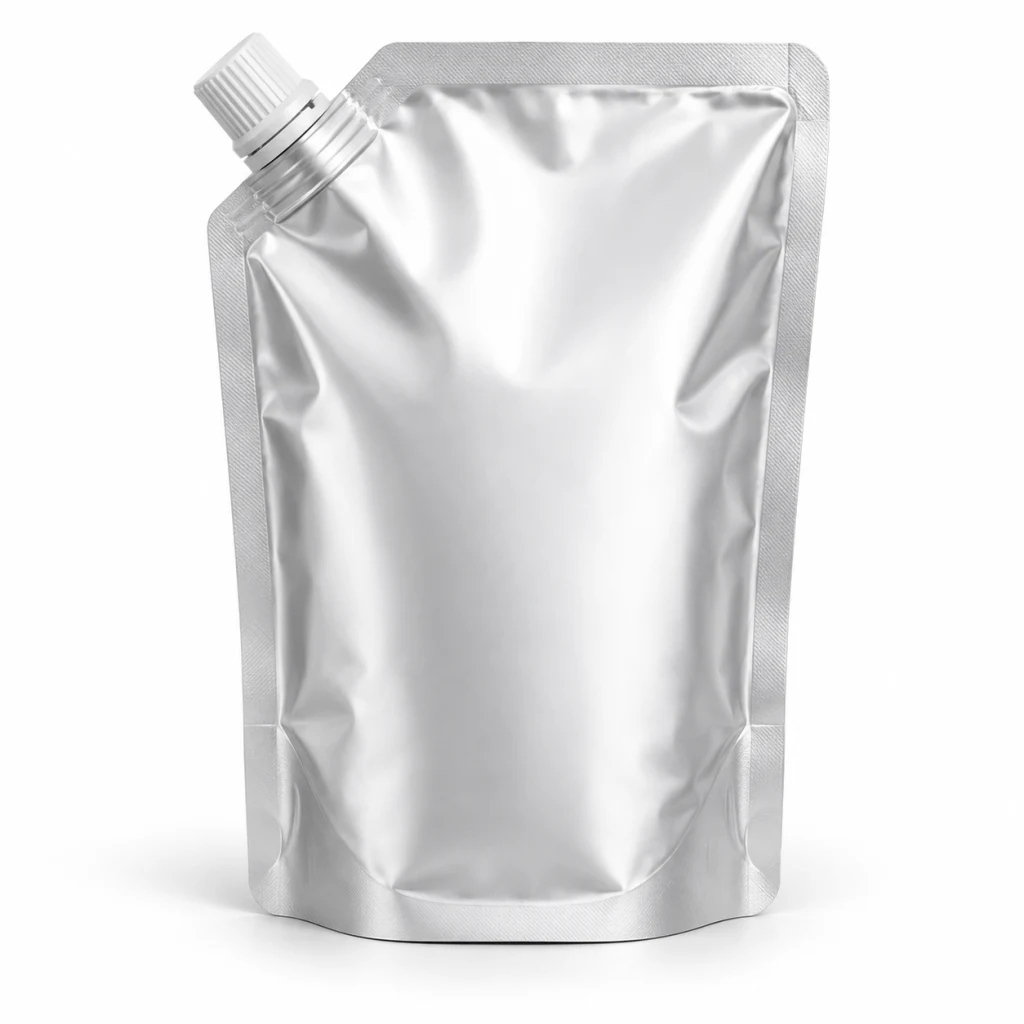
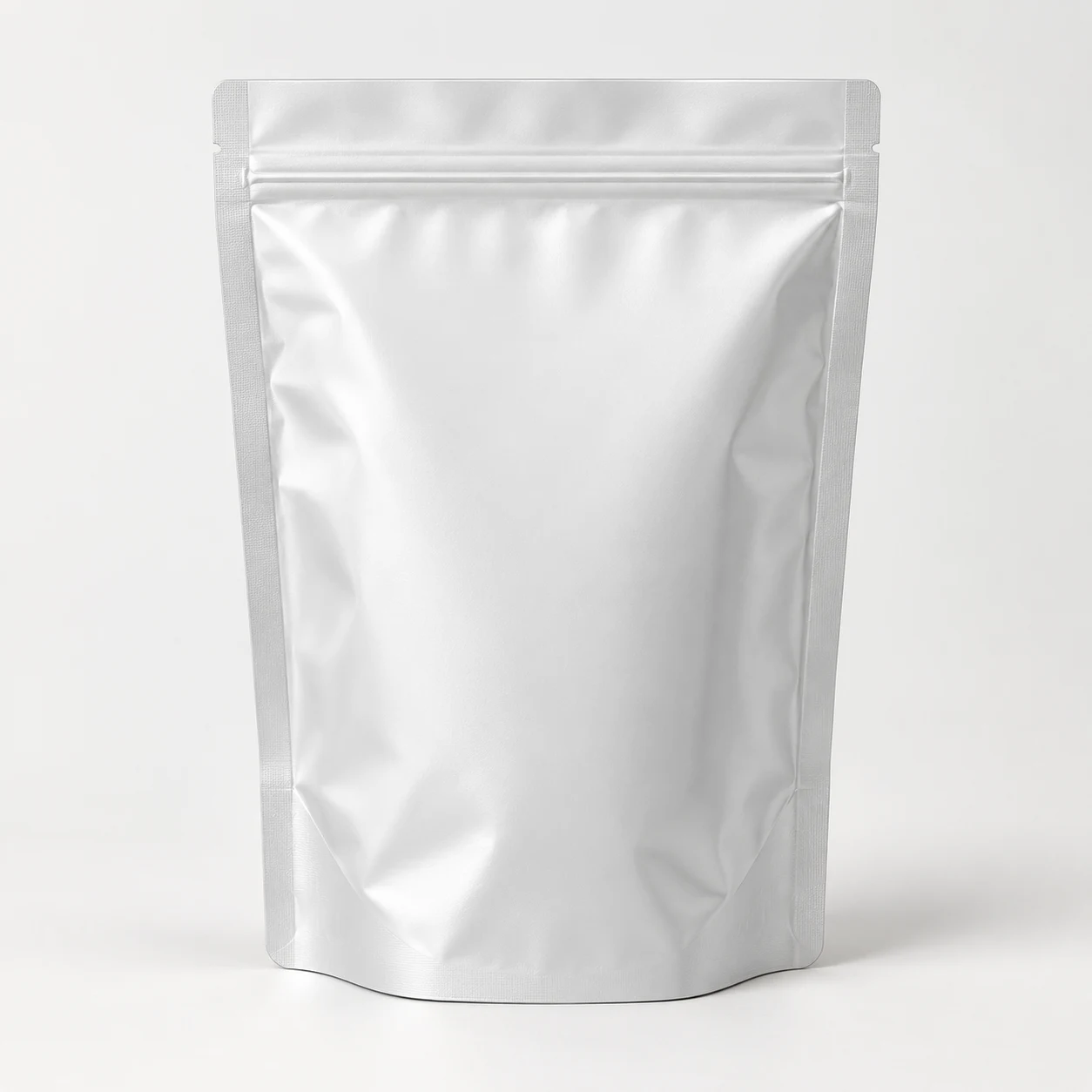
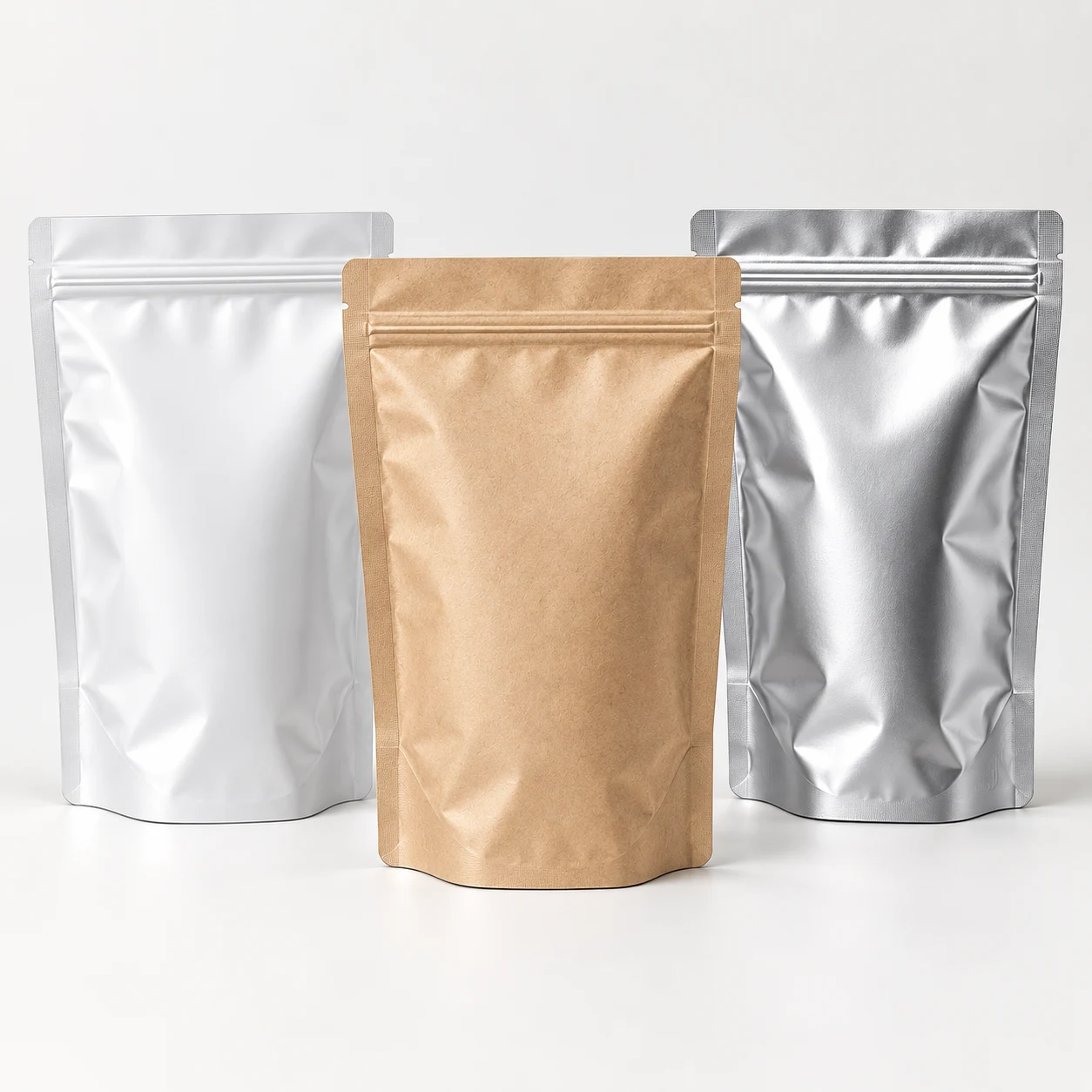
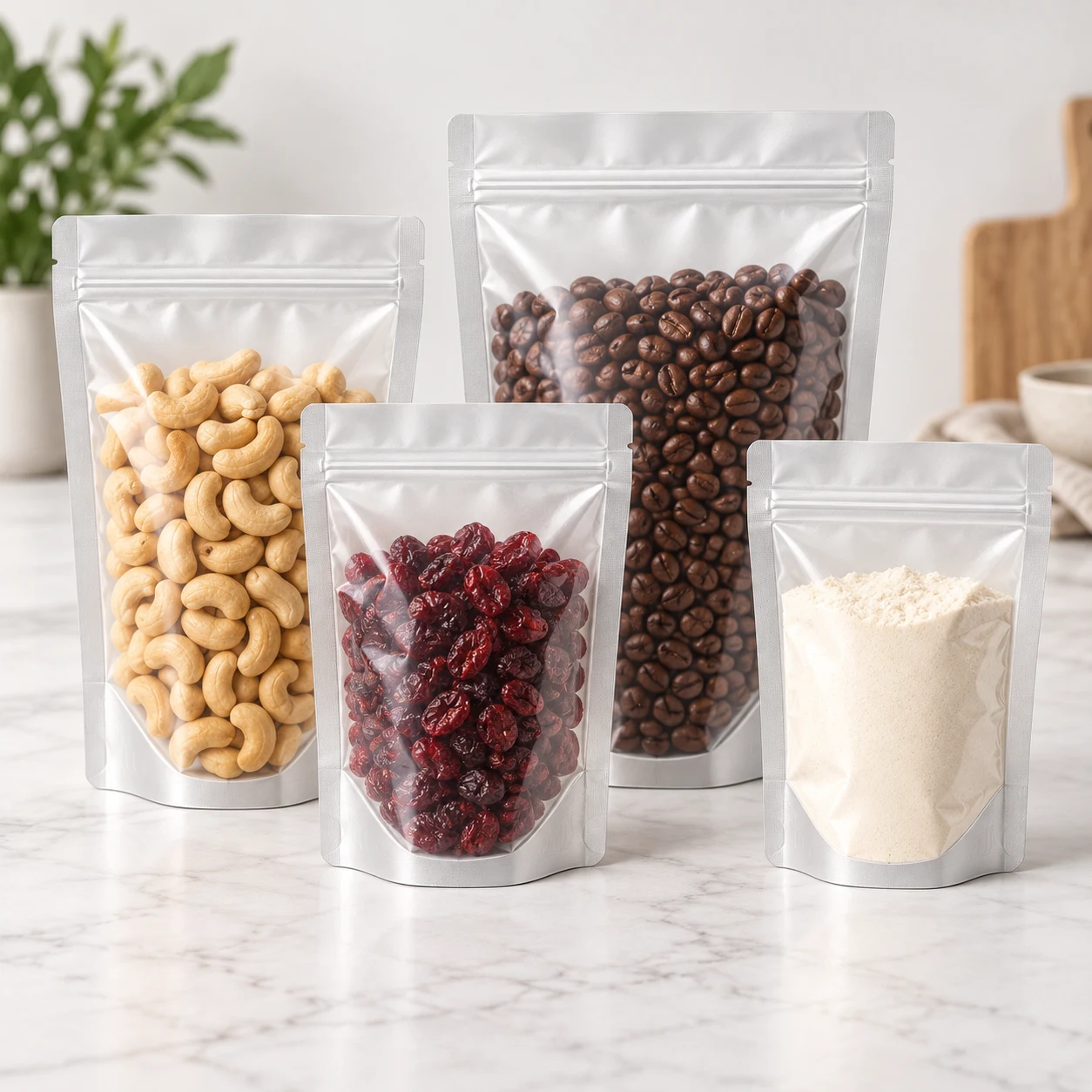
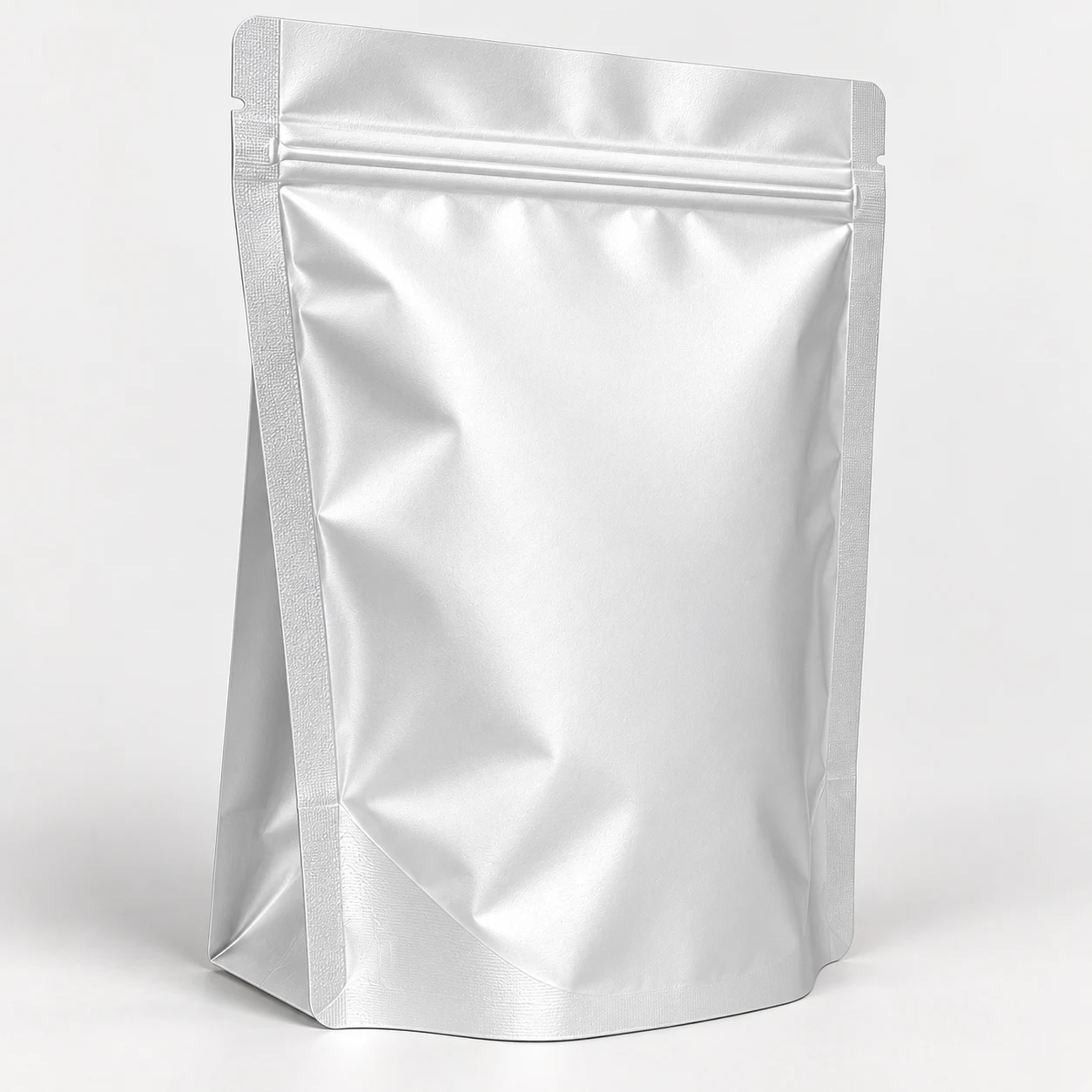
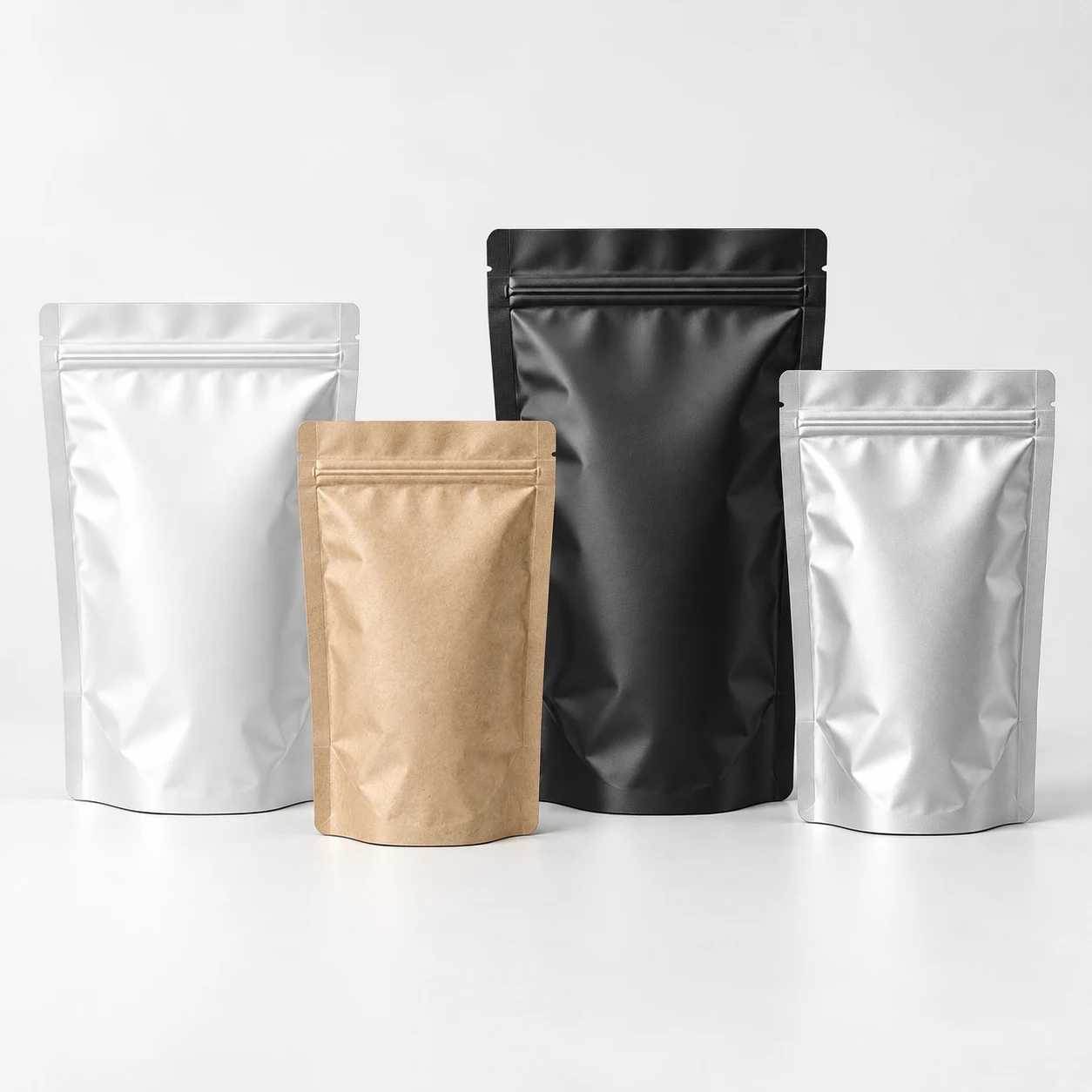
Custom stand-up pouch — made to order: size, thickness, structure and printing up to 10 colours are all specified per run.
A custom stand-up pouch is the format most brands move to first when they leave rigid packaging, and the reason is shelf presence: the gusset at the base opens under the weight of the fill, so the pack stands unaided and presents a full printed face without the cost of a jar or a can. It is also the most flexible format we make. Eight of our ten laminate structures are available in it, which means the same silhouette can be specified as an economical PET/PE bag for dry goods or a PET/NY/AL/PE laminate that survives retorting at 121 °C.
Choosing the structure
The structure is the decision that matters; the shape is the easy part. Coffee and nuts need the oxygen barrier — PET/AL/PE or PET/VMPET/PE, rated 5 of 5 here. Crisps and puffed snacks need stiffness and a moisture barrier more than an oxygen one. A brand selling on an organic shelf usually wants Kraft paper/PE or PLA/PBAT, and accepts a lower barrier for it. Our materials and structures page sets out what each layer does, and how to choose flexible packaging materials works through the four questions that decide it.
What can be changed
Size, thickness and structure are all made to order, with printing up to ten colours in gravure or digital. A press-to-close zipper, a spout, a window, a matt or gloss or kraft finish are specified at the same time. If the product is used over several sittings, the zipper pouch is the same pouch with the closure built in; if it is poured, see the spout pouch. Structures are available to FDA and GB food-grade specification. Send us the product, the fill weight and the shelf life and we will quote a structure against it.
What moves the price
Four things, in roughly this order. The structure: a PET/PE bag and a PET/NY/AL/PE retort laminate are different products at different prices, and the barrier you actually need is the biggest single lever you control. The print method: gravure needs a cylinder per colour paid before anything is printed, digital needs none, and at low volume the difference dwarfs everything else.
The quantity, because setup and waste are fixed and spread across the run. And the extras — a valve, a zip, a spout, a window — each of which is a separate operation with its own unit cost. Ask for the price at two or three quantities rather than one; the curve is steep at the bottom and flat further along, and the point where it flattens is often lower than people expect.
Where it goes wrong
The commonest mistake is a size chosen from a chart rather than from the product. Bulk density varies fivefold between puffed snacks and salt, powders settle in transit by a tenth or more, and a pouch that looked full on the line looks half empty on a shelf — which is a complaint even when the weight is right. The second is over-specifying the structure: a foil laminate on a product that turns over in three weeks is money spent on a shelf life nobody uses. The third is artwork laid out flat, which forgets that a gusseted base takes part of the printed face when it opens. We return a dieline before anything is printed for exactly that reason.
Where custom stand-up pouch is used
Coffee roasters, snack brands, pet food, supplements and ready meals all reach for this format first, and each asks something different of it — which is why the eight structures exist. The coffee page sets out what a roasted bean needs, the pet food page what fat and carry weight do to a laminate, and the supplement page what a hygroscopic powder demands. If you are weighing this against buying film and forming pouches on your own line, rollstock against pre-made lays out the real trade. Sizes are worked back from fill weight and bulk density rather than picked from a chart — the size guide shows how.
What to send us for a quotation
A quotation for custom stand-up pouch is written against a specification, so the more of this you can send, the closer the first number is to the real one: which structure, or the shelf life and the product so we can choose one — PET/PE, PET/CPP and PET/AL/PE are available here; the temperature the pack has to survive, from filling through to how the customer opens it (ambient, and to 121 °C with PET/NY/AL/PE for this product); the line it runs on — this one is specified for pre-made pouch filling and Vacuum packing; which options you want fitted: zipper, Spout and Matt finish; the values for size, Thickness, Structure and Printing up to 10 colours.
Send the fill weight and the quantity with it. Where you already buy something similar, a sample is worth more than a description — we measure what is actually there rather than quoting against how it was once written down.
Food-contact and export requirements are set out in FDA 21 CFR 177, the US rule for food-contact polymers; the declarations for this structure are issued with the order.