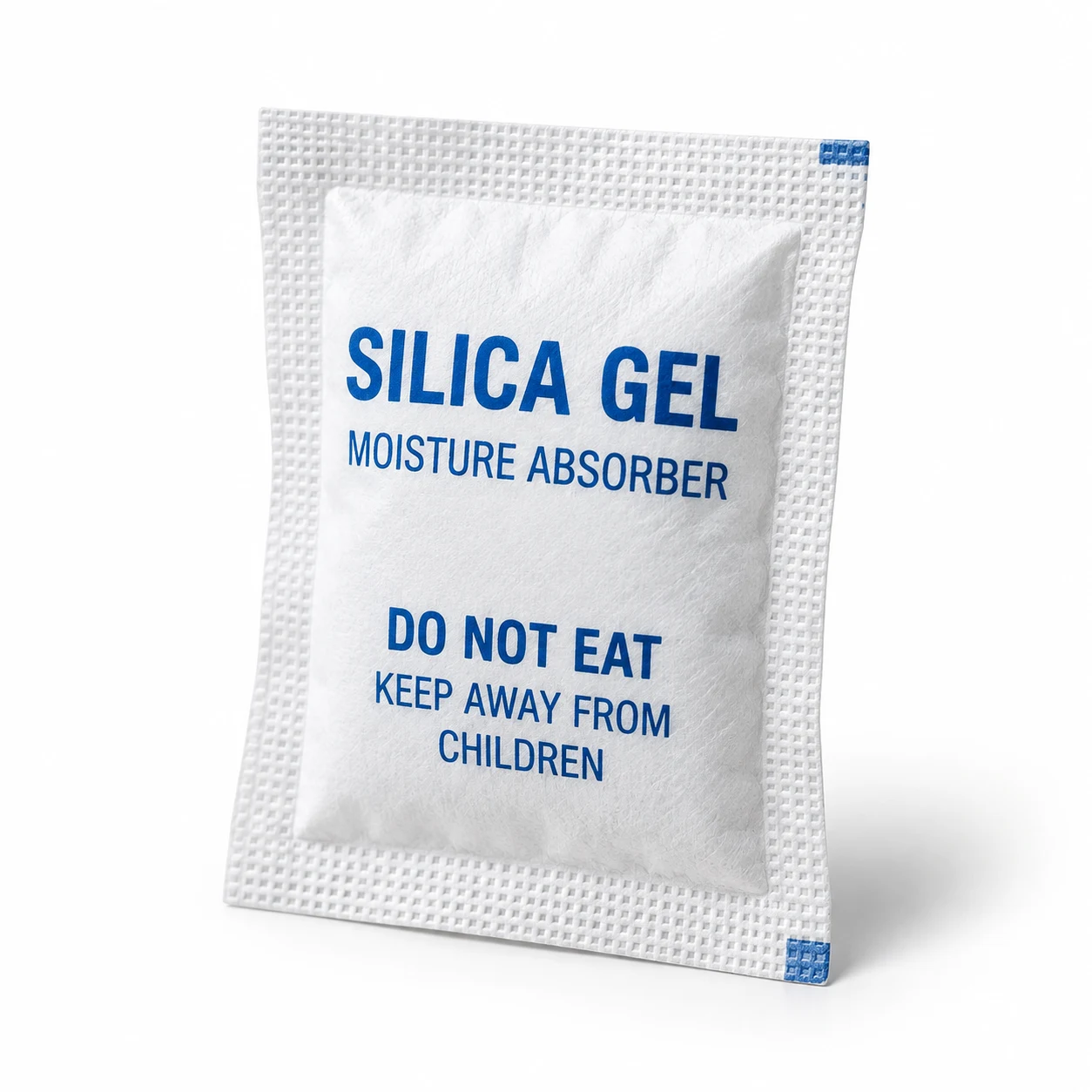
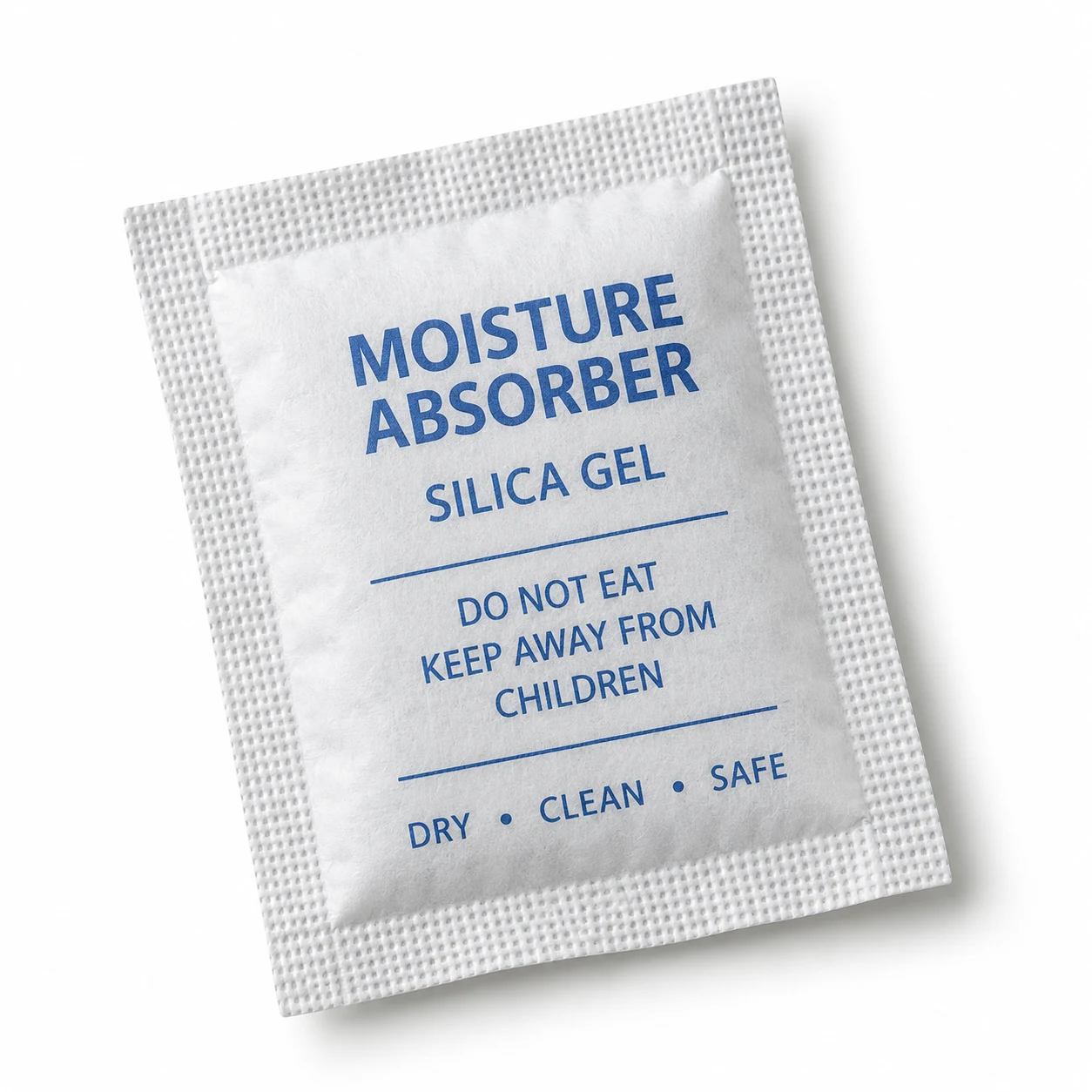
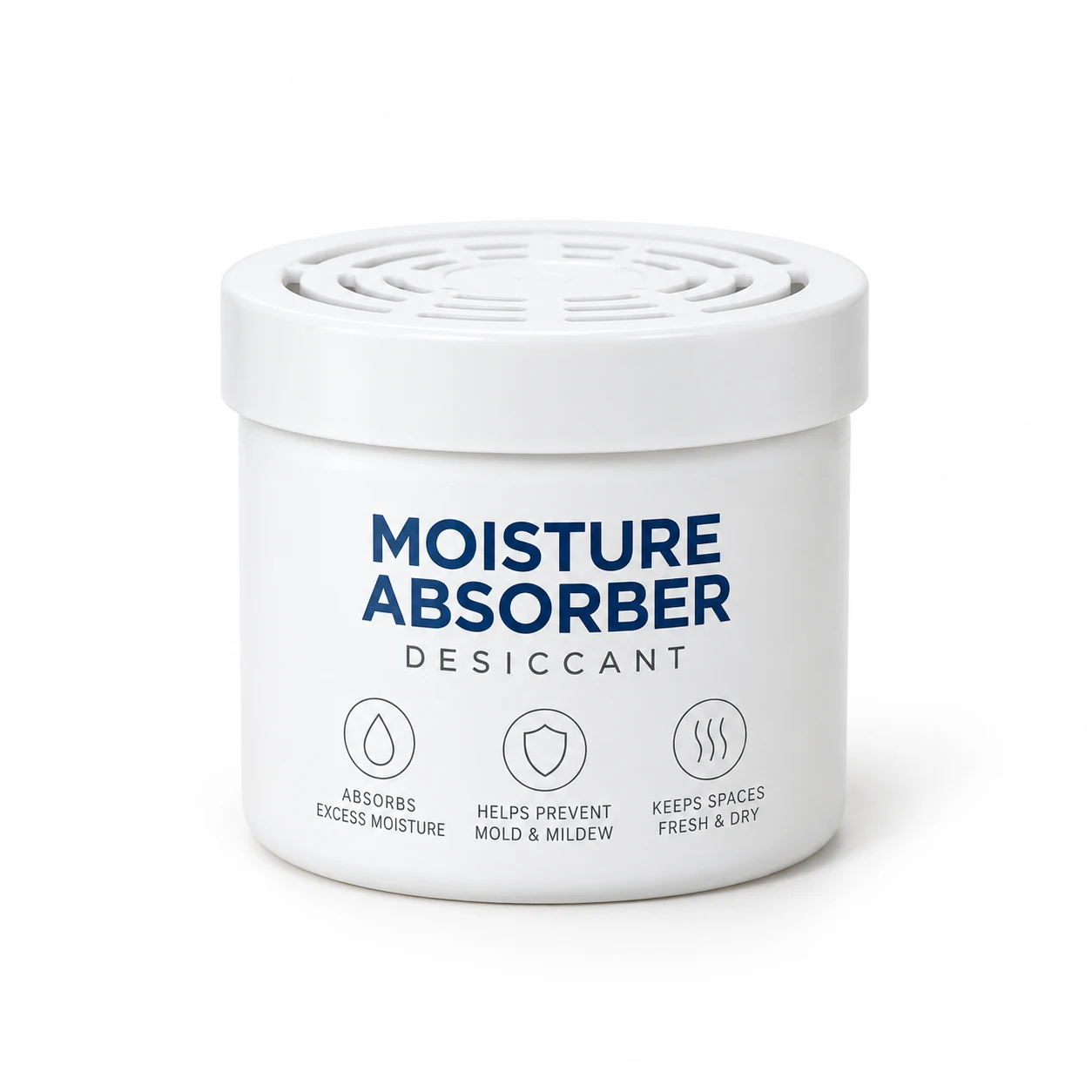
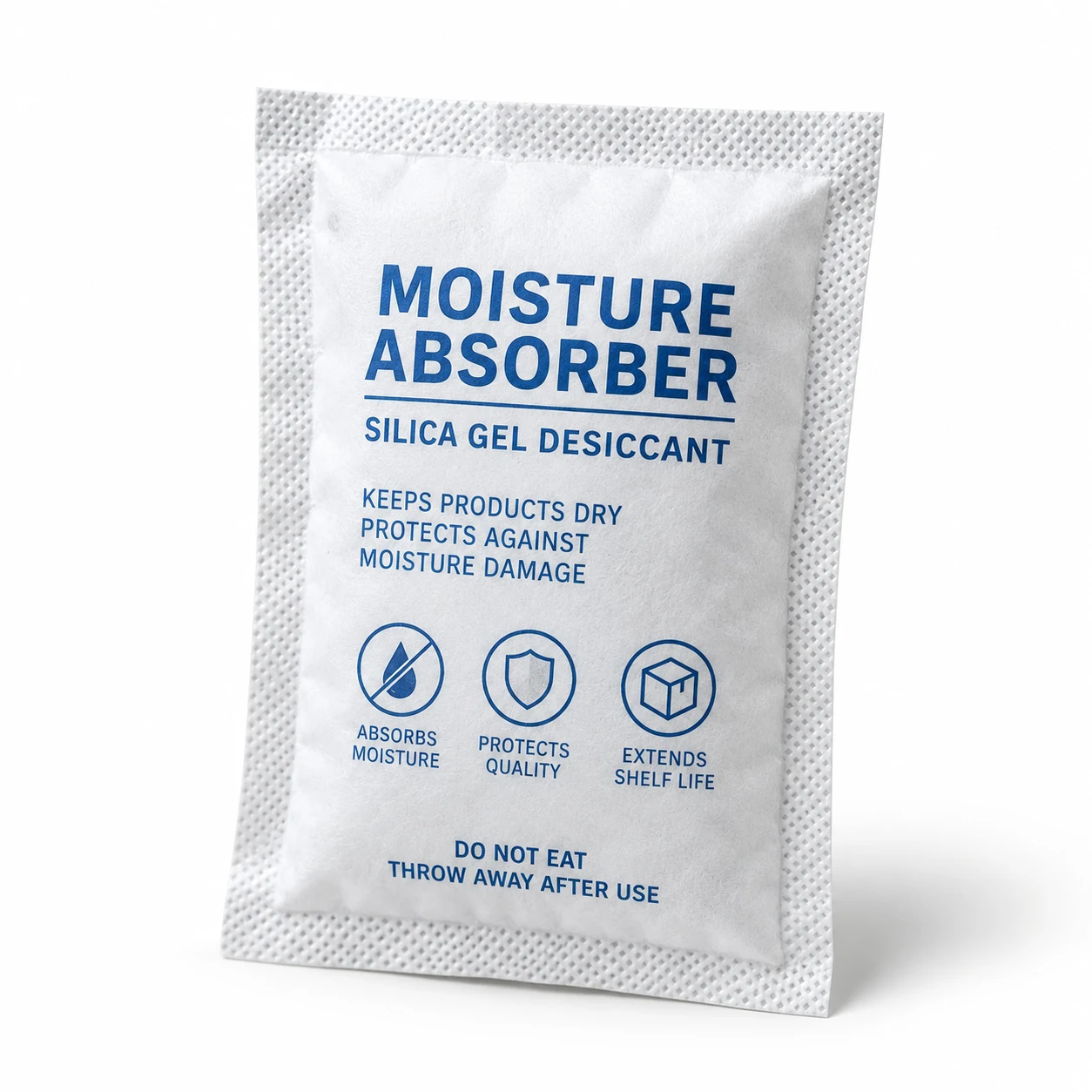
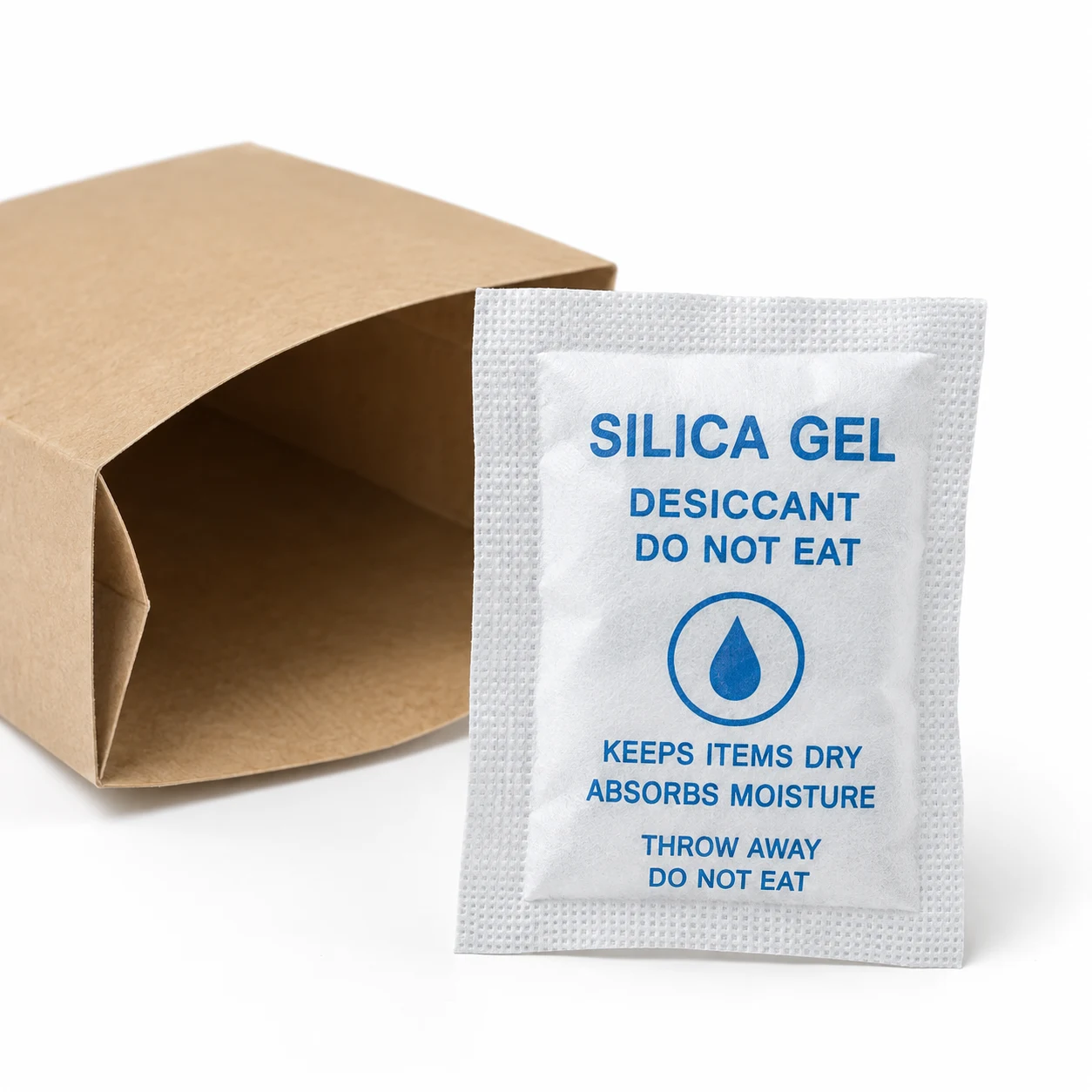
Wholesale desiccants — made to order: sachet size, desiccant type, sachet material and printing are all specified per run.
A shipping container crossing the tropics behaves like a greenhouse. Air warms, holds moisture, cools overnight, and drops that moisture as condensation onto whatever is coldest — usually the cargo. Container rain ruins paper, corrodes metal and mildews textiles, and it happens inside a sealed container that never took on a drop of outside water. Desiccants are what stop it.
Silica gel, clay and container desiccants
Silica gel adsorbs strongly and fast, works well at the low humidity a sealed pack needs, and is what goes in with electronics, pharmaceuticals and food. Clay desiccant is cheaper, performs better at higher humidity and ambient temperatures, and is the sensible choice for bulk goods. Container desiccants are a different product entirely — hanging bags or poles holding a kilo or more of moisture-absorbing salt, sized to the container and the voyage rather than to the pack.
Sizing and ordering
Sachets from 1 g to 500 g, plus container strips and hanging bags. Sachet size, desiccant type, sachet material and printing are made to order, with food-grade sachets available where the sachet sits inside a food pack. Sizing follows the sealed volume, the barrier of the pack and the length of the journey — tell us all three. Typical uses are food and pharmaceuticals, electronics and appliances, hardware and footwear, and container shipments.
What moves the price
Type, sachet size and sachet material. Silica gel costs more than clay and works better at the low humidity a sealed pack needs; clay is cheaper and better at ambient. Food-grade sachet material costs more than industrial. Container desiccants are a different product priced by the voyage rather than by the pack. The quantity that matters is grams of desiccant, not number of sachets, and over-specifying is common and wasteful.
Where it goes wrong
Sizing against the container rather than the sealed volume, the pack barrier and the length of the journey — the three things that actually set it. The second is silica gel where clay would do, or clay where silica was needed, which is a temperature and humidity question rather than a price one. The third is a non-food-grade sachet inside a food pack, which is a compliance failure rather than a performance one.
Where wholesale desiccants is used
Inside sealed food and pharmaceutical packs, in electronics and hardware cartons, and hanging in shipping containers crossing the tropics. The supplement page covers why a hygroscopic powder needs one even inside a foil pouch, and the pharmaceutical page what a pharmaceutical-grade sachet has to satisfy. Sizing follows the sealed volume and the voyage, not the container.
What to send us for a quotation
A quotation for wholesale desiccants is written against a specification, so the more of this you can send, the closer the first number is to the real one: which structure, or the shelf life and the product so we can choose one — Silica gel desiccant, Clay desiccant and Container desiccant are available here; the temperature the pack has to survive, from filling through to how the customer opens it (ambient for this product); the line it runs on — this one is specified for heat sealing; which options you want fitted: 1 g to 500 g sachets, Silica gel and Clay; the values for sachet size, Desiccant type, Sachet material and Printing.
Send the fill weight and the quantity with it. Where you already buy something similar, a sample is worth more than a description — we measure what is actually there rather than quoting against how it was once written down.
Food-contact and export requirements are set out in ISPM 15, the international standard for wood packaging crossing a border; the declarations for this structure are issued with the order.