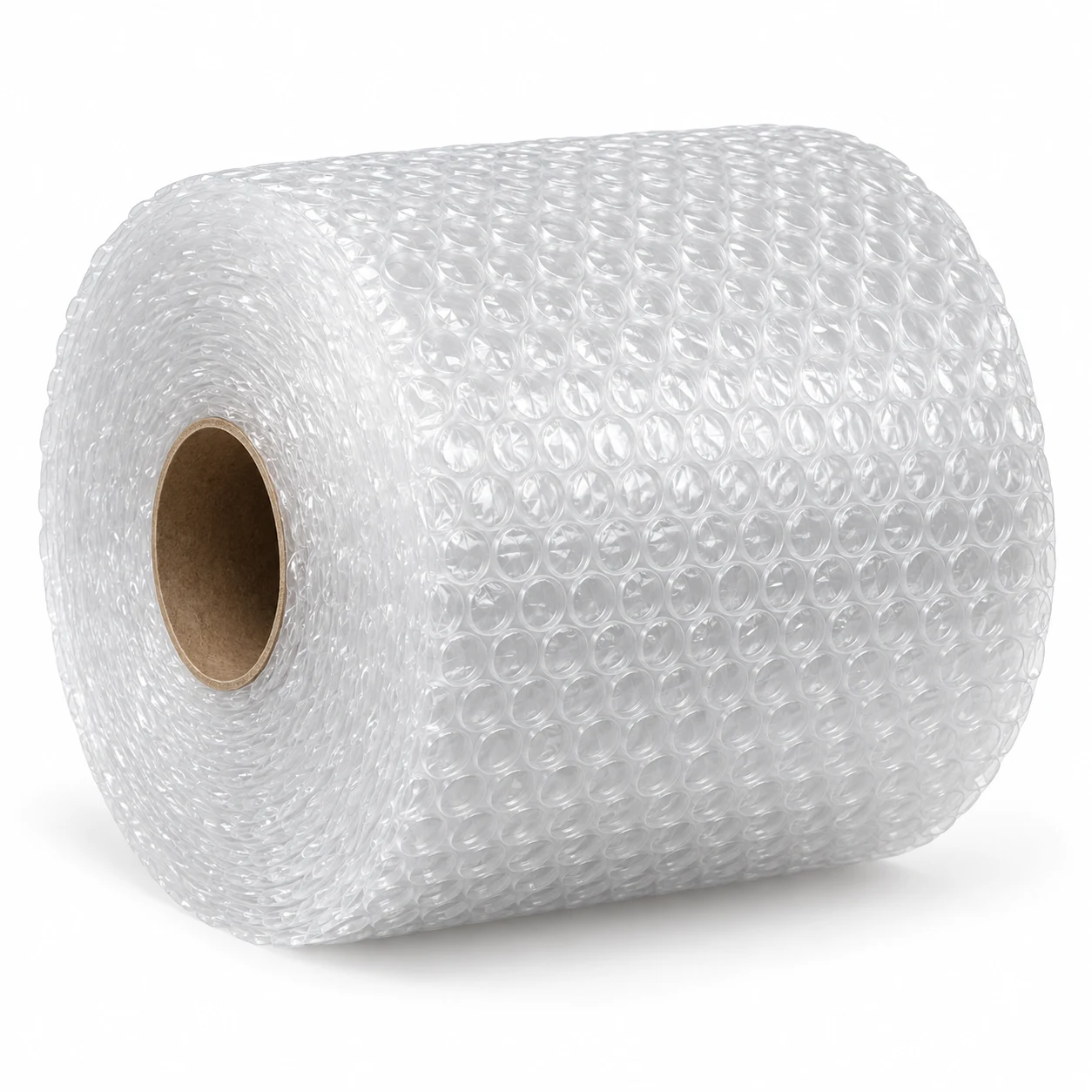
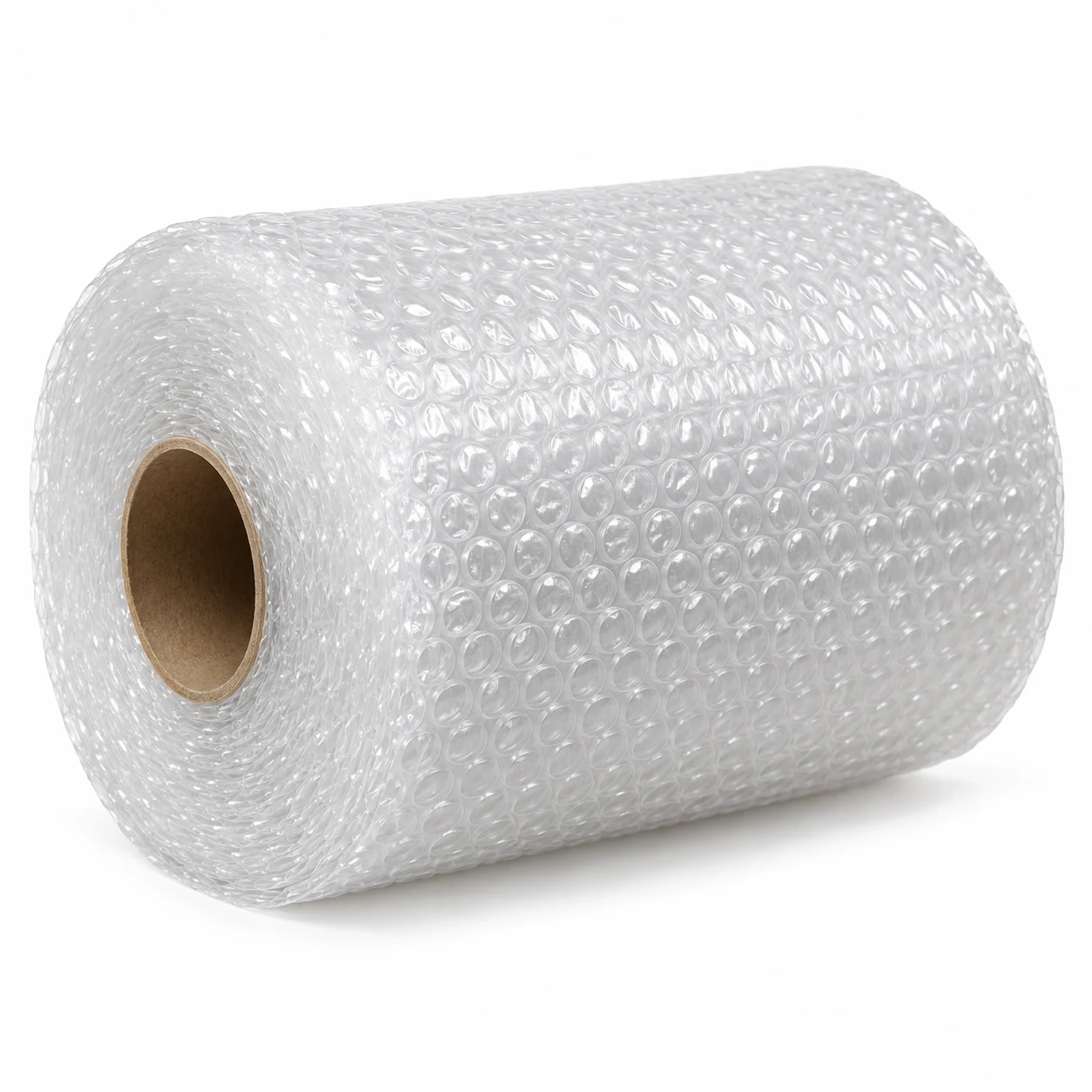
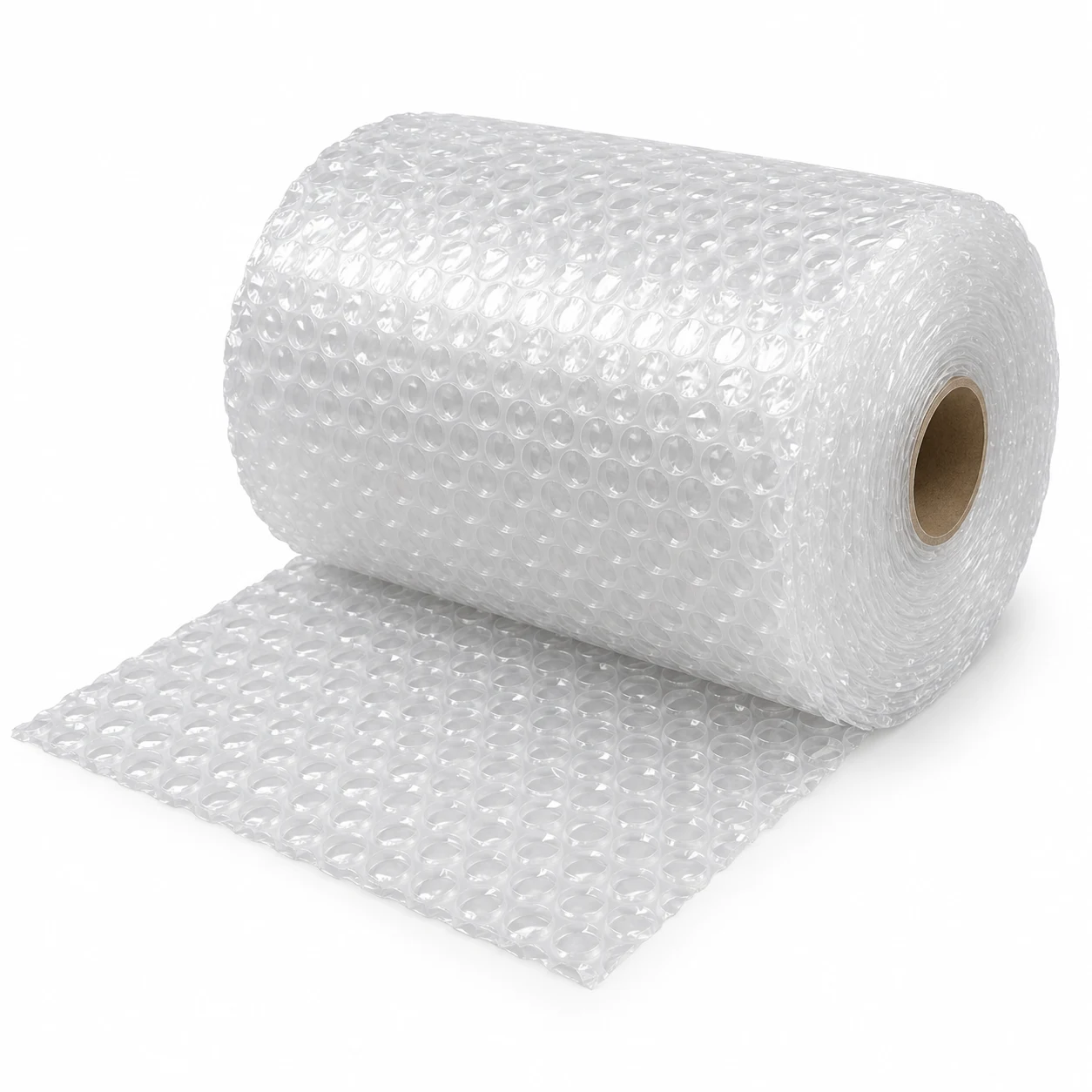
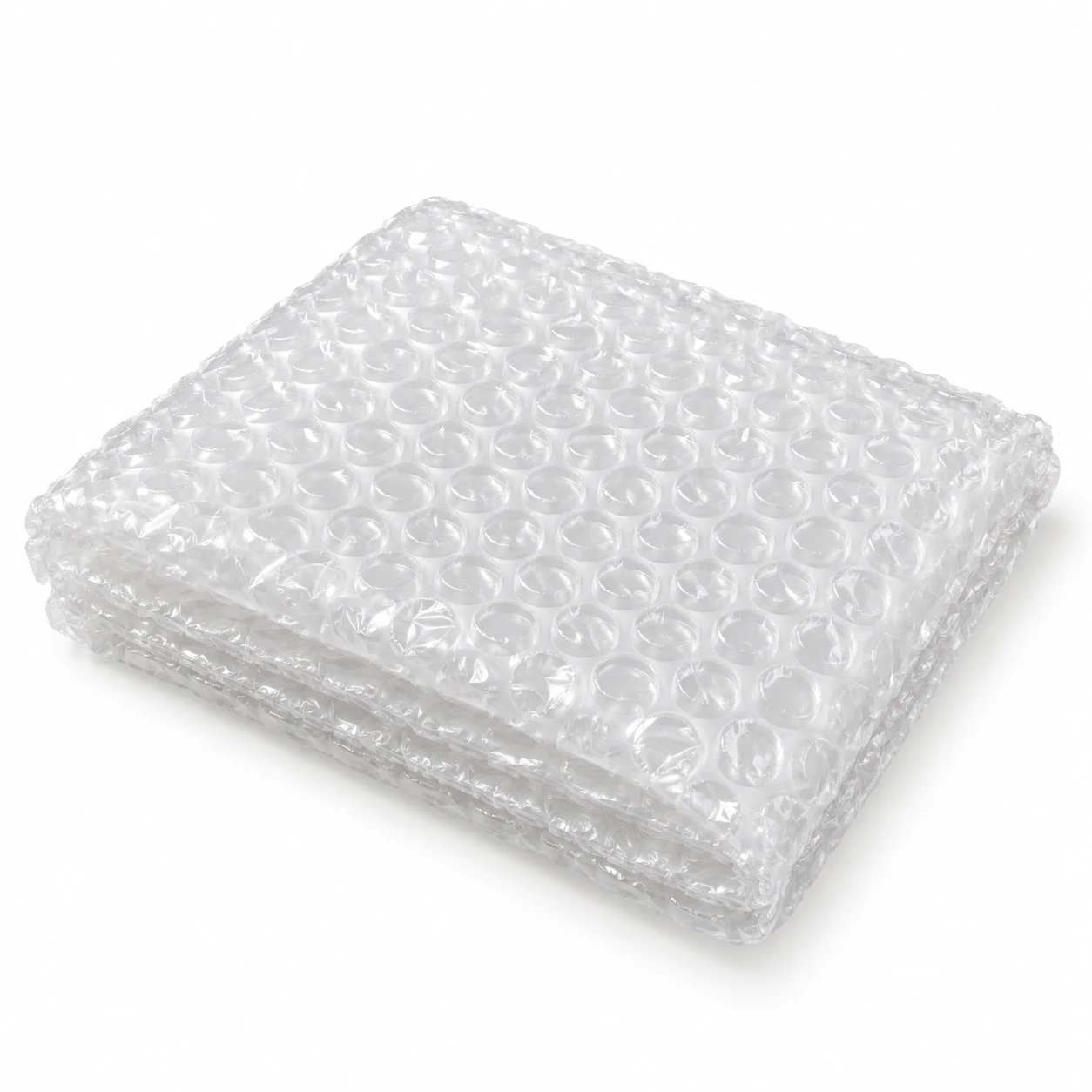
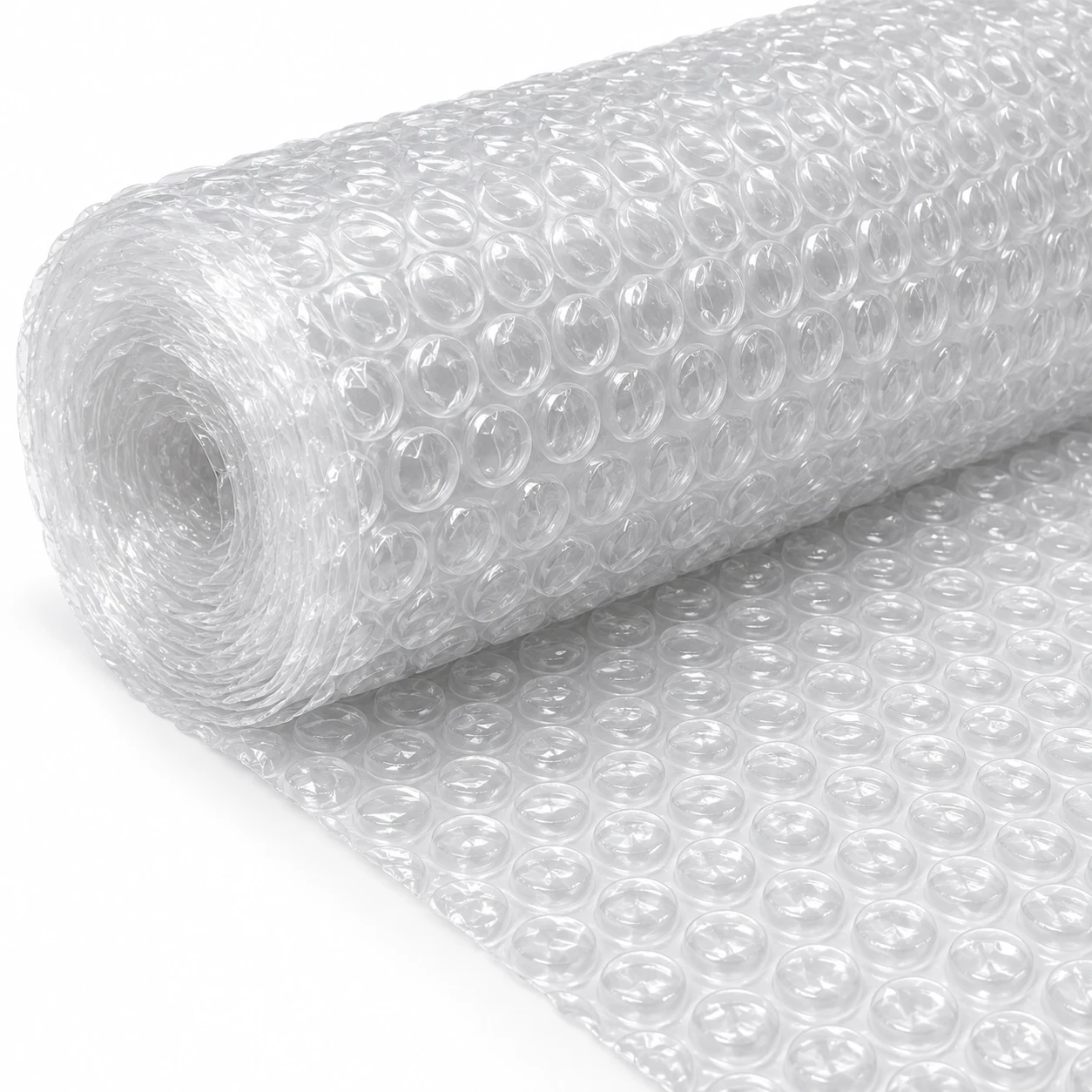
Wholesale bubble and foam — made to order: thickness, width, bubble size and bag size are all specified per run.
Bubble film and foam do the same job by different means. Bubble traps air in discrete cells that deform and rebound, which absorbs sharp impacts well. Foam is a continuous cellular structure that cushions gently and, crucially, does not scratch — so the choice between them is usually decided by the surface of the product rather than by the weight of it.
Bubble size, foam type and anti-static
Small bubbles cushion light items and wrap closely around detail; large bubbles absorb more energy and suit heavier goods and void fill. EPE pearl cotton is soft and non-abrasive, ideal against polished, painted or lacquered surfaces. Foam rolls and sheets cut into fitted inserts. Anti-static grades are not optional for circuit boards and electronic assemblies — ordinary polyethylene generates a charge on separation that will damage components before they are ever powered.
Ordering
Thickness, width, bubble size and bag size are made to order, as rolls, sheets, laminated stock or ready-made bags. Bags are worth costing against rolls: they are more expensive per unit and much faster on a bench, so the answer depends on labour rather than on materials. For corners and edges specifically, see corner protectors and edge boards.
What moves the price
Format and grade. Rolls are cheapest; ready-made bags cost more per unit and are faster on a bench; laminated and anti-static grades each add. Bubble size and foam thickness follow the product weight and fragility rather than a preference. As with all cushioning, the honest saving is less material used well rather than cheaper material used loosely — a fitted foam insert protects better and costs less in use than a carton stuffed with loose fill.
Where it goes wrong
Anti-static skipped on electronics, which is the expensive one because the damage is invisible until the customer powers the product on. The second is bubble against a finished surface, which marks it. The third is cushioning specified without knowing the route — a courier parcel sees harder drops than a palletised load and needs more.
Where wholesale bubble and foam is used
Electronics, glassware, ceramics, furniture and any product with a surface that marks — inside the carton, filling the void and absorbing the shock. For corners and edges specifically, corner protectors and edge boards; for the cartons themselves, cartons and transport packaging. Anti-static grades are not an upgrade for electronic assemblies, they are the specification.
What to send us for a quotation
A quotation for wholesale bubble and foam is written against a specification, so the more of this you can send, the closer the first number is to the real one: which structure, or the shelf life and the product so we can choose one — Bubble film, Foam roll and sheet and EPE pearl cotton are available here; the temperature the pack has to survive, from filling through to how the customer opens it (ambient for this product); the line it runs on — this one is specified for strapping and wrapping and Die cutting; which options you want fitted: small bubble, Large bubble and Anti-static; the values for thickness, Width, Bubble size and Bag size.
Send the fill weight and the quantity with it. Where you already buy something similar, a sample is worth more than a description — we measure what is actually there rather than quoting against how it was once written down.
Food-contact and export requirements are set out in ISPM 15, the international standard for wood packaging crossing a border; the declarations for this structure are issued with the order.