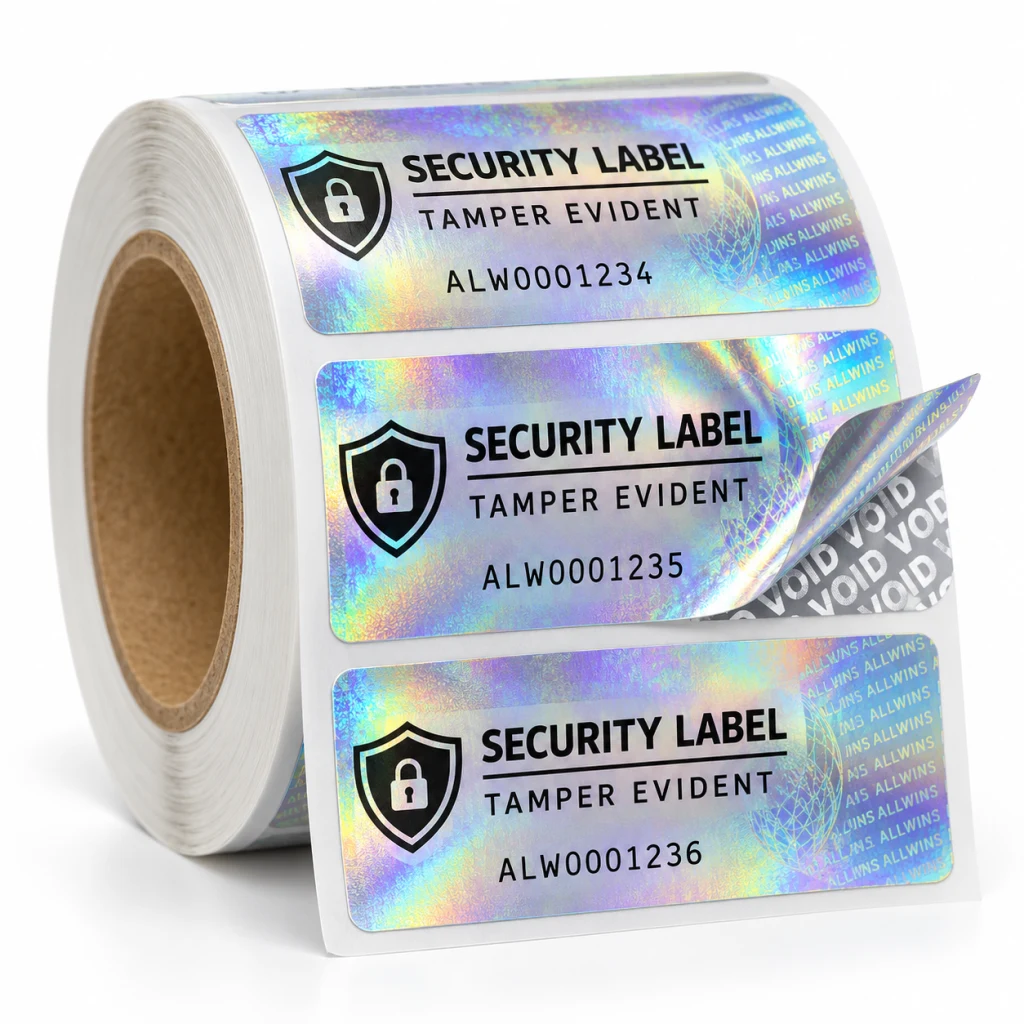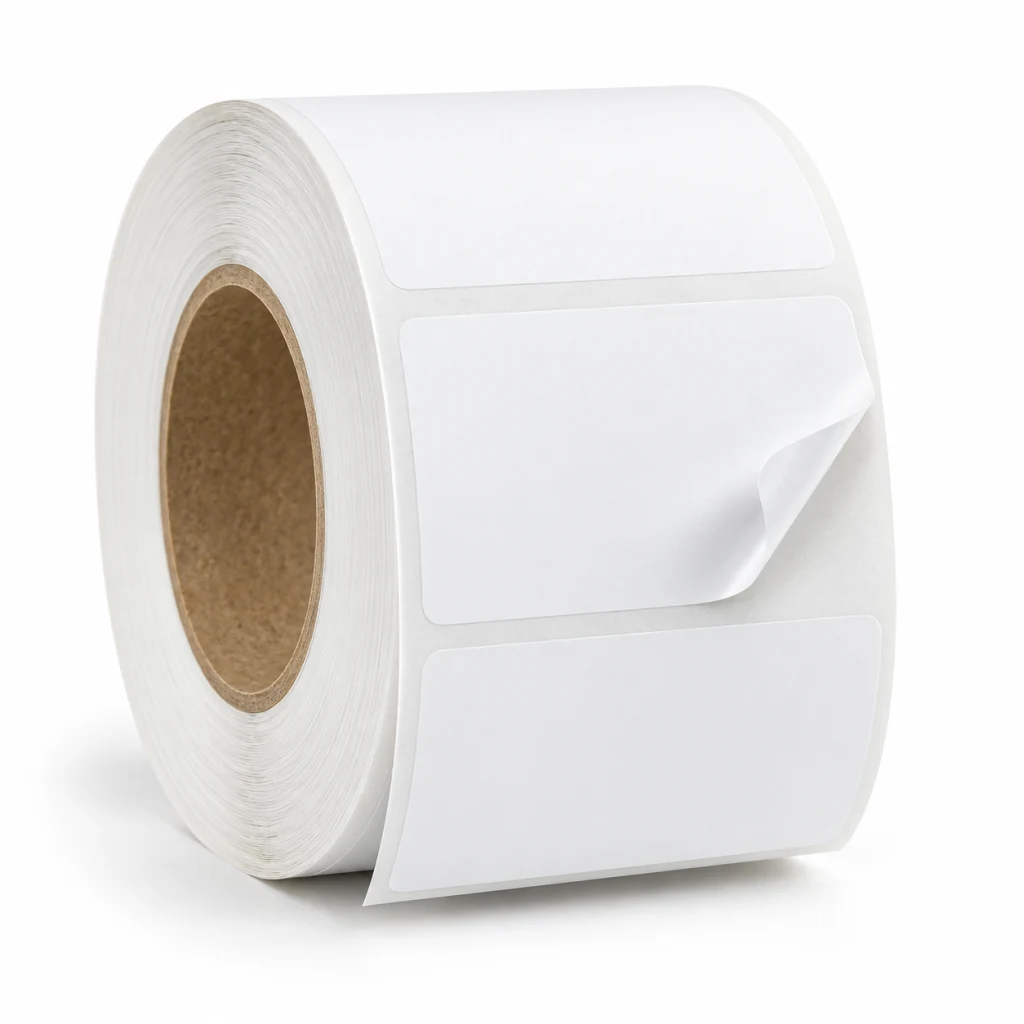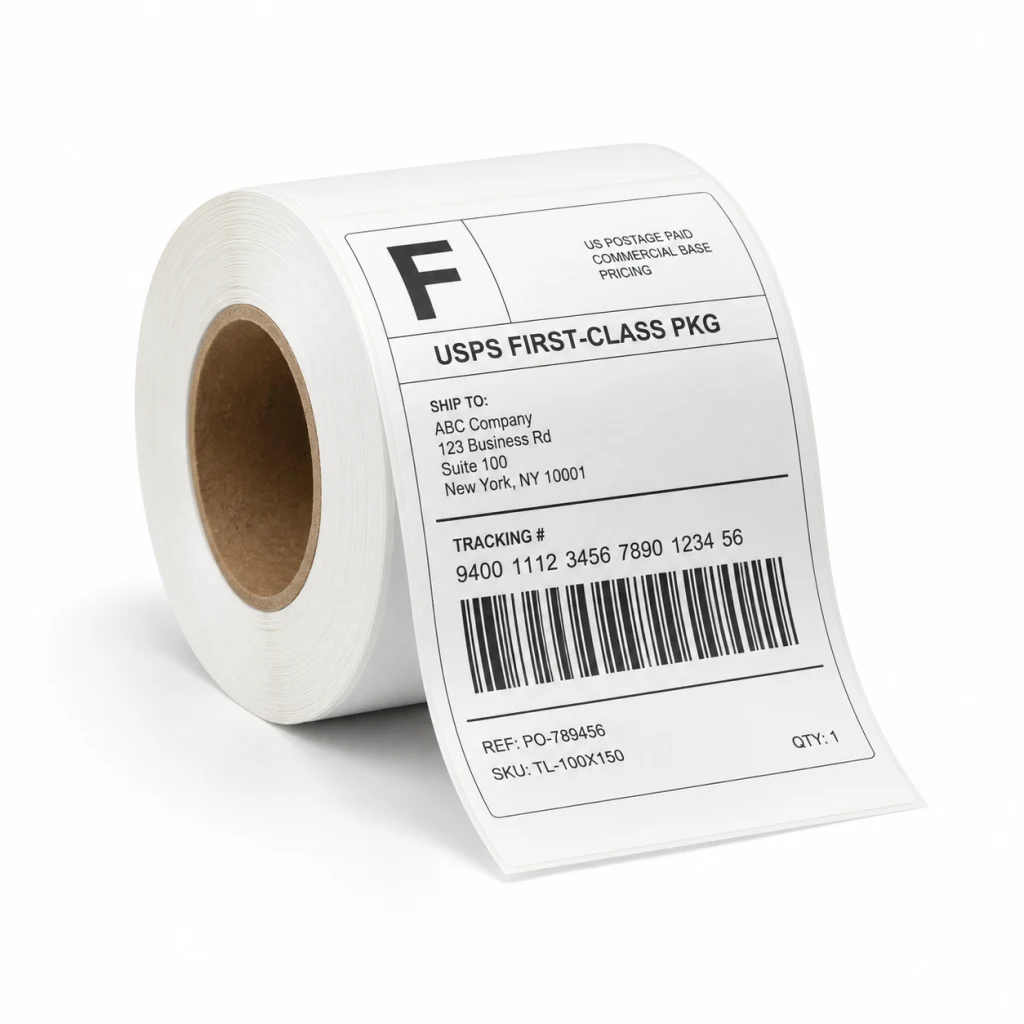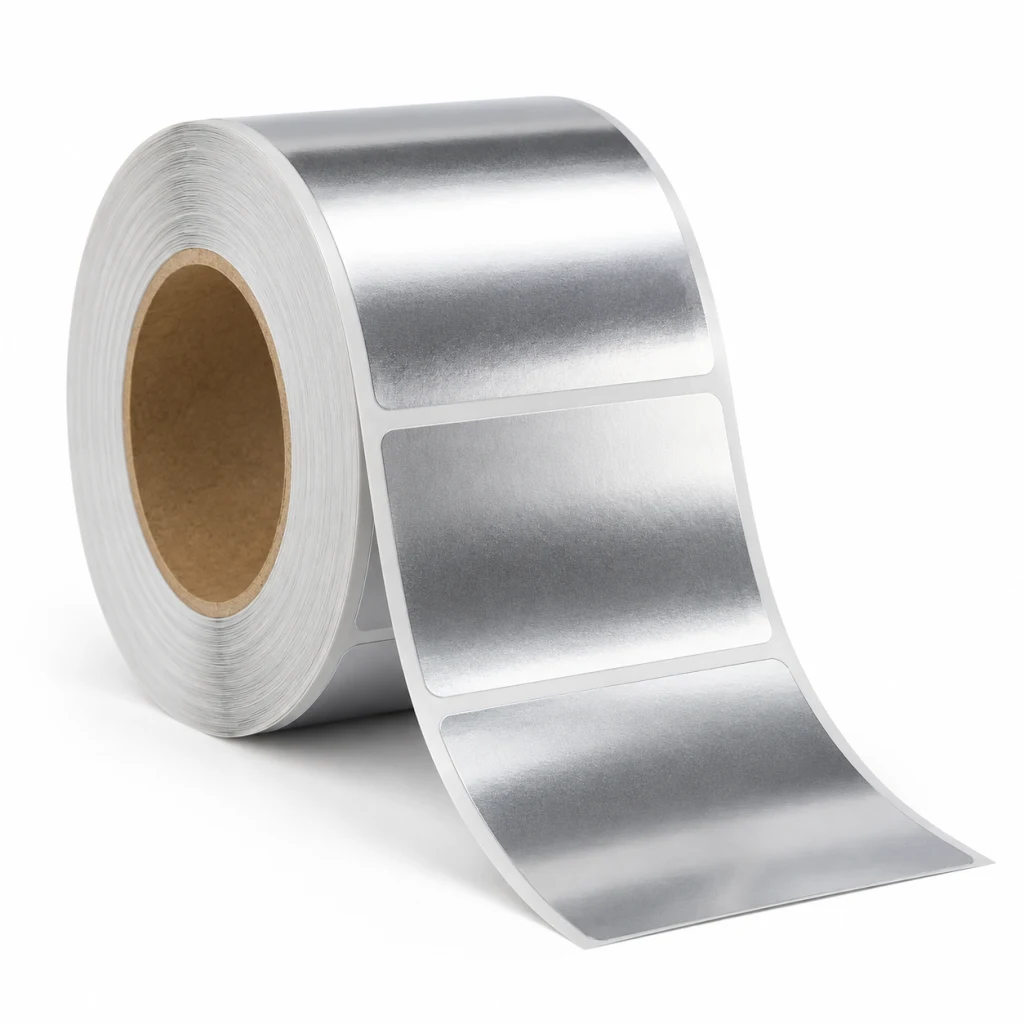
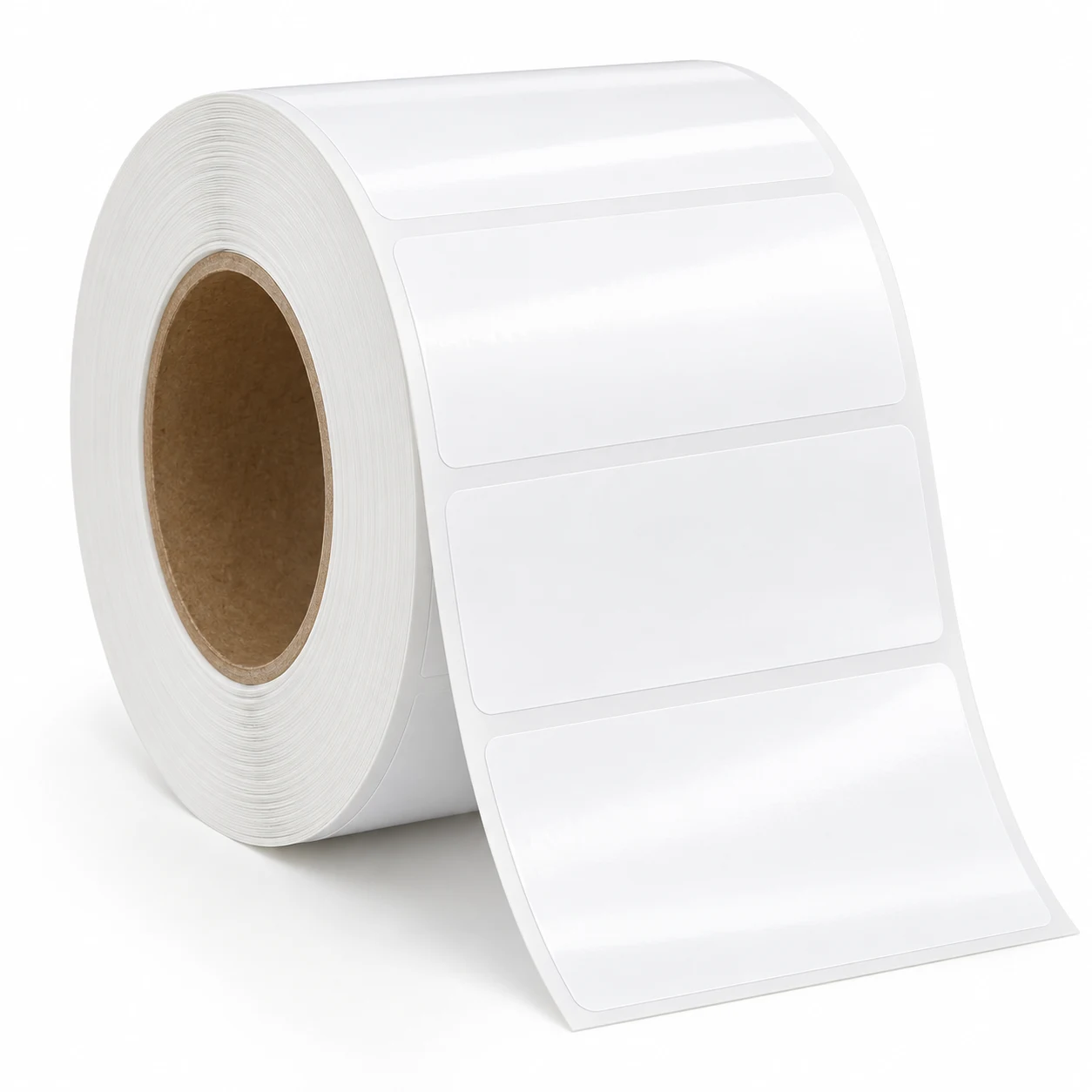
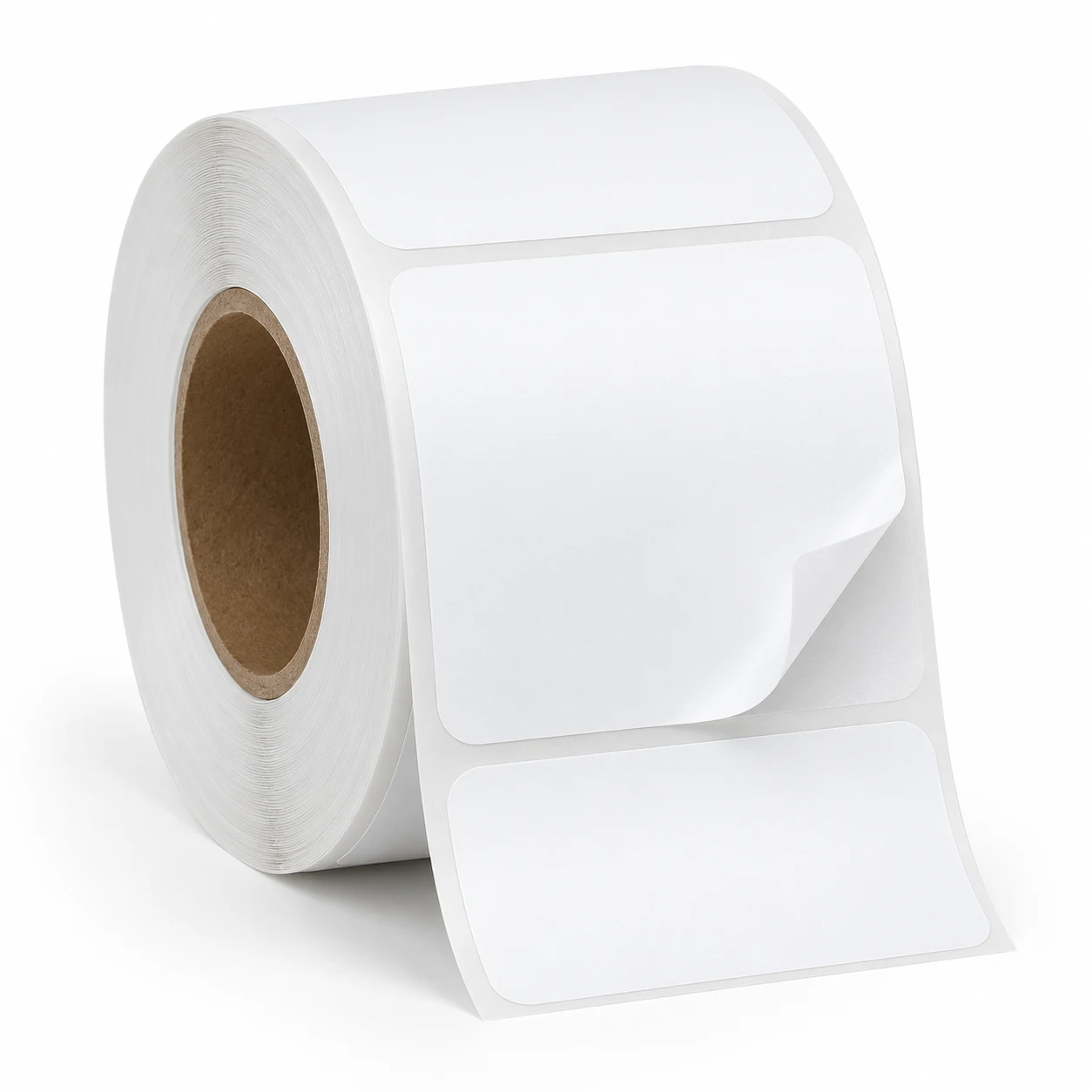
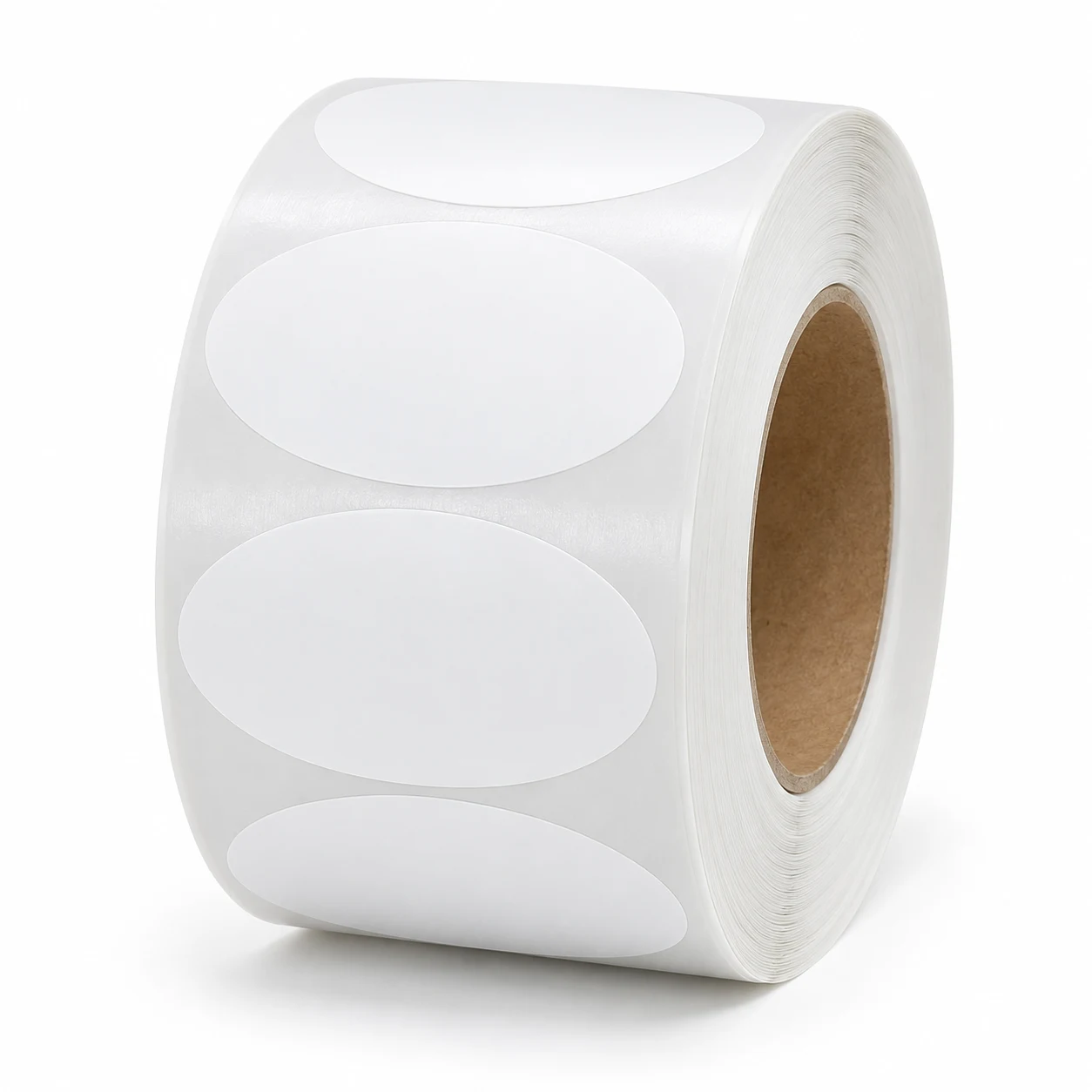
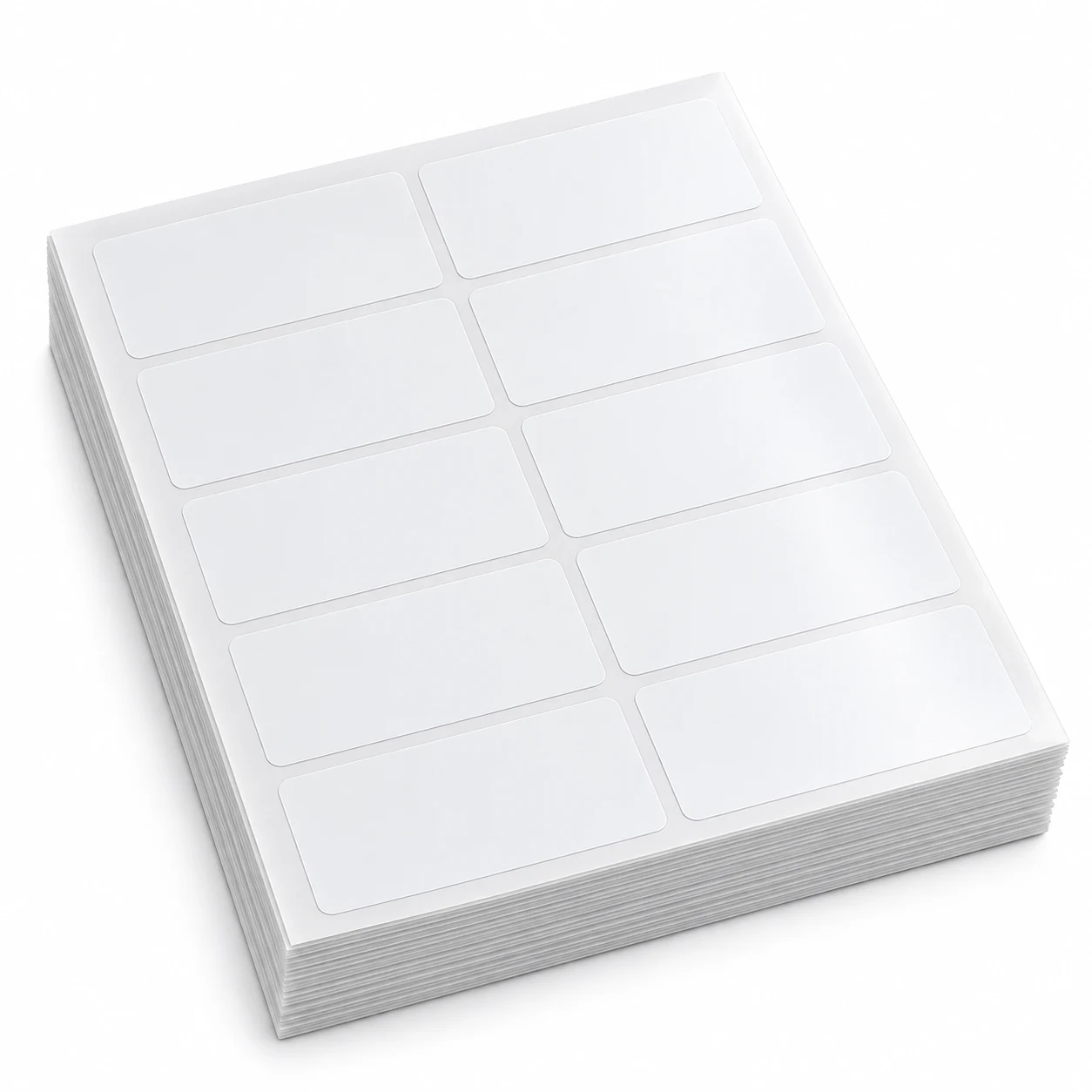
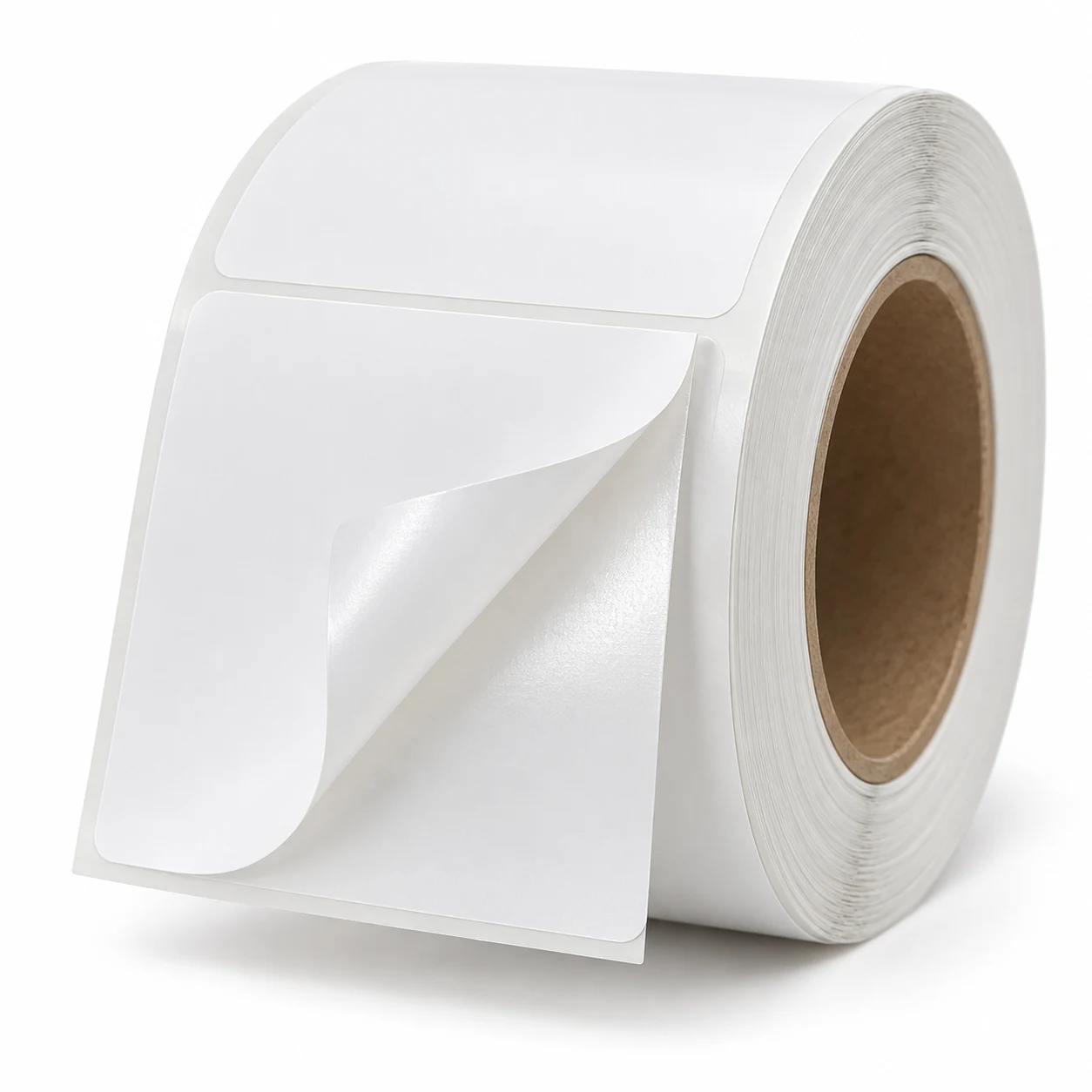
Custom synthetic paper label — made to order: size, shape, adhesive and finish are all specified per run.
Synthetic paper is polypropylene made to look and print like paper, and the difference shows the moment the label gets wet. It does not soften, cockle, tear or lift; it resists chemicals and abrasion; and it works from −30 to 100 °C, which covers a freezer and a warm washroom shelf equally. For household, personal care, cold chain and outdoor products it is the sensible face material.
Adhesives for difficult surfaces
A face that survives is only half of it. High-tack adhesive is for textured, recycled or low-energy surfaces — HDPE bottles especially — where a standard adhesive lifts at the edges within days. Freezer adhesive is formulated to grip a surface that is already cold and wet at the moment of application, which ordinary adhesives simply will not do. Water resistance rates 4 of 5.
Ordering
White, matt or gloss; size, shape, adhesive and finish are made to order, printed flexo or UV and die-cut. The liner is glassine or PP film depending on the application speed. For a label that should be invisible against the container instead, see the transparent PET label; for the economical option on dry goods, the coated paper label.
What moves the price
The facestock, which costs several times what coated paper does, and the adhesive, where high-tack and freezer grades both carry a premium. A PP film liner costs more than glassine and runs faster on automatic applicators, so at volume it sometimes pays for itself. Die, print method and quantity behave as with paper labels. The honest comparison is not against paper on price but against the cost of labels that fail — which is replacement, relabelling and a retailer complaint.
Where it goes wrong
A standard adhesive on a low-energy surface. HDPE especially will shed a label that looked perfect on application, and the fault appears days later in a warehouse rather than on the line. The second is a freezer adhesive specified for a pack labelled before freezing, which is paying for a property nobody uses. The third is assuming the facestock alone makes the label waterproof — the adhesive has to be rated for it too, or the label survives and lets go.
Where custom synthetic paper label is used
Household and personal care, cold chain, outdoor and chemical labelling — anywhere the label is going to get wet, cold or handled. The frozen and chilled page covers why a freezer adhesive is a different product rather than a stronger one, and the cosmetics page why a bathroom shelf is harder on a label than most people expect.
What to send us for a quotation
A quotation for custom synthetic paper label is written against a specification, so the more of this you can send, the closer the first number is to the real one: which structure, or the shelf life and the product so we can choose one — Synthetic paper (PP) are available here; the temperature the pack has to survive, from filling through to how the customer opens it (−30 to 100 °C for this product); the line it runs on — this one is specified for flexo printing and UV printing; which options you want fitted: white, Matt and Gloss; the values for size, Shape, Adhesive and Finish.
Send the fill weight and the quantity with it. Where you already buy something similar, a sample is worth more than a description — we measure what is actually there rather than quoting against how it was once written down.
Food-contact and export requirements are set out in FDA 21 CFR 175.105, the rule adhesives in food packaging are held to; the declarations for this structure are issued with the order.