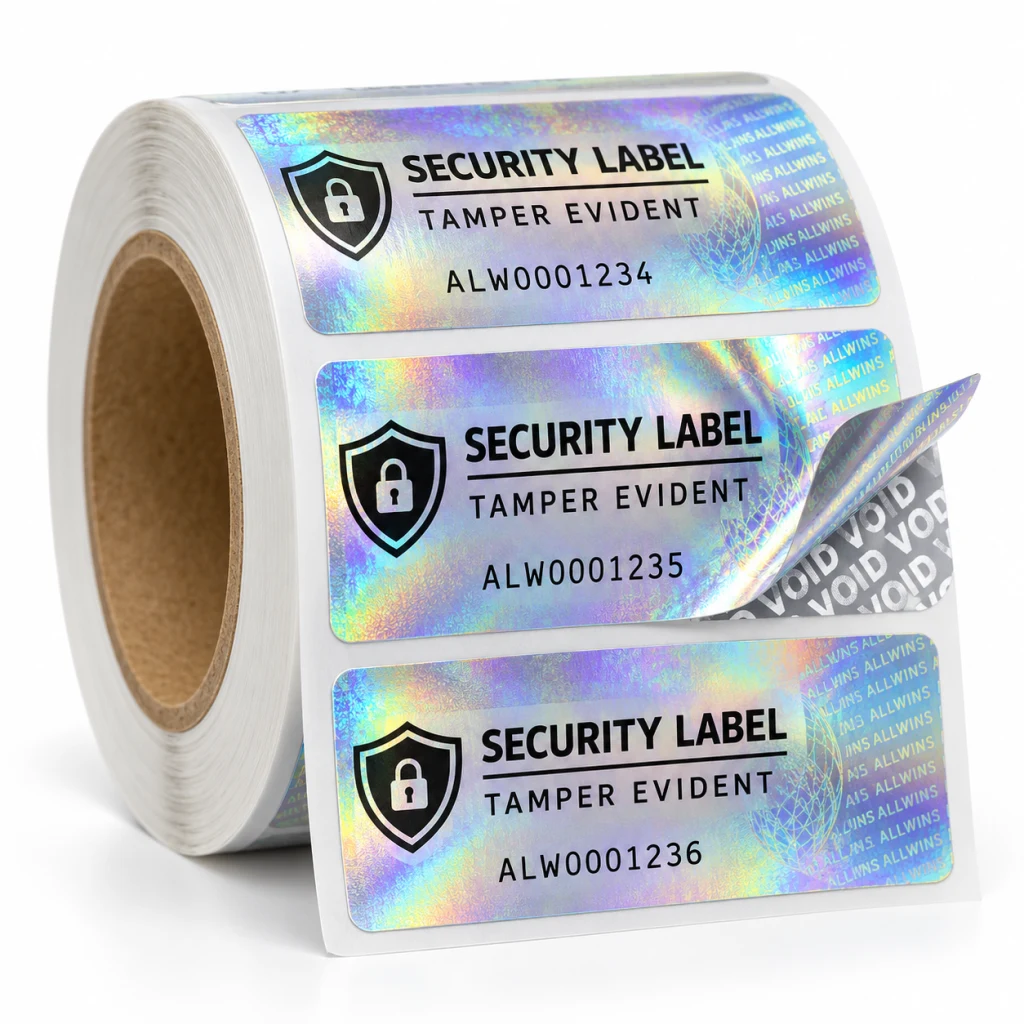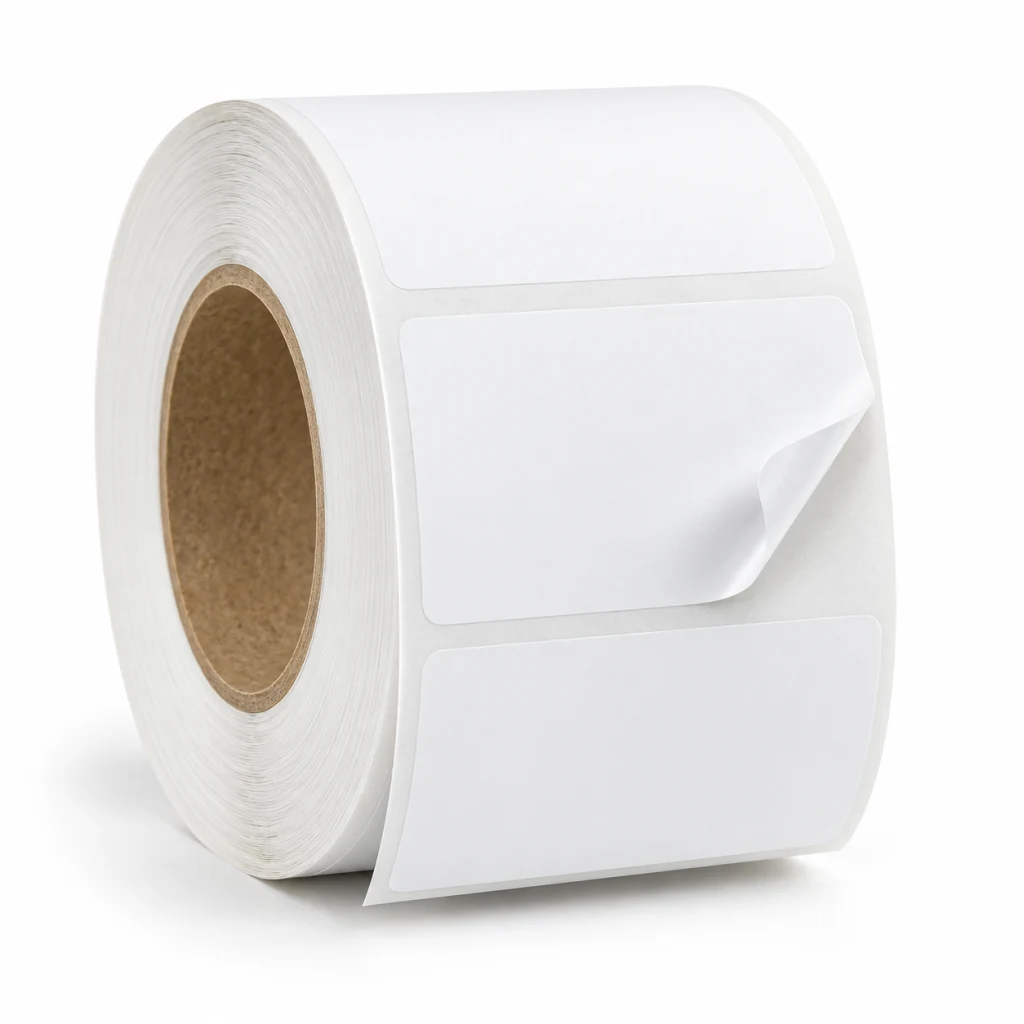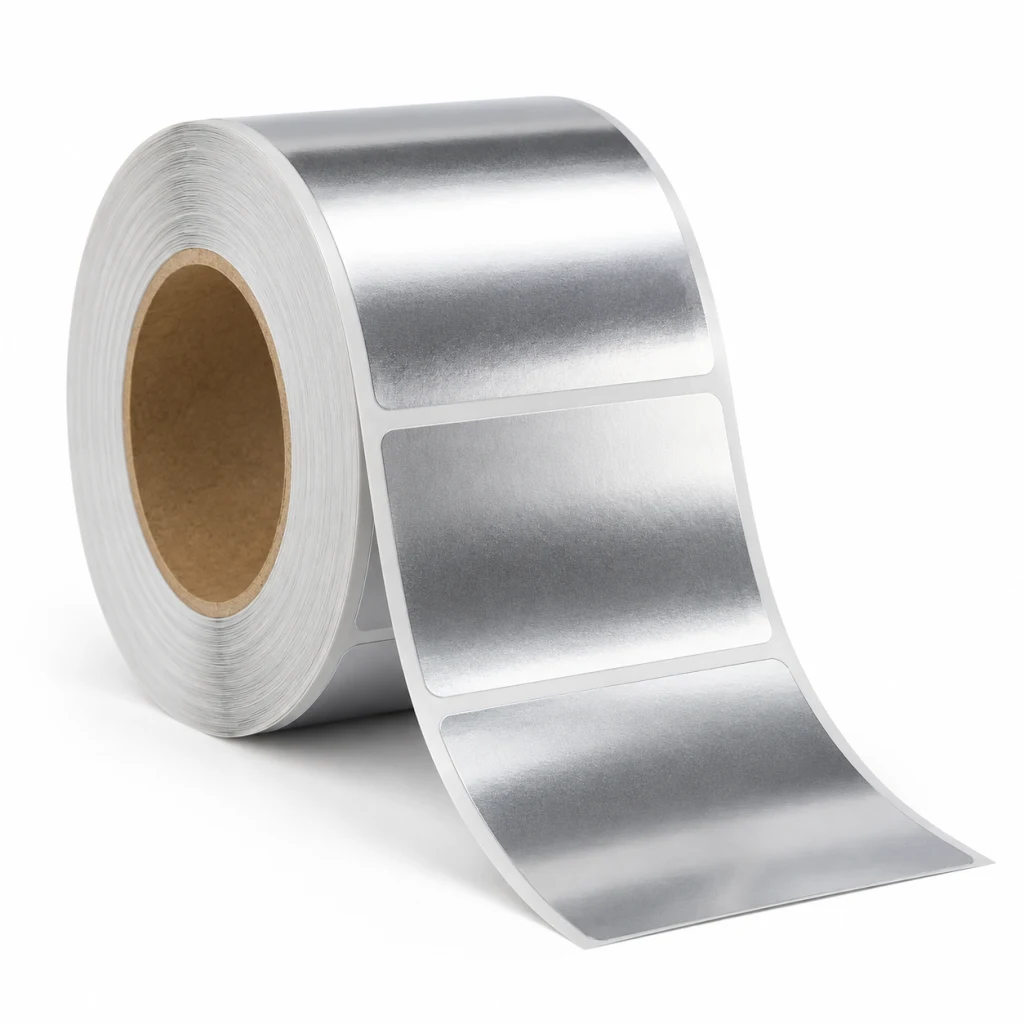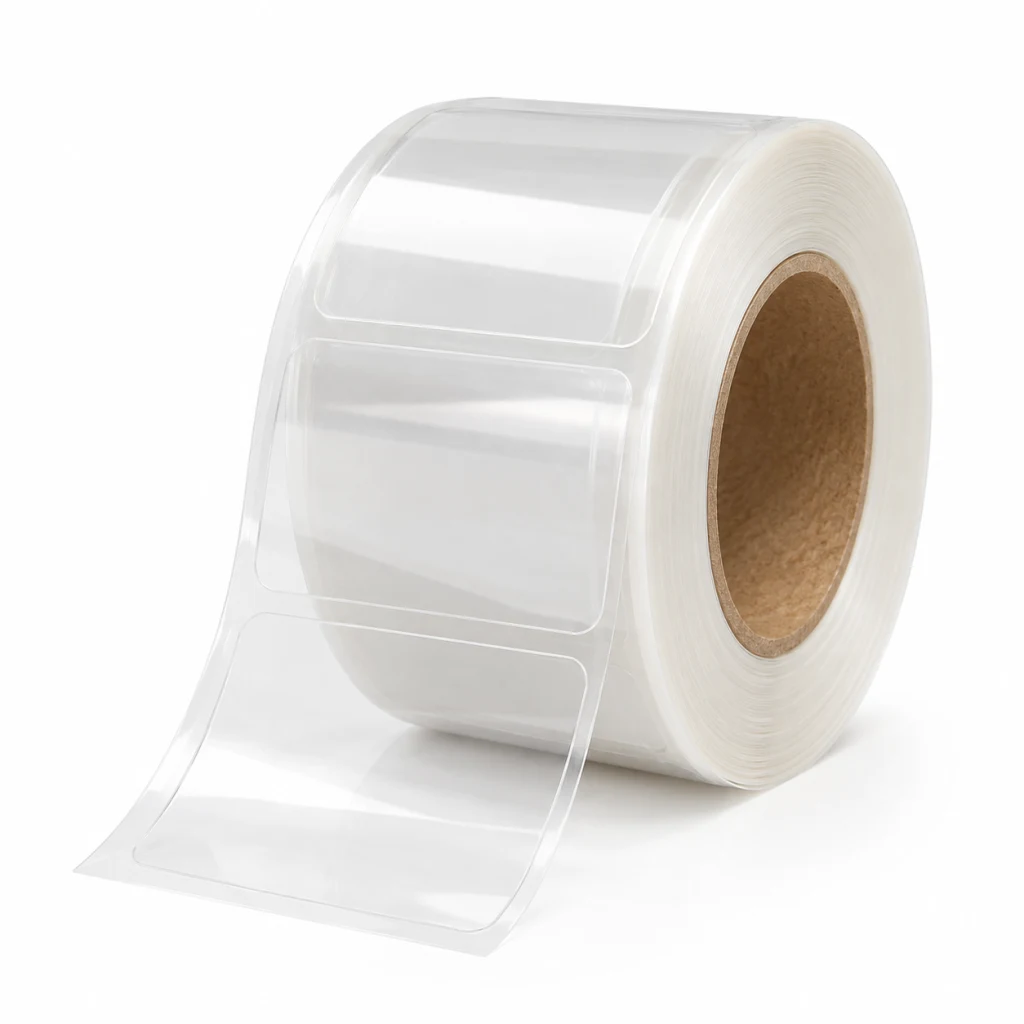
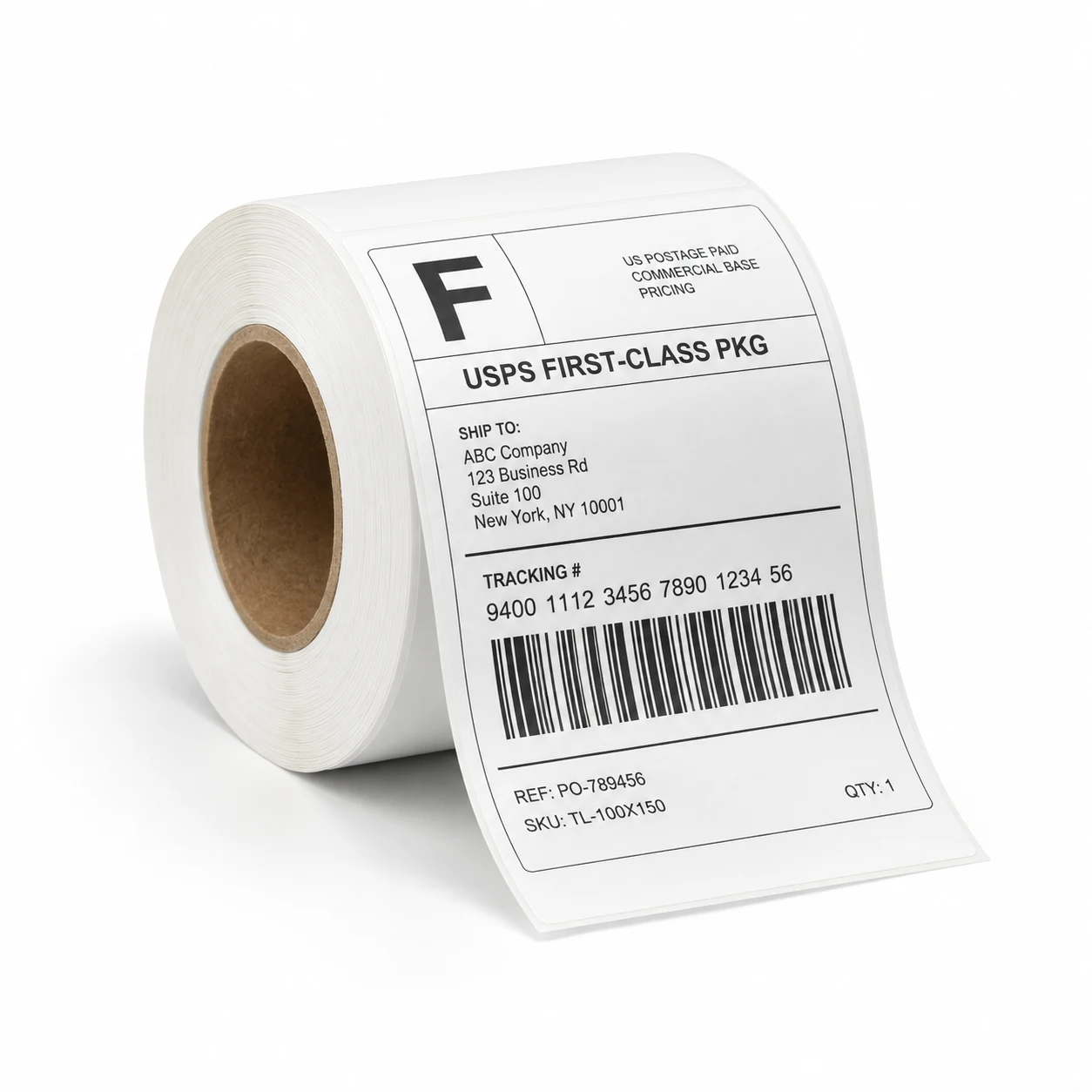
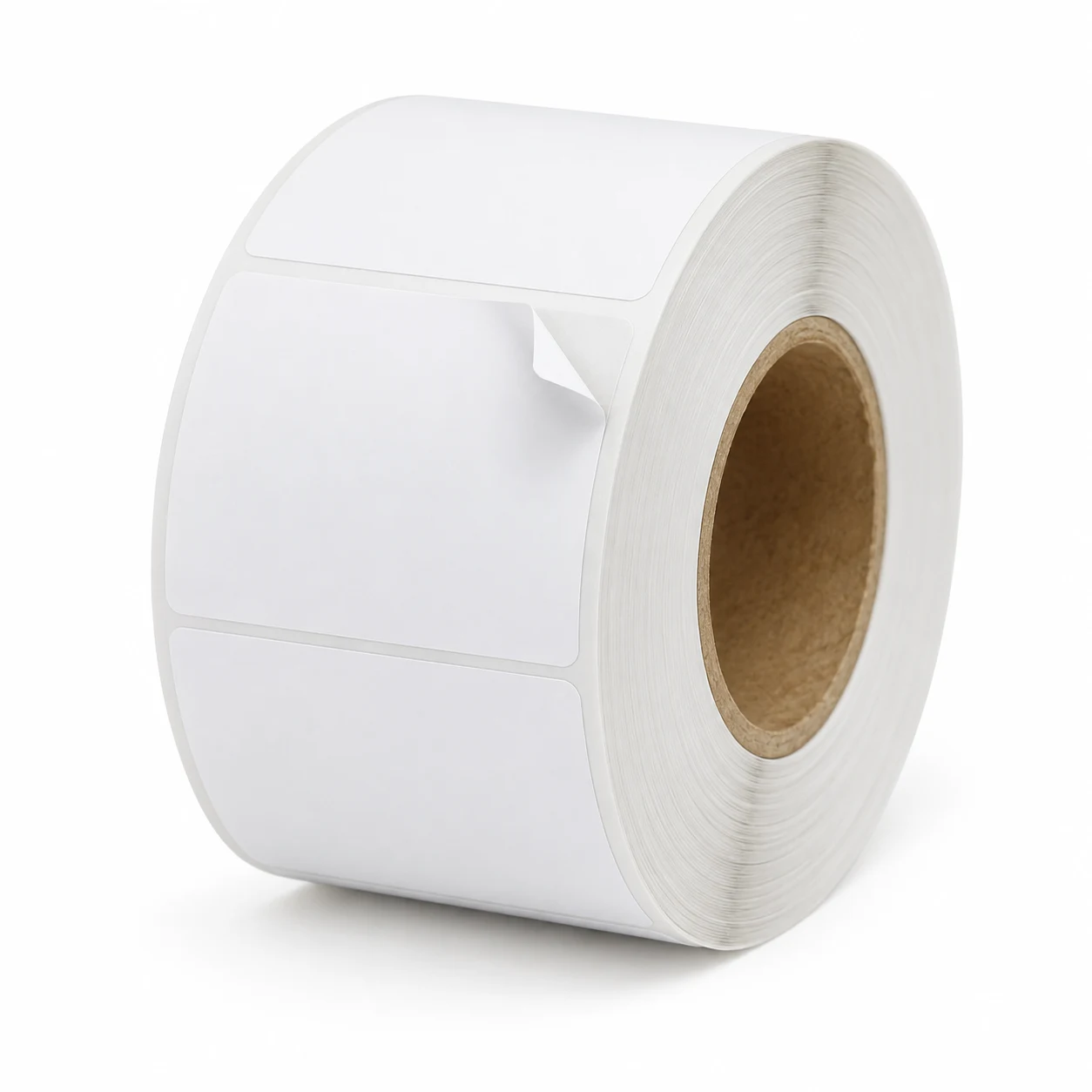
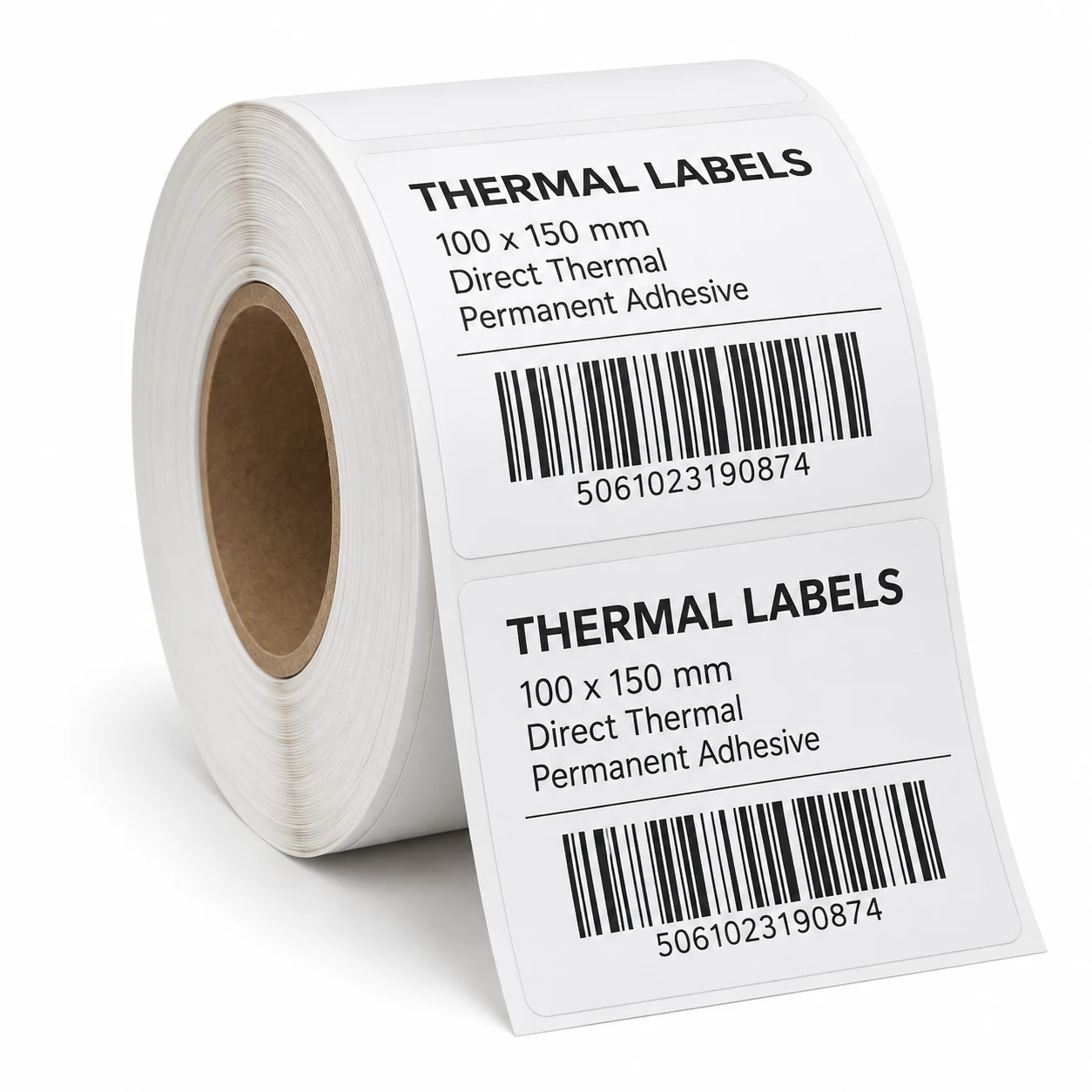
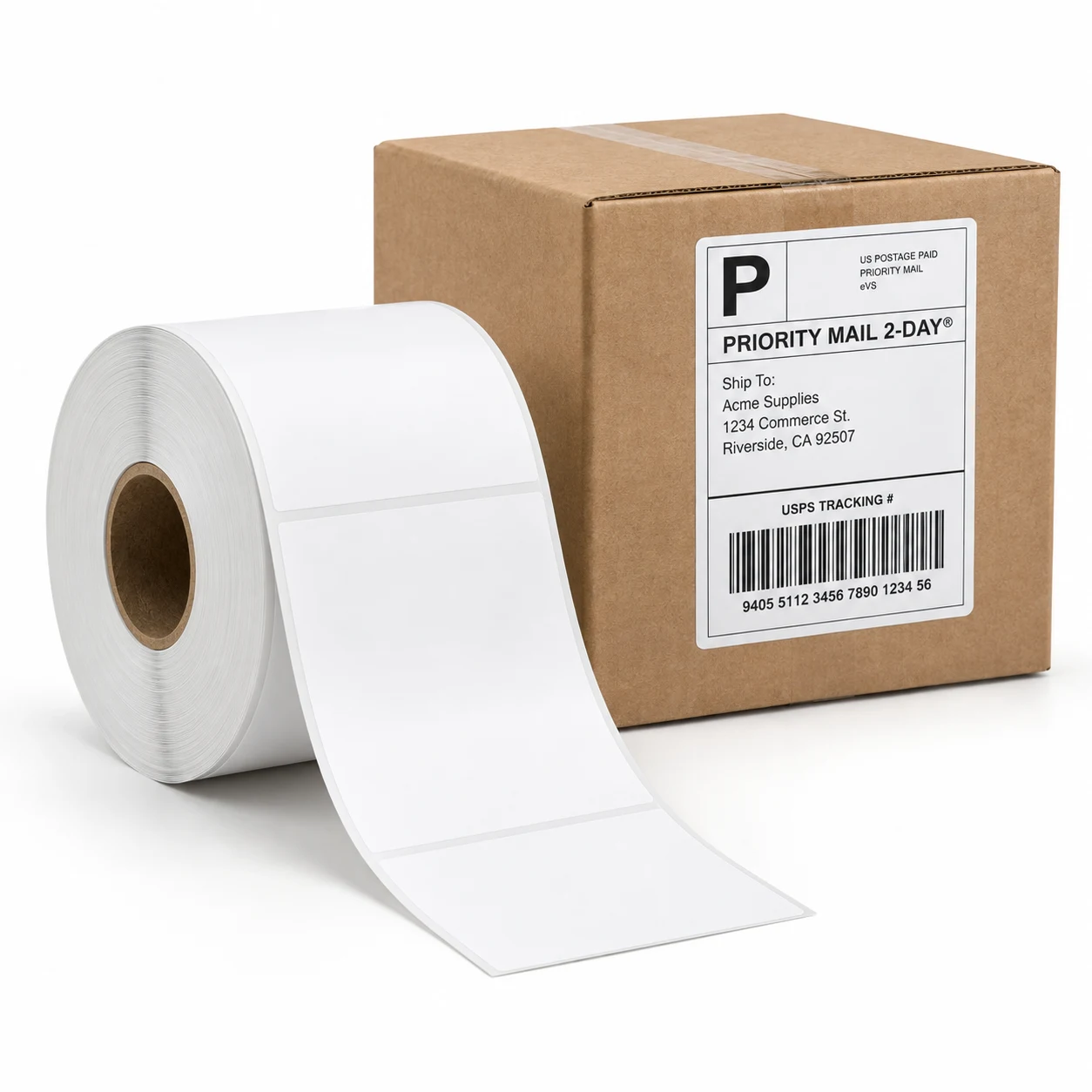
Custom thermal label — made to order: size, core diameter, roll length and adhesive are all specified per run.
Direct thermal labels print with no ribbon and no ink — the print head applies heat, and the coating on the face darkens where it touches. That is why logistics, retail and scale labels are almost all thermal: one consumable instead of two, nothing to reload mid-shift, and barcodes that scan first time.
Top coated, and how long the print lasts
Direct thermal print fades. Heat, sunlight, friction and some plasticisers will all clear a label eventually, which is fine for a parcel in transit for a week and not fine for an archive. A top coating slows it considerably and adds abrasion and moisture resistance, and it is worth specifying whenever the label has to be readable months later. Water resistance rates 3 of 5; temperature range −20 to 60 °C.
Rolls, cores and ordering
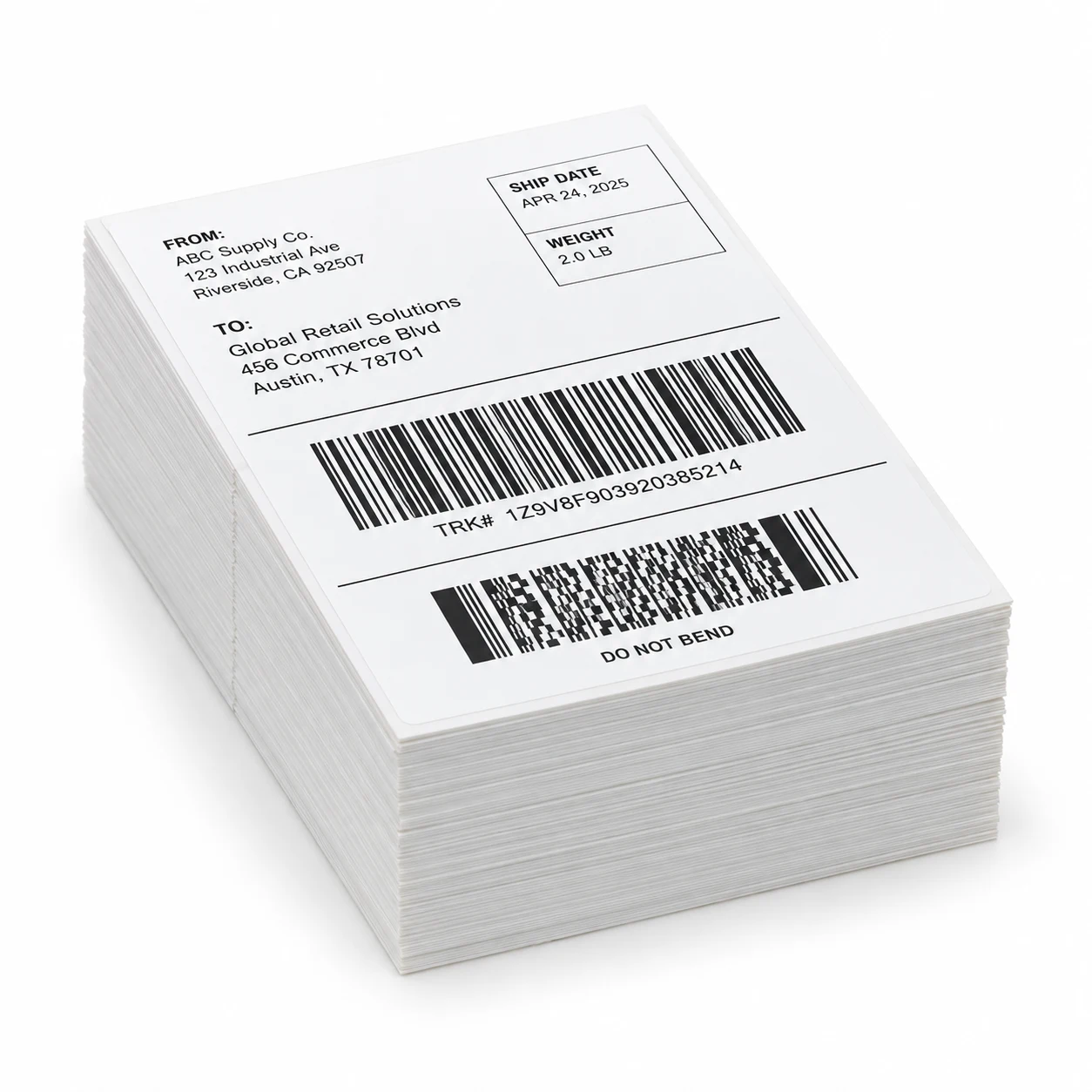
Size, core diameter, roll length and adhesive are made to order, on rolls or fanfold, with freezer adhesive where labels are applied to cold wet surfaces. Core diameter and roll length have to match your printer — a roll that will not fit is the most avoidable problem in this category, so send us the printer model. Typical uses are logistics, barcode, retail and scale labels. For labels that stay put permanently, see the full label range.
What moves the price
Top coating and roll format, over a facestock that is inexpensive to begin with. Uncoated direct thermal is the cheapest label here; a top-coated one costs more and lasts far longer. Core diameter and roll length do not move the price much but do determine whether the roll fits the printer, which matters more. Adhesive follows the surface: standard for dry cartons, freezer for cold wet packs, and the freezer grade carries a premium.
Where it goes wrong
Using uncoated direct thermal for a label that has to be readable months later. Heat, light and abrasion all clear the print, and a barcode that will not scan at the far end of a chain is a delivery problem rather than a label problem. The second is a core or roll length the printer cannot take. The third is direct thermal where thermal transfer was needed — if the label faces chemicals, heat or sunlight, a resin ribbon on a synthetic face is the specification.
Where custom thermal label is used
Logistics, warehouse, retail and scale labelling — high volume, printed on demand, read once or twice and discarded. Where the label has to stay legible for months or years, a thermal transfer ribbon on a synthetic face is the better pairing: see marking labels and ribbons. For labels applied to cold, wet packs, the adhesive matters more than the face — the frozen and chilled page explains why.
What to send us for a quotation
A quotation for custom thermal label is written against a specification, so the more of this you can send, the closer the first number is to the real one: which structure, or the shelf life and the product so we can choose one — Thermal paper are available here; the temperature the pack has to survive, from filling through to how the customer opens it (−20 to 60 °C for this product); the line it runs on — this one is specified for variable data printing and Die cutting; which options you want fitted: direct thermal, Top coated and Freezer adhesive; the values for size, Core diameter, Roll length and Adhesive.
Send the fill weight and the quantity with it. Where you already buy something similar, a sample is worth more than a description — we measure what is actually there rather than quoting against how it was once written down.
Food-contact and export requirements are set out in FDA 21 CFR 175.105, the rule adhesives in food packaging are held to; the declarations for this structure are issued with the order.