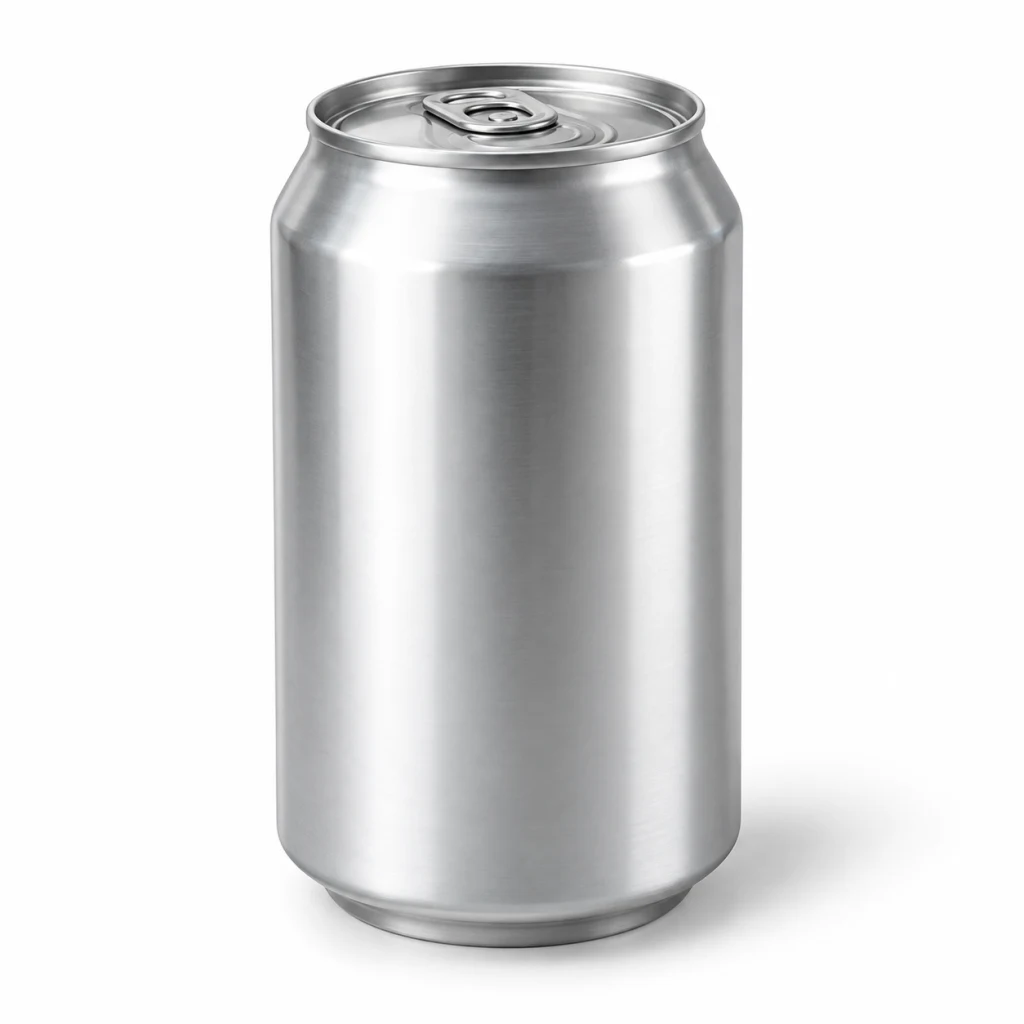
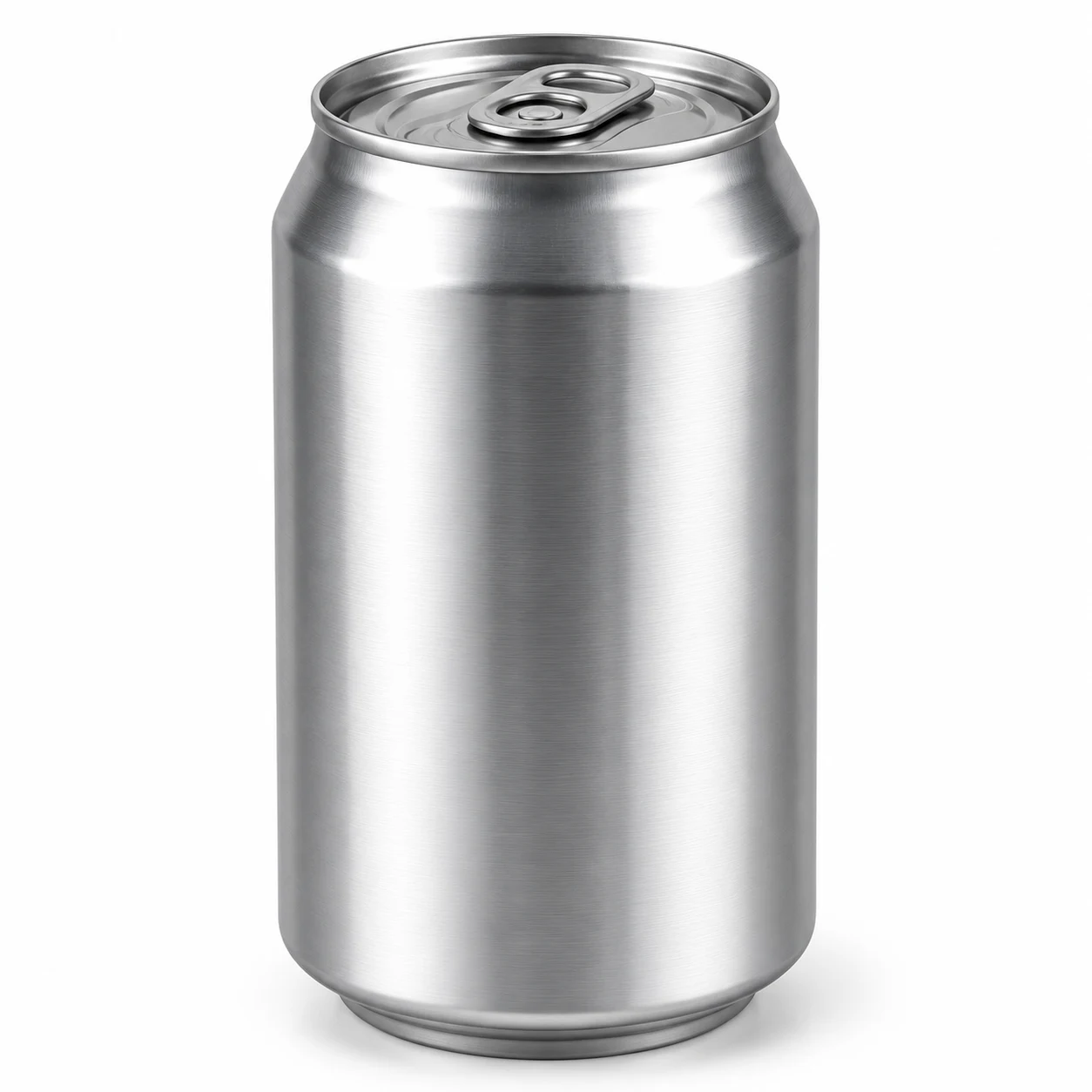
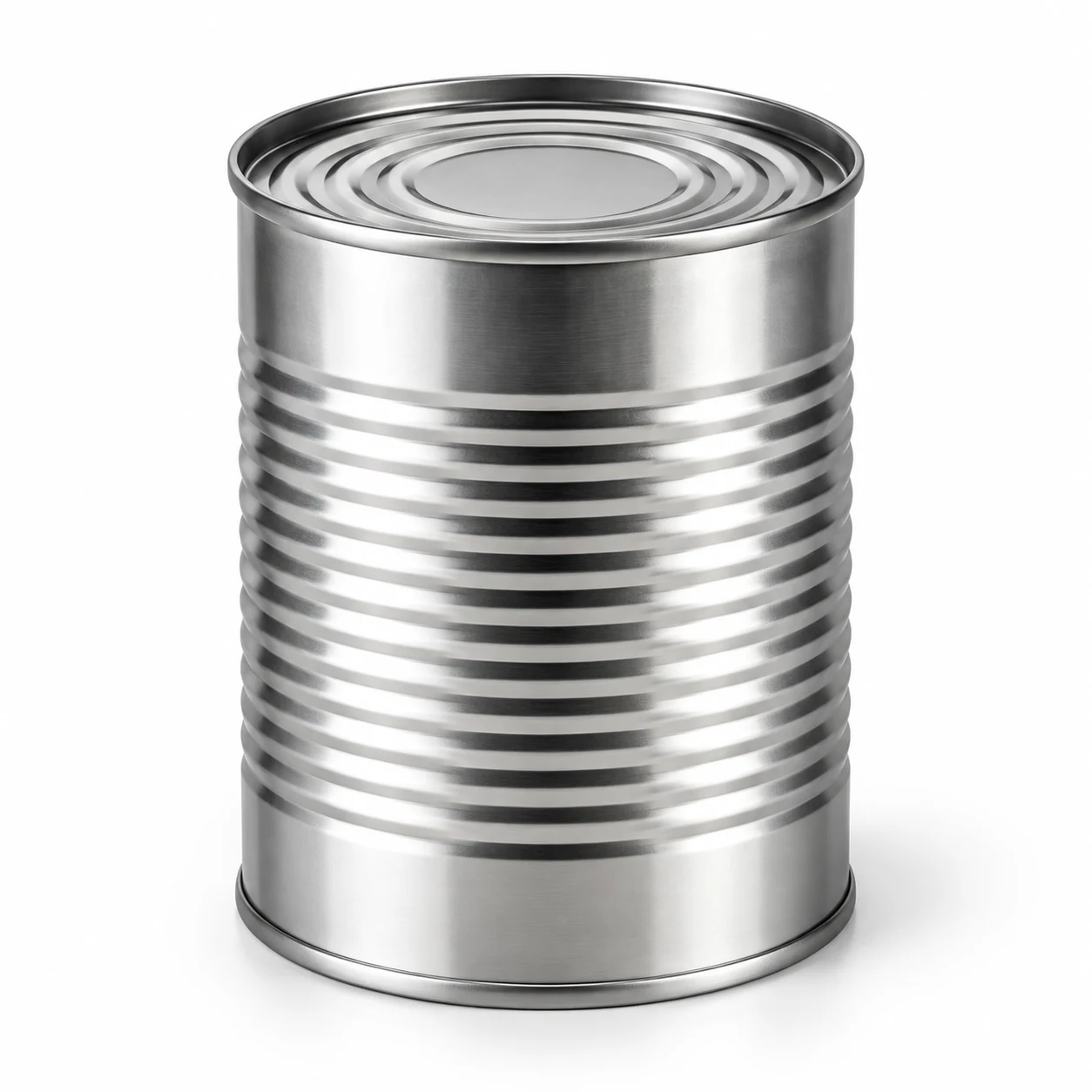
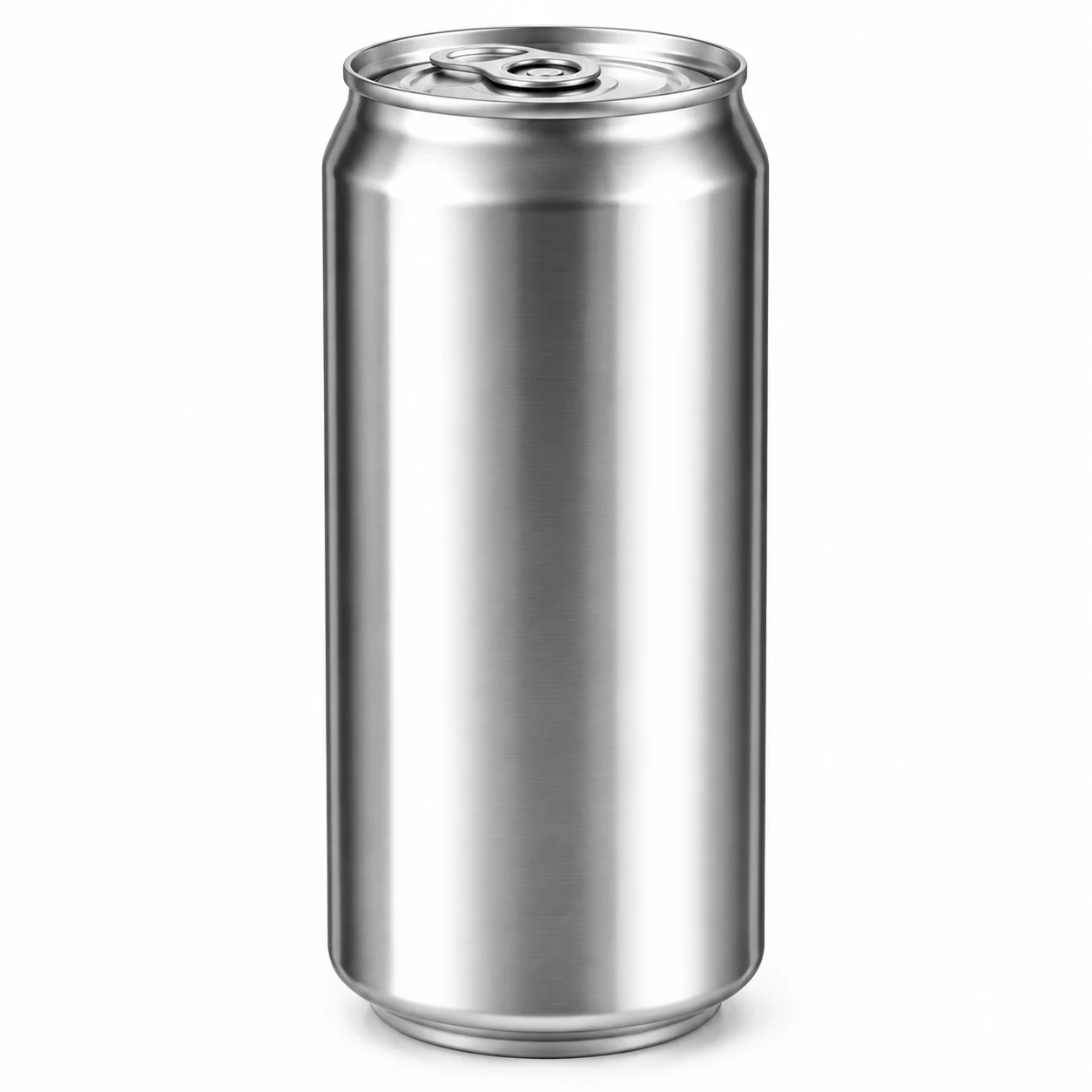
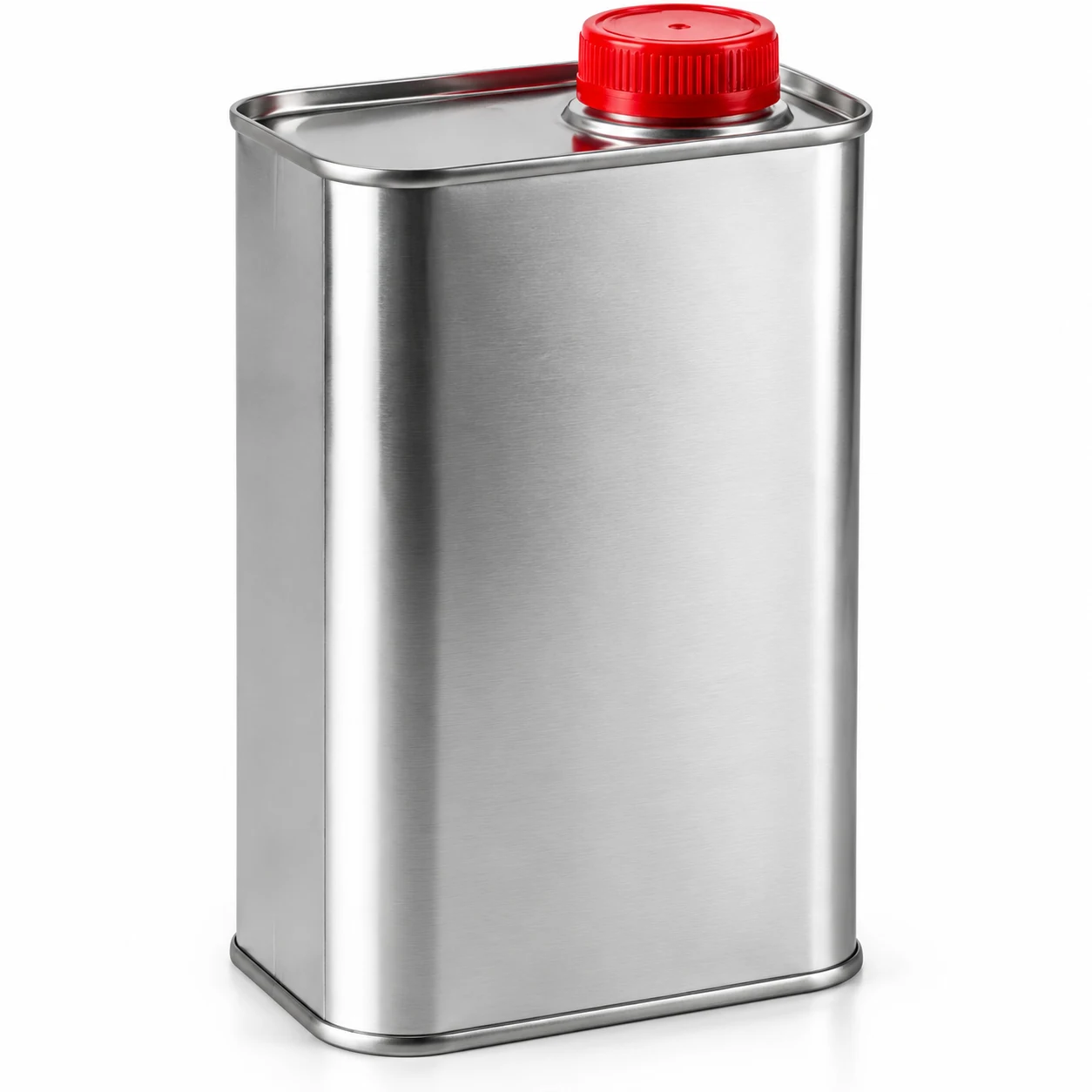
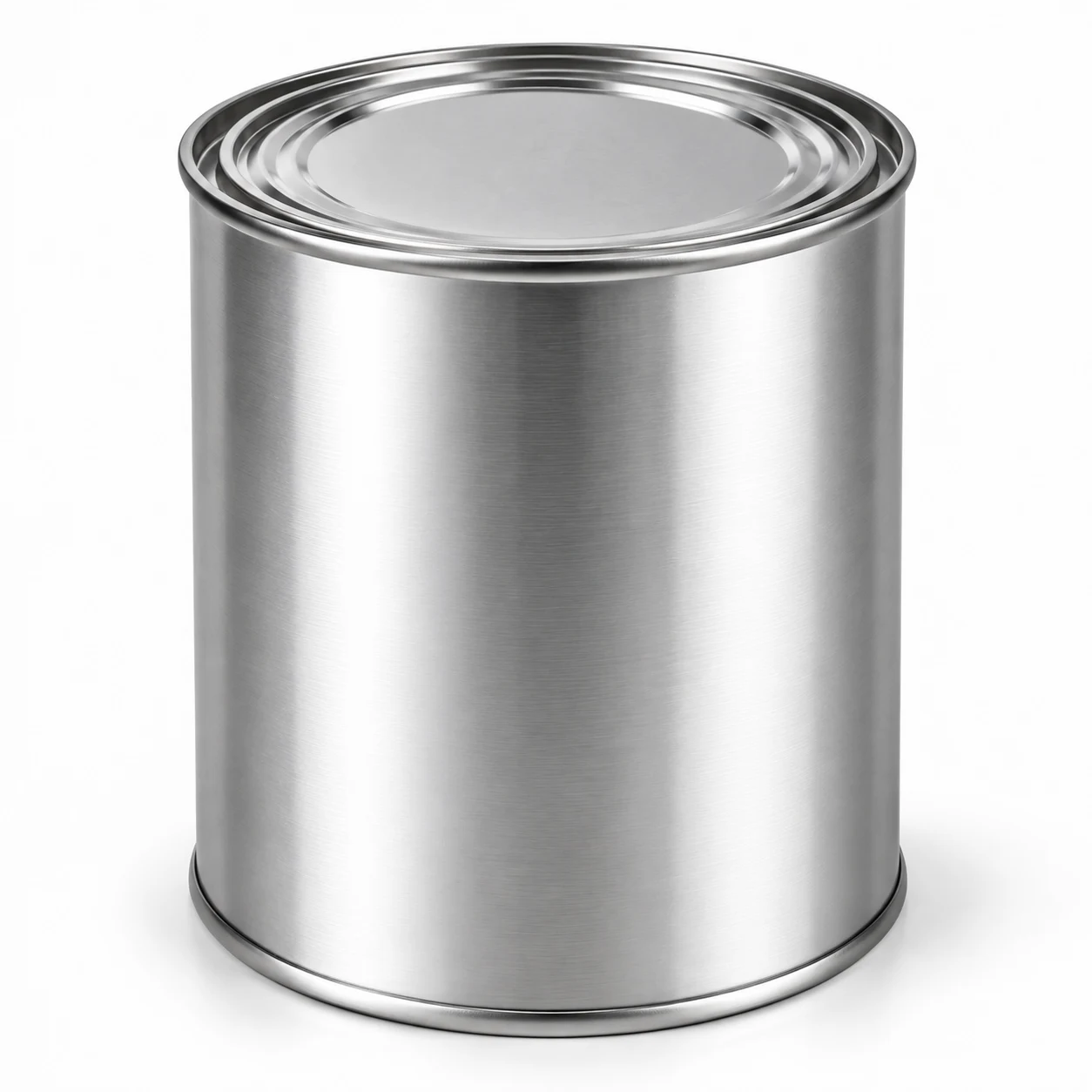
Custom tinplate can — made to order: diameter and height, end type and printing are all specified per run.
Tinplate is steel with a thin tin coating and a food-grade lacquer inside, and a sealed tinplate can is one of the few packages that is genuinely shelf stable for years. Light, oxygen and moisture are excluded completely; the can survives retort sterilisation at 121 °C with the food inside; and it stacks and ships without the crushing losses a lighter container takes.
Ends, lacquers and what to specify
An easy-open end costs more and sells better for consumer food; a plain end requires an opener and suits bulk and industrial packs. The internal lacquer is chosen against the product — acidic foods, brines and high-sulphur products each attack a different lacquer system, and the wrong one is discovered months into shelf life. Tell us what is going in the can, not just the volume. Printing goes directly onto the body, so no label is needed.
Ordering
Diameter and height, end type and printing are made to order. Temperature range is −40 to 200 °C. Typical uses are canned food, milk powder, coffee and seasonings. For a lighter can with a board body and a real barrier, see the composite paper can; for pressurised drinks, the aluminium can. FDA and GB food-grade lacquers.
What moves the price
Diameter, height and end type, with the internal lacquer as a quieter but real line. Easy-open ends cost more than plain. Printing goes directly onto the body, which removes the label cost entirely but adds a plate cost, so short runs sometimes favour a plain can with a label. Steel is a commodity and quotations move with it. Minimums are high: a can line is not a short-run process.
Where it goes wrong
The wrong lacquer for the contents, which is the failure that shows up months into shelf life as discolouration, off-flavour or corrosion — and by then the whole batch is affected. Acidic foods, brines and high-sulphur products each want a different system. The second is specifying the can and then discovering the filling line cannot seam it. The third is assuming a retort process is a given; it has to be validated for the pack as well as the food.
Where custom tinplate can is used
Canned food, milk powder, coffee and seasonings — shelf lives measured in years, and products sterilised in the container. The lacquer follows the contents rather than the format, which is the specification most often left off an enquiry. For a lighter can with a board body and a real barrier, see the composite paper can; for pressurised drinks, the aluminium can.
What to send us for a quotation
A quotation for custom tinplate can is written against a specification, so the more of this you can send, the closer the first number is to the real one: which structure, or the shelf life and the product so we can choose one — Tinplate are available here; the temperature the pack has to survive, from filling through to how the customer opens it (−40 to 200 °C for this product); the line it runs on — this one is specified for stamping and Retort processing; which options you want fitted: easy-open end, Plain end and Printed body; the values for diameter and height, End type and Printing.
Send the fill weight and the quantity with it. Where you already buy something similar, a sample is worth more than a description — we measure what is actually there rather than quoting against how it was once written down.
Food-contact and export requirements are set out in FDA 21 CFR 175 and 177, which cover coatings and polymers in food contact; the declarations for this structure are issued with the order.