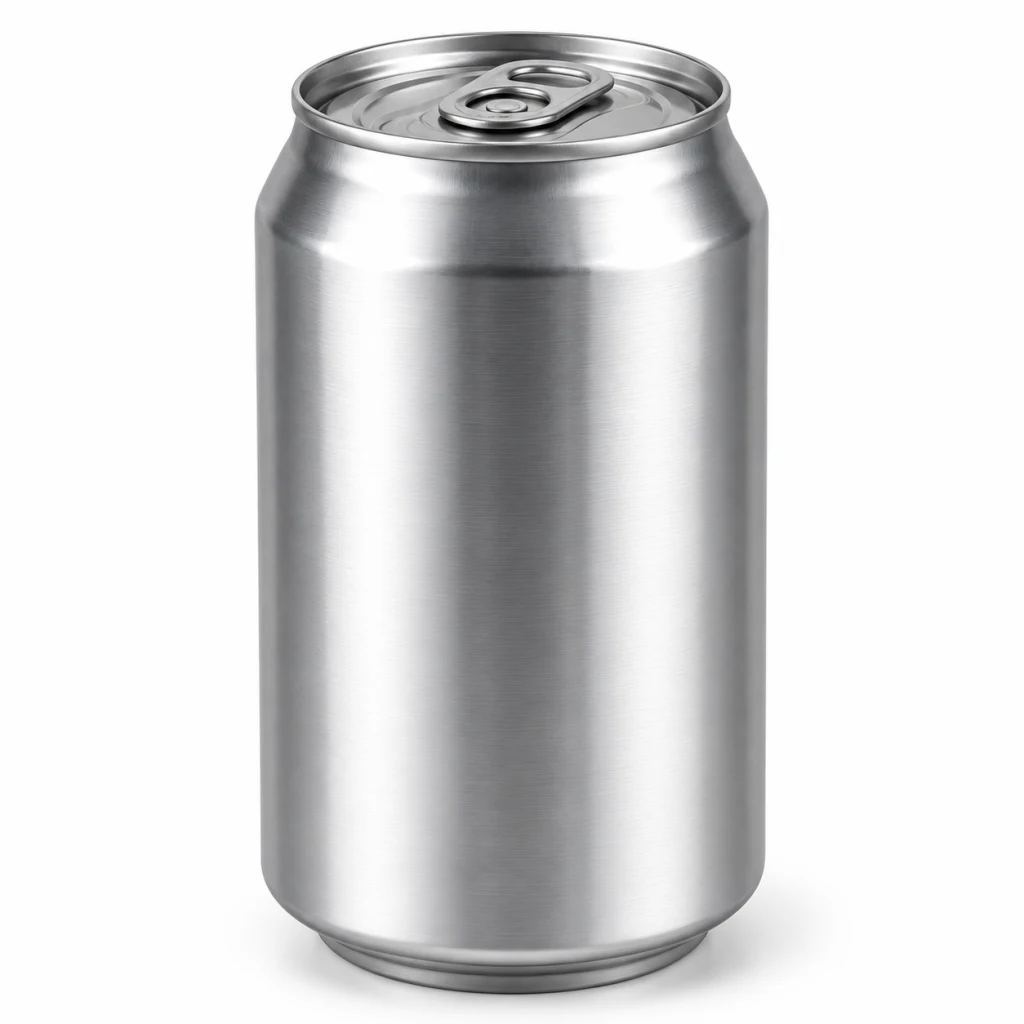
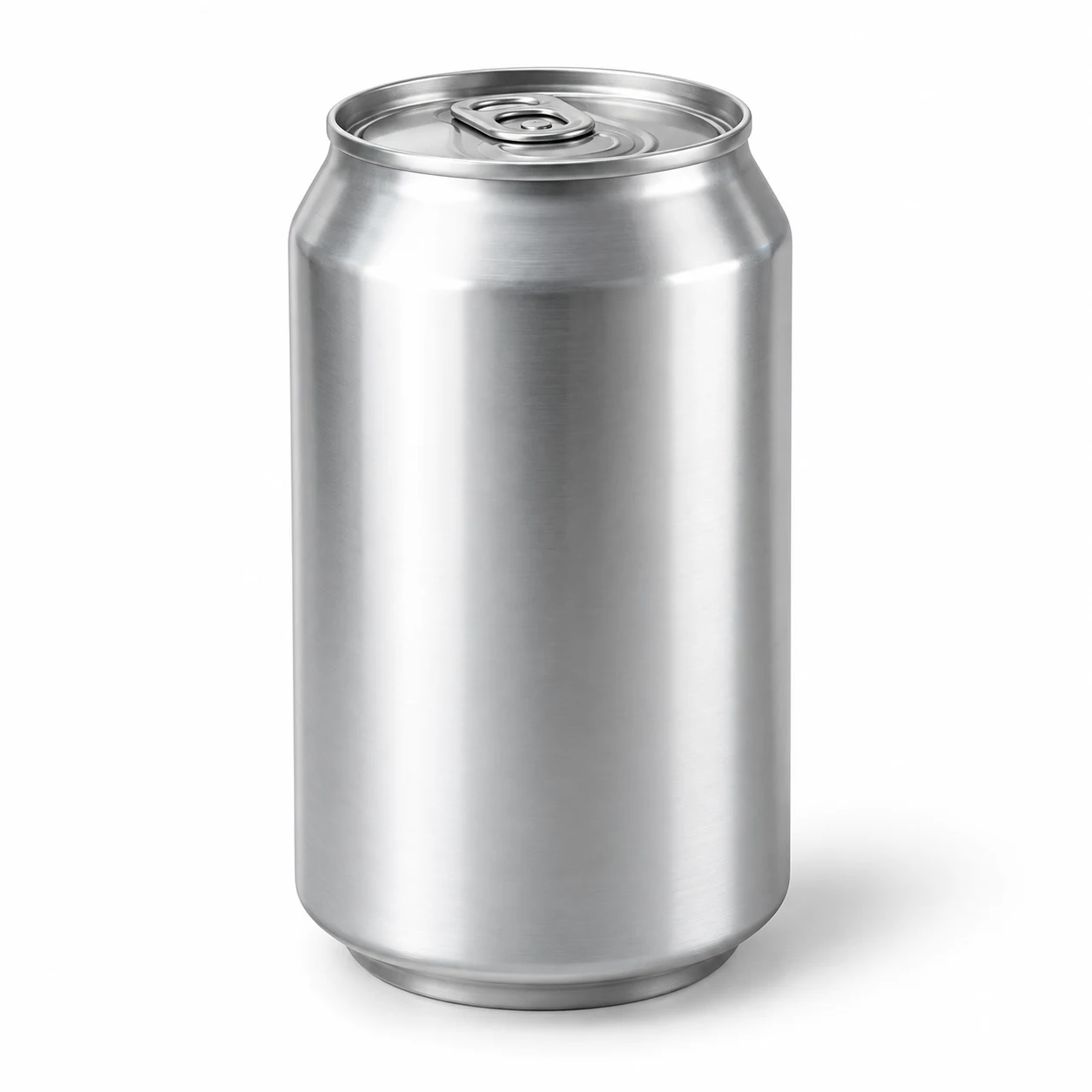
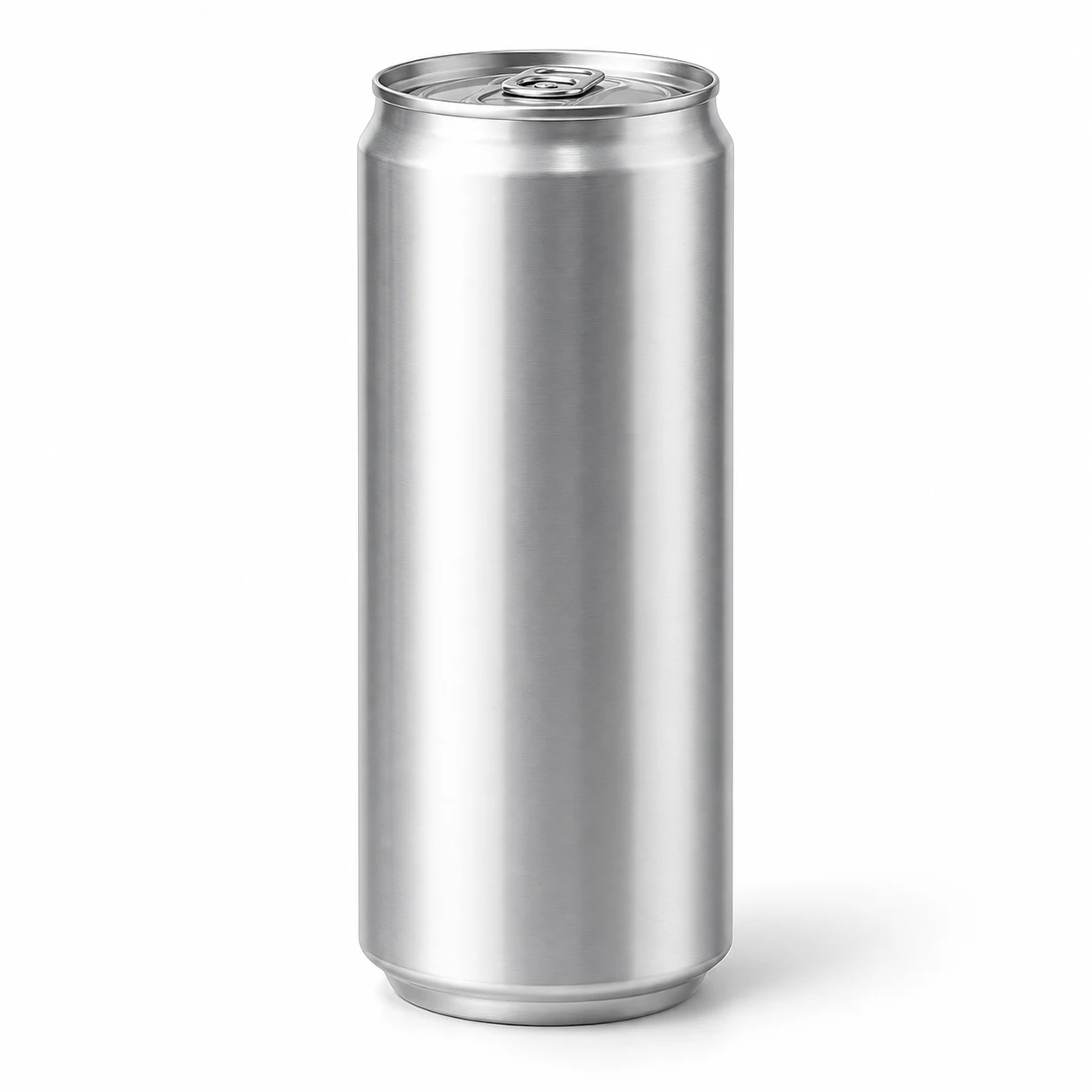
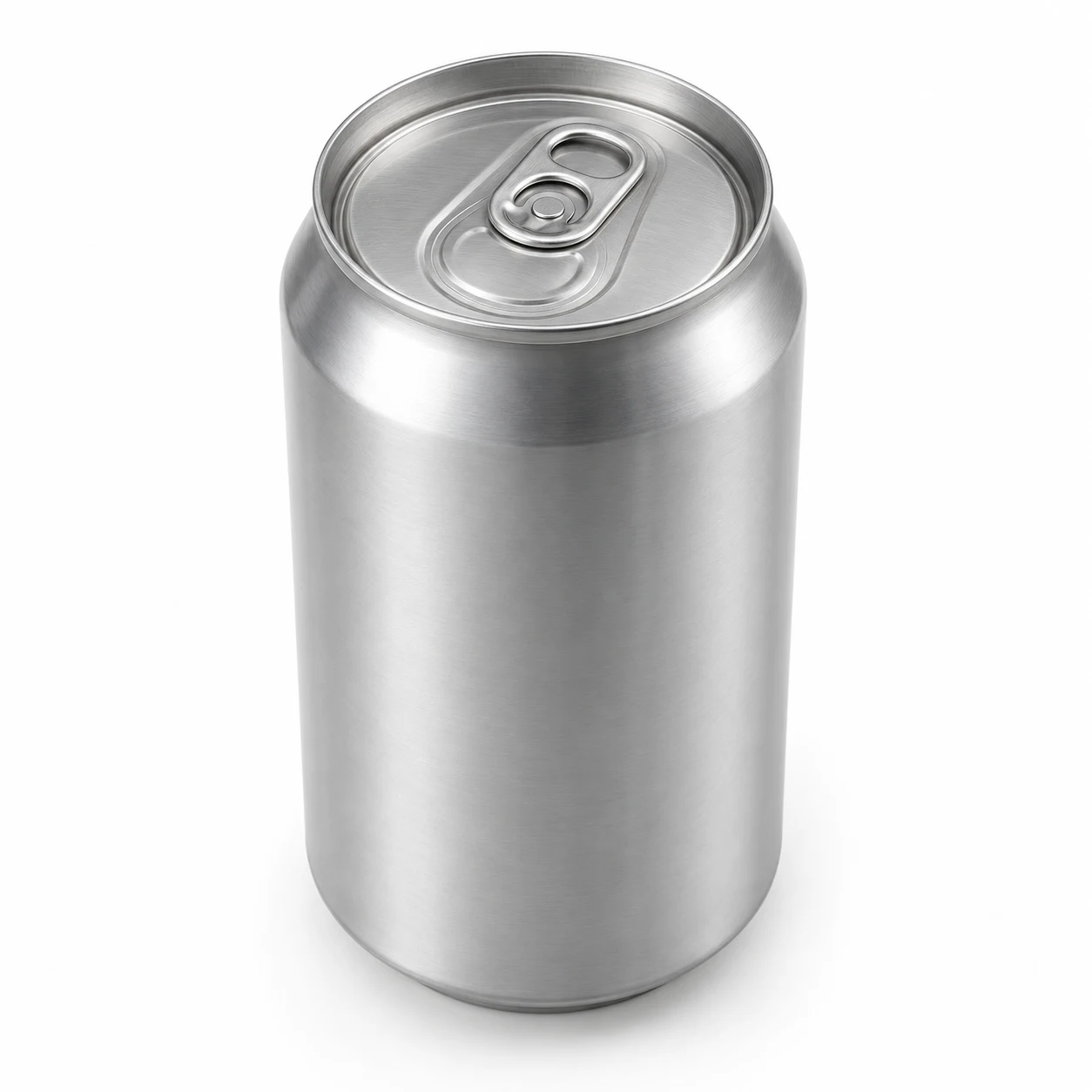
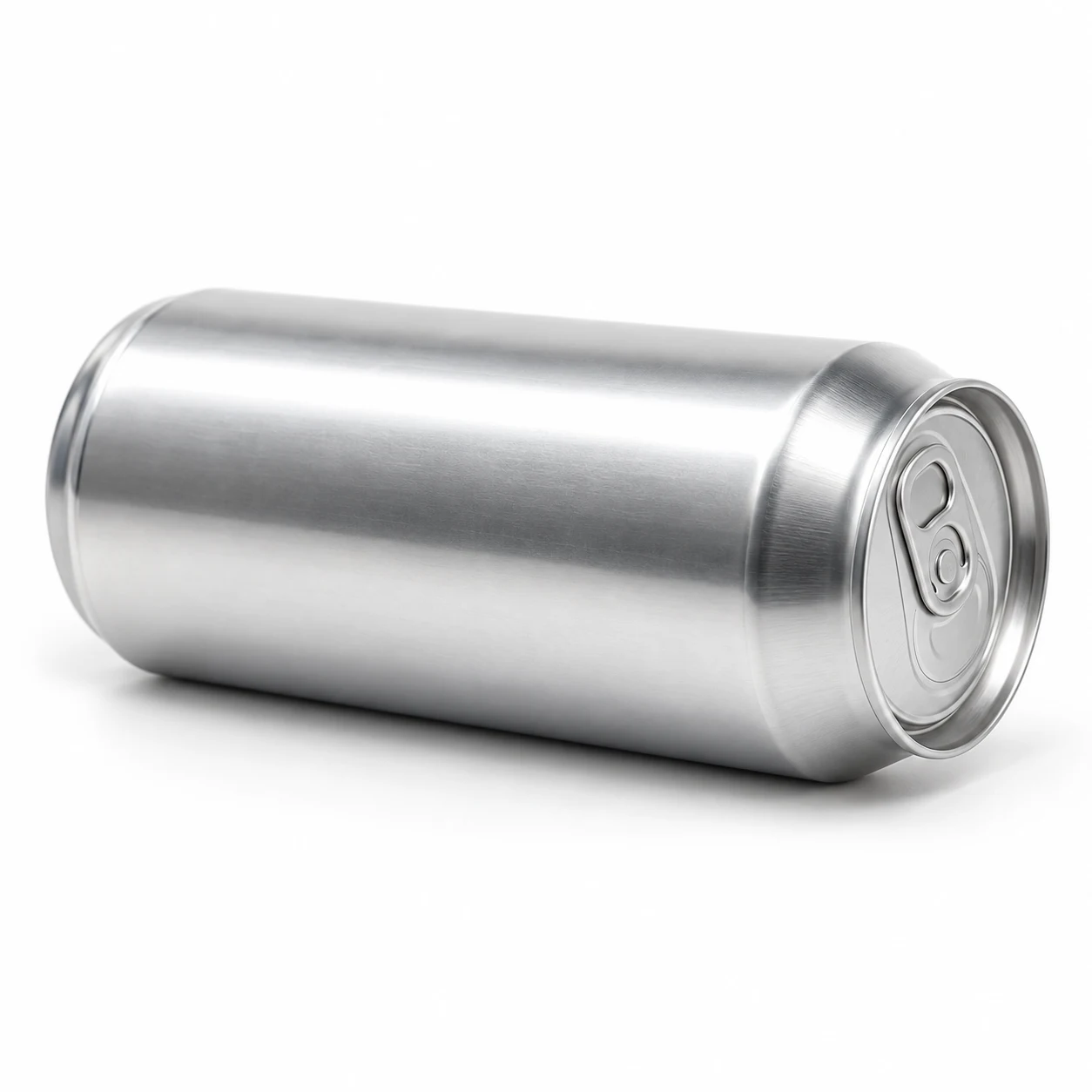
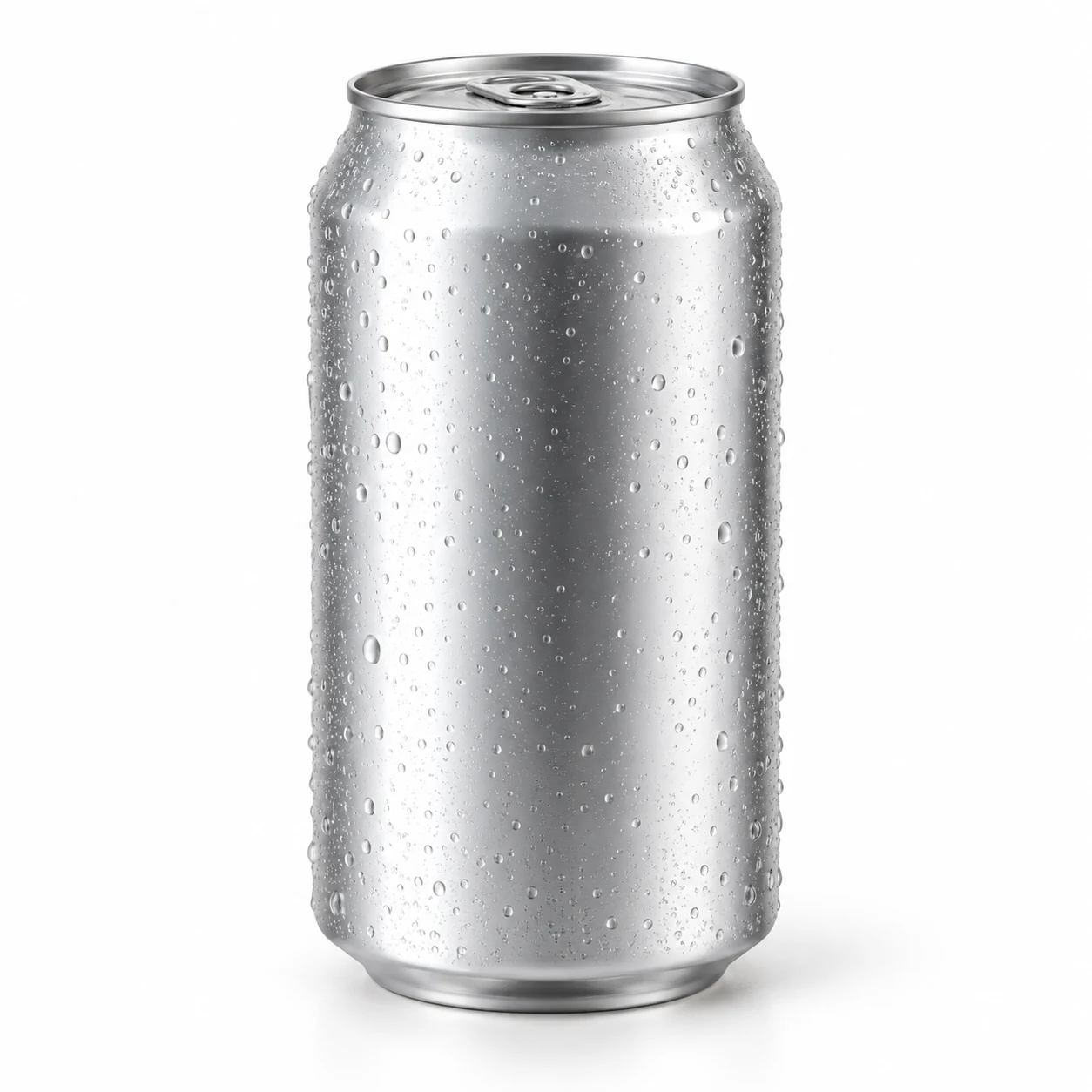
Custom aluminium can — made to order: volume, body shape and printing are all specified per run.
An aluminium can holds internal pressure, which is why carbonated drinks, beer and energy drinks are packed in one. It is also light, it chills faster than glass or plastic, it excludes light and oxygen completely, and it takes print across the entire body at a quality no label achieves on a curved surface. As a package it is close to ideal for what it does.
Formats and ends
Standard, slim and sleek bodies are available, and the choice is a positioning decision as much as a volume one — slim and sleek read as premium and as energy or seltzer; standard reads as beer and soft drinks. Easy-open ends are the norm; resealable ends cost more and suit larger formats and slower consumption. Aerosol bodies are also available. Temperature range is −50 to 300 °C.
Ordering
Volume, body shape and printing are made to order. Aluminium is recycled at higher rates and with less energy loss than almost any other packaging material, which is worth stating on the pack where a brand is making that case. For non-pressurised contents needing the same barrier, see the tinplate can. FDA and GB food-grade lacquers.
What moves the price
Body format, end type and print, over a base that follows the aluminium market. Slim and sleek bodies cost more per unit than standard ones and read as more premium, which is usually the reason they are chosen. Resealable ends are a significant increment. Printing is direct to the body and needs plates, so the first run carries a setup the repeats do not. Minimums are the highest in this catalogue; a can line runs at thousands per minute and is not set up for small batches.
Where it goes wrong
Designing the format before checking the minimum, which is how a small brand ends up with five years of stock. The second is a still fill without nitrogen dosing, leaving a can that dents and looks faulty on shelf. The third is artwork that ignores the distortion of printing onto a curved, drawn body — the plate and the shape have to be reconciled before the run.
Where custom aluminium can is used
Carbonated soft drinks, beer, energy drinks, seltzers and aerosols — anything that holds pressure, and anything sold on a chilled shelf where the pack has to look as good as it prints. For non-pressurised contents needing the same complete barrier, the tinplate can is the comparison, and for a premium powder or dry good the composite paper can gets close at a lower weight.
What to send us for a quotation
A quotation for custom aluminium can is written against a specification, so the more of this you can send, the closer the first number is to the real one: which structure, or the shelf life and the product so we can choose one — Aluminium are available here; the temperature the pack has to survive, from filling through to how the customer opens it (−50 to 300 °C for this product); the line it runs on — this one is specified for stamping and Heat sealing; which options you want fitted: standard, Slim and Sleek; the values for volume, Body shape and Printing.
Send the fill weight and the quantity with it. Where you already buy something similar, a sample is worth more than a description — we measure what is actually there rather than quoting against how it was once written down.
Food-contact and export requirements are set out in FDA 21 CFR 175 and 177, which cover coatings and polymers in food contact; the declarations for this structure are issued with the order.