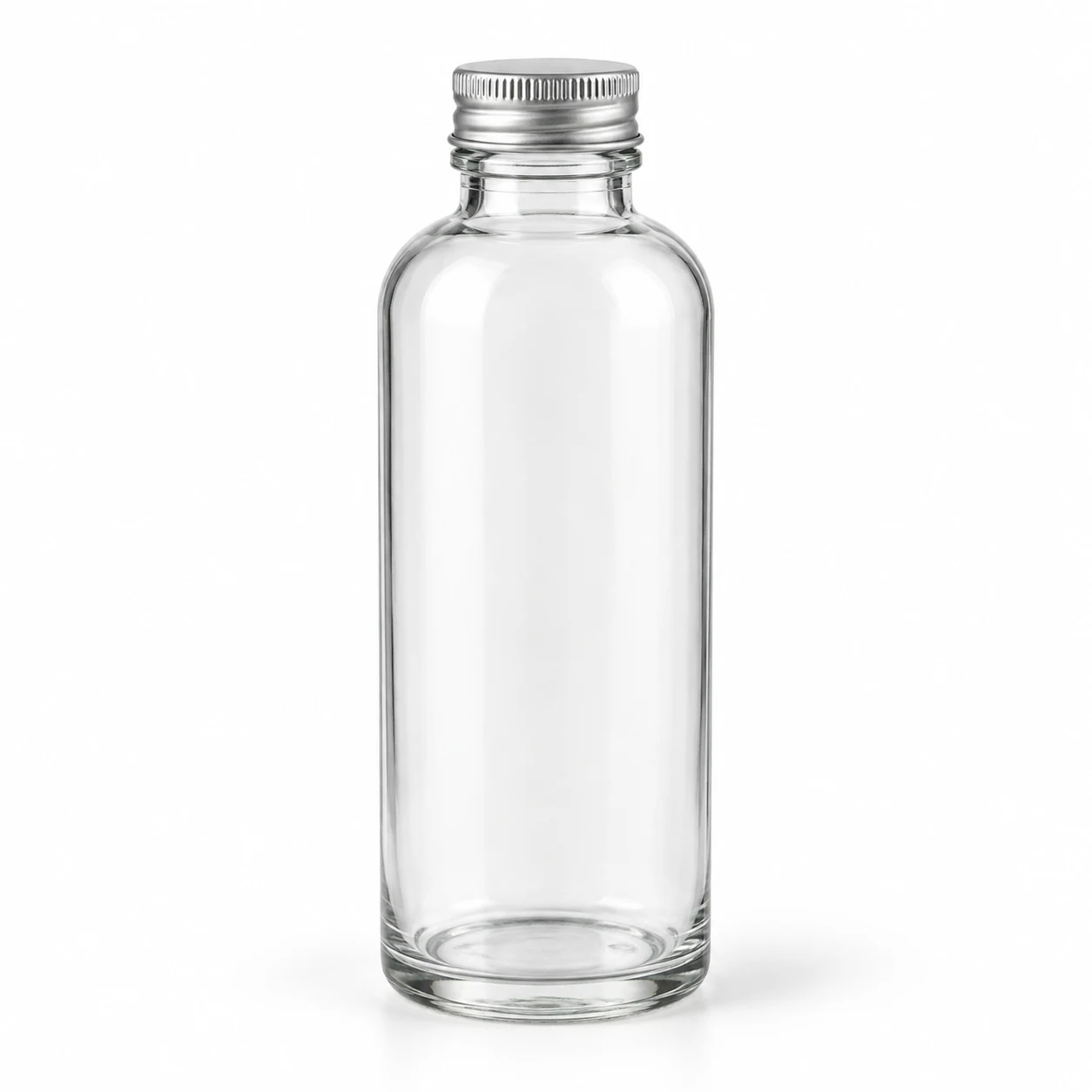
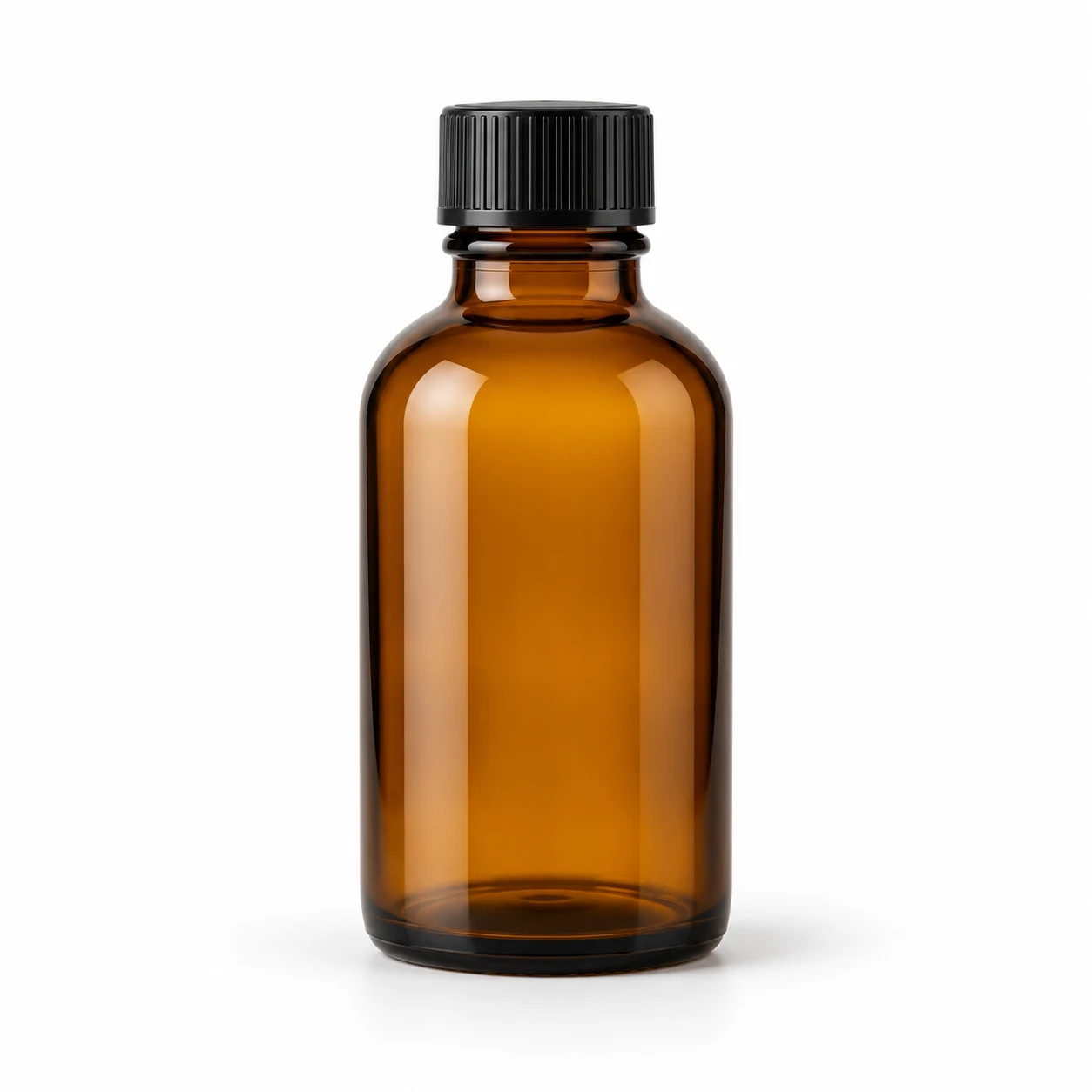
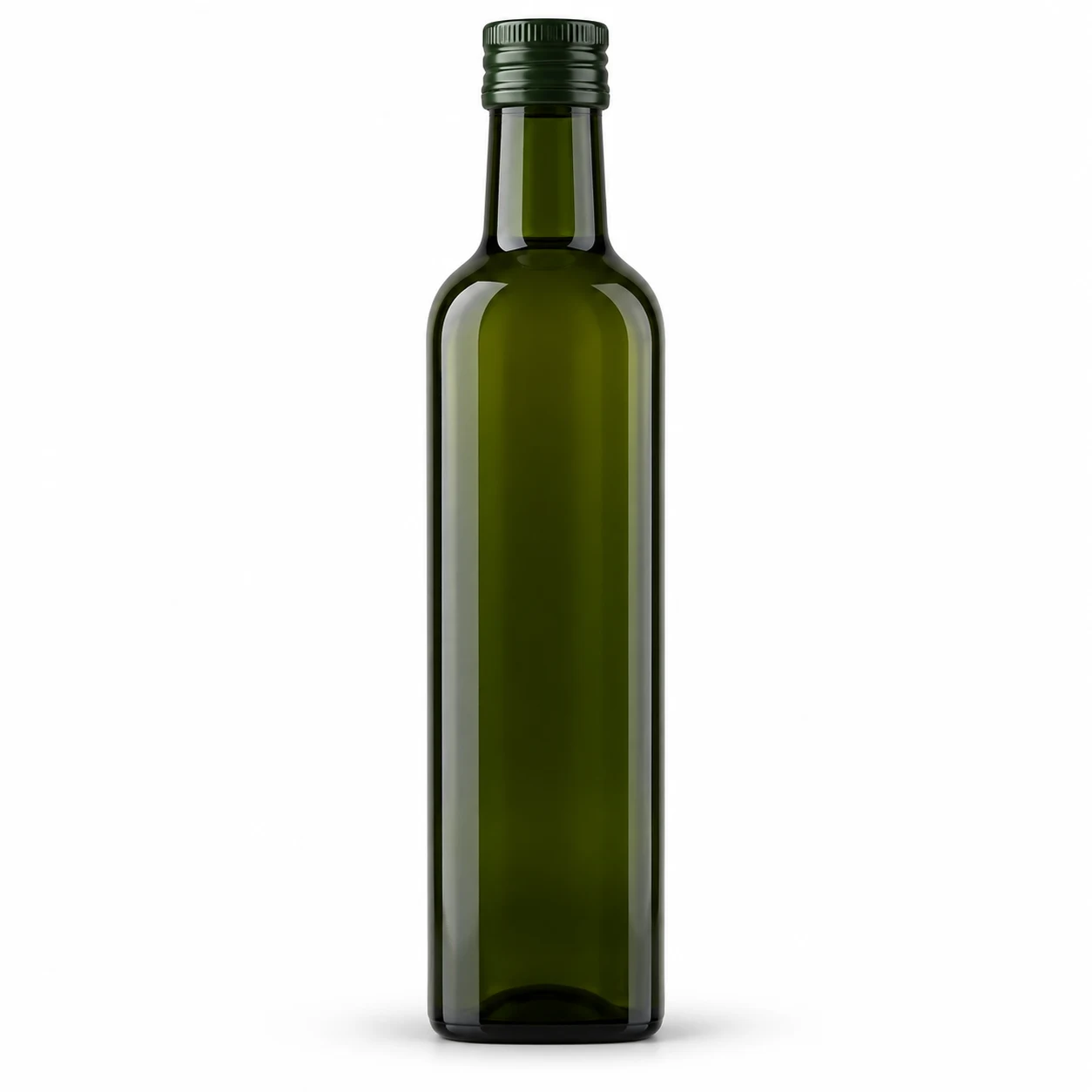
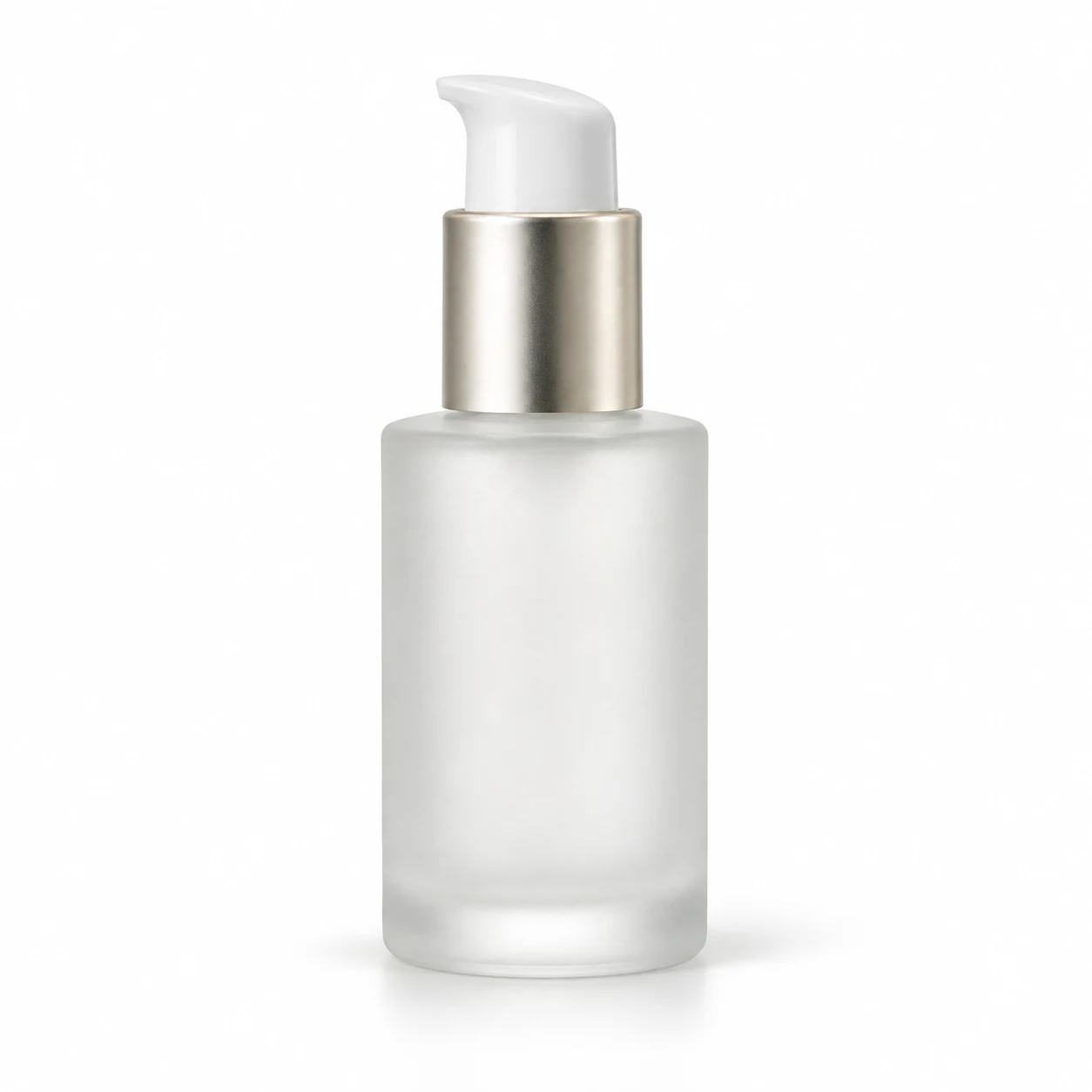
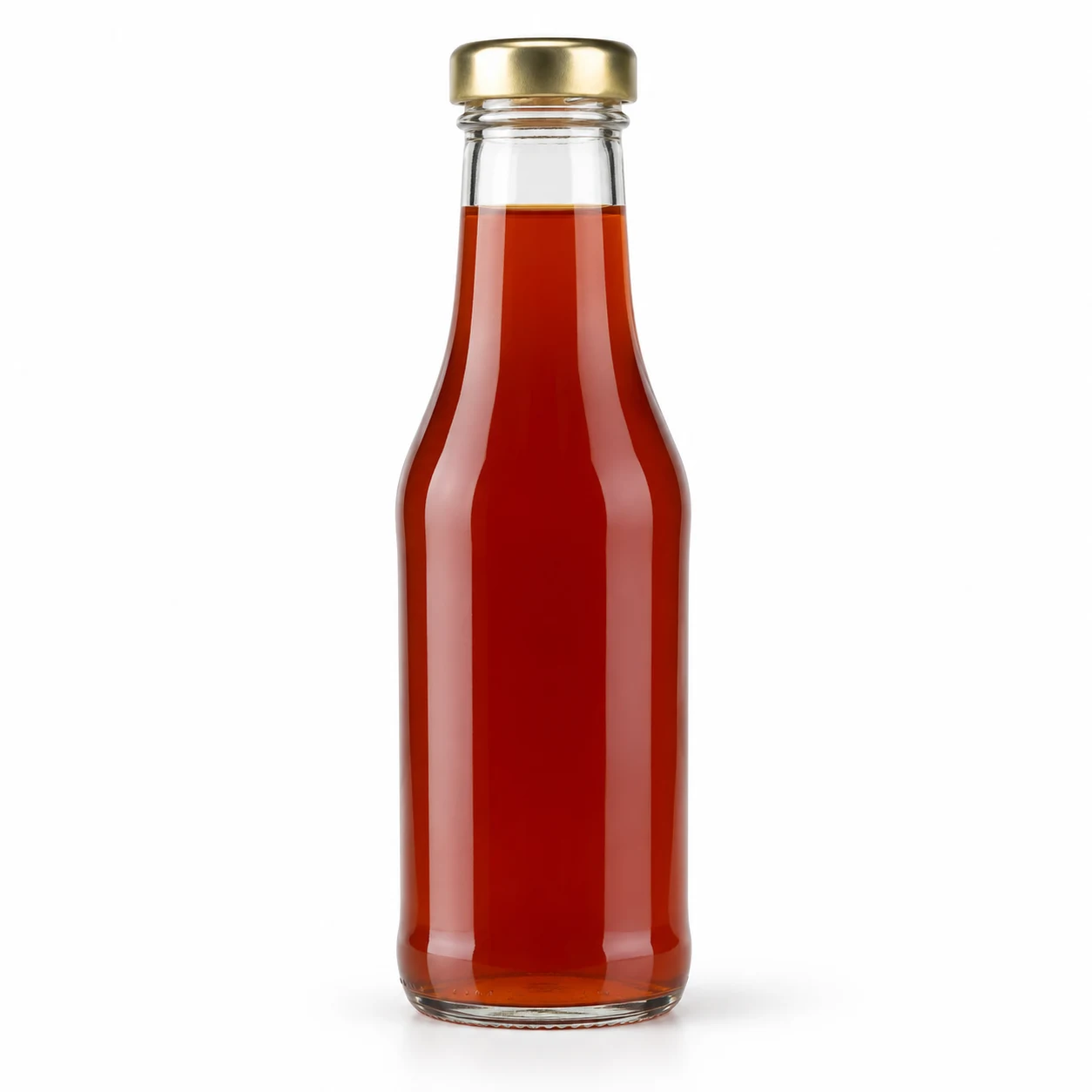
Custom glass bottle and jar — made to order: volume, shape, glass colour and closure are all specified per run.
Glass is inert. It does not react with what is in it, it does not absorb flavour, it does not leach anything, and it does not let anything through in either direction. For honey, jam, sauces, spirits and health supplements — products sold partly on the idea that nothing has been done to them — that is not just a technical property, it is the argument.
Colour is a specification, not a decoration
Flint glass is clear and shows the product. Amber blocks the blue and ultraviolet wavelengths that degrade oils, vitamins and beer, and it is chosen for that reason rather than for its look. Green sits between the two. Available round or square, with twist-off or other closure finishes; the finish has to match your capper and your closure supplier. Temperature range runs from −40 to 400 °C, so hot filling and pasteurisation in the container are both routine.
The trade-off, stated plainly
Glass is heavy and it breaks, and both cost money in freight and in losses. Against that, it is reusable many times over and completely recyclable without downgrading, which no plastic here matches. Volume, shape, glass colour and closure are made to order. For the same clarity at a fraction of the weight, see the PET bottle. Export freight and packing for glass are covered in cartons and transport packaging.
What moves the price
The mould and the weight, and glass weighs enough that freight is part of the price rather than beside it. A lightweight bottle and a heavy one of the same volume are different products commercially, and the heavier one often sells better — which is a positioning decision with a logistics cost attached. Colour costs: flint is the baseline, amber and green are separate melts. Closures are bought components. Minimums are higher here than anywhere else in the catalogue because a furnace campaign is not a short run.
Where it goes wrong
Under-estimating breakage and freight, which together can exceed the container price on a long route — and which are the reason we will sometimes say PET is the better commercial answer even though glass is the better container. The second is a closure finish that does not match the capper. The third is amber chosen for appearance and then a product that did not need light protection paying for it, or flint chosen for appearance over a product that did.
Where custom glass bottle and jar is used
Honey, jam, sauces, spirits, beverages and health supplements — products sold partly on the idea that nothing has been done to them, where an inert container is the argument rather than a detail. It is heavy and it breaks, and both cost money; we will say so where PET would serve you better. For packing and shipping glass over distance, see cartons and transport packaging.
What to send us for a quotation
A quotation for custom glass bottle and jar is written against a specification, so the more of this you can send, the closer the first number is to the real one: which structure, or the shelf life and the product so we can choose one — Glass are available here; the temperature the pack has to survive, from filling through to how the customer opens it (−40 to 400 °C for this product); the line it runs on — this one is specified for heat sealing and Hot filling and pasteurisation; which options you want fitted: flint, Amber and Green; the values for volume, Shape, Glass colour and Closure.
Send the fill weight and the quantity with it. Where you already buy something similar, a sample is worth more than a description — we measure what is actually there rather than quoting against how it was once written down.
Food-contact and export requirements are set out in FDA 21 CFR 175 and 177, which cover coatings and polymers in food contact; the declarations for this structure are issued with the order.