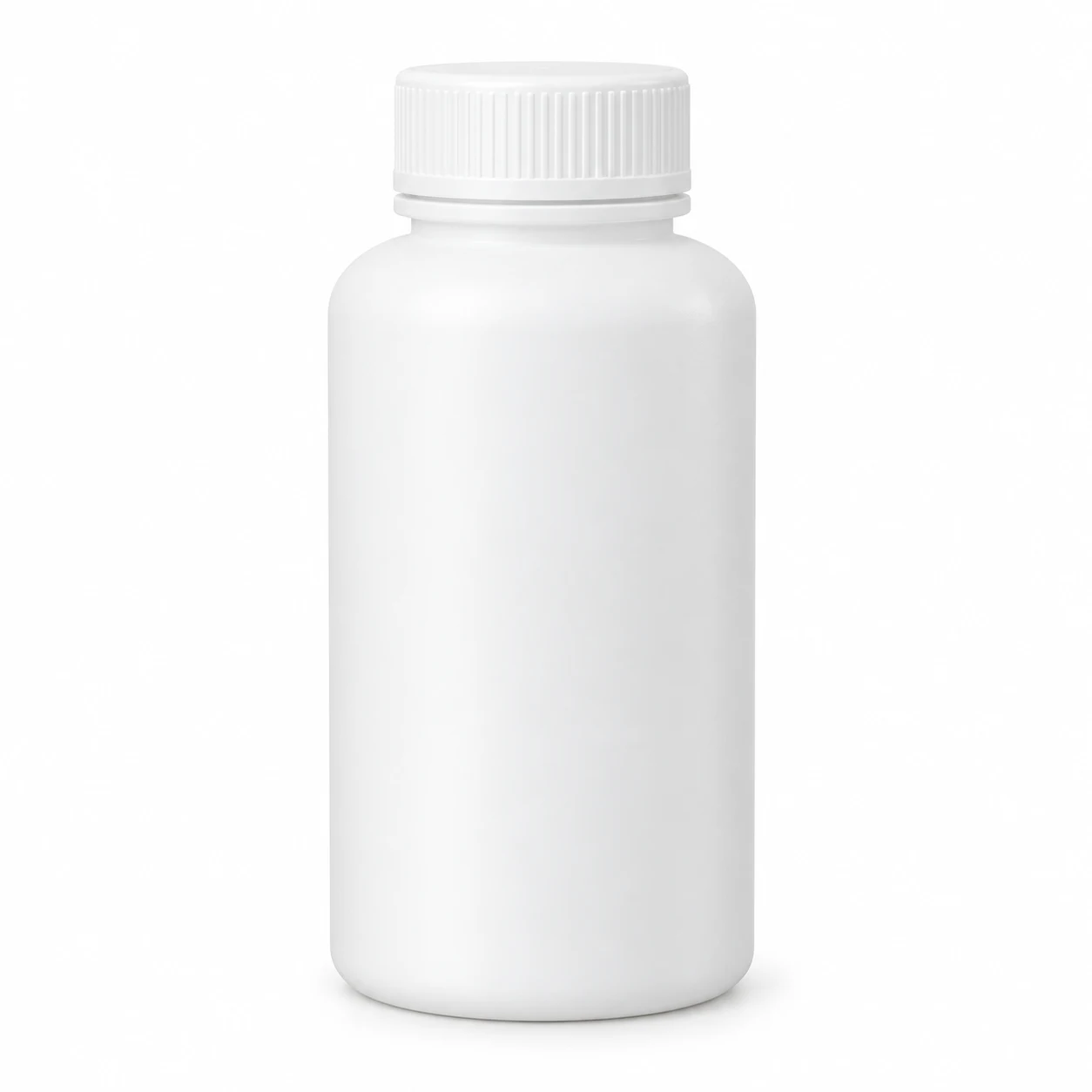
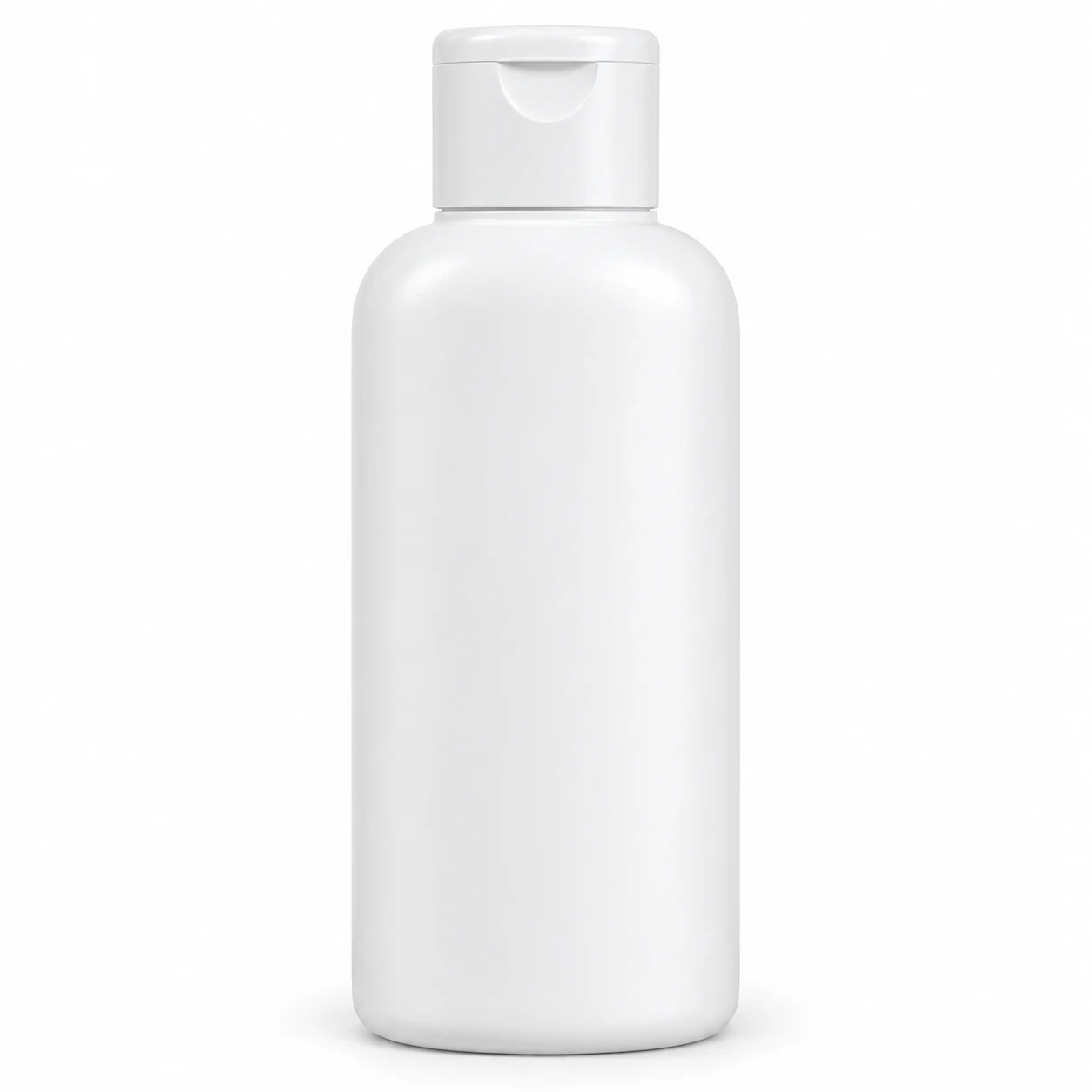
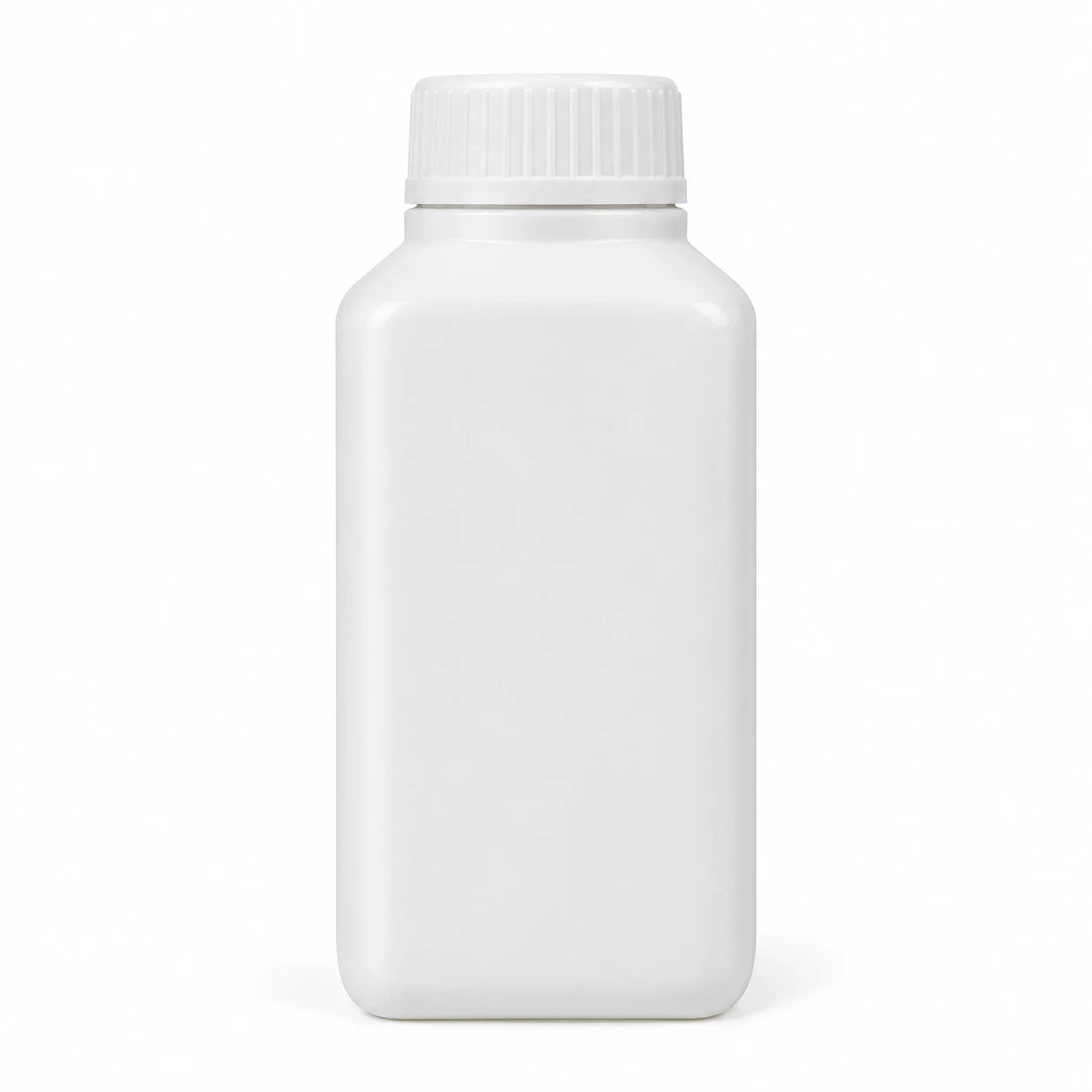
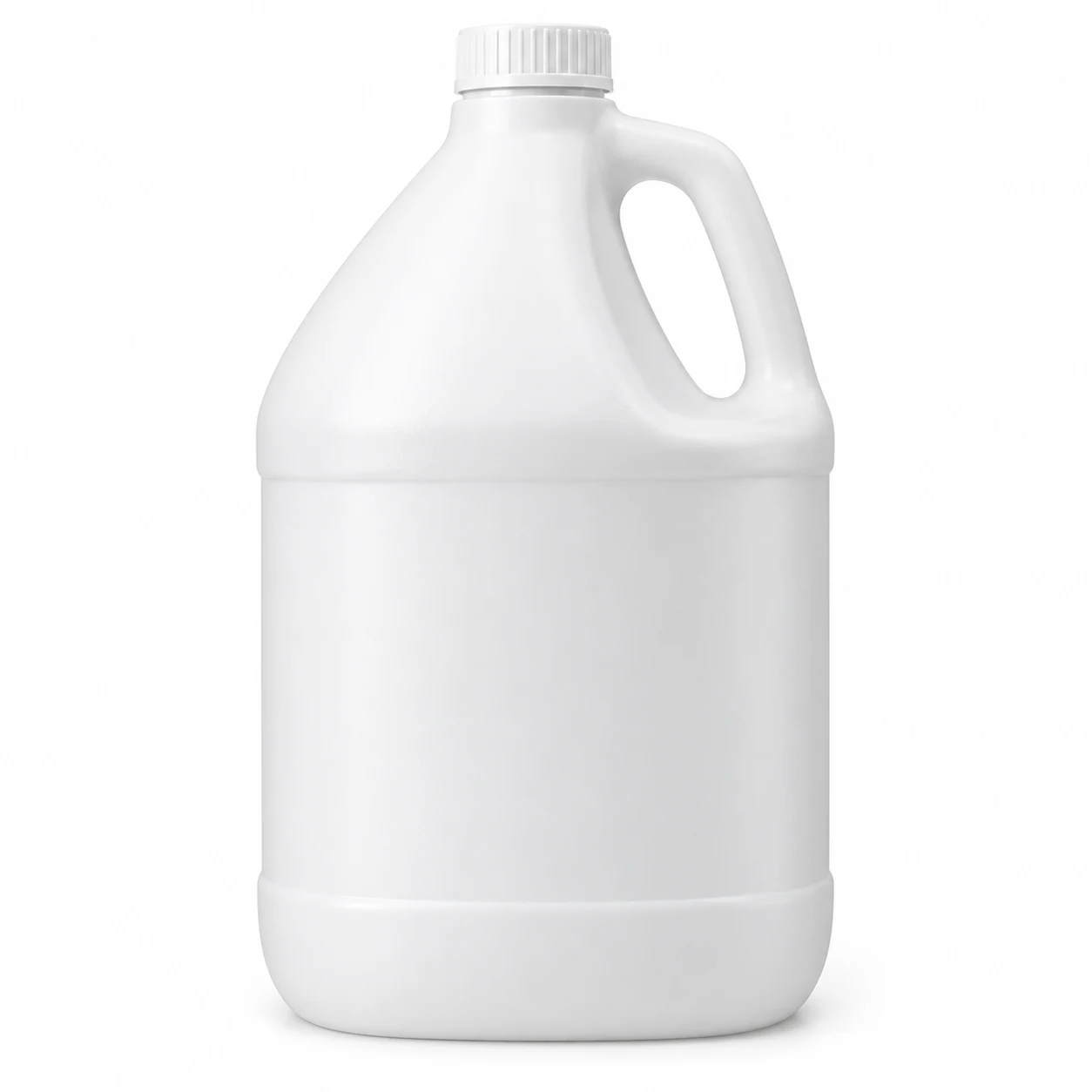
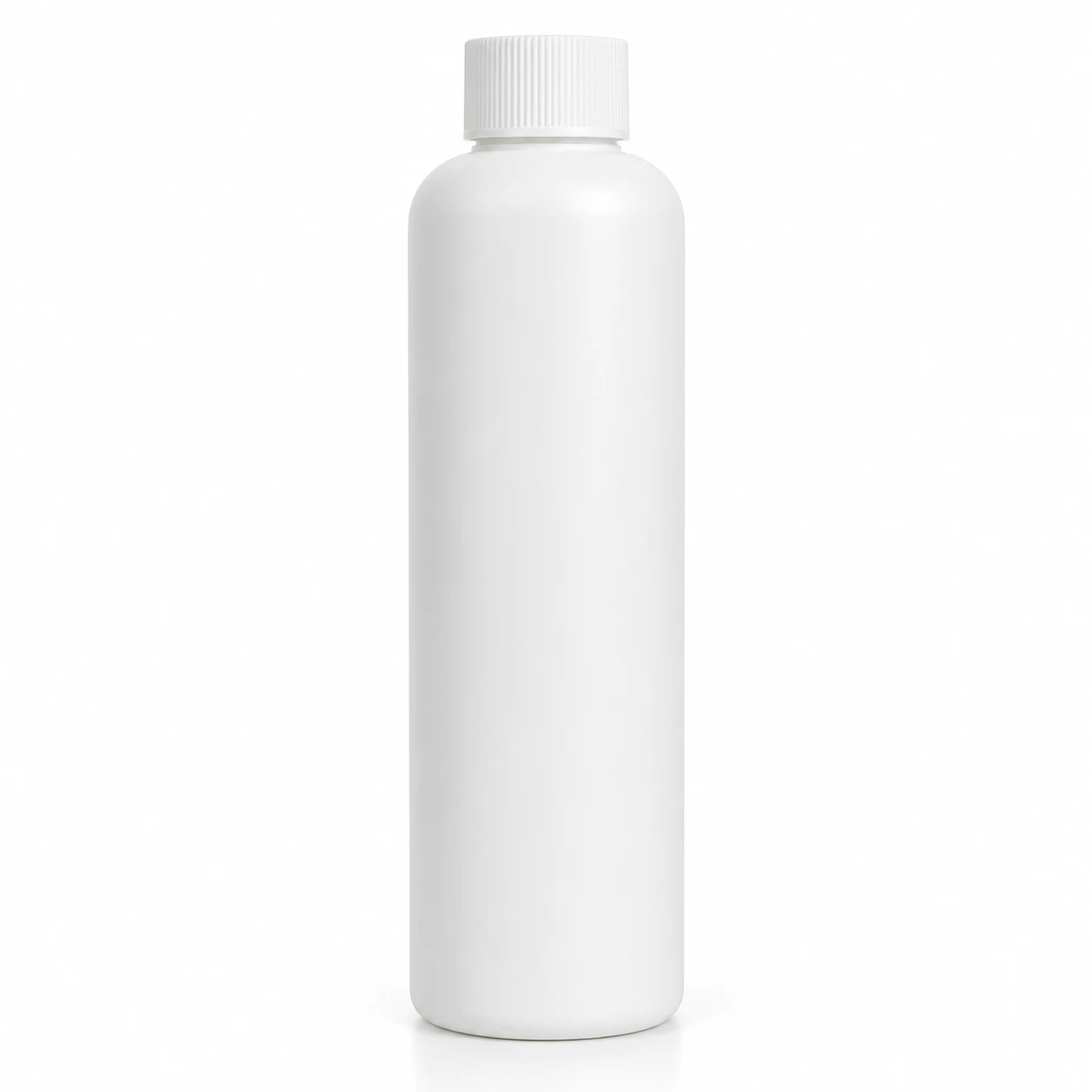
Custom hdpe bottle — made to order: volume, neck finish, colour and handle are all specified per run.
High-density polyethylene is what you use when the contents would attack anything else. It is chemically stable against detergents, solvents, oils and acids, it has very low permeability so it does not let its contents out or air in, and it is tough enough that a dropped bottle dents rather than shatters. Dairy, sauces, edible oil, household and personal care all sit here.
Opaque by nature, and why that helps
HDPE is not clear — natural grade is translucent white, and pigmented grades are fully opaque. For milk, oils and anything that degrades in light, that is a feature rather than a limitation: the bottle is doing barrier work a clear one cannot. Oxygen and moisture barrier both rate 4 of 5, the best of any plastic bottle we supply. Available natural, white or coloured, round or oval, with an integral handle where the volume warrants one.
Ordering
Volume, neck finish, colour and handle are made to order, and the neck finish has to match your closure and capping head — send us the cap. Temperature range is −40 to 80 °C. For clarity and the lowest cost per unit, see the PET bottle; for heat tolerance to 100 °C and a foil-sealed mouth, the PP bottle and cup. FDA and GB food grade.
What moves the price
Tooling and resin, as with PET, plus pigment — HDPE is rarely run natural for consumer products and masterbatch is a real line. Wall thickness drives weight and weight drives cost. A moulded handle adds tooling complexity and material. Because HDPE is chosen for chemical resistance rather than clarity, the specification conversation tends to be about the contents rather than the appearance, and a sample of the formulation shortens it considerably.
Where it goes wrong
Assuming chemical resistance is universal. HDPE handles most things and not everything, and a formulation with aggressive solvents or high-temperature contents needs checking rather than assuming. The second is labelling: HDPE is a low-energy surface and a standard adhesive lifts within days — a high-tack adhesive is a specification, not an upgrade. The third is hot filling, which HDPE tolerates less well than PP.
Where custom hdpe bottle is used
Dairy, edible oil, sauces, household cleaners and personal care — anywhere the contents would attack a lesser plastic or would degrade in light. The cosmetics and personal care page covers how a formulation is matched to a container, and why a sample of the product is worth more than a description of it. For the same volume in a clear bottle, see the PET bottle.
What to send us for a quotation
A quotation for custom hdpe bottle is written against a specification, so the more of this you can send, the closer the first number is to the real one: which structure, or the shelf life and the product so we can choose one — HDPE are available here; the temperature the pack has to survive, from filling through to how the customer opens it (−40 to 80 °C for this product); the line it runs on — this one is specified for injection moulding and Heat sealing; which options you want fitted: natural, White and Coloured; the values for volume, Neck finish, Colour and Handle.
Send the fill weight and the quantity with it. Where you already buy something similar, a sample is worth more than a description — we measure what is actually there rather than quoting against how it was once written down.
Food-contact and export requirements are set out in FDA 21 CFR 175 and 177, which cover coatings and polymers in food contact; the declarations for this structure are issued with the order.