
Packaging articles and insights
Practical writing on materials, machinery, sourcing and export — from the people who supply them. Everything here is drawn from the specifications on our own product pages.
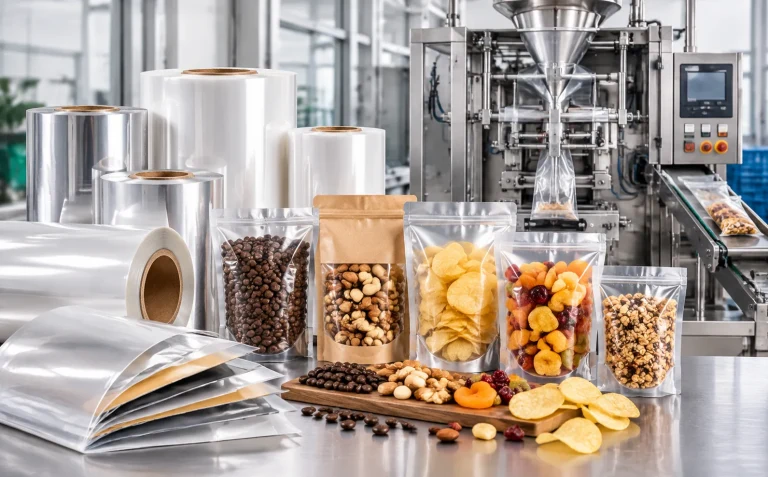
Choosing film for your VFFS machine: a specification checklist
A film that suits the product and not the machine stops the line. Six specifications decide whether a reel runs.
Read more → Choosing film for your VFFS machine: a specification checklist
Rollstock or pre-made pouches: which suits your line
One arrives as film and becomes a pouch on your line. The other arrives as a pouch. The choice is about volume, capital and flexibility.
Read more → Rollstock or pre-made pouches: which suits your line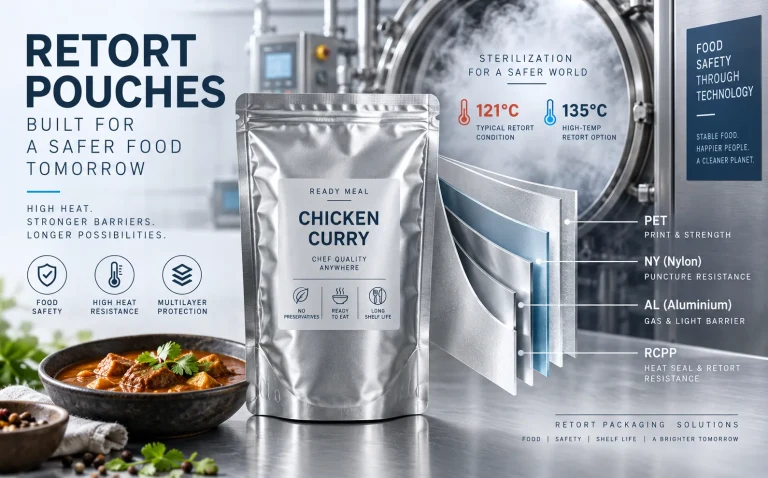
Retort pouch specifications: 121 °C, 135 °C, and what the structure has to do
Sterilising food inside its own pack is the hardest thing asked of a flexible structure. Here is what the specification has to say.
Read more → Retort pouch specifications: 121 °C, 135 °C, and what the structure has to do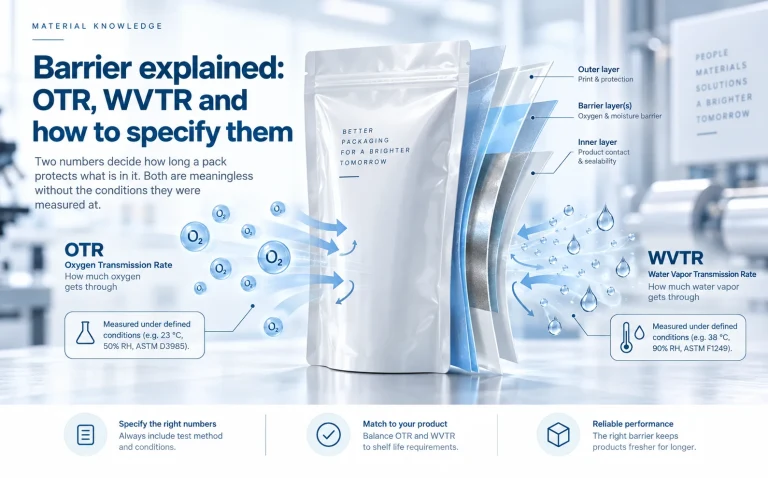
Barrier explained: OTR, WVTR and how to specify them
Two numbers decide how long a pack protects what is in it. Both are meaningless without the conditions they were measured at.
Read more → Barrier explained: OTR, WVTR and how to specify them
How to read a film structure: PET/AL/PE and the rest
Every quotation carries a string like PET/NY/AL/PE. It is not a product code — it is the pack described layer by layer, from the outside in.
Read more → How to read a film structure: PET/AL/PE and the rest
Packaging lead times from China: a realistic week-by-week timeline
A first order and a repeat order are not the same timeline. Here is where the weeks go, and which of them you can compress.
Read more → Packaging lead times from China: a realistic week-by-week timeline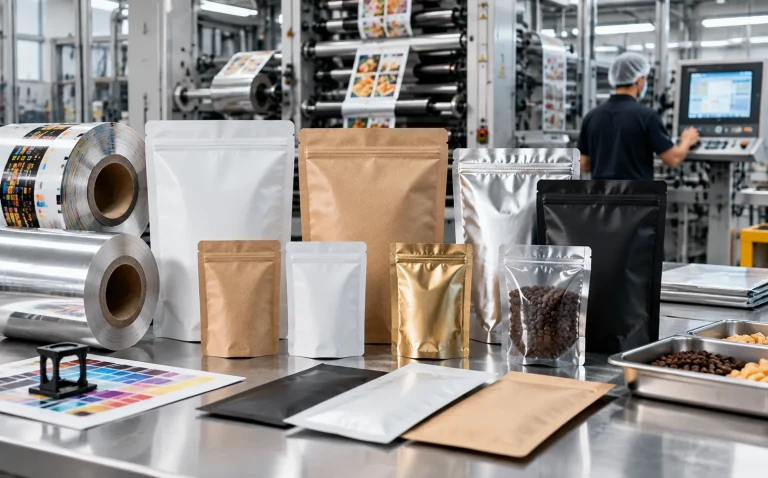
Minimum order quantities for custom printed pouches, and what drives them
MOQ is not a policy. It is the point at which a run stops losing money, and four things decide where that point sits.
Read more → Minimum order quantities for custom printed pouches, and what drives them
Stand-up pouch sizes: a capacity chart from 50 g to 5 kg
Pouches are sold by dimension and filled by weight, and the conversion between the two is bulk density. Here is a working chart, and what moves it.
Read more → Stand-up pouch sizes: a capacity chart from 50 g to 5 kg
Export packaging compliance basics
Compliance stops shipments far more often than quality does. What food-contact means, what has to be on the label, and which documents actually travel with the goods.
Read more → Export packaging compliance basics
Key factors in packaging machinery selection
The specification that matters is not the top speed on the brochure. It is what the machine does with your product, your film and your changeovers.
Read more → Key factors in packaging machinery selection
How to source packaging from China
The risks in Chinese sourcing are not the ones most buyers worry about. Here is where orders actually go wrong, and what to check at each stage.
Read more → How to source packaging from China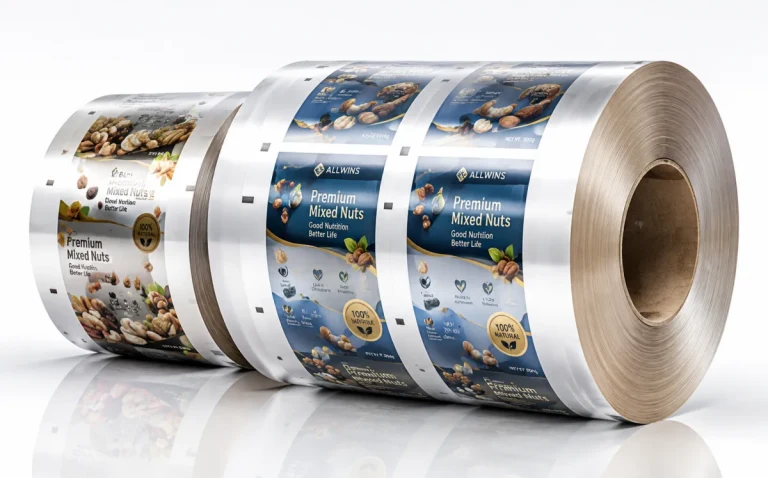
PET/AL/PE against mono-material structures
A laminate stacks different films so each layer does one job. A mono-material uses one polymer so it can be recycled. Here is what you gain and what you give up.
Read more → PET/AL/PE against mono-material structures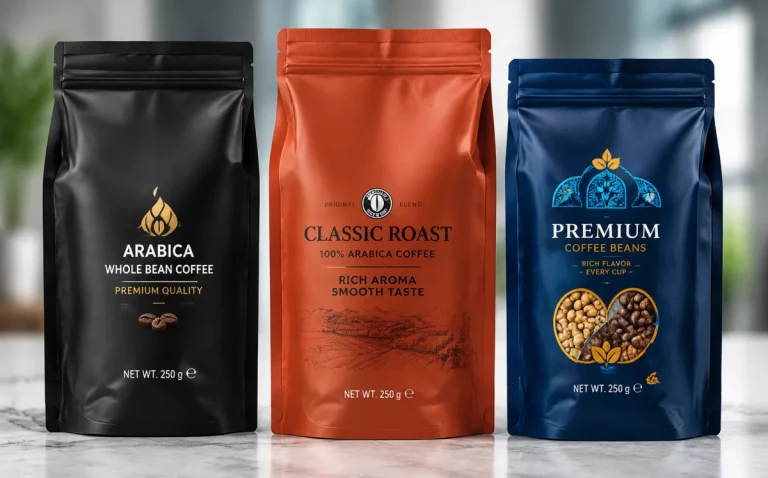
Coffee bag packaging guide
Coffee is the hardest common product to package well: it outgasses, it loses aroma to oxygen, and the pack has to look like the price on the shelf. Here is what the structure has to do.
Read more → Coffee bag packaging guide
How to choose flexible packaging materials
Four questions decide the structure: what the product is sensitive to, how it is filled, how long it has to last, and what it has to look like. Everything else follows.
Read more → How to choose flexible packaging materialsA question the articles do not answer?
Tell us about your product and our team will answer it directly.