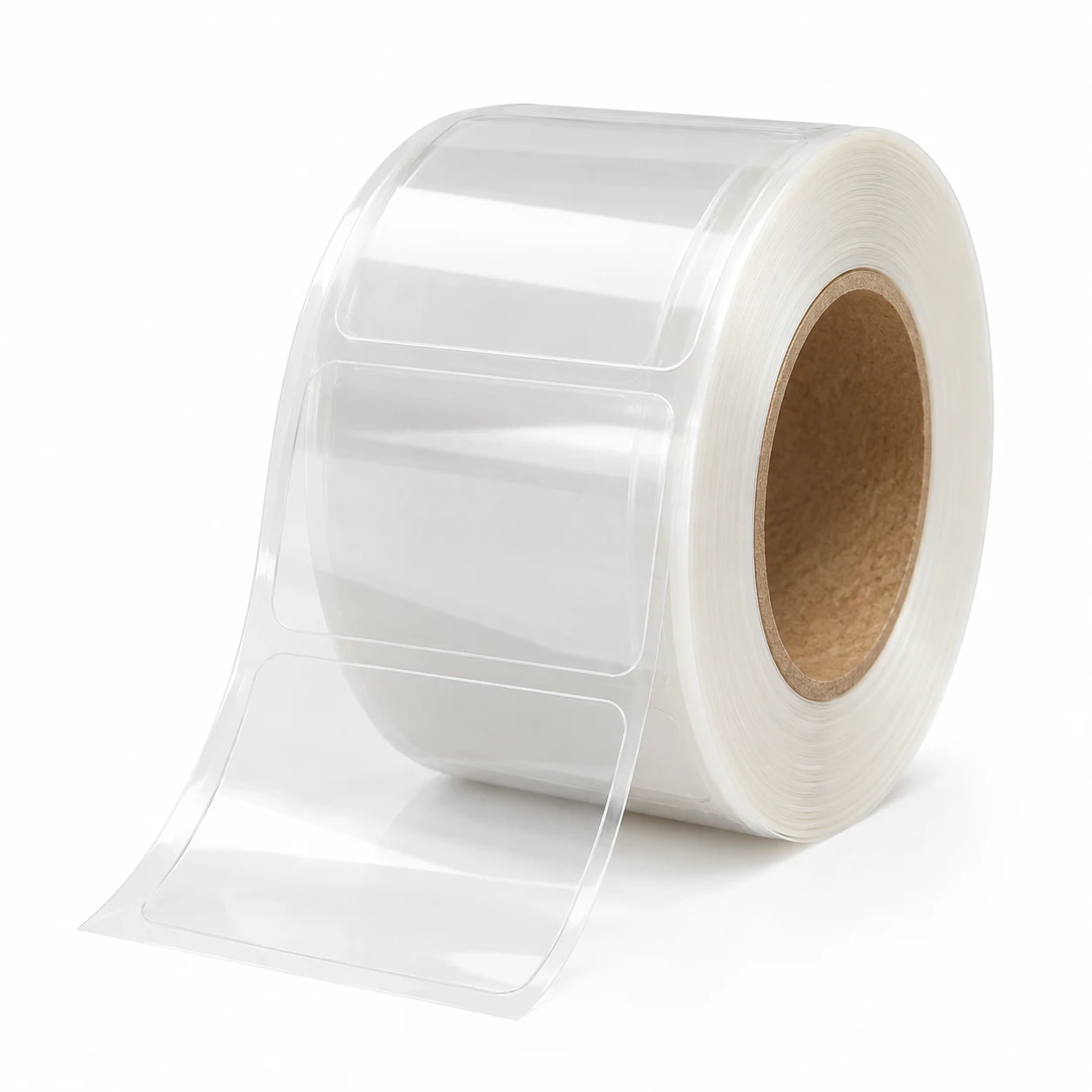
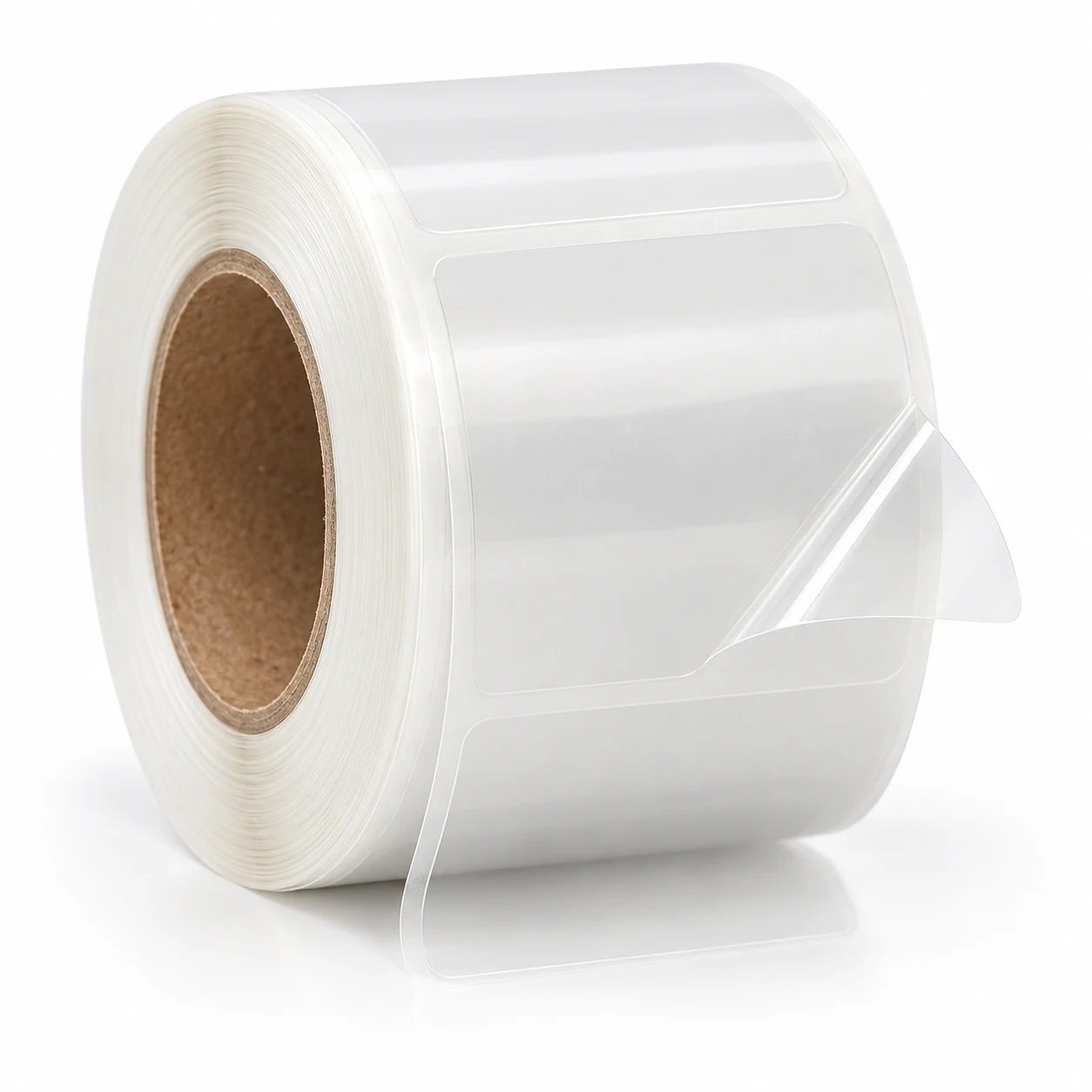
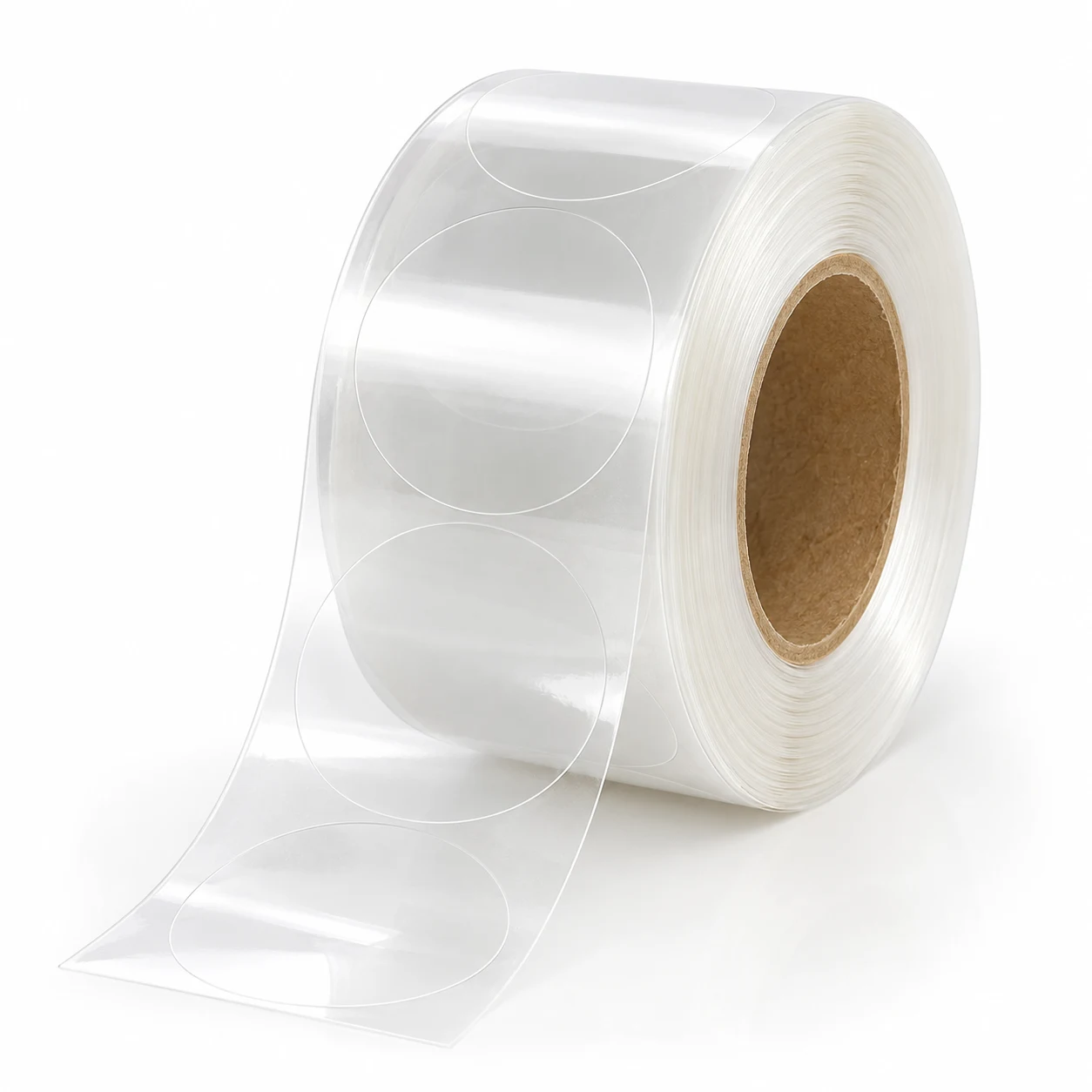
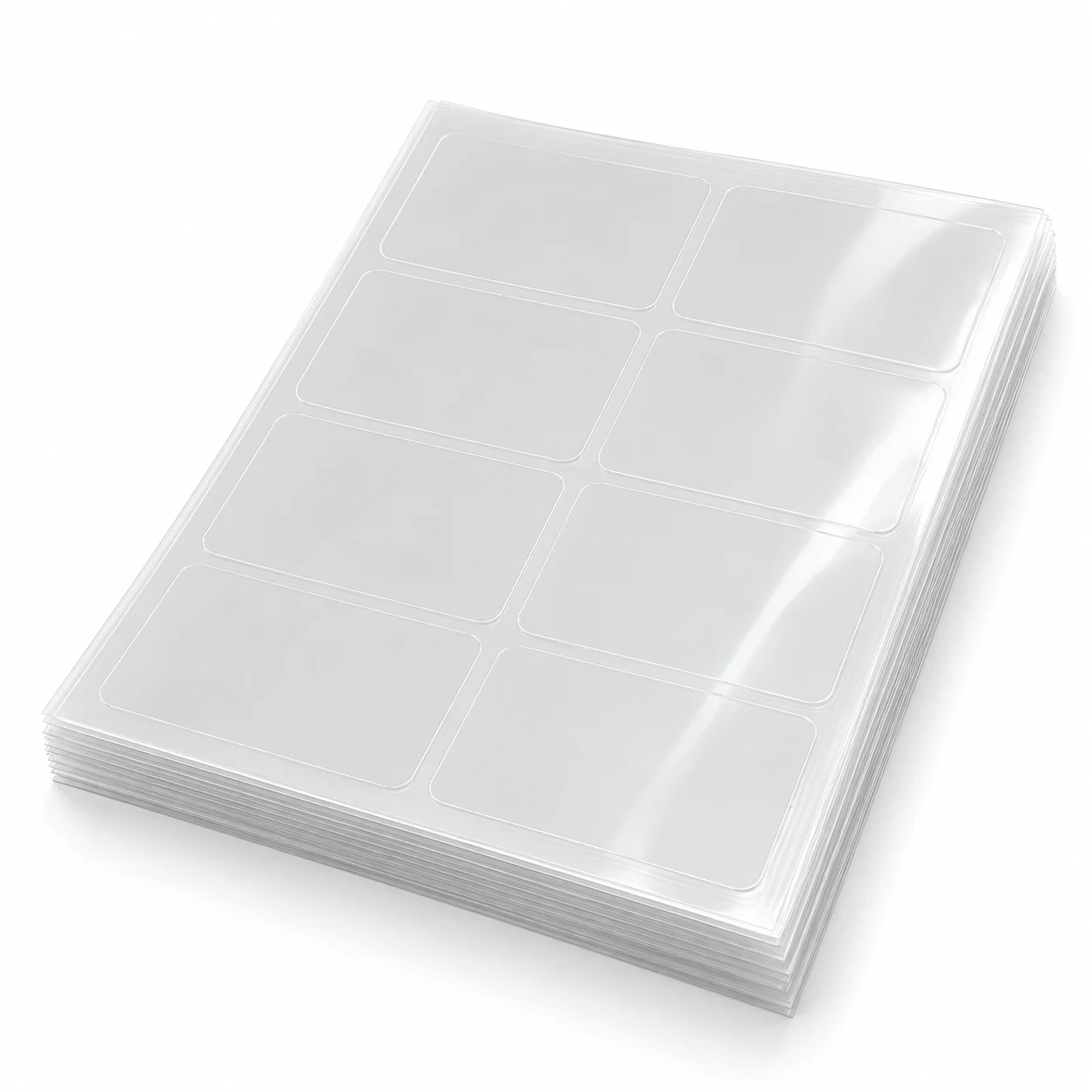
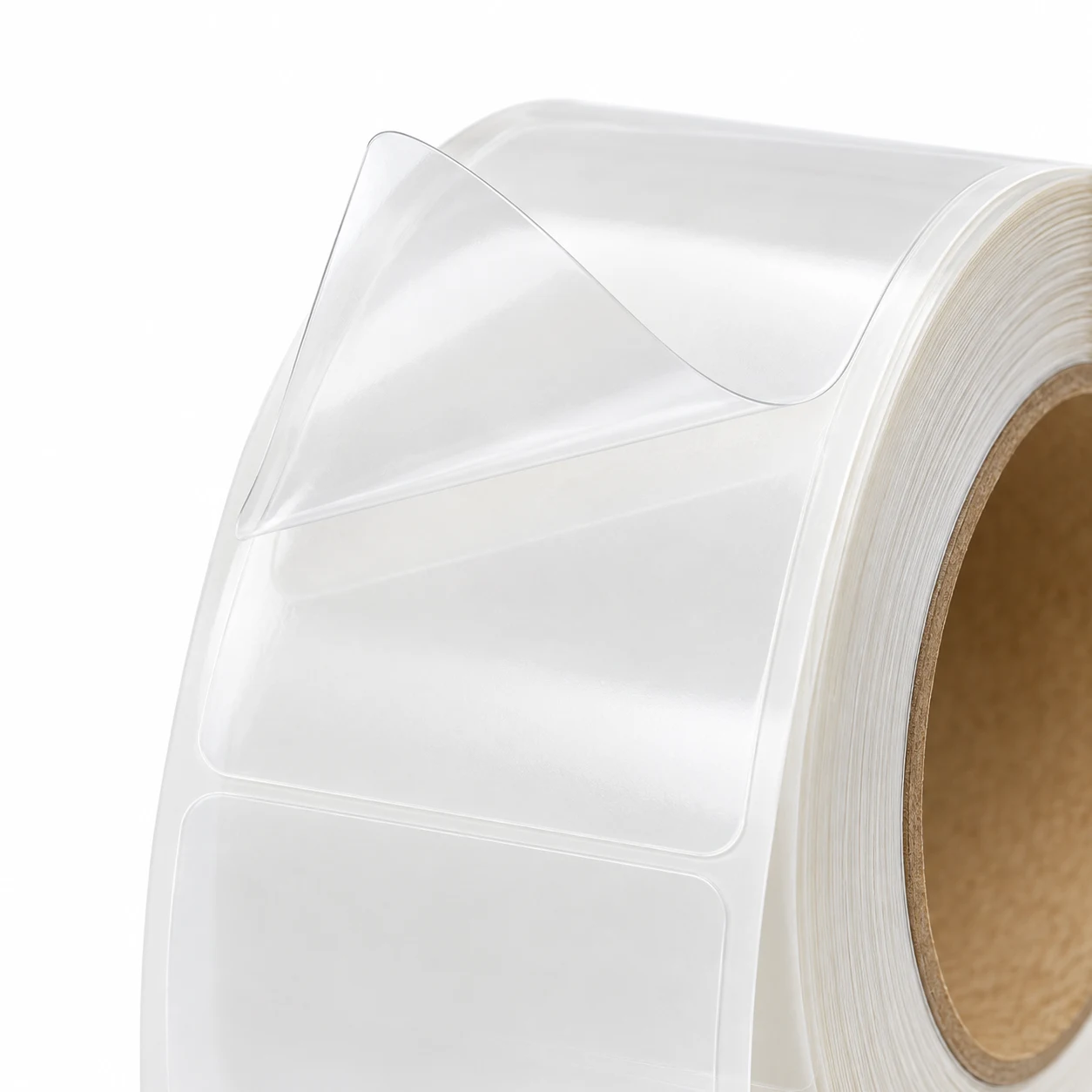
Custom transparent PET label — made to order: size, shape, adhesive and print are all specified per run.
A clear PET label is specified to disappear. Applied well to a smooth container it reads as though the design was printed directly onto the glass or the plastic — the no-label look that cosmetics, premium beverages and spirits have used for years, because the product and the container do the selling and the label only adds the words.
Getting the no-label look right
Two things break the illusion. The first is any air trapped under the film, which is a question of applicator pressure and container surface rather than of the label. The second is white ink: most artwork needs a white block printed behind the coloured elements so they read against the contents, and where that block ends is where the label becomes visible. Designing the block deliberately — rather than letting it be a rectangle — is the difference between a clear label and an obvious one.
Ordering
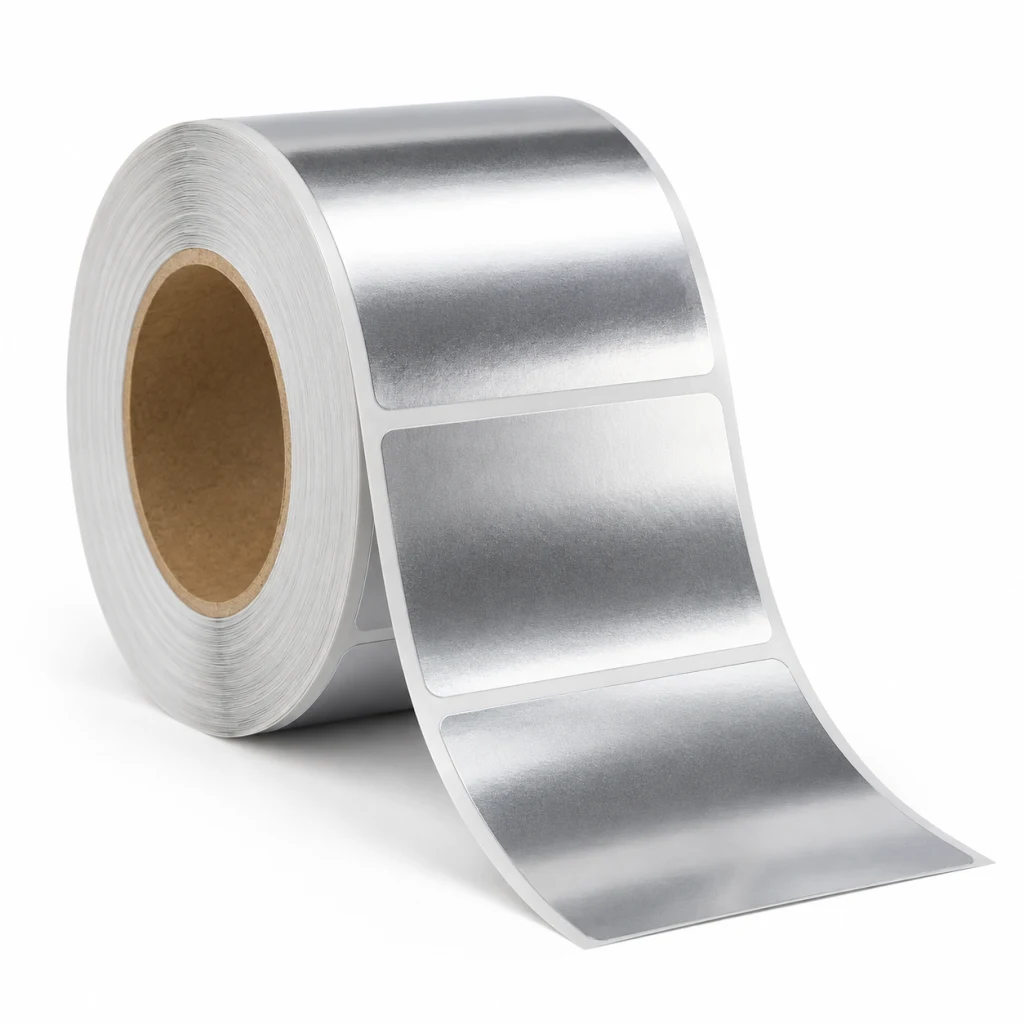
Clear, or clear with a white block; permanent or removable adhesive; size, shape and print made to order, printed UV or digital. PET is tear resistant and dimensionally stable from −30 to 120 °C, so the label does not distort through hot filling or pasteurisation. For a metallic premium finish instead, see the metallic foil label.
What moves the price
White ink. A clear label with coloured artwork needs a white block printed behind it, and that is an extra colour station on every run — on some designs it is the largest single cost in the label. The PET facestock costs more than paper, the liner is usually PET or a heavier glassine for clarity, and the die behaves as elsewhere. UV and digital printing are the usual methods here and price accordingly.
Where it goes wrong
A white block left as a rectangle, which makes a clear label look like a sticker and defeats the whole point of specifying one. The second is application: trapped air is far more visible under clear film than under paper, so an applicator and a container surface that were adequate for opaque labels may not be. The third is a textured or heavily curved container, where clear film shows every imperfection and an opaque facestock would flatter the pack more.
Where custom transparent PET label is used
Cosmetics, premium beverages, spirits and any range where the container is the design and the label only adds the words. The cosmetics and personal care page covers the finishes that go with it. For a premium effect that reflects rather than disappears, the metallic foil label is the other direction, and printing and finishing covers what the artwork has to do for either.
What to send us for a quotation
A quotation for custom transparent PET label is written against a specification, so the more of this you can send, the closer the first number is to the real one: which structure, or the shelf life and the product so we can choose one — Transparent PET film are available here; the temperature the pack has to survive, from filling through to how the customer opens it (−30 to 120 °C for this product); the line it runs on — this one is specified for uV printing and Digital printing; which options you want fitted: clear, Clear with white block and Permanent adhesive; the values for size, Shape, Adhesive and Print.
Send the fill weight and the quantity with it. Where you already buy something similar, a sample is worth more than a description — we measure what is actually there rather than quoting against how it was once written down.
Food-contact and export requirements are set out in FDA 21 CFR 175.105, the rule adhesives in food packaging are held to; the declarations for this structure are issued with the order.