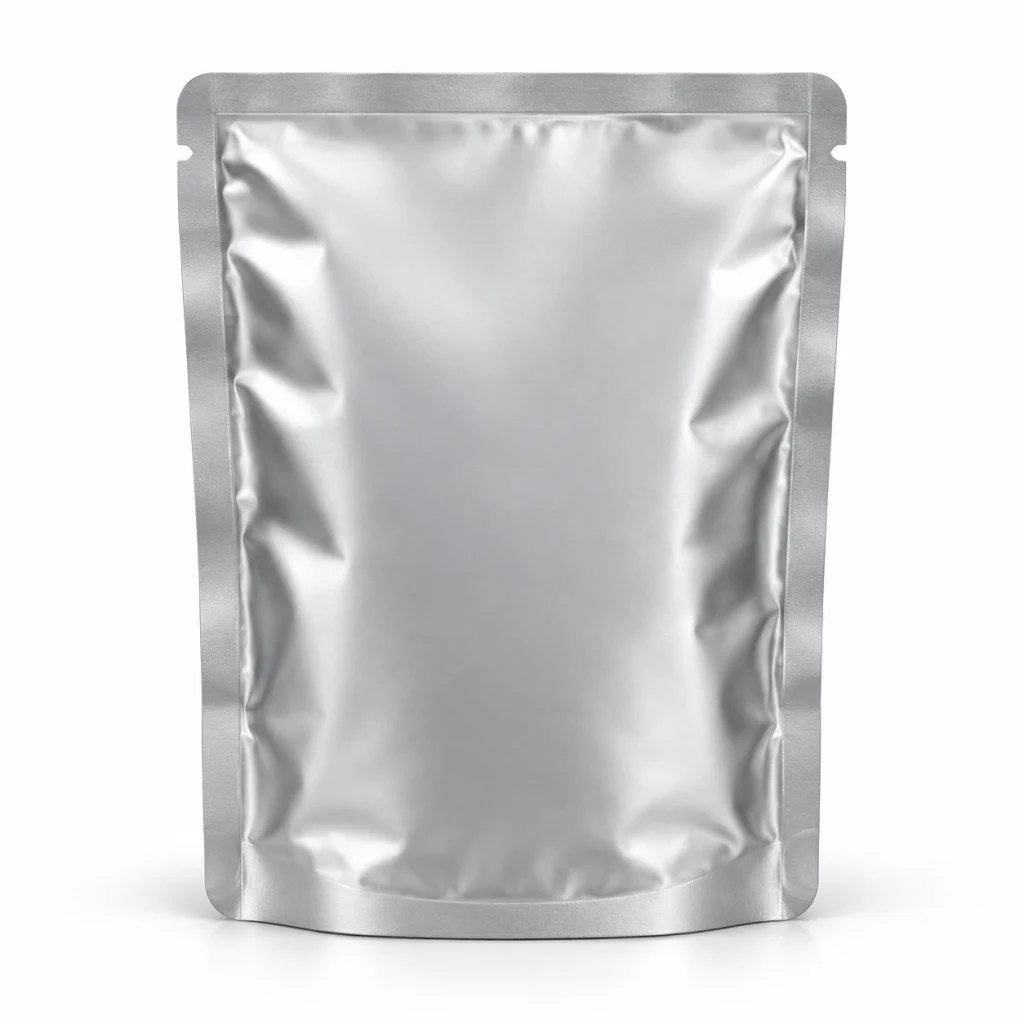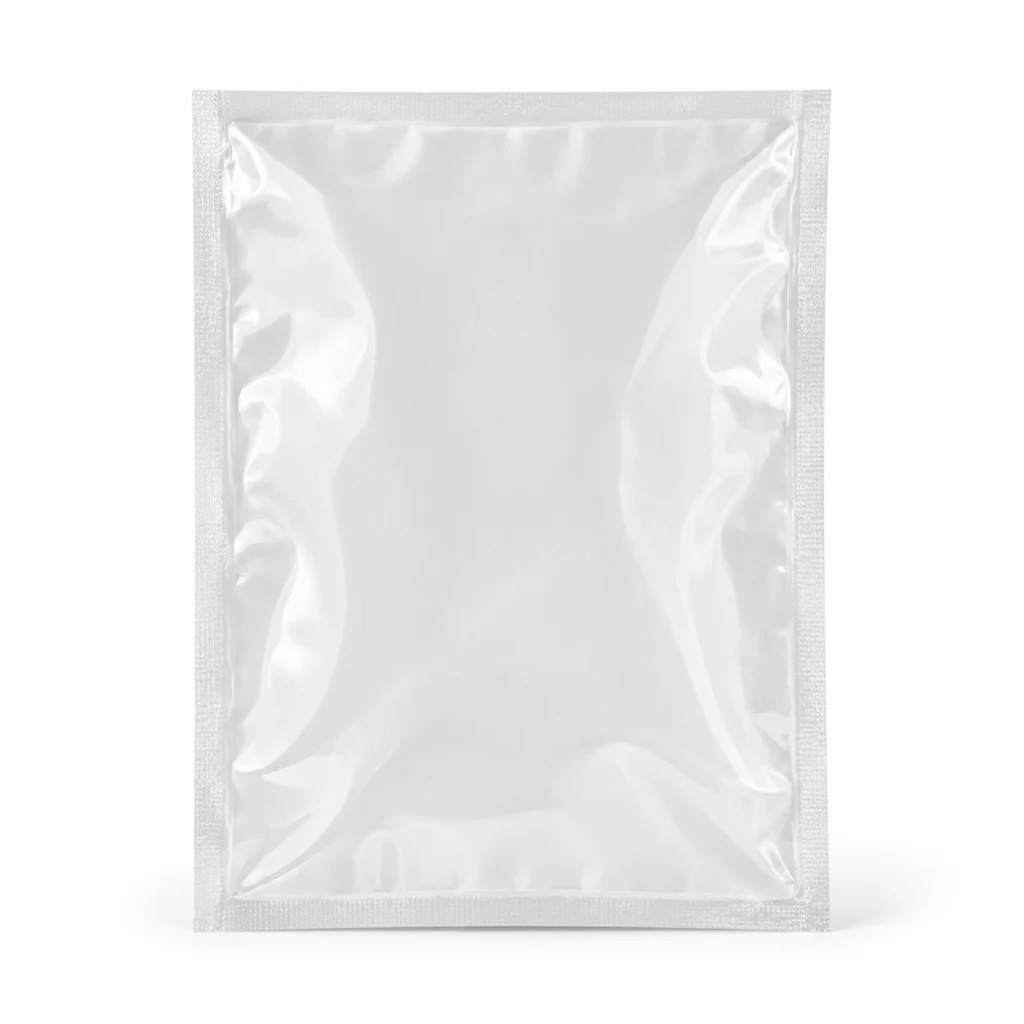
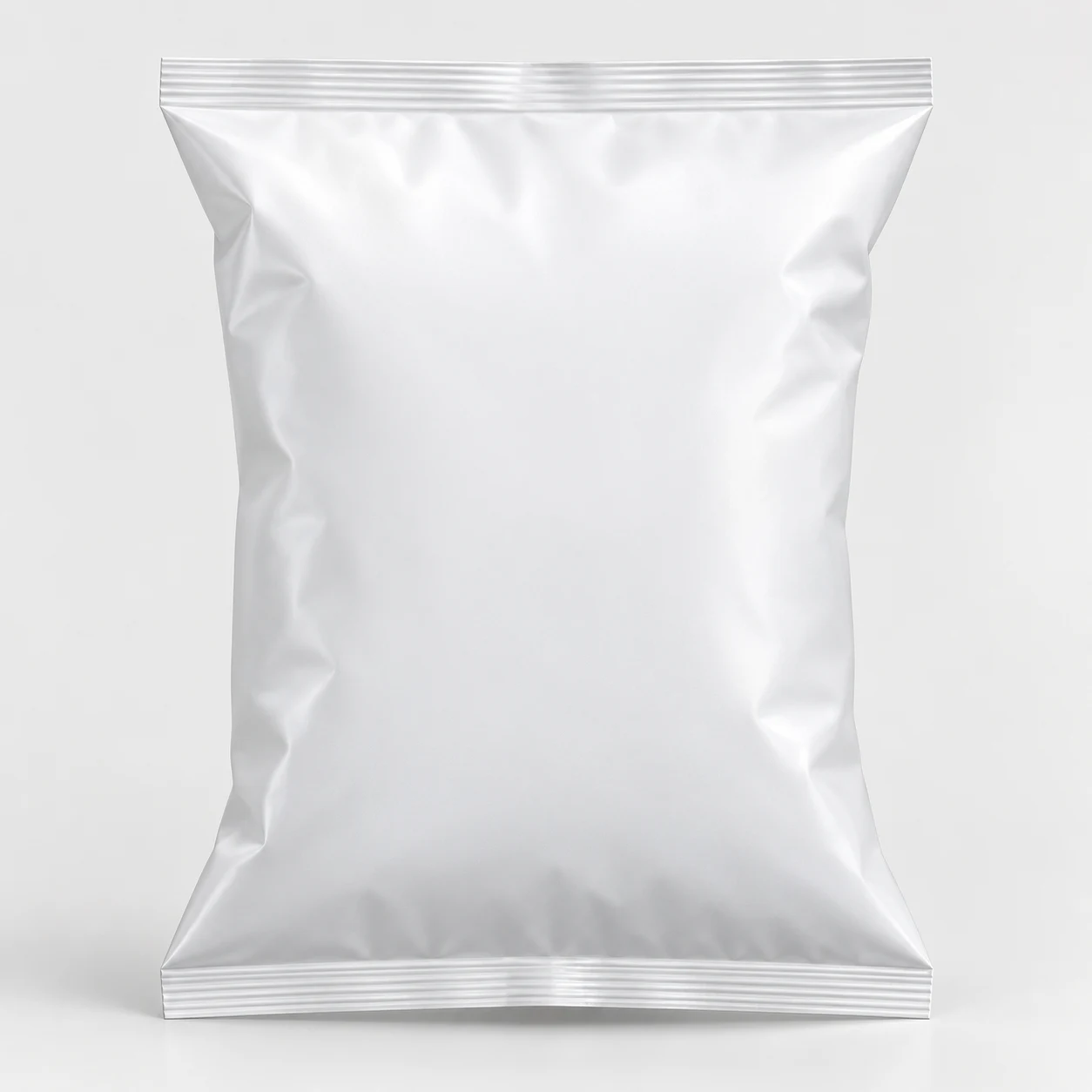
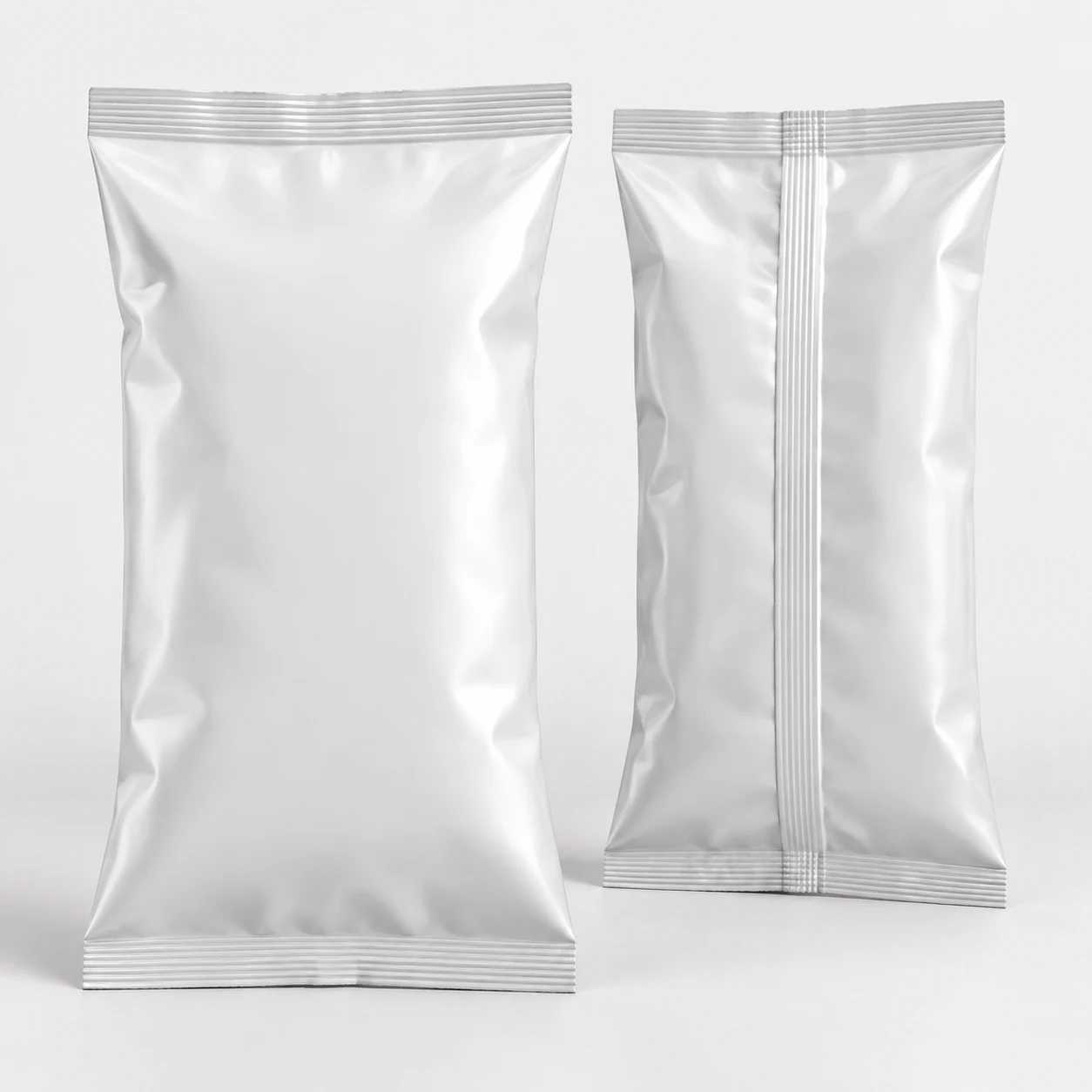
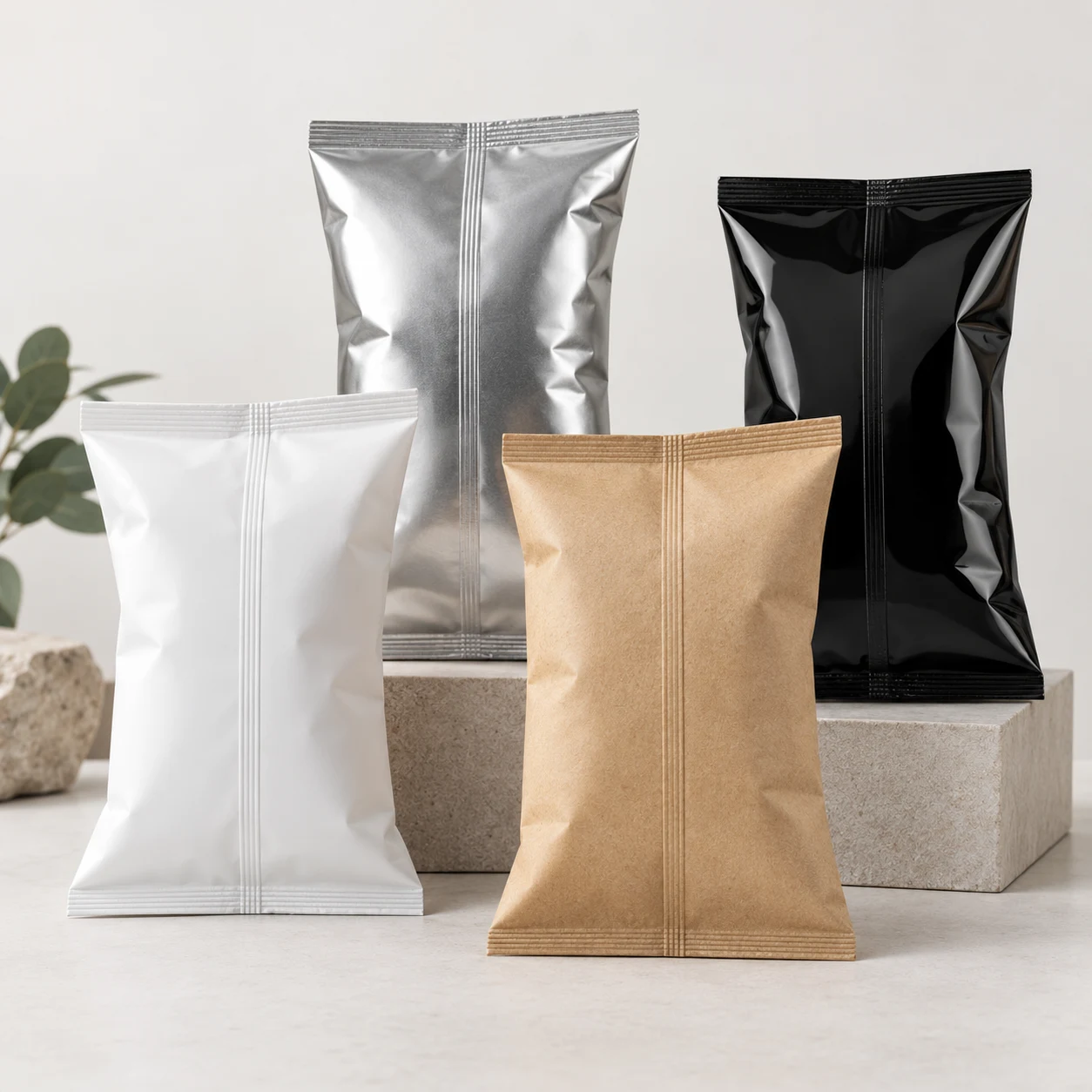
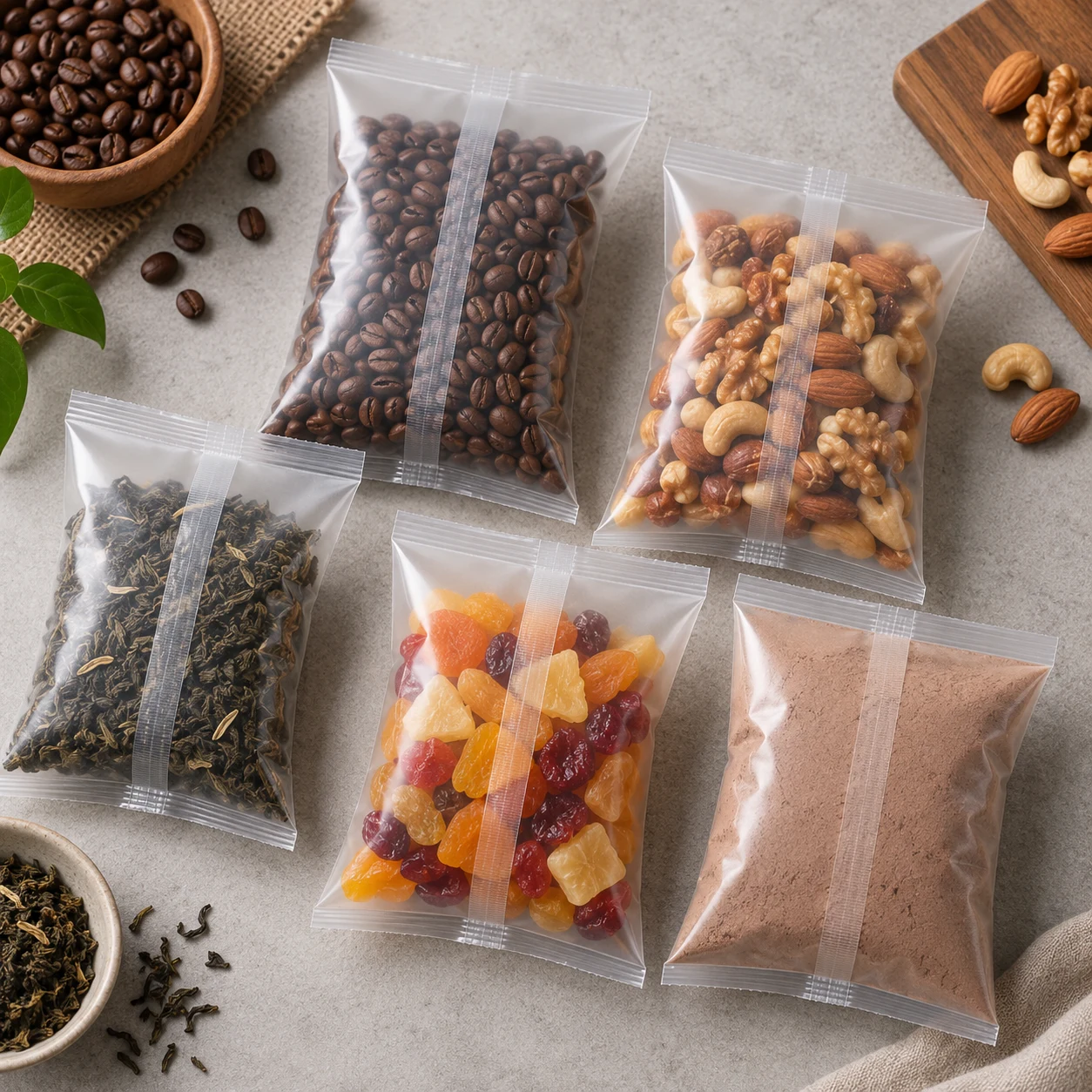
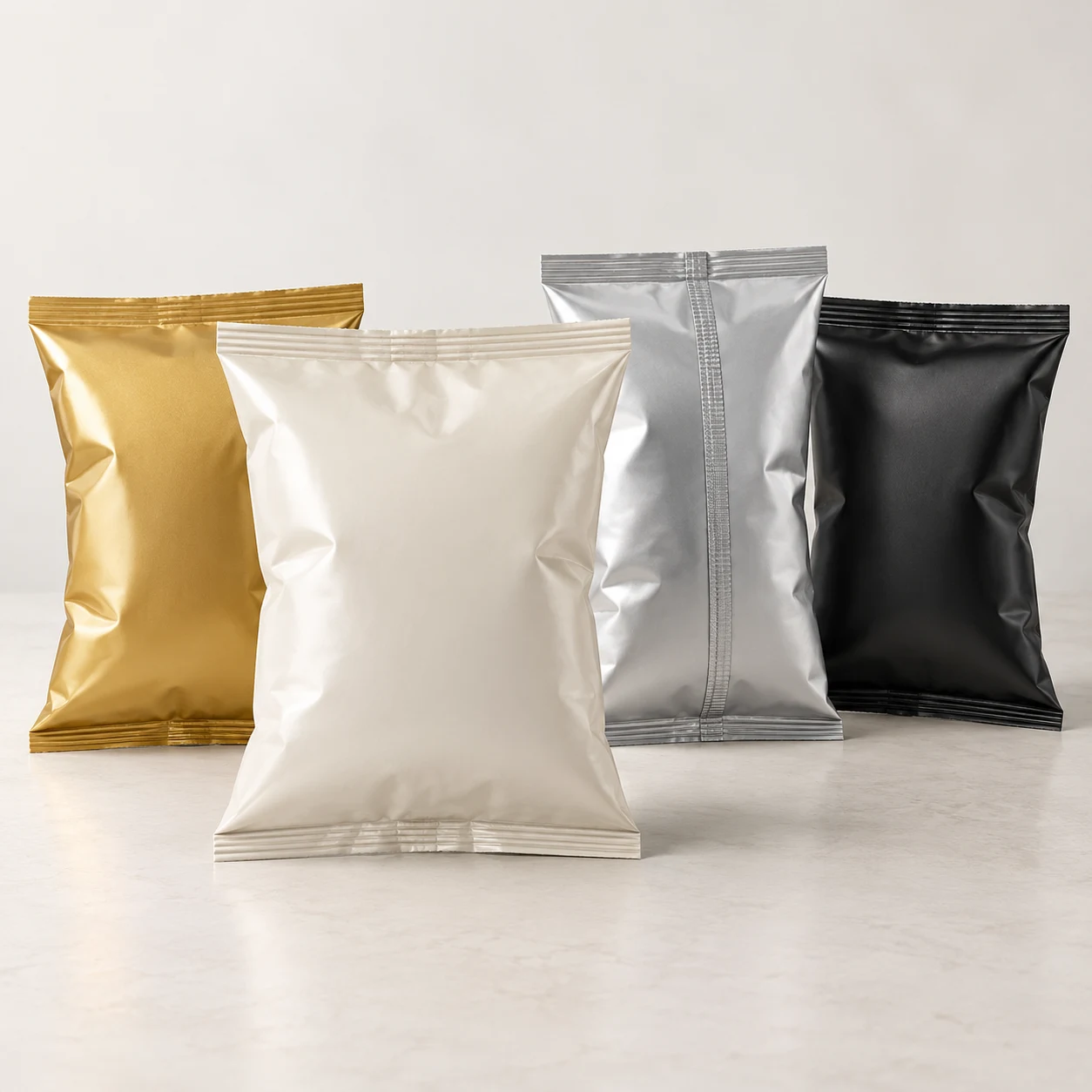
Custom back seal pouch — made to order: web width, thickness and printing up to 10 colours are all specified per run.
A back-seal or pillow pouch is not made ahead of time and filled — it is formed on your own line from roll stock, sealed down the back and across each end as the product drops in. That is what makes it fast. A flow-wrap or vertical form-fill-seal machine running back-seal film will out-pace pre-made pouch filling several times over, and the film costs less than a converted pouch because nobody has converted it yet.
The print and the seal
The fin seal sits on the reverse, so the front face carries uninterrupted print — useful on bread, pastry and snack packs where the artwork wraps. We supply it in BOPP/PE for general dry goods and PET/CPP where the pack is filled hot or cooked in, because CPP holds up at temperatures PE does not. Barrier is modest at 2 of 5, which suits fast-turnover product: pastry and bread, puffed snacks, dry goods, daily chemical items.
Matching the film to the machine
Web width, thickness and printing up to ten colours are made to order, and the web width has to match your forming collar rather than the other way round — send us the machine and we will specify against it. Our guide to packaging machinery selection covers what to check before you tool up, and the full film range is in films and rolls. Food-grade structures to FDA and GB are available.
What moves the price
Film, and almost only film. There is no conversion — you are buying roll stock and making the pouch yourself — so the price follows the structure, the web width and the quantity, with printing on top. That is what makes the format cheap per unit and why it wins at volume. The capital sits elsewhere: a form-fill-seal or flow-wrap line is a real purchase, and the comparison that matters is total cost including the machine, not film against pre-made pouch.
Where it goes wrong
Film specified against the product and not the machine. A reel with the wrong web width will not form; one with a seal initiation temperature above your jaw temperature will seal weakly at speed; one with the wrong coefficient of friction will drag on the former or telescope on the unwind. None of these is a film defect and all of them stop a line. Send the machine model with the enquiry and the specification is written against it — that is the one thing a converter selling finished pouches cannot do for you.
Where custom back seal pouch is used
Bread, pastry, crisps, puffed snacks and daily chemical goods — high-volume lines where the pack is formed, filled and sealed in one motion and the unit cost has to be low. The whole category is covered on the snack and bakery page. Because this is roll stock rather than a finished pouch, the film has to be specified against the machine as much as the product: choosing film for a VFFS machine lists the six specifications that decide whether a reel runs, and rollstock against pre-made covers when the capital is worth it.
What to send us for a quotation
A quotation for custom back seal pouch is written against a specification, so the more of this you can send, the closer the first number is to the real one: which structure, or the shelf life and the product so we can choose one — PET/CPP and BOPP/PE are available here; the temperature the pack has to survive, from filling through to how the customer opens it (ambient, and high temperature with PET/CPP for this product); the line it runs on — this one is specified for flow wrap and Form fill seal (VFFS); which options you want fitted: pET/CPP, BOPP/PE and Matt finish; the values for web width, Thickness and Printing up to 10 colours.
Send the fill weight and the quantity with it. Where you already buy something similar, a sample is worth more than a description — we measure what is actually there rather than quoting against how it was once written down.
Food-contact and export requirements are set out in FDA 21 CFR 177, the US rule for food-contact polymers; the declarations for this structure are issued with the order.