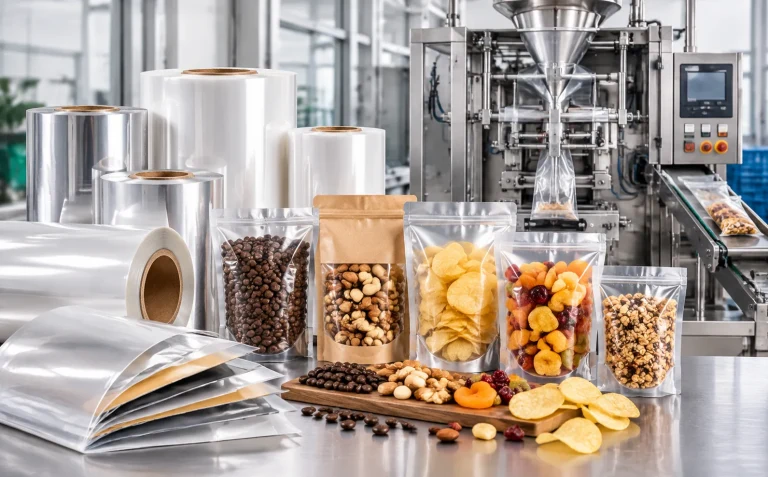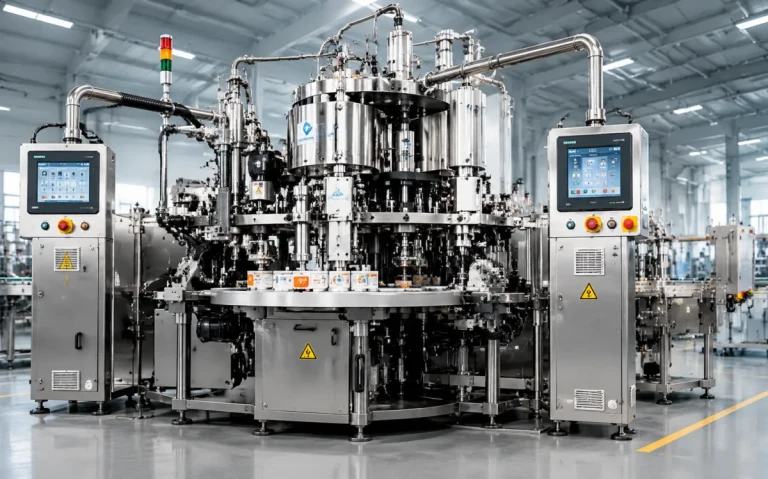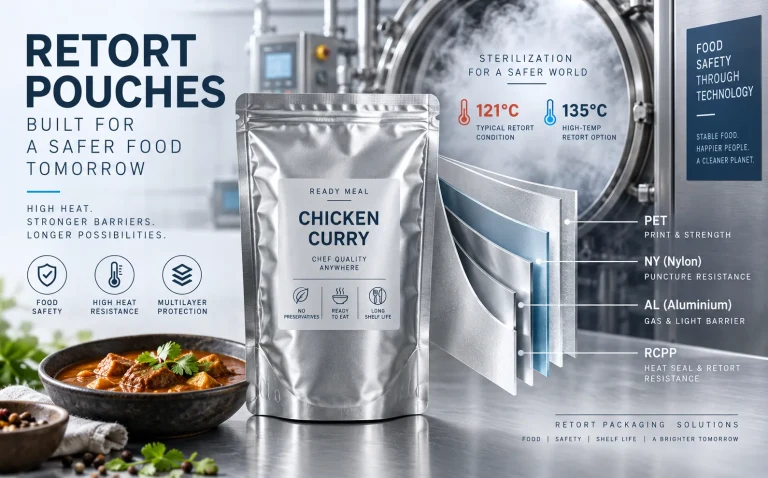
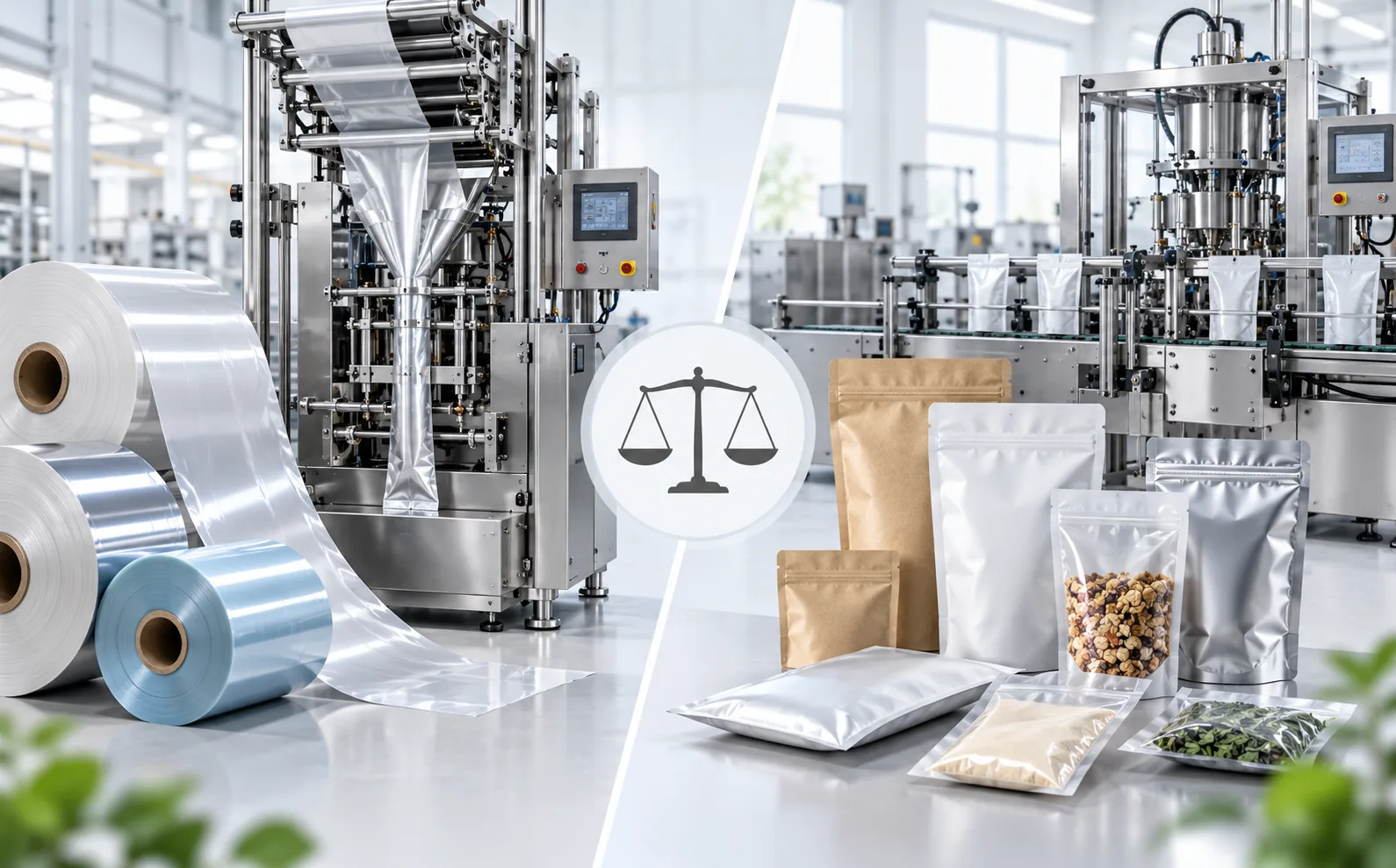
Rollstock vs pre-made pouches is a choice between 2 routes to the same pack: buy film and form it on your own line, or buy the pouch finished. The pack can look identical; nothing else is.
There are two ways to get product into a flexible pack. Buy film on a reel and let your own machine form, fill and seal it; or buy finished pouches and fill them. The pack can look identical either way. Almost everything else is different.
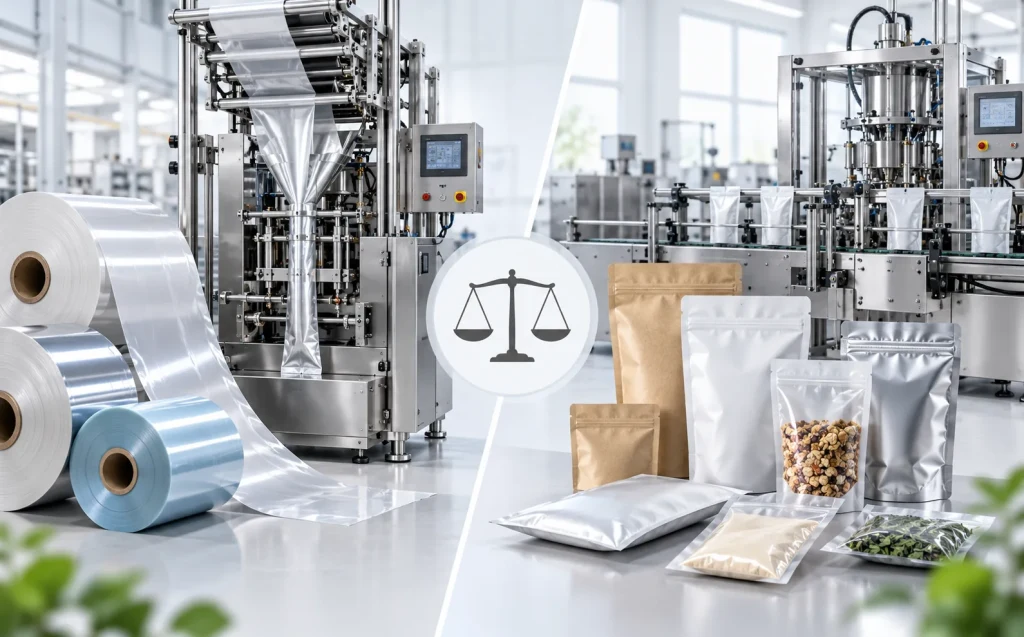
Rollstock
Film arrives on a reel. A vertical or horizontal form-fill-seal machine folds it, seals it, drops the product in and closes it, hundreds of times a minute.
It is faster. A VFFS line will out-run pre-made pouch filling several times over, because forming and filling happen in one continuous motion.
It is cheaper per unit. You are buying film, not a converted pouch, so nobody has been paid to convert it.
It needs a machine. That is real capital, and the film has to match it — web width to the forming collar, seal initiation temperature to the jaws and dwell time, coefficient of friction to the former. Film specified against the product alone and not the machine is the usual reason a line runs badly. See packaging machinery selection.
It limits the format. Pillow packs and simple gusseted shapes are straightforward. Zips, spouts and shaped outlines are harder, more expensive, or not possible depending on the machine. The back seal pouch is the classic rollstock format.
Pre-made pouches
Pouches arrive finished. A filler opens each one, fills it and seals the top.
Any format you like. Stand-up, zippered, spouted, die-cut to an outline — the converter has already done the difficult part.
Less capital. A pouch filler costs a fraction of a form-fill-seal line, and small volumes can be filled by hand.
Better shelf presence. A converted pouch has a crisper base and cleaner seals than most machines form in line, which shows on a shelf.
Higher unit cost, slower line. Both are the price of the convenience, and both matter more as volume rises.
Where it flips
There is no single volume, because it depends on the machine you would have to buy, the format you need and how many variants you run. The shape of the decision is consistent though: at low volume, with several formats or variants, pre-made wins clearly. At high volume, one or two SKUs, a simple format, rollstock wins clearly — and the film saving pays for the machine faster than most buyers expect.
The awkward middle is real. If you are in it, the honest test is whether the format you want is one a machine can form. If it needs a spout or a shaped outline, the question answers itself.
You do not have to choose once
A common and sensible path is to launch on pre-made pouches, prove the product, then move to rollstock when the volume justifies the line. The structure can stay the same through that change, which means the pack does not have to be requalified — only the format does.
ALLWINS supplies both, and the group also sells the machinery, which is why we can specify film against a machine rather than against a description of one. Send the format, the volume and the line you have and we will quote both ways.
The standards behind this are public: see FDA 21 CFR 177, for the film either route is made from.
Rollstock vs pre-made pouches in short
- Rollstock is faster and cheaper per unit, and it needs a machine and limits the format.
- Pre-made pouches cost more and run slower, and they can be any shape, with zips and spouts.
- There is no single crossover volume: it depends on the machine, the format and how many variants you run.
- Launching pre-made and moving to rollstock later keeps the structure, so the pack does not have to be requalified.
Key Information
Rollstock and pre-made pouches are two routes to the same pack: buy film and form it on your own line, or buy the pouch finished. The pack can look identical; the cost, the lead time and the machinery behind it do not.
- Rollstock has a lower material cost per pack and needs a form-fill-seal machine to use it.
- Pre-made pouches need no forming machine and carry a higher unit cost.
- The break-even moves with volume, the number of SKUs and how complex the pouch shape is.
- Complex shapes and special closures are easier as pre-made pouches.
- Many buyers use both: rollstock for the high-volume line and pre-made pouches for short runs and launches.
Is rollstock cheaper than pre-made pouches?
Per pack, yes, on the material. Whether it is cheaper overall depends on whether you already have a form-fill-seal machine and enough volume to keep it running.
When do pre-made pouches make more sense?
For shorter runs, several SKUs, complex shapes, or where no forming machine exists. They remove the capital cost and the changeover time.
Can I switch between the two later?
Yes, and many buyers run both. The artwork and the structure usually carry across; the seal geometry and the tooling do not.