Custom pouch MOQ is a break-even, not a policy. Four things set it, three of them are yours to change, and the largest single lever is which of the 2 print methods you use.
Minimum order quantity is the question most likely to end an enquiry early, and it is usually answered badly — either with a number that is wrong for the specification, or with a refusal to say. It is worth explaining what the number is made of, because three of the four things that set it are under the buyer’s control.
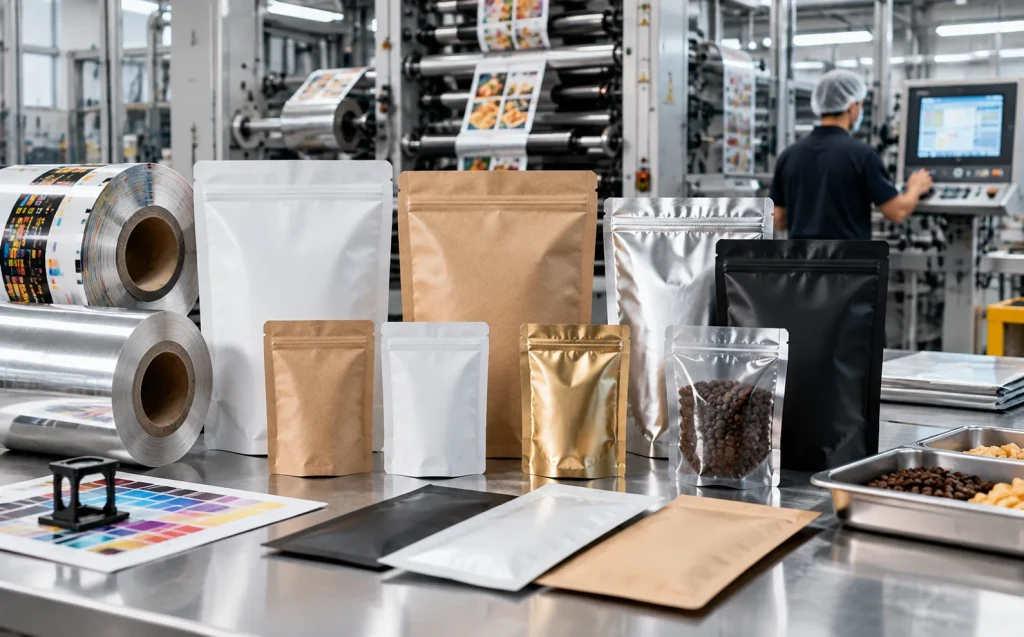
MOQ is not a policy, it is a break-even
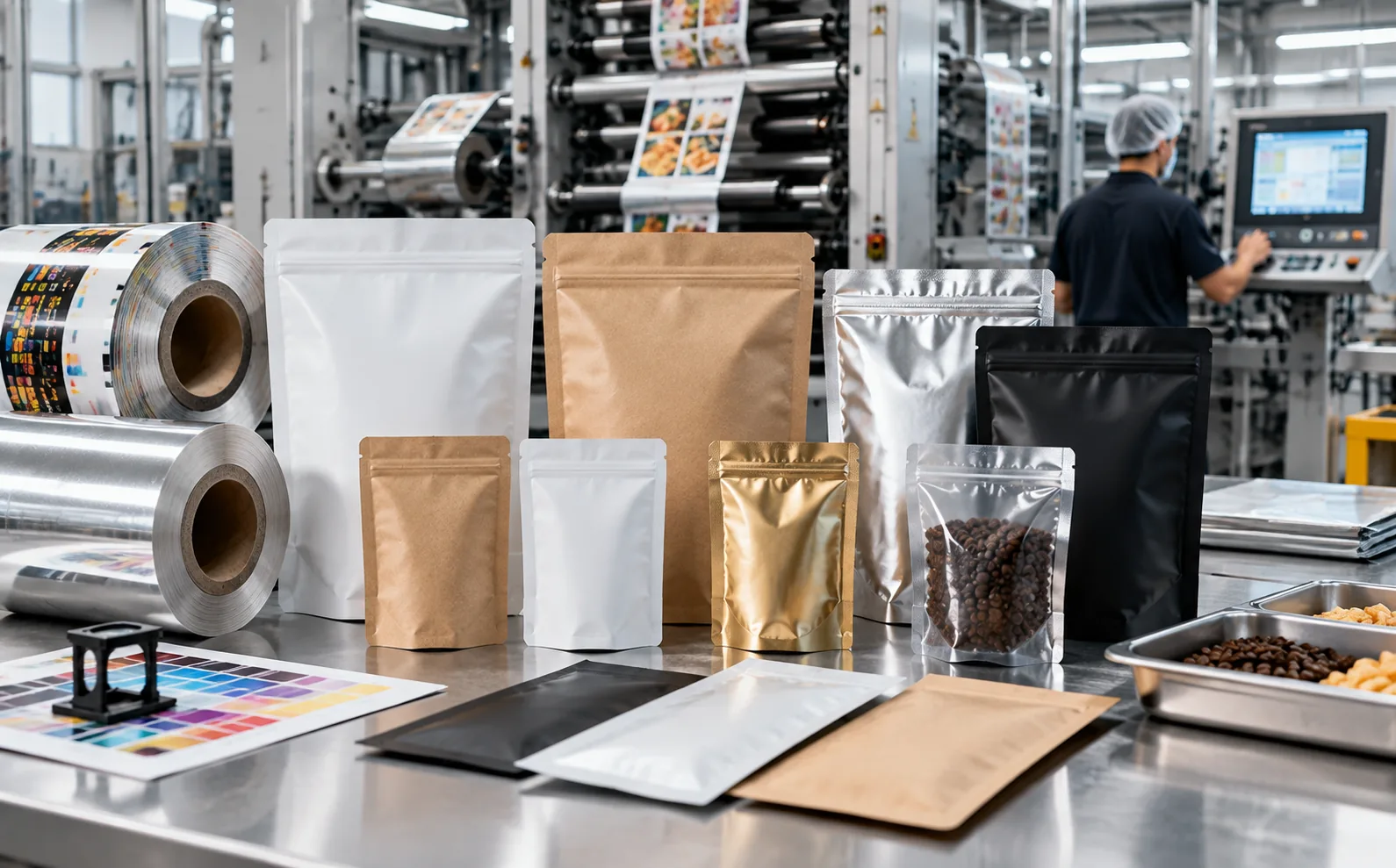
Nothing about a custom pouch is free before the first metre is printed. Cylinders are engraved, film is ordered to a web width, the press is set up and brought into register, and a quantity of film is run off and scrapped while the colours settle. Those costs exist whether you order 3,000 pouches or 300,000.
The minimum is the point at which spreading them across the order stops producing a price nobody would pay. It is arithmetic, not gatekeeping.
What actually sets the number
The print method. This is the largest factor by far. Gravure needs one engraved cylinder per colour, and those cylinders are paid for before anything is printed — which is why gravure MOQs are measured in tens of thousands. Digital printing has no cylinders, so a run of a few thousand is viable, and short runs of variants cost the same per unit as one long run of a single design. If a quoted MOQ is far higher than you expected, ask what it would be digitally.
The web width. Film is manufactured and slit to a width, and a press runs a fixed width regardless of how much of it your pouch uses. A pouch that tiles efficiently across the web produces less waste per unit than one that leaves a strip unused, and the MOQ follows. Small dimensional changes sometimes move the number substantially — worth asking about before redesigning anything else.
The structure. A common structure like PET/PE is made continuously and available in smaller quantities. A specialist laminate — a retort structure, a foil ply, a compostable film — may be produced in batches, and the batch is the minimum whatever your order is.
The number of colours and finishes. Each extra colour is another cylinder in gravure. A matt or gloss laminate, a spot varnish or a hot-foil pass is another run through the line, and each pass has its own setup and waste.
How to get a smaller first order
Print digitally for the first run. You lose nothing in barrier or structure — the film is the same — and you gain the ability to change the artwork after seeing it on shelf, which is worth more than the per-unit saving at low volume.
Use an unprinted or stock-printed pouch to launch, and move to custom print when the volume justifies cylinders. Several brands in this catalogue did exactly that.
Consolidate variants onto one structure. Four flavours in one structure and one size, differing only by artwork, is one production run. Four structures is four.
Ask for the price at two or three quantities rather than one. The curve is steep at the bottom and flat further along, and the point where it flattens is often lower than expected — sometimes the next quantity up costs barely more in total.
What we will tell you
The product pages in this catalogue state what is available; the quotation states the minimum for your specification, because the specification is what sets it. We will also tell you when a smaller run is possible by changing the print method rather than the pack — that conversation is usually more useful than the number itself.
Send the format, the structure and the quantity you would like, and ask for the digital and gravure prices side by side.
The standards behind this are public: see the FDA rules for food-contact polymers.
Custom pouch MOQ in short
- The number is a break-even, not a policy: cylinders, film, setup and start-up waste are paid before the first good pouch.
- Print method is the largest lever — gravure needs a cylinder per colour, digital needs none.
- Web width matters: a pouch that tiles cleanly across the web wastes less, and small dimensional changes move the minimum.
- Ask for the price at two or three quantities; the curve is steep at the bottom and flat further along.
Key Information
A custom pouch MOQ is a break-even, not a policy. Four things set the number, three of them are the buyer's to change, and the largest single lever is which of the two print methods is used.
- MOQ exists because tooling and plate costs are paid once and have to be recovered across the run.
- Gravure printing carries a cylinder charge per colour and needs a longer run to justify it.
- Digital printing carries no plate charge, which is what makes a short first run possible.
- Reducing the colour count reduces the plate cost and therefore the MOQ.
- A repeat order on existing artwork skips the tooling step, so its minimum is lower than the first order's.
Why is there a minimum order for custom printed pouches?
Because the plates or cylinders and the tooling are paid once. The minimum is the quantity at which that fixed cost stops dominating the unit price.
How can I lower the MOQ on a first order?
Use digital print instead of gravure, reduce the number of colours, or accept a stock pouch size rather than a bespoke one. Each removes part of the fixed cost.
Is the MOQ lower on a repeat order?
Yes. The artwork is already proofed and the tooling already exists, so the second order does not carry the setup the first one did.