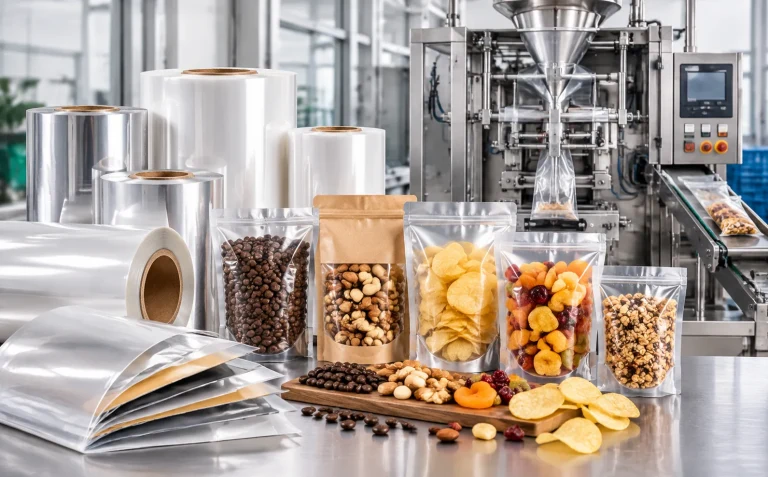
Packaging machinery selection turns on 5 factors, and the 1 that catches people is film compatibility — a machine that runs beautifully on one reel will not run on another.
A packaging machine is bought on a number — bags per minute — and lived with on everything else. The machines that disappoint are rarely slow; they are the ones that will not hold a seal on the film you actually buy, or that take forty minutes to change over on a line running six SKUs.
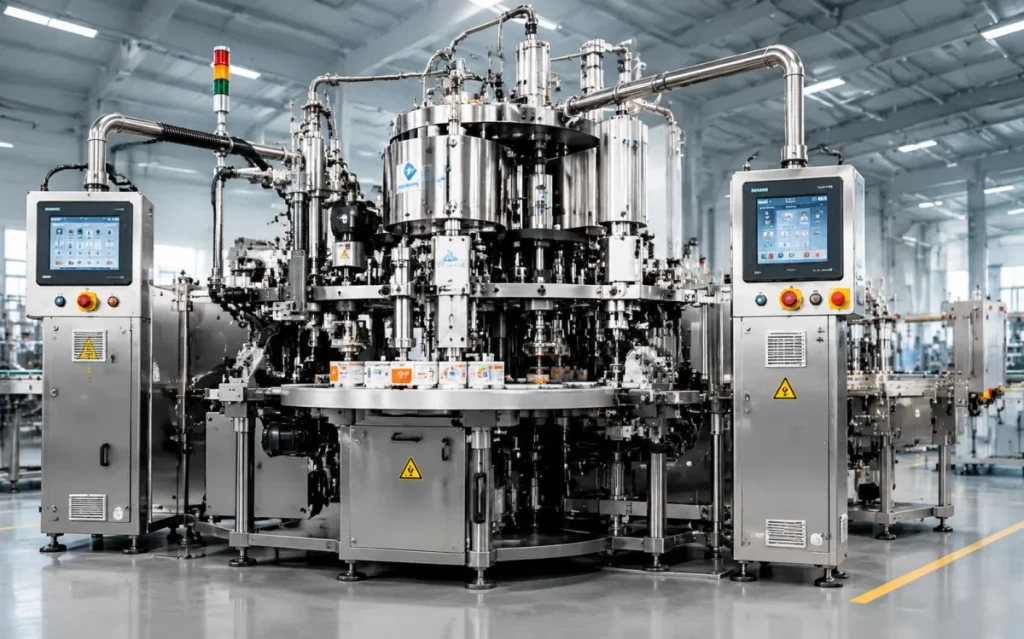
Start with the product, not the machine
Free-flowing powder, sticky granules, whole beans, wet product in sauce and irregular solids are five different filling problems with five different answers — auger, multihead weigher, volumetric cup, piston, or hand-placed.
Get this wrong and no amount of machine quality rescues it. A multihead weigher is superb on nuts and hopeless on a product that bridges.
Dust, static and fat content all matter too, and all of them are worth stating before anybody quotes.
Pre-made pouch or form-fill-seal
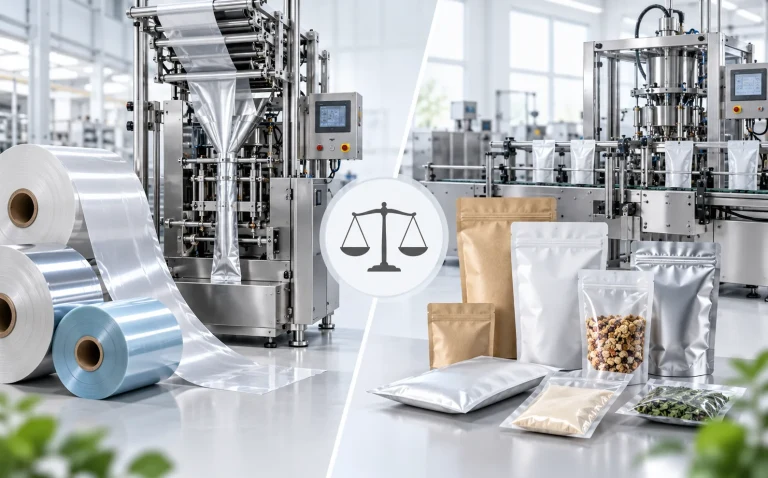
A pre-made pouch machine takes finished bags and fills them. The bags cost more per unit, the machine costs less, changeovers are quick, and the pack quality is consistently good. It suits multiple SKUs, shorter runs and premium formats.
Form-fill-seal makes the bag from a reel of film as it goes. Film costs less than finished pouches, the machine costs more, and speed is far higher — but the format is fixed by the forming set and the film has to be right.
The break-even is a volume question. Below a few million packs a year, pre-made usually wins on total cost once tooling and changeovers are counted.
Speed, and the number that matters more
Brochure speed is measured on ideal product with an ideal film. Ask instead for the sustained rate on a product like yours, and for the overall equipment effectiveness the factory sees on the same model.
A machine at 60 bags a minute running 85% of the shift beats one rated at 90 that jams every twenty minutes and needs an operator standing over it.
Ask what causes the stops, and how long a clear takes.
Film compatibility — the one that catches people
Every machine has a seal-initiation temperature range, a film stiffness it wants, and a slip window it runs cleanly in. A film outside those is a machine that runs but seals badly.
This is the argument for specifying the machine and the material together. A film chosen only on barrier and price, then handed to a line that was never told about it, is the single most common cause of a packaging project going wrong.
Ask for a trial on your film before the machine ships. A factory that will not run one is telling you something.
Changeover, cleaning and support
If you run several sizes, changeover time is a bigger number over a year than top speed. Ask how long a size change takes, how many tools it needs, and whether an operator can do it alone.
For food, ask how the product-contact parts are cleaned and how much of the machine comes apart without tools.
And ask the boring questions: which parts wear, what they cost, how long they take to arrive, and who answers the phone at 2am your time when the line is down. The answers separate suppliers more than the specification sheet does.
The standards behind this are public: see FDA 21 CFR 177, for the films any of these machines will be running.
Packaging machinery selection in short
- Start with the product and the format, not with the machine or the speed.
- Pre-made pouch filling is flexible and slower; form-fill-seal is faster and limits the format.
- Rated speed is not achieved speed — changeover, cleaning and downtime decide output.
- Film compatibility catches people: web width, seal temperature and friction all have to match the line.
Key Information
Packaging machinery selection turns on five factors, and the one that catches buyers is film compatibility: a machine that runs beautifully on one reel will not run on another.
- A machine is bought on bags per minute and lived with on changeover time, film tolerance and support.
- The choice between a pre-made pouch machine and a form-fill-seal machine is set by the product and the run pattern, not by speed.
- Rated speed is measured under ideal conditions with one product and one film.
- Film compatibility is a specification, not an assumption: seal initiation temperature and coefficient of friction both have to match.
- Changeover and cleaning time decide real output when a line runs several SKUs.
Should I buy a VFFS machine or a pre-made pouch machine?
VFFS suits long runs of one product with lower film cost; a pre-made pouch machine suits shorter runs, several SKUs and more complex pouch shapes. The run pattern decides it.
Why does my machine not hit its rated speed?
Rated speed is measured with one film and one product under ideal conditions. Real output is set by the product's flow, the film's seal window and how often the line changes over.
What should I check before buying a packaging machine?
That it runs the film you can actually buy. Ask for the seal initiation temperature range and the coefficient of friction the machine expects, then check them against your film specification.