
To source packaging from China well you need 6 steps and an eye on the 4 places an order actually goes wrong — starting with whether the factory is a factory at all.
Buyers new to Chinese sourcing usually worry about being cheated. In practice outright fraud is rare and easy to screen for; what costs money is the ordinary stuff — a factory that quoted on a different structure than the one you described, a print run approved from a screen instead of a proof, a shipment held at the border for a missing certificate.

Screening a supplier
Ask what the factory actually owns. A converter with its own gravure press and laminator will answer immediately; a trading company will change the subject. Neither is disqualifying, but you should know which you are talking to, because it decides who is accountable when something is wrong.
Ask which of your structures they run every week. A factory that laminates PET/PE all day and has done PET/AL/PE twice is not the right home for a foil job.
Ask for the certificates that apply to your product and check the scope, not just the logo. A food-safety certificate covers named sites and named processes, and a group can hold one for a plant that is not making your order.
Getting a quotation you can compare
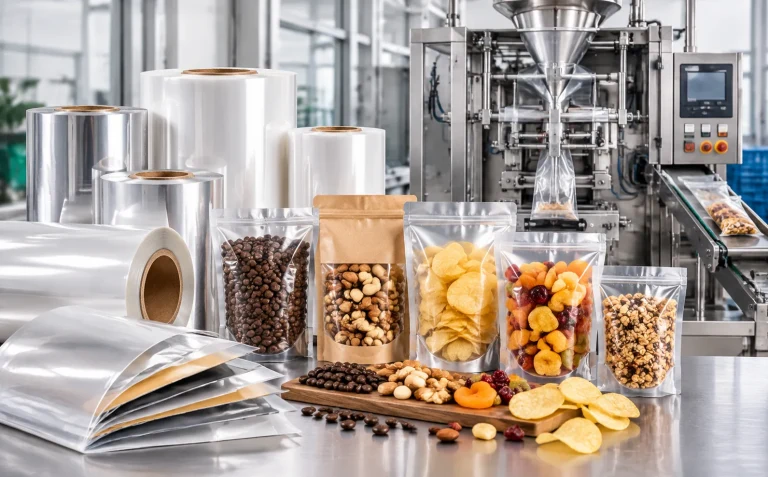
Quotations from three factories are rarely comparable, because each will have quietly specified something different. Fix the variables before you ask: structure and layer thicknesses in µm, format and dimensions, print method and colour count, finish, any functional features, and the quantity.
Ask for the cylinder or plate cost separately from the unit price. Gravure carries a one-off tooling cost per design; a quote that buries it in the unit price looks cheaper at one quantity and worse at another.
Ask what the price assumes about the film’s source. Resin prices move, and a quotation held for thirty days is a different offer from one held for a week.
Samples and approval
Take plain stock samples first to check the substrate, the seal and the feel. This costs almost nothing and settles most structural questions.
Then approve print on a proof, not on a screen. Colour on a metallised film is not colour on white PET, and a design that looked right in the artwork can go dull or muddy on the actual substrate.
Approve in writing, keep the approved proof, and make it the reference for the production run. This one habit prevents most print disputes.
Inspection
In-line inspection during the run catches registration drift and lamination faults while there is still time to stop. Pre-shipment inspection checks the finished goods against the specification — dimensions, seal strength, print against the approved proof, and the count.
Decide before production who is doing this and against what document. An inspection with no written specification to check against is a photograph, not an inspection.
Shipping and the paperwork
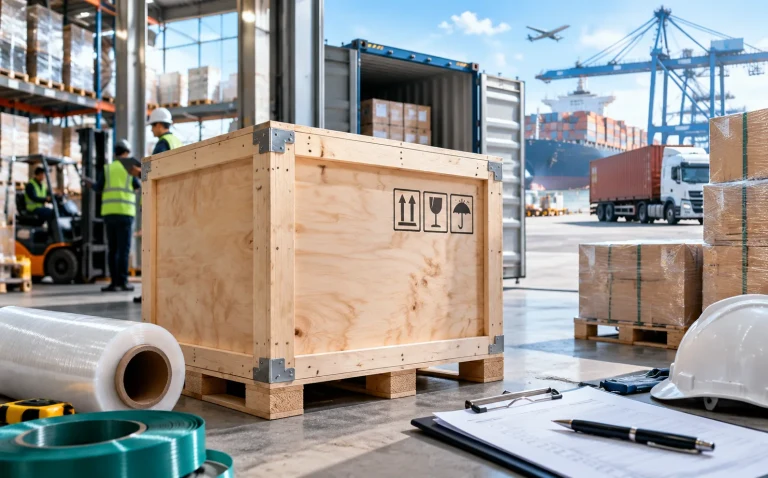
Sea freight is the default for volume; air makes sense for launch quantities and for anything where a delay costs more than the freight. Get both quoted and decide with the numbers in front of you.
The documents that hold shipments are dull and predictable: commercial invoice, packing list, bill of lading, certificate of origin, and whatever your destination requires for food-contact materials. Ask what your own customs broker needs before the goods leave, not after they arrive.
Import duty and clearance at your end are yours. Factor them in when you compare a Chinese price with a local one, because the gap is often smaller than the quotation suggests.
What a sourcing partner is for
All of the above is doable directly, and plenty of buyers do it. What a partner adds is that it is somebody’s job — the factory visit, the sample chase, the inspection booking, the document that turns out to be missing on a Friday afternoon.
That is what the ALLWINS sourcing division does: supplier selection, sample coordination, quality inspection, export logistics, and one point of contact who answers for all four.
The standards behind this are public: see ISPM 15, which governs any timber in the shipment.
Sourcing packaging from China in short
- Verify the factory is a factory: many listings are agents, and an agent adds a margin and a layer.
- A hand-made golden sample tells you little about a production line; inspection at the site does.
- Most disputes are two parties who wrote down different things, so agree the specification before production.
- Compliance paperwork holds more shipments than quality problems do.
Key Information
Sourcing packaging from China well takes six steps, and the money is usually lost not to fraud but to ordinary mismatches — a trading company presented as a factory, a quotation that cannot be compared, or an approval given on the wrong sample.
- Outright fraud is rare and easy to screen for; specification drift and unclear quotations cost more.
- A business licence states the registered scope, which shows whether a supplier is a factory or a trading company.
- Quotations are only comparable when the structure, thickness, print method and run quantity are stated identically.
- Approval should be given on a production sample, not a digital proof.
- Pre-shipment inspection happens before the balance is paid, which is the only point at which it has leverage.
How do I check a Chinese packaging supplier is a real factory?
Ask for the business licence and read the registered scope, then ask for photographs or a video of the specific machine that will run your job. A trading company can supply well, but you should know which you are buying from.
Why do two Chinese quotations differ so much for the same pouch?
Usually because they are not the same pouch. A different thickness, a different print method or a different run quantity changes the price without changing the description.
When should inspection happen?
Before the balance payment. An inspection after payment records a problem; an inspection before it prevents one.